daughterinlaw beheads elderly
| | | |

Daughter-in-Law Beheads Elderly Mother-in-Law in Phuket

Phuket –

Police in Phuket have arrested a 36-year-old woman accused of brutally murdering her 74-year-old mother-in-law during a violent domestic dispute inside their home in Chalong.

The Chalong Police told the Phuket Express that they responded to an emergency call from neighbors who reported a shocking attack in Chalong. Upon arrival, officers discovered the body of Ms. Jantra, 74, lying inside the residence with severe knife wounds and extensive bloodstains across the floor. Her head had been severed in what police described as an exceptionally gruesome act.

Preliminary inquiries revealed that the victim had been living with her daughter-in-law, Ms. Sriwan, 36. On the day of the incident, the two reportedly engaged in a heated argument that escalated into violence. In a fit of rage, Sriwan allegedly struck Jantra repeatedly with a knife before decapitating her.

Neighbors who witnessed the confrontation immediately alerted authorities. When police arrived, they found the suspect hiding in the bathroom. She was taken into custody on the spot and is now facing charges of murder.

Forensic officers and medical examiners conducted an on-site investigation and autopsy, while detectives continue to probe the motive behind the attack. Authorities have pledged a thorough investigation to ensure justice is served.

The original version of this article appeared on our sister website, The Phuket Express, owned by our parent company TPN media.

Similar Posts

  • |

    Cambridge paper leak case: students hand over 17 papers evidence to NCCIA, but investigation still not complete

    Islamabad: The investigation into the alleged Cambridge A Level and O Level paper leaks has drawn fresh criticism after affected students claimed that they provided complete evidence, forensic details and technical assistance to the National Cyber Crime Investigation Agency (NCCIA), but the inquiry remains incomplete. Students associated with the Accountability4Cambridge movement said they made every possible effort to help NCCIA investigate the case and submitted evidence related to 17 leaked examination components. They claimed they even conducted their own forensic checks and prepared detailed records before handing them over to authorities. The students said their main demand was a quick investigation because their future depends on the final results. They wanted the matter resolved before results were announced so that affected students could receive relief if unfair practices had affected their grades. However, according to the students, NCCIA has still not completed its investigation. They claimed that the investigation officer assigned to the case has gone on training, causing further delay. The Accountability4Cambridge representatives said they submitted a complete evidence package to NCCIA, including 44 exhibits with verification details. They said the material was prepared carefully to help investigators identify where the papers were leaked and who was involved. The students said they tracked the movement of leaked papers and provided information about possible sources, online groups and communication channels where the leaked material was shared. Their evidence included details about WhatsApp numbers, Telegram groups and payment methods allegedly used to purchase the leaked papers. The students submitted the evidence directly to NCCIA’s forensic department and expected progress within days, but they were later informed that the assigned official was unavailable because he had gone for training. The controversy started after students alleged that Cambridge examination papers reached some candidates before the official exams, creating an unfair advantage for those who accessed them early. According to Accountability4Cambridge, around 17 examination components were leaked during the June 2026 examination series. They said Cambridge International acknowledged four of these components, while the remaining cases were still disputed. Students argued that a leaked paper could damage the grades of honest candidates because grade boundaries may change when some students score unusually high marks after seeing questions in advance. They said a student who worked honestly could lose university opportunities if their grades dropped because of unfair competition. The students also raised concerns about delays in the official response. The Senate Standing Committee on Federal Education had directed NCCIA to provide findings by July 21, 2026, but the deadline passed without a final report being submitted. The group said only an informal indication was given that findings would come later, while students continued waiting for answers. During their efforts, students met with various institutions, including the IBCC, Senate committees and NCCIA officials, and prepared documentation to support their claims. They said the evidence was not based only on screenshots but included detailed verification methods such as timestamps, recordings and technical information to support the authenticity of the leaked material. The students said they wanted authorities to identify the people responsible and ensure accountability instead of allowing the matter to continue without a clear conclusion. They also demanded stronger action from Cambridge, including transparency regarding how the leaks happened, where they originated and what action was taken against those involved. The students further demanded reforms in the examination system, including better protection of papers, separate arrangements for Pakistan and measures to prevent future leaks. They warned that the issue concerned not only marks but also the future of thousands of students who depend on Cambridge results for university admissions in Pakistan and abroad.


  • | |

    Murad rejects new province claims, rules out viole…

    Sindh Chief Minister Murad Ali Shah has dismissed claims that Pakistan’s governance system has collapsed, while firmly opposing the creation of new provinces in Sindh and warning that no violence or bloodshed will be allowed over the issue. Speaking to reporters after attending the Mining Technical Conference 2026 in Karachi, the chief minister said the Constitution provides a clear legal mechanism for altering provincial boundaries. He stressed that any such move can only take place if the concerned provincial assembly approves it with a two-thirds majority. Murad Ali Shah said the Sindh Assembly has repeatedly passed unanimous resolutions opposing the creation of any new province in the province. He maintained that there has been no change in the assembly’s position and that the issue should be addressed only through constitutional and democratic procedures. The chief minister said public debate on administrative reforms is acceptable, but warned against creating unnecessary tensions or presenting the issue in a way that could provoke conflict. He said no one would be allowed to exploit the matter to create unrest in Sindh. His remarks came after Interior Minister Mohsin Naqvi recently suggested that Pakistan’s existing governance system was no longer capable of addressing national challenges and called for administrative reforms, including the creation of new administrative units. Responding to questions about public demonstrations, Murad Ali Shah said peaceful protest is a constitutional right but should be held in accordance with the law. He urged organisers to obtain permission from the relevant authorities before staging protests. The chief minister also highlighted the provincial government’s agricultural policy, saying arrangements have been made to procure one million tonnes of wheat to protect local farmers and stabilise the market. Speaking about economic development, he said Sindh continues to expand its mining and energy sectors. He announced that electricity generation from Thar coal is expected to increase from 2,640 megawatts to 3,000 megawatts in the near future. Murad Ali Shah said Thar’s coal fields are producing more than 15 million tonnes of coal annually, helping Pakistan reduce its dependence on imported fuel and saving more than $1.5 billion in foreign exchange each year.

  • | | |

    Goods transporters postpone nationwide strike for …

    The goods transporters strike has been postponed for 40 days after the government and representatives of the transport industry made progress in resolving several key demands. All Pakistan Goods Transport Ittehad President Malik Shehbaz Awan announced the decision on Sunday, saying the strike was being deferred in the “broader national interest”. He said some demands had already been addressed, while issues requiring cabinet approval would be considered within 15 to 20 days. A major concern for transporters is the government’s daily adjustment of petrol and diesel prices. The association has called for fuel prices to be revised on a fortnightly or monthly basis instead. Transporters also received assurances that overloading would be controlled according to legal axle-load limits. Discussions will continue on withholding tax and other industry-related issues. Awan said the Sindh government had agreed to shift truck operations to a new truck stand within a year. He also claimed that six of the association’s eight demands concerning Punjab had been accepted. Sindh Governor Nihal Hashmi and Federal Minister for Communications Abdul Aleem Khan welcomed the development and stressed continued dialogue. The 40-day postponement gives both sides an opportunity to resolve the remaining disputes and avoid further disruption to Pakistan’s goods transportation network.

  • | |

    Islamabad High Court extends stay on 50% additiona…

      The Islamabad High Court (IHC) has extended its earlier interim order preventing the collection of an additional 50 percent toll tax from vehicles that do not have an M-Tag installed. The relief will remain in effect until the next hearing of the case, providing temporary protection to motorists while the legal proceedings continue. During the hearing, the National Highway Authority (NHA) submitted its written response before the court, outlining its position regarding the policy of imposing an additional toll charge on vehicles that are not registered under the M-Tag system. The response is expected to form the basis of further arguments in the case. The petitioner’s counsel requested additional time to carefully review the written reply submitted by the NHA before presenting a detailed response. Accepting the request, the court adjourned the proceedings to a later date, allowing both parties sufficient time to prepare their arguments. While postponing the hearing, the Islamabad High Court announced that its previous order would continue to remain in force until the next hearing. As a result, authorities have been restrained from collecting the additional 50 percent toll tax from vehicles that either do not have an M-Tag installed or have insufficient balance in their M-Tag accounts. The interim relief means that motorists falling into these categories cannot be charged the extra amount until the court issues further directions. However, the regular toll charges applicable under existing rules may still be collected. The dispute centers on the National Highway Authority’s policy requiring motorists to register their vehicles with the M-Tag electronic toll collection system. Under the authority’s regulations, vehicles that are not registered with M-Tag are subject to a 50 percent higher toll fee when using motorways and designated highways. Similarly, vehicles with an M-Tag account that does not have sufficient balance may also be charged the additional amount under the same policy. The NHA introduced the M-Tag system to modernize toll collection, reduce congestion at toll plazas, promote cashless payments, and improve the efficiency of traffic management on Pakistan’s motorway network. The electronic system enables vehicles to pass through toll plazas more quickly, minimizing delays and reducing manual cash transactions. Despite these objectives, the policy of imposing an additional 50 percent toll charge has faced criticism from some motorists and legal experts. Opponents argue that the surcharge is excessive and places an unnecessary financial burden on drivers, particularly those who have not yet registered for the M-Tag system or encounter technical issues with their accounts. They also contend that such a financial penalty should have a clear legal basis and should not be enforced without proper safeguards. The NHA’s decision has therefore been challenged before the Islamabad High Court, where the petitioner seeks to have the additional toll charge declared unlawful. The court will examine the legal validity of the policy after considering the arguments of both parties, including the authority’s written response and the petitioner’s objections. Until the next hearing, the High Court’s interim order will continue to provide temporary relief to affected motorists by preventing the collection of the disputed 50 percent additional toll tax. The outcome of the case is expected to determine whether the National Highway Authority can lawfully enforce the surcharge in the future or whether changes to the policy will be required.

  • | |

    Court awards Ahsan Iqbal Rs2.5m in defamation case

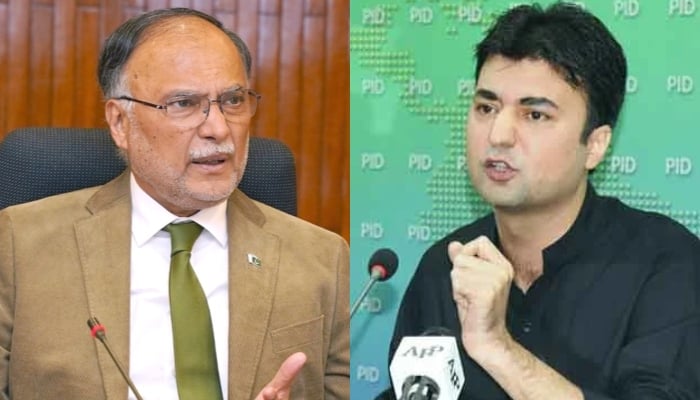
    An Islamabad District and Sessions Court has ruled in favour of Federal Minister Ahsan Iqbal in a long-running defamation case against PTI leader Murad Saeed. The court ordered Murad Saeed to pay Rs2.5 million in damages for making allegations that were not proven during the proceedings. Additional Sessions Judge Hakim Khan announced the verdict after hearing the case. The court held that Murad Saeed’s statements had damaged Ahsan Iqbal’s reputation and public image. It directed the PTI leader to compensate the federal minister with Rs2.5 million. According to the judgment, Murad Saeed accused Ahsan Iqbal of being involved in corruption worth Rs70 billion. However, the court found that he failed to provide any evidence to support the allegations. The court ruled that the accusations of corruption, misuse of authority, and receiving illegal commissions were defamatory because they remained unsubstantiated. The judgment stated that Ahsan Iqbal had initially sought Rs10 billion in damages for the alleged harm caused to his reputation. However, the court observed that the amount claimed was excessive in view of the evidence presented during the trial. It therefore awarded Rs2.5 million as reasonable compensation. The court further observed that Murad Saeed’s controversial statements had harmed Ahsan Iqbal’s reputation, dignity, and credibility. It said the allegations created a negative impression of the minister among the public and directly targeted his honesty, integrity, and professional standing. The judgment also noted that Murad Saeed neither appeared before the court during the proceedings nor submitted evidence to substantiate the corruption claims. The absence of supporting material, the court said, weakened his defence and left the allegations unproven. The case originated from statements made by Murad Saeed in 2019 regarding the Multan-Sukkur Motorway project. At the time, he alleged that Ahsan Iqbal had committed corruption in connection with the project. After reviewing the evidence and hearing the arguments, the court concluded that the accusations were not established and therefore amounted to defamation. The verdict marks the conclusion of the defamation proceedings, with the court reaffirming that public allegations of corruption must be backed by credible evidence.

  • Punjab, Korean delegation agree to boost livestock and agriculture cooperation

    Lahore – A Korean delegation led by CHO SOK JAE met with Punjab Minister for Livestock and Agriculture Syed Ashiq Hussain Kirmani. Secretary Livestock Ahmad Aziz Tarar was also present on the occasion. Additional Secretary Technical Dr. Usman Tahir, Director General Production Dr. Naeem Kanwar, Director Communication Dr. Khaliq Shafi and senior officials of the Agriculture Department also attended the meeting. The meeting included a detailed discussion on the use of modern technology, mutual cooperation, investment and the promotion of trade relations in the livestock and agriculture sectors. The Korean delegation said that it was working on advanced technology for first-generation potato seed which could prove to be an effective alternative to the conventional seed currently imported into Pakistan. According to the delegation, their first-generation seed could help achieve higher yields thereby increasing the productivity and potential of the agricultural sector. The delegation also introduced an advanced blood-based pregnancy testing kit for animals. According to the delegation, the kit can detect pregnancy in animals through a blood sample as early as 28 days after conception with results available in approximately 30 minutes. The delegation also expressed interest in producing the testing kit locally in Pakistan. On the occasion, Provincial Minister Syed Ashiq Hussain Kirmani invited the Korean delegation to invest in Pakistan’s livestock and agricultural sectors. He said that the Punjab government welcomed the promotion of modern technology and international cooperation. In this regard, the Provincial Minister appointed Director General Production Dr. Naeem Kanwar as the focal person to evaluate the blood pregnancy testing kit and prepare a technical report. The Provincial Minister directed that the kit be practically tested at government livestock farms and that a comprehensive technical report be prepared and submitted. This would help determine the future course of action regarding the effective use of this technology.

Leave a Reply

Your email address will not be published. Required fields are marked *