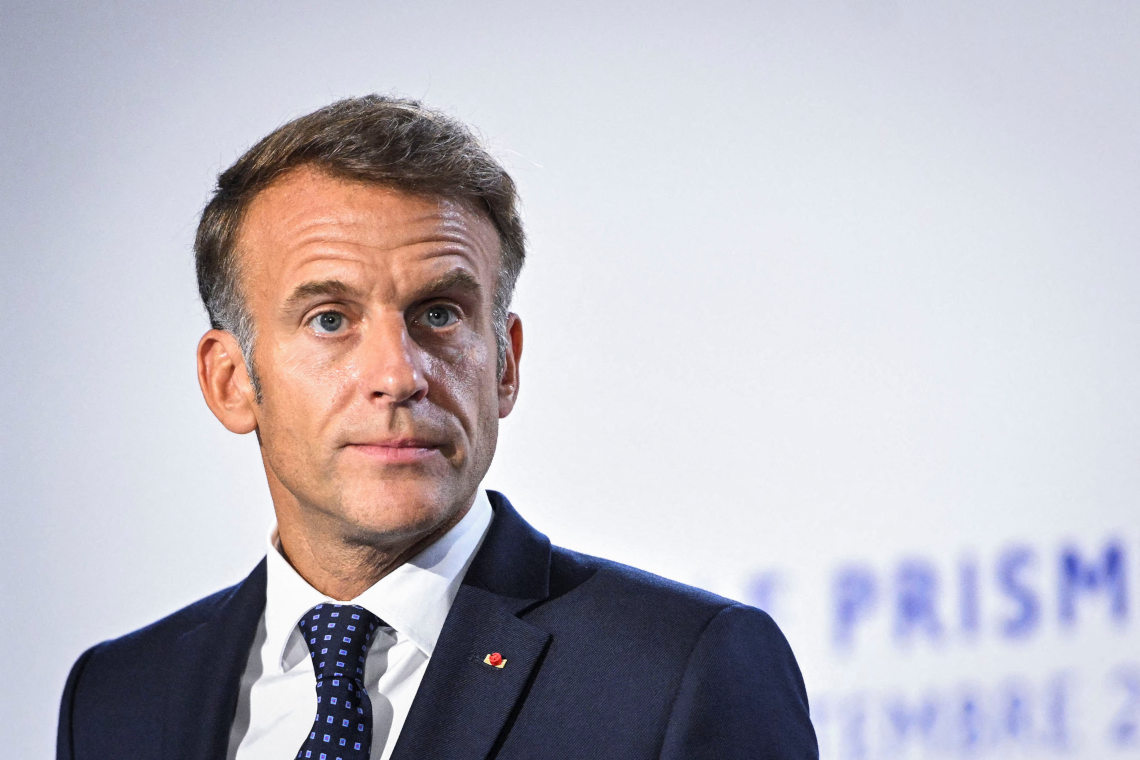
macron urges ban
| | | |

Macron urges EU ban on social media for under-15s in letter to Von der Leyen

PARIS, France – French President Emmanuel Macron has urged the European Commission to back a European Union-wide ban on social media for children under 15 after France failed to enact its own legislation, his office said on Tuesday, September 8.

In a letter to European Commission President Ursula von der Leyen dated Aug. 29 and seen by Reuters and other media, Macron said it had become urgent to introduce a bloc-wide ban through new EU legislation after France’s Constitutional Council struck down a national bill this summer before it was due to take effect in September.

“I believe it has now become essential to go further and, through a new European legislative text, harmonize a ban on access to social media platforms for children under the age of 15, in order to protect all children across the Union,” Macron wrote.

Following Australia’s landmark social media ban for children adopted last year, several European countries are considering their own curbs amid growing concern over the impact of social media on young people’s mental health and safety. But some countries, especially in Scandinavia, believe it is best left for parents to decide.

Macron, now in his final year as French president, has taken up the cause as a priority before the next French presidential election in 2027, and has been lobbying other EU governments to back restrictions. He said France would separately rework the legislation struck down by the Constitutional Council, though political fragmentation in parliament and difficult budget negotiations could complicate efforts to pass a new law.

Von der Leyen said in July that the European Union would move to limit young children’s access to social media across the 27-member bloc, citing proposals from two experts recommending a tiered system. Under that approach, children under 13 would only be allowed limited, supervised access, with restrictions eased gradually as they get older.

Macron is seeking a tougher approach, pushing for a blanket ban on social media access until the age of 15, ahead of Von der Leyen’s flagship State of the Union speech to the EU parliament later this month. – Rappler.com

Similar Posts

  • | |

    HRW says Israeli strike that killed journalist was war crime

    Human Rights Watch (HRW) has accused Israel of carrying out a deliberate airstrike that killed Lebanese journalist Amal Khalil, saying the attack may amount to a war crime under international law. In a report released on Wednesday, the international rights organisation said the strike targeted Amal Khalil and her camerawoman, Zainab Faraj, while they were covering Israeli military operations in southern Lebanon earlier this year. Amal Khalil, a reporter for the Lebanese newspaper Al-Akhbar, was killed in an Israeli airstrike on April 22 in the town of Al-Tayri. Her colleague, camerawoman Zainab Faraj, was seriously injured in the same attack. According to HRW, the available evidence suggests the Israeli military knew journalists were inside the building before launching the strike. The organisation said information gathered during its investigation indicates the attack was intentional and violated international humanitarian law. The report also referred to requests made by the United Nations Interim Force in Lebanon (UNIFIL) and the International Committee of the Red Cross for access to the area. HRW said these requests support evidence that authorities were aware of the presence of journalists at the location. Human Rights Watch further stated that Amal Khalil remained alive for some time after the strike. However, it alleged that Israeli forces prevented rescue workers from reaching the site, delaying emergency medical assistance that could have improved her chances of survival. The organisation said deliberately targeting journalists performing their professional duties and blocking humanitarian access are serious violations of international law. It added that such actions could constitute war crimes and should be investigated independently. HRW called for a transparent and impartial investigation into the incident and urged those responsible to be held accountable. It also stressed that journalists covering armed conflicts are civilians protected under international humanitarian law and must not be targeted during military operations.

  • | |

    Adam Driver, Sadie Sink join Marvel’s upcoming X-Men film

      Marvel Studios has revealed an impressive new cast for its highly anticipated X-Men movie, with Adam Driver, Sadiew Sink and Inde Navarrette among the actors set to join the franchise. The announcement was made by Disney during its biennial D23 fan convention in California on Friday, generating considerable excitement among thousands of Marvel fans. Marvel Studios president Kevin Feige appeared on stage at the Honda Center during the opening night of the three-day event. He gave more than 10,000 attendees an early glimpse of the upcoming X-Men project, which has not yet received an official title. The film is currently scheduled to arrive in cinemas in May 2028. Sadie Sink, known for her role in Stranger Things will reportedly continue as Jean Grey following her appearance in Spider-Man: Brand New Day. Inde Navarrette will portray Rogue, while the ensemble cast also features Kit Connor as Cyclops, Samara Weaving as Emma Frost, Christopher Abbott as Professor Xavier and Maya Boyd as Storm. Adam Driver is also joining the project, taking on the role of the villain Nathaniel Milbury. The actor appeared at the D23 gathering through a video message and spoke about his long-running discussions with Feige regarding a possible role in the Marvel Cinematic Universe. Driver said that he and Feige had been discussing the possibility of working together for several years and believed they had eventually found the right project and the right moment to make their collaboration happen. The X-Men announcement was one of several major reveals made by Disney and Marvel during the event. Feige also presented footage from Avengers: Doomsday another major Marvel production scheduled for release in December. The movie is expected to bring together several major superhero groups, including the Avengers, the Fantastic Four and the X-Men, along with Wakandan warriors. The heroes will face one of Marvel’s most prominent villains, Doctor Doom, who will be portrayed by Robert Downey Jr. The crossover is expected to play a major role in the expanding Marvel Cinematic Universe. Disney also provided fans with their first glimpse of Ryan Gosling in Lucasfilm’s upcoming Star Wars: Starfighter.The new film is scheduled to reach cinemas in 2027, a year that will mark the 50th anniversary of the original Star Warsmovie. The D23 event also featured announcements about several new sequels. Pixar presented previews of upcoming projects including Gatto and the supernatural adventure Ghost Market. The studio also confirmed The Incredibles 3 and Coco 2 Other returning franchises receiving new installments include Lilo & Stitch 2 Ice Age: Boiling Point and Frozen 3.Stars Kristen Bell, Idina Menzel and Josh Gad were among those promoting the latest Frozen project. The strong focus on sequels was noticed by attendees. One visitor, Gary Aurin, joked that almost everything at the event appeared to be a continuation of an existing franchise. Disney also surprised audiences by announcing a new animated project featuring Oswald the Lucky Rabbit. Director Jon Favreau introduced the character, who will appear in a mini-series scheduled to premiere on Disney+ next year. Oswald was created by Walt Disney and Ub Iwerks in 1927 for Universal Pictures and predates Mickey Mouse. Disney regained the character’s rights in 2006. The three-day D23 convention is scheduled to conclude on Sunday, bringing together fans, filmmakers, actors and creative teams to celebrate Disney’s upcoming entertainment projects.

  • | |

    Zelenskiy accuses Russia of targeting world food s…

    Ukraine and Russia traded accusations of lethal attacks on Sunday, with President Volodymyr Zelenskiy saying Moscow deliberately targeted global food security by striking the seaport at Odesa. Three people died and 37 sustained injuries in the eastern Ukrainian city of Kharkiv after a multi storey apartment block took a direct hit. Across the border, authorities in Russia’s Belgorod region reported that a Ukrainian drone attack killed five people and wounded 25 others. Odesa seaport takes major damage Zelenskiy said a strike had damaged Odesa’s seaport, a critical hub for Ukraine’s agricultural exports. Local authorities reported that dozens of drones and missiles struck the southern seaside city, wounding a dozen people in the process. “In this way, the Russians are at war with the world’s food security,” Zelenskiy said, framing the attack as part of a broader effort by Moscow to disrupt global grain supplies that flow through Ukraine’s Black Sea ports. The Ukrainian president said Russia also struck nine other regions across the country on Sunday, extending the assault well beyond Odesa alone. Russia has spent months bombarding Odesa in a sustained campaign aimed at cutting Ukraine off from the Black Sea and choking its export routes. Ihor, a 67 year old Odesa resident whose apartment narrowly avoided destruction in the latest strikes, said residents have grown accustomed to the danger. “Everyone who lives in Odesa knows that the most common target is around the port area,” he said. Ukraine strikes Russian oil tankers in response As Ukraine works to choke off the revenue Russia relies on to fund its war effort, Kyiv’s forces have repeatedly targeted Russian oil tankers and other cargo vessels moving through the Black Sea. Ukrainian forces claimed three additional strikes on such vessels on Sunday alone. Both countries have widened their campaigns against each other’s logistics networks in recent months. E-commerce warehouses on both sides of the border and Ukrainian petrol stations have come under sustained attack throughout the summer. Ukraine’s state energy company Naftogaz reported a significant rise in attacks on its facilities over the past three days, including strikes on oil extraction sites overnight. Ukraine’s energy ministry said Russian forces also struck power facilities in the Odesa region, cutting electricity to a substantial share of the port city’s residents overnight. Power had already been restored to 90,000 consumers by Sunday, the ministry said. Russia’s Defence Ministry confirmed striking fuel storage facilities in the ports of Odesa and nearby Chornomorsk, saying the sites were being used to support the Ukrainian military. Pope Leo renews call for peace At the Vatican, Pope Leo used his Sunday address to renew calls for an end to the war, now in its fourth and a half year. Speaking before worshippers gathered for the Angelus prayer, the pontiff said tragic incidents are multiplying across the conflict, leading to a growing number of civilian casualties, including children. The renewed papal appeal comes as both Russia and Ukraine show little sign of scaling back their attacks, with strikes on energy infrastructure, ports and logistics networks continuing to intensify on both sides as the war grinds into its fifth year without a resolution in sight.

  • | | |

    European colonization brought smallpox to the Americas

    Historians have believed that the collapse of Indigenous populations across the Americas was triggered largely by smallpox. The historical manuscripts and missionary chronicles provided detailed eyewitness reports of these devastating outbreaks. Molecular proof links colonial-era American epidemics directly to Old World viral strains remained elusive. Now, a study published in the journal Science provides the definitive genetic confirmation researchers have sought for generations. It’s led by geneticists at Trinity College Dublin in collaboration with biological anthropologists at the Universidad de Chile. Researchers have successfully extracted and sequenced the oldest known smallpox viral genomes ever recovered in the Americas. The ancient viral DNA was retrieved from the naturally mummified remains of two individuals buried in northern Chile during the early Spanish colonial era. The viral samples were recovered from bone fragments belonging to an adult woman (aged 30 to 35) and a young man (aged 18 to 20) buried near Camarones Cove. A coastal site in northern Chile that once marked the southern reaches of the Inca Empire. The individuals had been naturally preserved by the hyper-arid climate. They’re wrapped in camelid wool blankets and interred in traditional cloth bundles. Scientists initially analyzed DNA from 13 individuals excavated at the site. They were searching for ancient bacterial infections such as tuberculosis. Instead, they discovered preserved traces of the variola virus. Guess what? It’s the deadly pathogen responsible for smallpox. Radiocarbon analysis alongside molecular clock estimates revealed that both individuals died between 1492 and 1631 CE. The violent era of Spanish conquest led by conquistadors like Francisco Pizarro. Because the two viral genomes recovered from the mummies were virtually identical, geneticists concluded that both individuals likely succumbed to the same localized outbreak or were infected by the same circulating viral strain.  Evolutionary Trajectory of a Global Killer When researchers mapped the newly recovered genetic sequences onto a global evolutionary tree of smallpox, the results were unequivocal. The Chilean viral strain positioned directly between medieval European strains. The strains included those previously recovered from Viking-era human remains and later 17th- to 19th-century strains circulating in Europe. This placement provides molecular evidence that the virus was introduced to Indigenous American communities from the Old World. The study yielded surprising insights into how pathogens evolve when introduced to vulnerable host populations. The variola virus originally evolved from a animal-host (zoonotic) pathogen. It was undergoing extensive genetic alteration up through the 16th century as it adapted to human hosts. Surprisingly, the virus’s rate of genetic change slowed dramatically during the peak colonial expansion of the 17th and 18th centuries. Researchers hypothesize that Indigenous populations lacked any pre-existing immunity. So, the virus had reached an evolutionary optimum. It could spread effortlessly without needing further genetic adaptation. The virus’s evolution accelerated once again in the late 18th and 19th centuries. It was after the introduction of Edward Jenner’s smallpox vaccine in 1796. Therefore, the evolutionary pressure forced the pathogen to adapt once more. Why This Discovery Matters Today Smallpox stands as one of the deadliest infectious diseases in human history. It has claimed hundreds of millions of lives over millennia before its official eradication in 1980 through global vaccination efforts. In the Americas, the disease inflicted physical casualties. The virus also shattered social structures and morale. The rapid disfigurement and death led communities to feel overwhelmed by forces they could neither treat nor comprehend. This discovery demonstrates the immense power of ancient DNA research. Tracing how pathogen evolution interacts with human migration, population immunity, and public health interventions provides critical context for understanding modern infectious disease threats today.  

Leave a Reply

Your email address will not be published. Required fields are marked *