Credit cards, move over: Filipinos really love buy now, pay later
If you’ve ever looked at the price of a new phone, winced, then immediately checked what the monthly payment would look like stretched over two years – well, you’re in very good company.
Filipinos have taken a liking to buy now, pay later (BNPL), and judging by how much it has already caught on, it just might give the old reliable credit card a serious run for its money.
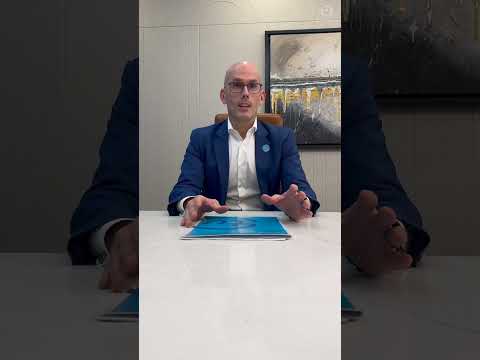
BNPL has come out as one of the hottest credit products in the country. Rappler recently sat down one-on-one with TransUnion Philippines president and CEO Peter Faulhaber, who called it the “fastest growing” product in the credit information firm’s latest Credit Perception Index.
“Fastest growing, large take up rate, strong favorability also in terms of perception,” Faulhaber said, describing BNPL. The enthusiasm has been so strong that even TransUnion is still trying to pin down exactly what is driving it, given the reasons behind the growth were beyond the scope of their current survey.
“We can hypothesize, but it’s hard to tell why it’s as favorable or has exploded as fast as it has in recent years,” he told Rappler.

A quick distinction is useful here. BNPL is a specific type of installment credit, usually offered directly at or near the point of purchase. It’s often offered through an app or a physical card, with a fixed repayment schedule and a relatively quick approval process.
A credit card gives you a reusable credit limit that you can keep drawing from as you repay it. But approval is usually stricter, which can make it harder for those with little credit history to qualify, such as fresh graduates, or those new to their jobs or the formal banking system.
In any case, this fascination with BNPL didn’t come out of nowhere, but it’s definitely been growing over time.
A TransUnion Consumer Pulse Study in late 2024 found that 36% of Filipinos were interested in using BNPL, already ahead of the 32% interested in credit cards. Fast forward to 2026 and BNPL is no longer some novelty fintech product. Some 80% of Filipinos surveyed said they knew about BNPL services, even higher than the 79% who said the same about credit cards.
Besides being top of mind, BNPL is also something Filipinos seem unusually warm toward. Asked which credit products they associated with being “helpful,” 54% picked BNPL, ahead of regular installment payments at 52% and credit cards at 49%.
From a BNPL app to a bank
BillEase – one of the better-known names in BNPL – has ridden that hype all the way into banking, with a former Bangko Sentral ng Pilipinas (BSP) deputy governor sitting on its board.
That would be Eduardo Bobier, who retired from the BSP in 2024 after nearly four decades at the central bank. Before leaving government, Bobier was also pulling in one of the heftiest paychecks as the central bank’s deputy governor for corporate services, earning P23.75 million in 2024 and ranking ninth among the country’s highest paid officials.
Quite the hire for a company best known, until fairly recently, for letting shoppers pay for purchases later.
BillEase acquired a majority stake in the Rural Bank of Sta. Maria in Ilocos Sur in November 2025, then formally renamed it BillEase Bank in September. Its newfound status as a rural bank gives BillEase a way to move beyond lending and into deposits, savings, and other banking services, although its in-app banking products are still being rolled out.
Atome has taken another route, putting BNPL onto a Mastercard that can be used online, in stores, or abroad. In an earlier Rappler interview, Atome Philippines country manager Chris Quiros said the card had proven particularly popular among young professionals, including gig and freelance workers and those just starting their careers, as well as consumers trying to manage monthly household budgets.
Shopee is in on it too. Its SPayLater service lets eligible users defer payment or split purchases into installments, putting BNPL a click away on the online shopping giant’s checkout page. And as BNPL has become harder to avoid, it has also become easier to trust.
![[READOUT] What Philippine borrowing tells businesses ahead of 2027](https://www.rappler.com/tachyon/2026/09/What-Philippine-borrowing-tells-businesses-ahead-of-2027.jpg?fit=449%2C449)
BNPL feels less sketchy too
That may be another reason the product has taken off. Filipinos are not only more familiar with BNPL, they’re beginning to see it as safer too.
TransUnion found that 78% of respondents considered BNPL services safe in 2026, up six percentage points from a year earlier. It still trails traditional banks at 88% and digital banks at 84%, but it’s now viewed to be as safe as e-wallets. (READ: GCash prices Philippines’ biggest-ever IPO at P6.60 per share)
Online lending apps, meanwhile, did not get quite the same vote of confidence. Digital money lending services had the lowest perceived safety among the financial services TransUnion measured, at just 57%, while 31% of respondents described them as “risky,” the highest share among the credit products singled out for that label.
Faulhaber said fairness and transparency can make or break that trust. If consumers have problems with particular lenders, he said, that would “definitely dent” perceptions of those companies and could eventually hurt the reputation of the broader segment, although TransUnion’s survey has not yet picked up a wider deterioration in fintech sentiment.
All that said, these loan products have to be used responsibly. In other words, don’t forget the other half of the equation – actually paying later. As the credit bureau head put it, consumers shouldn’t treat available credit as “free money or an extra salary.” – Rappler.com