FO rejects India’s criticism of AJK elections
Pakistan’s Foreign Office (FO) has strongly rejected India’s criticism of the ongoing Azad Jammu and Kashmir (AJK) legislative elections, saying New Delhi has neither the legal standing nor the moral authority to question the democratic process in the region.
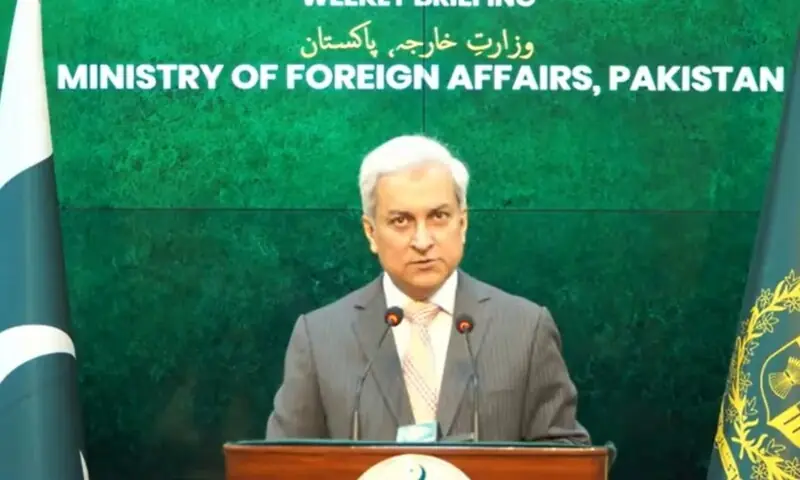
Speaking at the weekly media briefing on Thursday, Foreign Office spokesperson Tahir Andrabi dismissed remarks made by India’s Ministry of External Affairs (MEA), which had described the AJK elections as a “farce.” He termed India’s comments baseless, politically motivated and an attempt to undermine a democratic process being conducted under the constitutional and legal framework of Azad Jammu and Kashmir.
Andrabi said the elections are taking place in a peaceful, transparent and orderly manner despite security challenges, reflecting the democratic aspirations and political will of the people of AJK. He added that Pakistan remains committed to ensuring a free and fair electoral process in the region.
The spokesperson said India’s criticism comes as the seventh anniversary of New Delhi’s August 5, 2019 decision to revoke the special constitutional status of Indian Illegally Occupied Jammu and Kashmir (IIOJK) is being observed. He maintained that those unilateral measures violated international law, relevant United Nations Security Council (UNSC) resolutions and India’s own international commitments.
He reiterated Pakistan’s position that Jammu and Kashmir remains an internationally recognised disputed territory, whose final status should be determined through a UN-supervised plebiscite in accordance with relevant UNSC resolutions and the wishes of the Kashmiri people.
Andrabi also accused India of attempting to divert global attention from alleged human rights violations and restrictions on political freedoms in occupied Kashmir. He said references to casualty figures and other claims made by Indian authorities cannot overshadow concerns raised by the international community over the situation in the region.
Responding to another question regarding India’s reaction to Deputy Prime Minister and Foreign Minister Ishaq Dar’s recent remarks on Youm-e-Istehsal, Andrabi described the Indian statement as an effort to justify its policies in occupied Kashmir.
He alleged that a heavy military presence, strict security laws and demographic changes continue to affect the Muslim-majority character of the territory. He further claimed that development projects promoted by India cannot replace the Kashmiri people’s right to self-determination