gold prices rise
| | |

Gold prices rise further in Pakistan as global rat…


KARACHI: Gold prices in Pakistan continued their upward trend on Monday, with the price of gold per tola increasing by Rs2,000, according to the All Pakistan Sarafa Gems and Jewellers Association.

Following the latest increase, the price of one tola of gold reached Rs461,936 in the domestic market. The latest rise comes amid an increase in international gold prices, which have also strengthened in the global market.

According to the association, the price of 10 grams of gold increased by Rs1,715, bringing the rate to Rs396,035. The continued rise in gold prices is likely to keep the precious metal attractive for investors and buyers who traditionally consider gold a store of value during periods of economic uncertainty.

In the international market, gold prices also recorded an increase. The price of gold rose by $20 per ounce to reach $4,395 per ounce.

The latest movement in domestic gold prices reflects the influence of international bullion rates, while local market conditions and currency fluctuations can also affect the price of gold in Pakistan.

Gold remains one of the most widely followed commodities in the country, particularly among investors, jewellery buyers and households that use the precious metal as a form of savings. Changes in gold prices can therefore have a direct impact on consumers, particularly those planning to purchase jewellery for weddings and other important occasions.

The increase of Rs2,000 per tola means that buyers will now have to pay more for the same quantity of gold compared with the previous rate. Similarly, the rise in the 10-gram price indicates continued upward pressure on the domestic bullion market.

The international increase of $20 per ounce has also contributed to the positive movement in local prices. Global gold rates are closely watched by Pakistani traders because changes in international bullion prices can influence domestic market rates.

Gold prices around the world are affected by several factors, including investor demand, inflation expectations, currency movements, interest rates, geopolitical developments and uncertainty in global financial markets. During periods of economic or political instability, investors often turn toward gold because it is traditionally regarded as a relatively safe asset.

For Pakistani consumers, movements in gold prices can be particularly significant because jewellery represents an important form of household wealth and savings. A sustained increase in prices can make gold purchases more expensive, while existing gold holders may benefit from higher market valuations.

Market participants are likely to continue monitoring international bullion prices as well as developments in the domestic currency market to determine the direction of gold prices in Pakistan in the coming days.

The latest figures show that gold continues to trade at historically elevated levels in both domestic and international markets. With the international price now standing at $4,395 per ounce, any further movement in global rates could have an impact on prices in Pakistan.

For now, the domestic market has recorded another increase, with one tola of gold priced at Rs461,936 and 10 grams at Rs396,035.

Investors, jewellery traders and consumers will be closely watching the market for further changes, particularly as fluctuations in international gold prices and currency rates continue to influence the local bullion market.

Similar Posts

  • |

    Progressive Abdul El-Sayed and moderate Haley Stevens lock horns in high-stakes Michigan Democratic Senate primary

    Voters across Michigan headed to the polls on Tuesday for a pivotal Democratic Senate primary that has emerged as a major battleground testing the ideological direction of the party. Former public health director Abdul El-Sayed faced four-term US Representative Haley Stevens in a fierce contest to secure the nomination to replace retiring Democratic Senator Gary Peters. The election night watch party for El-Sayed in Detroit saw left-wing commentator Hasan Piker launch a sharp critique against the Democratic political establishment while speaking to media representatives. Piker praised El-Sayed’s campaign as an “issues-first” movement, asserting that grassroots engagement carried greater weight than financial backing. Piker drew specific attention to external campaign funding, taking aim at the more than $30 million (£23.5 million) poured into the race by political action committees affiliated with the American Israel Public Affairs Committee (AIPAC) in support of Stevens. Describing the influx of negative advertising against El-Sayed as a “heinous smear campaign”, Piker expressed hope that mainstream Democrats would learn from El-Sayed’s approach. He also dismissed suggestions that the candidate or his high-profile backers would prove to be a general election liability, arguing that voters are disillusioned with personality-driven politics and seeking structural policy changes. Throughout the primary, the candidates presented starkly contrasting visions for the party’s future in the battleground state. El-Sayed, who gained endorsement from Senator Bernie Sanders, focused his platform on reducing corporate influence in politics, expanding healthcare access, and providing economic support to working families. Responding to characterisations regarding his political stance, El-Sayed clarified that he advocates for regulated capitalism rather than socialism. Conversely, Stevens leaned on her tenure in the US House of Representatives and her previous role in the Obama administration, positioning herself as a pragmatic candidate with the legislative track record needed to retain the seat. While earlier polling indicated El-Sayed held a slight edge, surveys suggested Stevens might hold broader appeal amongst moderate voters in the upcoming general election. The political friction surrounding the primary also drew public commentary from US President Donald Trump, who characterised the race as a contest between a “communist and a socialist.” The winning Democratic nominee will move on to face Republican candidate Mike Rogers in the November general election, a race anticipated to play a crucial role in determining party control of the US Senate.

  • | | | |

    Iran’s supreme leader Mojtaba Khamenei names Bag…

    TEHRAN: Iran’s Supreme Leader Ayatollah Mojtaba Khamenei has reshuffled two key positions in the country’s security and political establishment, appointing Mohammad Bagher Zolghadr as his political adviser and former Islamic Revolutionary Guard Corps (IRGC) commander Mohsen Rezaei as his representative on the Supreme National Security Council (SNSC). The appointments were announced through messages attributed to Khamenei on social media on Sunday, according to reports, placing two veteran figures with extensive military and political experience in prominent roles at a sensitive moment for Tehran. In his message to Zolghadr, Khamenei cited his “valuable experience” while appointing him as a political adviser. Zolghadr has held several senior positions in Iran’s security establishment and previously served as secretary of the SNSC. The move follows Zolghadr’s departure from the council’s top administrative position. Reports said Rezaei has been appointed to replace him as secretary of the powerful security body, while also serving as Khamenei’s representative on the council. Rezaei is a veteran figure in Iran’s political and military establishment. He served as commander of the IRGC for much of the Iran-Iraq war era and has held a range of senior political positions. He has also previously run for Iran’s presidency. The latest appointments are drawing attention because the SNSC plays a central role in coordinating Iran’s defence, security and foreign-policy decisions. Although the council is formally chaired by President Masoud Pezeshkian, its work brings together senior political, military and security institutions. The timing of the reshuffle is particularly significant as Iran faces continuing pressure over regional security and negotiations surrounding the Strait of Hormuz. Recent diplomatic efforts have focused on arrangements for shipping through the strategically important waterway, making changes within Tehran’s security leadership especially closely watched. Both Zolghadr and Rezaei are associated with Iran’s security establishment and have extensive experience in military affairs. Analysts are therefore likely to watch closely for any indication that the appointments could affect Tehran’s approach to negotiations, regional security or relations with the United States. The reshuffle also strengthens the role of figures with longstanding links to the IRGC within the leadership structure. Rezaei had already served as a military adviser to Mojtaba Khamenei before taking on the latest assignment. For Zolghadr, the new position keeps him within the senior leadership circle despite his exit from the SNSC secretaryship. His experience in security and political affairs could allow him to continue playing a role in shaping policy from the Supreme Leader’s office. The appointments come at a critical time for Iran, with international attention focused on Tehran’s security posture and the future of the Strait of Hormuz. Whether the changes represent a broader adjustment in Iran’s negotiating strategy remains to be seen, but the elevation of two experienced security figures is likely to keep Tehran’s next moves under close scrutiny.

  • | | | |

    Iran vows retaliation after fresh US strikes

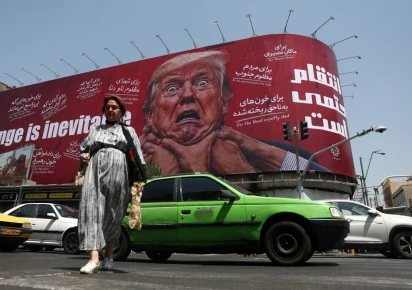
    Iran has vowed to retaliate after the United States launched fresh overnight air strikes on multiple locations across the country, further escalating the conflict that has increasingly drawn several Middle Eastern nations into the fighting. The Islamic Revolutionary Guard Corps (IRGC) issued a strong warning, saying those responsible for the attacks would face punishment. Iranian media quoted the force as saying that the “aggressor” would be held accountable. The latest US strikes reportedly targeted several areas in southern Iran, including Bushehr province, which is home to the country’s only nuclear power plant. Explosions were also reported in Qeshm, Kish, Bandar Abbas, Abadan and other nearby locations. Iranian officials said a residential building on Qeshm Island was struck during the attacks. Local authorities confirmed that three members of the same family, including a child, were killed. Two other children from the same family were injured and shifted to hospital for treatment. The US military said the strikes were launched in response to recent Iranian missile attacks targeting American forces stationed in Jordan. Washington described the operation as a powerful response aimed at deterring further attacks on its troops in the region. The military action came shortly after US President Donald Trump warned that Iran would face severe consequences following attacks on American military facilities. Meanwhile, Jordan said its air defence systems intercepted and destroyed five Iranian missiles heading toward its territory. Officials said this was the fourth consecutive day that missiles or drones launched from Iran had been intercepted. No casualties or property damage were reported. Iran also strongly condemned recent joint US-Saudi air strikes carried out in Iraq. Tehran described the attacks as a violation of Iraq’s sovereignty and territorial integrity. It accused Washington of widening the regional conflict and expressed support for the Iraqi government. The Iraqi government also criticised the strikes and called on all parties to avoid further escalation. Iraqi officials stressed that the country should not become a battleground for regional disputes. Israeli Prime Minister Benjamin Netanyahu said it was difficult to predict Iran’s next moves regarding the Strait of Hormuz. However, he argued that alternative energy routes could eventually reduce the strategic importance of the vital shipping lane. The United Nations expressed deep concern over the renewed fighting. UN Secretary-General António Guterres urged both the United States and Iran to end hostilities and return to diplomatic negotiations. He also welcomed mediation efforts by regional countries seeking to reduce tensions. The IRGC claimed that two oil tankers attempting to sail through what it described as an unauthorised route in the Strait of Hormuz turned back after a fire reportedly broke out on one vessel. Iranian officials insisted the country maintained control over the strategic waterway and warned that restrictions would remain as long as foreign military threats continued. The United Arab Emirates also condemned drone attacks targeting Saudi oil facilities from Iraqi territory, calling them a serious violation of Saudi sovereignty and a threat to regional security. The conflict has expanded rapidly over recent days, with military activity reported in Iran, Iraq, Jordan, Egypt and the Gulf region. The growing instability has increased concerns over regional security and disrupted global energy markets. Oil prices climbed sharply as investors reacted to fears of further escalation and possible disruptions to shipping through the Strait of Hormuz, one of the world’s most important energy trade routes.

  • | |

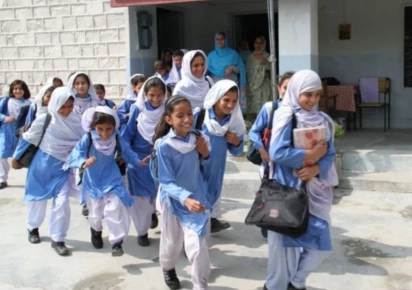
    Sindh schools to follow six-day week from August 1

    The Sindh government has announced that all public and private schools across the province will observe a six-day working week from August 1. The new schedule will remain in place until further orders. An official notification issued by the School Education and Literacy Department confirmed that schools will remain open from Monday to Saturday. The decision applies to all educational institutions operating under the department’s administrative control. The announcement comes as schools prepare to reopen after the end of summer vacations. Educational institutions remained closed for two months, with the holiday period running from June 1 to July 31. Students and teachers will now return to classrooms under the revised weekly schedule. Officials said the six-day week has been introduced to ensure smooth academic activities and improve the pace of teaching. The move is expected to help schools complete the academic calendar on time and make up for learning time lost due to previous disruptions. The decision applies equally to government and private schools throughout Sindh. School administrations have been instructed to implement the revised timetable immediately after reopening. Earlier this year, educational institutions in Sindh also experienced temporary closures because of regional security concerns linked to tensions in the Middle East. Schools remained closed for a brief period before normal academic activities resumed. Provincial authorities later restored regular operations while maintaining Saturday holidays. However, the latest notification has withdrawn that arrangement and introduced a six-day working week across the province. Education officials have advised parents, students and school administrations to follow the updated schedule. They said any future changes to school timings or working days will be communicated through official notifications.

  • | |

    Khawaja Asif backs federal control of Karachi, Gwa…

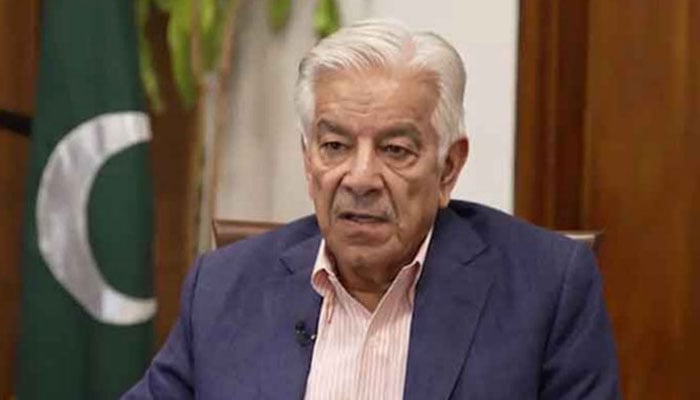
    Defence Minister Khawaja Asif has said that, in his personal opinion, Karachi and Gwadar should be directly administered as part of the federation, stressing that his remarks are intended to serve the national interest rather than any political or personal agenda. Speaking in a television interview, Asif clarified that the proposal reflects his own views and has not been discussed or approved by his party. He acknowledged that the Pakistan Muslim League-Nawaz (PML-N) may agree with some of his opinions while differing on others. “I am expressing my personal opinion. I have not sought my party’s approval for these remarks,” he said. “Some of my views may be supported by the party, while others may not.” The defence minister stressed that he has no personal interest in either Karachi or Gwadar and that his comments were made solely from the perspective of what he believes is best for the country. Asif also spoke about the importance of local government systems in modern democracies. He said effective local governments play a key role in governance, public service delivery and political development. He noted that local government institutions were revived during the 1980s and argued that many leaders currently serving at the provincial and federal levels began their political careers through the local government system. According to Asif, strengthening local governance remains essential for improving democratic institutions and ensuring better administration across the country. Commenting on the country’s administrative structure, the defence minister said provinces should not be created on the basis of provincial or ethnic identities. He suggested that national unity and effective governance should remain the guiding principles in discussions on administrative reforms.

  • |

    MQM-P calls for administrative units based on popu…

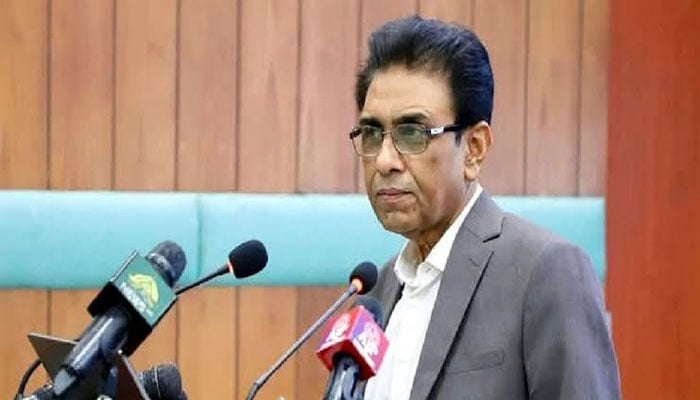
    Muttahida Qaumi Movement-Pakistan (MQM-P) Chairman Dr Khalid Maqbool Siddiqui has called for the creation of new administrative units across Pakistan based on population size, arguing that the country needs a more effective system of governance to meet the needs of its growing population. Speaking at a press conference in Karachi, Siddiqui said the business community across the country had also raised concerns similar to those voiced by his party regarding the existing administrative structure. He argued that Pakistan’s administrative system needed reforms to ensure better governance and a more balanced distribution of resources. Siddiqui said the provincial structure had changed after the abolition of the One Unit system, but the country had failed to restore an administrative framework that fully addressed the needs of its population. He stressed that his party’s demand for new administrative units did not target the country’s territorial integrity or seek to undermine the existing provinces. “We demand the creation of administrative units in Pakistan according to the population,” Siddiqui said, emphasizing that the objective was to improve administration and ensure that people received better public services. Addressing concerns over the boundaries of potential new administrative units, the MQM-P chief said his party had never called for a debate over the division of Pakistan’s territory. He described Pakistan as the “motherland” and said all four provinces remained an integral part of the country. Siddiqui maintained that the country itself was indivisible, while the Constitution allowed for changes in the administrative structure. He said the Constitution provided a mechanism for altering provincial boundaries and creating new administrative arrangements, although he believed the existing procedure had become impractical under current circumstances. The MQM-P chairman also pointed to the significance of August 1, the beginning of Pakistan’s independence month. He said the month carried a strong ideological connection with the creation of Pakistan and should encourage political leaders to discuss reforms aimed at strengthening the country. Siddiqui further revealed that his party had already introduced a constitutional amendment in the National Assembly to address the issue. He argued that Pakistan needed to revisit its administrative framework and consider reforms that could make governance more efficient and bring government closer to the people. The MQM-P has repeatedly advocated the creation of additional administrative units, maintaining that a more decentralized system could improve governance, facilitate service delivery and ensure a fairer distribution of resources. The demand, however, remains a politically sensitive issue, particularly in the context of debates over provincial boundaries and autonomy.

Leave a Reply

Your email address will not be published. Required fields are marked *