governor signals ppps
| |

Governor signals PPP’s shift to opposition polit…

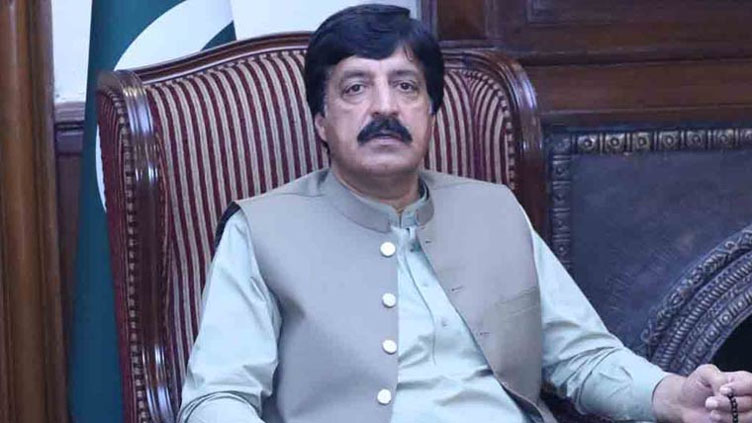
Governor of Punjab Sardar Saleem Haider Khan has said that those who had been supporting the Pakistan Muslim League-Nawaz (PML-N) government in implementing its policies and defending its decisions had reached the limits of their endurance.

Speaking to a delegation of the Pakistan English Media Association (PEMA) at the Governor’s House on Monday, he said the Pakistan Peoples Party (PPP) had now assumed the role of an opposition party and would continue to function as a genuine opposition until the next general elections, scheduled for 2029.

PEMA Chairman Zulqernain Tahir and President Rameez Khan led the delegation, which also included Secretary General Ali Raza and members Mubashir Bokhari, Babar Dogar, Shahar Bano, Mubashar Hassan, Faisal Ali Ghumman and Samiullah Randhwa.

He made it clear that the PPP would not return to the present coalition arrangement following the Azad Jammu and Kashmir (AJK) elections and would instead play the role of an effective opposition, particularly in Punjab.

Mr Khan said the PPP had never favoured coalition governments as a means of running the country, even during the previous parliamentary term. Although the party was widely regarded as an ally of the PML-N-led government, he said it was, in practice, steadily moving into opposition.

He maintained that those backing the present government appeared increasingly powerless in the face of poor governance and allegations of corruption.

Responding to a question, the PPP leader said internal differences within the party had been resolved to enable it to function as a more effective opposition.

Mr Khan also dismissed speculation over a power-sharing arrangement at the federal level, saying there was no written agreement under which Prime Minister Shehbaz Sharif would serve for two and a half years before handing over office to Bilawal Bhutto Zardari for the remainder of the term.

He said there could be no disagreement that the people of Pakistan were grappling with rising unemployment and persistent inflation. The PPP, he added, would continue to raise these issues publicly to mobilise support while also exerting political pressure on the PML-N government to improve its performance and deliver meaningful relief to the public.

Similar Posts

  • | |

    From classroom to gallery: KDSP’s graduation 

    Exhibition Redefines Ability Finding confidence in every stitch: Inside KDSP’s graduation where ‘thesis’ means a product, a skill, and a paycheck KARACHI: The room was loud with pride. Eight students stood by tables displaying tote bags, paintings, screen-printed handbags, painted canvases, cushion covers, and pouches stitched with their own names on them. This is KDSP’s idea of a “thesis.” Not a paper. A proof. Proof that years of training can turn into a skill, and a skill can turn into independence. It is easy to group all children under one word — “special.” But at the Karachi Down Syndrome Program, they don’t. Because a child with Down Syndrome learns differently than a child with CP. An autistic student needs a different kind of classroom than any other child. Launched in March 2014, the Karachi Down Syndrome Program (KDSP) is a prominent non-profit organization advocating for the value, acceptance, and inclusion of individuals with Down syndrome. Based in Karachi, KDSP operates as a “one-stop solution” providing comprehensive, highly subsidized developmental services to individuals and their families. But “special” is not a plan. And it is not the same for everyone: We called them “special.” And then we used that word as a reason to keep them on the margins. Out of regular schools. Out of job lists. Out of the story we tell about who gets to be useful. A child with CP faces physical challenges and needs mobility support. An autistic child navigates the world differently and needs structure and sensory understanding. A child with Down Syndrome often learns at a different pace and needs repetition, speech therapy, and patience — but also gives back warmth, honesty, and a remarkable ability to master routine work. Their needs are not the same. So their training cannot be the same either. The moment we start calling everyone by one word, we stop seeing the person. A room where ability is displayed, not debated: Last week I had the opportunity to visit the graduation exhibition of 8 students who completed KDSP’s 3-year Education For Life, EFL Graduation Program.   In a city with hundreds of NGOs, very few truly invest in the development of individuals. KDSP is among those few. Here, funding does not end at a ceremony. It becomes years of therapy. It becomes a classroom. It becomes a young adult learning to count change, write an invoice, and stand behind a table that says “Made by me.” CEO: “We don’t do one-size-fits-all” While explaining the mission and vision of KDSP, CEO Ms. Tabish Shahzad said their entire focus is on developing an inclusive society. “From early childhood development to adolescence and beyond, our goal is to take each child to a place where they are fully independent and can be a useful citizen,” she explained. “Every child with Down Syndrome has challenges — speech or communication, lack of focus, behavioral and mental health issues. For each challenge we have diversified programs and counselling sessions. We don’t do one-size-fits-all,” Tabish added, head held high. Different Needs, Different Names, Same Dignity We cannot call everyone “special” and think the job is done. Ms. Sidra Sajid, Skill Development Facilitator for Education For Life, EFL, explained how that works on the ground. “We have a proper organizational structure to support the ultimate EFL program,” she said. “For every vocation and skill, we have trained vocational teachers. It’s not volunteers coming once a month. It’s daily, structured training.” Supporting them are Managers and Assistant Managers who oversee every faculty: Ms. Umaima Shafqat, Ms. Ayesha Shahid, Ms. Sania Siddiqui, Ms. Mahzeb Fahim, and Ms. Asma Urooj. They put in all their efforts in various skill development programs and maintain keen observation of students’ challenges, how to resolve them, and facilitate them through various programs. Ms. Sidra explained that the KDSP EFL Graduation Program reflects a philosophy with two clear dimensions. First, Life: Basic academics. How to travel. How to manage money. How to carry out everyday chores without depending on anyone. The dignity of doing it yourself. It is obligatory to learn numeracy, computer literacy, cooking, and life skills. Second, Livelihood: Vocational training and skills that actually sell. Baking. Stitching. Screen printing. Block printing. Weaving. Photography. Making clay items. Things that turn into a product, a service, and an income. The room proved both. White tablecloths. Hand-written price tags. Students standing behind their own work, explaining it in their own words. Talking about the graduates, Ms. Sania Siddiqui added with quiet pride: “Most of them are already earning for their families through their craft. Like Unzila, one of our graduates, who has excelled in splatter painting and has completed her internship at Engro Martin Dow and KDSP itself. And Hasan Mansoor, who is a master of quilling craft. His products are already being offered for sale through KDSP’s own sales outlet, Lehr.” Lehr, headed by Ms. Mehak, is KDSP’s retail space where students’ products — from baked goods to crafts like Hasan’s quilling — are sold to the public. It is the final step of the program: moving from classroom to customer. A proud moment for mentors: Ms. Sadia Navaid, Quilling Class mentor, who has been associated with KDSP for several years, stood by Hasan’s table watching visitors admire his work. “I have seen these children struggle with paper strips in their early classes,” she said. “Tiny fingers, no focus, paper tearing. And today, to see them become masters and make such awesome products… it’s been a journey.” She paused, eyes on Hasan as he explained his design to a customer. “This journey has shown me several sides of life, and the blessings of Allah. These children are my pride and my medals of achievement. It was wonderful to see them grow, along with parents who put in their hundred percent to help them reach the summit.” Chef Zainab served freshly baked items. Ms. Samina, their painting guru, watched her students with the same pride. It was indeed a proud moment for all of them. From

  • | |

    Sanam Saeed and Emmad Irfani’s ‘Gulbahar’ te…

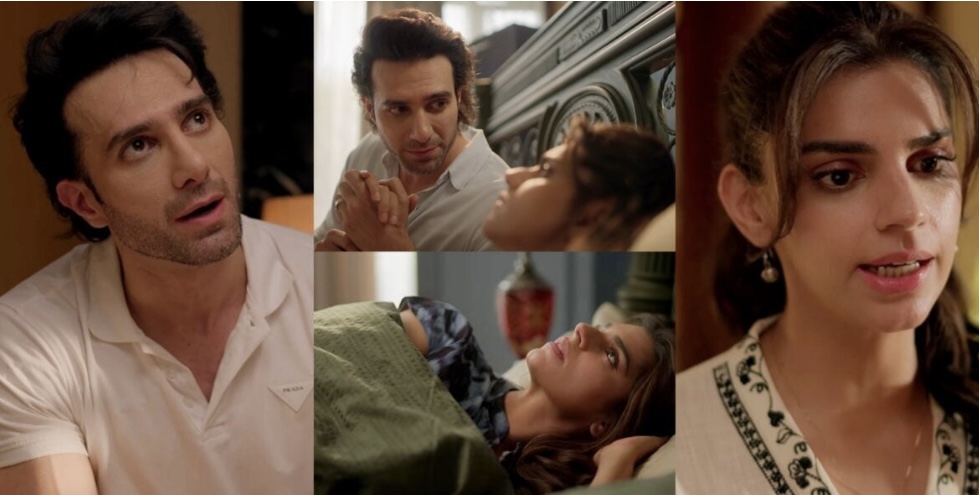
    Sanam Saeed and Emmad Irfani are set to reunite on television with their upcoming drama Gulbahar, and the newly released teaser has already created excitement among Pakistani drama fans. The teaser comes shortly after the actors earned widespread appreciation for their pairing in Kafeel. Their reunion in Gulbahar has therefore become one of the most anticipated developments for viewers who enjoyed their previous on-screen chemistry. (Reviewit.pk⁠) Directed by acclaimed filmmaker Mehreen Jabbar and written by Aliya Bukhari, Gulbahar appears to explore marriage, emotional distance and the longing for parenthood. The teaser presents Sanam Saeed and Emmad Irfani as a married couple whose relationship is being tested by an unfulfilled dream of having a child. (FUCHSIA⁠) Rather than relying on dramatic confrontations, the teaser uses quiet and emotionally restrained moments to establish its mood. Glimpses of an empty crib, a child and the couple’s emotional struggles suggest that motherhood and parenthood will play an important role in the story. Sanam Saeed appears to portray a woman deeply affected by her desire to become a mother. Her expressions in the teaser hint at loneliness and emotional exhaustion, while Emmad Irfani’s character appears to be dealing with the same situation from a different perspective. The teaser leaves several questions unanswered. Will the couple choose adoption? Will their inability to have a child create distance between them? Or will outside expectations put further pressure on their marriage? According to early reports, the drama revolves around a childless couple who face the difficult decision of whether to adopt. This gives Gulbahar an opportunity to explore a subject that is rarely handled with enough sensitivity on Pakistani television. (Reviewit.pk⁠) The reunion of Saeed and Irfani is another major attraction. Their previous project Kafeel gave audiences a complicated marital relationship, and viewers are now curious to see them take on a completely different dynamic. Social media reactions to the Gulbahar teaser have already shown strong interest in seeing the pair together again. (Reviewit.pk⁠) Mehreen Jabbar’s involvement has also raised expectations. Known for her distinctive visual storytelling, the director appears to be taking a more intimate approach with Gulbahar. The teaser’s quiet atmosphere and focus on emotion suggest that the drama may depend more on character development than sensational twists. At the same time, some viewers are already wondering whether the story will take a conventional route involving pressure for another marriage or family expectations. These possibilities remain speculation until the drama reveals more about its characters and storyline. For now, Gulbahar promises an emotionally driven story about marriage, love, longing and the meaning of family. With Sanam Saeed and Emmad Irfani leading the cast and Mehreen Jabbar behind the camera, the drama has already given audiences plenty of reasons to be curious.

  • | |

    Apple briefly crosses $5 trillion market value

    Apple has become the second company in history to reach a market valuation of $5 trillion. The technology giant briefly crossed the landmark during trading on Tuesday. Its shares rose as much as 1.8% to a record intraday price of $342.89. The rise pushed Apple’s market capitalisation above the $5 trillion mark. The stock later gave up some of its gains, but the milestone marked another major achievement for the iPhone maker. The surge also helped Apple reclaim its position as the world’s most valuable publicly traded company. It moved ahead of chipmaker Nvidia in market value. The latest rally reflects continued investor confidence in Apple. The company has taken a different approach to the growing artificial intelligence race. Apple has focused on partnerships and external infrastructure instead of making huge investments in its own data centres. This strategy has helped the company control capital spending while expanding its AI capabilities. Several major technology companies have committed billions of dollars to AI infrastructure. Apple has sought to avoid some of those heavy costs. The company has instead worked with external partners to support its AI-related services. Its collaboration with Google is among the initiatives aimed at strengthening features such as the upgraded Siri assistant. Apple’s approach has helped reduce pressure on its cash flow. It has also reassured investors as the company works to expand its presence in artificial intelligence. The $5 trillion milestone comes as Apple continues to focus on its hardware and services businesses. The company is also looking for new ways to encourage customers to upgrade their devices. As part of that effort, Apple has introduced a new device-leasing programme in the United States in partnership with Klarna. Under the programme, customers can lease iPhones for payments starting at $17.99 per month. The initiative is designed to make new devices more affordable and encourage consumers to upgrade their existing phones. Apple’s latest market milestone highlights the scale of investor expectations surrounding the company. It also shows the continued strength of its brand and business model in an increasingly competitive technology sector.

  • U.S. Hopes for Thai-Cambodian Ceasefire by Early Next Week, Says Rubio

    BANGKOK — U.S. Secretary of State Marco Rubio expressed cautious optimism on Friday that a ceasefire between Thailand and Cambodia could be restored by Monday or Tuesday of next week. Speaking to journalists in Washington, Rubio stated the administration is working to bring both nations back into compliance with a truce originally brokered by President […]

  • | |

    Hesson says National Champions Cup will sharpen Pakistan’s World Cup 2027 preparations

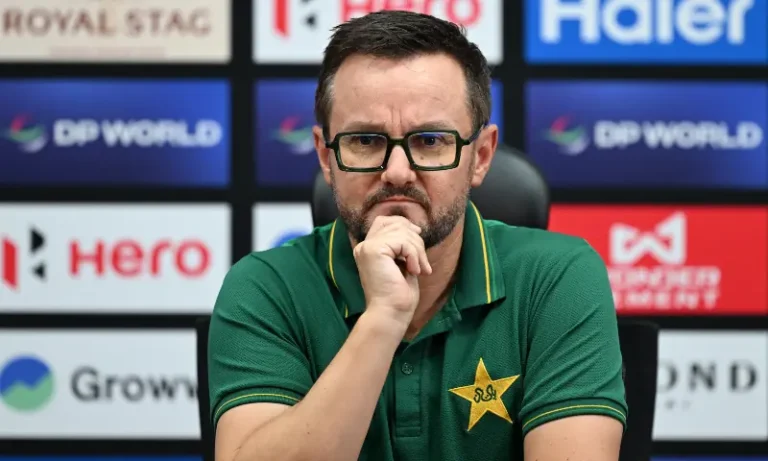
    Pakistan white ball head coach Mike Hesson said the upcoming National Champions Cup will play an important role in preparing the squad for the ICC World Cup 2027, expressing confidence in the tournament ahead of its start next month. The competition begins on August 18 at Multan Cricket Stadium, with all seven matches scheduled as day night fixtures. The 50 over List A tournament will feature four sides, Pakistan Greens, Pakistan Whites, Pakistan Blues and Pakistan Gold, and will officially open the 2026-27 domestic cricket season. Teams will compete in a single league round robin format, with the top two sides advancing to the final. Speaking to reporters, Hesson explained why the domestic season is starting with a 50 over List A event rather than another format. He said the four team tournament was specifically organized as part of Pakistan’s build up toward the World Cup. Hesson said he expects every player involved to get a genuine chance to show what they can do in what he called a highly competitive event. He said fans can expect quality cricket throughout, with each player given an opportunity to perform on a meaningful stage. The coach added that the team management is focused on maximizing the number of List A matches available to players ahead of Pakistan’s upcoming assignments, saying the coaching staff is planning the schedule specifically to create as many playing opportunities as possible. Looking further ahead to the World Cup itself, Hesson pointed to Pakistan’s historical strength in major ICC events, saying he hopes the team can deliver another strong campaign when the tournament arrives in 2027. He said selectors have put together well balanced squads across all four domestic sides and voiced confidence that the tournament would help several standout performers emerge ahead of the World Cup selection process.

  • |

    US President Donald Trump backtracks on promise allowing Ukraine to produce Patriot missiles

    US President Donald Trump has walked back his previous offer to grant Ukraine a license to domestically produce Patriot interceptor missiles, stating during a Cabinet meeting at Camp David that the United States has “not agreed” to share the technology. Trump expressed caution over transferring sensitive defense hardware, warning that “they can someday turn on you” and emphasising the need to safeguard advanced military systems. The reversal comes just three weeks after Trump publicly promised Ukrainian President Volodymyr Zelensky at a NATO summit in Ankara that Washington would grant Kyiv the manufacturing rights to build the air defense interceptors. Although Zelensky recently stated after a White House visit that the production licensing had been approved, Trump clarified that no final commitment has been made. The decision arrives as Kyiv faces intensified Russian drone and ballistic missile strikes, with Ukrainian military officials warning that critical shortages of Patriot interceptors are severely compromising their air defense capabilities.

Leave a Reply

Your email address will not be published. Required fields are marked *