four bodies recovered
| |

Four bodies recovered after Broad Peak avalanche

The bodies of four climbers have been recovered after a deadly avalanche struck Broad Peak, the world’s 12th-highest mountain, located in Pakistan. Rescue teams are continuing an extensive search for the remaining missing climbers in difficult weather and terrain.

The avalanche hit the mountain during the climbing season, leaving around 10 mountaineers missing. The victims include climbers from Nepal, Pakistan, China and the United States, highlighting the international nature of the expedition.

Search and rescue teams remain on the mountain despite harsh conditions. The operation is being carried out in a challenging high-altitude environment, where steep slopes, freezing temperatures and unstable snow have made rescue efforts extremely difficult.

Tourism Minister Nikk Nam Karim said every possible effort is being made to locate the missing climbers. He said rescue teams are working continuously to search the affected area and provide assistance to those involved in the incident.

The minister added that the Tourism Department is supporting the rescue mission by providing logistical assistance. Authorities are coordinating with rescue teams and other relevant agencies to ensure the search operation continues without interruption.

Broad Peak, which rises to more than 8,000 metres in the Karakoram mountain range, is one of Pakistan’s most challenging peaks and attracts climbers from around the world every year. However, the mountain is also known for its unpredictable weather and avalanche risks, particularly during the peak climbing season.

Officials have not yet released the identities of the recovered climbers.

Similar Posts

  • |

    Indian student protest to continue after clashes in Delhi leave nearly 180 injured

    A youth led protest movement in India has vowed to continue demonstrations demanding the resignation of Education Minister Dharmendra Pradhan after violent clashes with police in New Delhi left nearly 180 people injured. The movement, known as the Cockroach Janta Party, cancelled plans for another march to parliament but said protests would continue at the Jantar Mantar demonstration site. Organisers said they wanted to avoid further injuries after Monday’s confrontation with security forces. The campaign began as an online satirical movement but has rapidly grown into one of the biggest public challenges facing Prime Minister Narendra Modi during his third term in office. It has attracted widespread support from young people angered by repeated examination paper leaks and allegations of corruption in India’s education system. Thousands of protesters from Delhi and nearby regions gathered outside parliament on Monday to demand accountability over a national medical entrance examination leak that affected more than two million students earlier this year. The exam had to be conducted again after question papers were leaked, while reports of several student suicides linked to the controversy intensified public outrage. Police used batons and tear gas to disperse demonstrators after violence broke out during the march. According to Delhi Police, more than 118 police and security personnel, along with around 60 protesters, were injured during the clashes. Most of those hurt received medical treatment and were later discharged from hospital. Authorities also detained around 70 protesters and said legal action would be taken against them. Police accused demonstrators of ignoring restrictions on public gatherings and behaving aggressively despite repeated warnings. On Tuesday, around 500 protesters gathered peacefully at Jantar Mantar despite light rain and heavy security across central Delhi. Paramilitary forces remained deployed while barricades were placed on several roads to prevent further unrest. CJP founder Abhijeet Dipke apologised to supporters for the violence they faced during Monday’s protest. He expressed particular concern over female demonstrators who he claimed were assaulted by male police officers during the clashes. Dipke announced that while the movement would continue its campaign, organisers would not attempt another march towards parliament because they feared more young people could be injured. The protest movement gained significant momentum after social activist Sonam Wangchuk joined the campaign with a hunger strike in late June. Wangchuk was later moved to hospital by authorities, a move that further fuelled criticism of the government among supporters. The group’s demands include the resignation of the education minister, the release of Wangchuk and financial compensation for the families of students who reportedly died by suicide following the examination leak. Government officials have indicated they are open to discussions. Health Minister JP Nadda recently met representatives of the movement and requested time to consider their demands. Parliamentary Affairs Minister Kiren Rijiju also called for calm and said ongoing talks should not be disrupted. Opposition parties criticised the government’s handling of the protests and accused authorities of using excessive force against peaceful demonstrators. Leaders of the ruling Bharatiya Janata Party rejected those claims and argued that the violence appeared to have been deliberately provoked. Political analysts believe that even if negotiations reduce immediate tensions, the wider frustration among India’s younger generation is unlikely to disappear. Concerns over unemployment, repeated examination scandals and growing distrust in public institutions continue to drive dissatisfaction, making youth unrest an increasingly important political issue for the government.

  • |

    Norway demands Infantino resign as FIFA pressure mounts

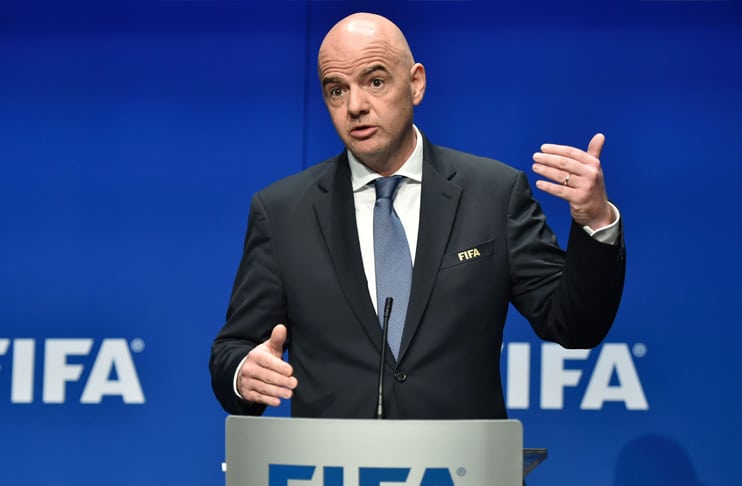
    OSLO: Norway’s Football Federation has announced that it will call for FIFA President Gianni Infantino to resign, intensifying pressure on the football governing body’s leader ahead of next year’s presidential election. Norwegian federation president Lise Klaveness said Infantino no longer has the institutional trust needed to lead FIFA, arguing that the organisation requires stronger and more credible leadership in the current climate. “He does not have the institutional trust required to lead FIFA in a stable manner,” Klaveness told reporters on Friday. “We are going to ask the FIFA president to resign now.” Infantino, who has led FIFA since 2016, is seeking a fourth and final term. He is currently the only declared candidate and would need a majority of votes from FIFA’s 211 member associations to secure re-election. Candidates have until November 18 to enter the race. Norway has been among Infantino’s most vocal critics, particularly over the governance of FIFA and decisions made under his leadership. Klaveness said the federation believed there was “no turning back” for the FIFA chief. The latest dispute follows the collapse of Infantino’s reported plan to allow private investors to participate in FIFA competitions, including the World Cup. The proposal drew criticism and added to concerns over the organisation’s direction. Norway’s federation has also decided to refer three matters to FIFA’s ethics committee. These include the abandoned private-investment plan, the lifting of US footballer Folarin Balogun’s suspension during the 2026 World Cup following an intervention by US President Donald Trump, and FIFA’s decision to award a so-called “Peace Prize” to Trump. The Norwegian federation is also seeking a comprehensive review of reforms previously promised by Infantino. Former FIFA president Sepp Blatter has suggested Klaveness could eventually challenge Infantino for the presidency, potentially making her the first woman to lead FIFA. However, Klaveness has rejected speculation about her own candidacy, saying the focus should remain on football governance rather than individuals. The challenge from Norway comes as Infantino prepares for a closely watched election campaign, with growing questions over his leadership and FIFA’s future direction.

  • | |

    Bus crash on Hungarian highway kills twelve Polish…

    Twelve people died and dozens more sustained injuries after a bus carrying Polish pilgrims veered off a motorway in Hungary and crashed into a ditch early Sunday. Police said the bus overturned after leaving the M3 motorway, which links the Hungarian capital Budapest with the northeastern city of Nyíregyháza, at around 1:00 a.m. local time, or 2300 GMT Saturday. Investigators believe the driver fell asleep at the wheel, and he has since been taken into custody. State media reported that firefighters have rescued 35 of the 57 passengers and two drivers who were aboard the bus. According to the Hungarian news agency MTI, emergency crews initially worked to lift the rear axle of the 24 tonne vehicle to free people trapped underneath before cranes arrived on scene to lift the entire bus. Hungary’s ambulance service said it treated one person with life threatening injuries, nine others with serious injuries and 37 more with minor injuries following the crash. Hungarian Prime Minister Péter Magyar offered his condolences to the victims’ families and wished the injured a swift recovery. Polish Prime Minister Donald Tusk echoed those sentiments and said he had ordered a special Polish aircraft carrying foreign ministry officials and medical personnel to travel to the scene, saying Poland stands together with those affected during the difficult moment. The bus had been returning from Bosnia and Herzegovina and was carrying pilgrims from Poland’s southernmost region of Podkarpacie, according to the Polish news agency PAP. Poland’s Foreign Minister Radosław Sikorski said his Hungarian counterpart informed him that police had already begun questioning the driver as part of the investigation into the crash.

  • | |

    Alia Bhatt leads female celebrities in India’s brand rankings

    Actor Alia Bhatt has emerged as India’s highest-ranked female celebrity in the Kroll Celebrity Brand Valuation Report 2025, securing sixth place overall with a brand value of $93.9 million. While Shah Rukh Khan retained his position as India’s most valuable celebrity brand, Alia topped the list among female stars, reflecting her strong commercial appeal and endorsement value. According to the report, Deepika Padukone ranked seventh with a brand value of $89.2 million, while Alia’s husband, Ranbir Kapoor, secured 10th place with a brand valuation of $80 million. Among the rising stars, Rashmika Mandanna claimed 12th position with a brand value of $75.2 million. Veteran actress Kareena Kapoor Khan ranked 15th with a brand value of $61.8 million, followed by Kiara Advani in 16th place at $51.9 million. The report also highlighted the growing commercial influence of younger actresses. Kriti Sanon secured 18th place with a brand value of $50.2 million, supported by the success of her skincare venture, while Ananya Panday ranked 19th with a valuation of $48.5 million, driven by her partnerships with several international brands

  • | | |

    Pakistan approves 1m tonnes wheat imports

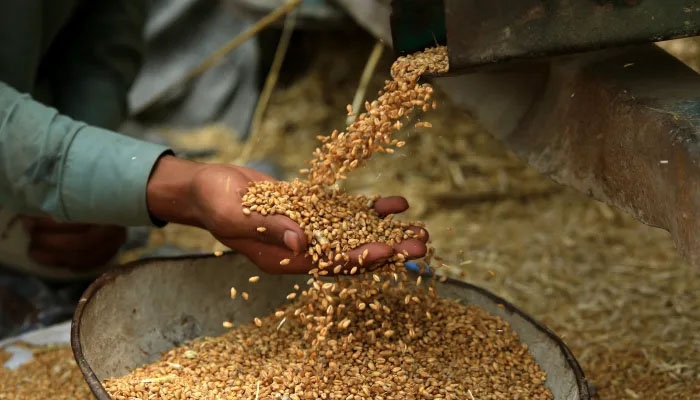
    Pakistan’s strategic wheat reserves have fallen to critically low levels, with the stocks held by the Pakistan Agricultural Storage and Services Corporation (PASSCO) reportedly almost exhausted. The shortage has emerged despite the International Monetary Fund (IMF) allowing the government to procure wheat. Federal and provincial authorities, however, were unable to secure sufficient quantities, resulting in a sharp decline in PASSCO’s strategic reserves. The situation has raised concerns about maintaining adequate wheat supplies and meeting future requirements. PASSCO plays an important role in maintaining strategic stocks that can be used to support food security during periods of shortage. In response to the declining reserves, the Economic Coordination Committee (ECC) has approved the import of one million tonnes of wheat. The government has also formed a steering committee to oversee the process and ensure that all necessary requirements are completed before the imported wheat is brought into the country. Officials said the import process will be subject to several conditions. These include pre-shipment inspection to verify the quality and quantity of wheat before it leaves the exporting country. Another major condition requires provincial governments to arrange and provide the funds needed to meet their respective wheat requirements. The latest decision comes as authorities seek to strengthen wheat availability and prevent a potential supply gap. The import plan is expected to help rebuild stocks after the depletion of PASSCO’s strategic reserves. The steering committee will monitor the required procedures and coordinate with the relevant federal and provincial authorities. Its role will include ensuring that the conditions attached to the wheat import decision are fulfilled. The development highlights the importance of timely wheat procurement and strategic stock management. Any delay in rebuilding reserves could create additional pressure on the country’s food supply system, particularly if domestic availability remains insufficient.

  • | |

    GCU Lahore goes fully paperless in major digital s…

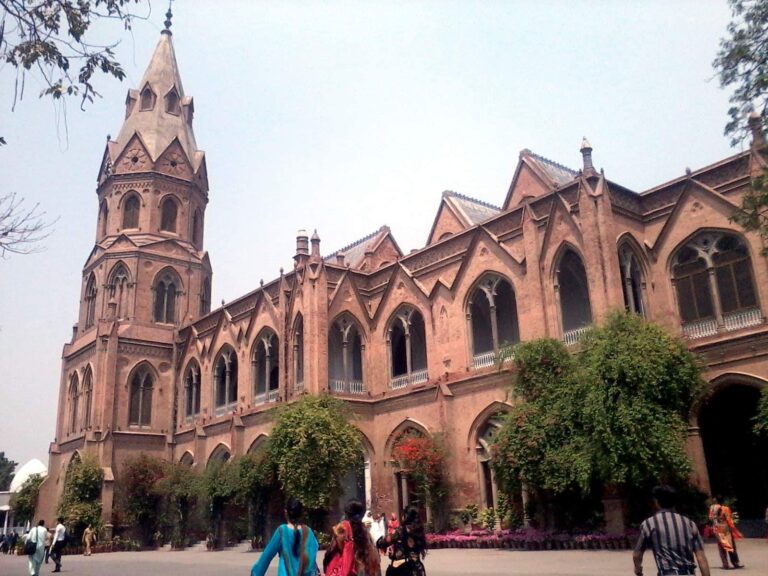
    LAHORE: Government College University (GCU) Lahore has officially moved its administrative operations to a fully paperless digital system, marking a major step towards modernising governance and reducing reliance on traditional office files. The transformation has been achieved through the implementation of the e-Filing and Office Automation System, a cloud-based digital platform developed by the Punjab Information Technology Board (PITB). The system has been provided to the university free of cost under special directions from the Punjab government, according to university officials. Under the new framework, administrative processes across GCU’s departments will now be handled online through a single digital platform. Routine matters such as leave applications, travel permissions, annual performance reports, official orders and departmental correspondence can now be processed electronically. The university said the system would also cover digital note sheets for proposals between departments, approval of payments for visiting faculty, purchase requests and agendas for departmental meetings. No more files moving from desk to desk One of the most significant changes will be the elimination of the traditional practice of physically moving files from one office to another. Instead, officials will be able to create, review, approve and track documents digitally through the cloud-based platform. This is expected to improve administrative efficiency while making it easier to monitor the progress of official matters. GCU Vice Chancellor Professor Muhammad Umar Chaudhry described the transition as more than an environmental initiative, saying digital governance was essential for a modern educational institution. He said moving administrative affairs away from paper would strengthen transparency, speed and accountability, while reducing delays associated with manual file tracking. According to the vice chancellor, removing routine administrative delays would allow faculty members and heads of departments to devote more time to teaching and research. Part of wider digital transformation The university said the paperless initiative is part of a broader digitalisation drive launched during the previous academic year under the vice chancellor’s leadership. Before implementing the complete e-office system, GCU had introduced online approval mechanisms for student society events and digital billing for payments to visiting faculty members. The administration is now preparing to take the process further with the planned launch of a comprehensive e-Services Portal. The upcoming platform is expected to streamline requests related to campus maintenance and other facilities. Officials hope the system will allow infrastructure-related problems to be reported and addressed more quickly without disrupting academic activities. Alumni records also going digital GCU’s digital reforms are not limited to current campus operations. The university is also working on a major project to digitise the records of its alumni, expanding technology-based management beyond day-to-day administration. The move towards a paperless campus could ultimately reduce paperwork, improve record management and provide university officials with faster access to important information. With administrative processes increasingly moving online, GCU Lahore is positioning itself as an example of how Pakistan’s public-sector universities can use digital technology to make governance faster, more transparent and more efficient.

Leave a Reply

Your email address will not be published. Required fields are marked *