haris khokhar denies
| |

Haris Khokhar denies Dr Nabiha Ali Khan’s allegations

Haris Khokhar has publicly broken his silence to firmly refute the allegations made by his estranged wife, social media personality and medical professional Dr. Nabiha Ali Khan, labeling her claims as entirely baseless and deeply damaging to his family’s reputation.
​The high-profile rift between the couple—whose viral wedding celebrations previously captivated Pakistani social media—escalated into a public controversy after Dr. Nabiha appeared on a live television show. During the broadcast, she broke down in tears while accusing Khokhar and his family of subjecting her to severe mental stress, alleging domestic interference from her mother-in-law and sister-in-law that ultimately led to their separation.
​Responding through an exclusive interview and subsequent online statements, Khokhar offered his side of the story, categorically denying any mistreatment or domestic misconduct. He expressed deep dismay over having his private domestic matters aired on national television, asserting that he never abandoned his wife as claimed. Instead, Khokhar maintained that Dr. Nabiha chose to leave their marital home voluntarily after failing to adapt to married life and the household dynamics.
​Defending his family against what he described as targeted character assassination, Khokhar pointed out that his sister is happily married with children and that his parents had consistently welcomed Dr. Nabiha into their home. He rejected accusations that his family caused friction in the marriage, emphasizing that the disputes stemmed from personal incompatibilities and unrealistic expectations rather than systematic abuse.
​”I will not engage in a toxic public blame game, but dragging my mother and family onto live broadcasts with false allegations is completely unacceptable. I never abandoned my wife; she chose to walk away. She needs to acknowledge the reality of our personal differences instead of maligning my parents on social media for content and sympathy.”

​Khokhar further revealed that he has initiated formal legal notices regarding the dissolution of their marriage, stating that reconciliation is no longer a viable option following the public defamation his family endured. Addressing the media circus surrounding their split, he urged content creators, digital news portals, and netizens to stop sensationalizing their personal tragedy for online views and engagement.
​As formal legal proceedings move forward, Khokhar reiterated his call for privacy, urging both sides to handle the final resolution through legal courts rather than continuing trials on digital platforms.

Similar Posts

  • |

    Atif Aslam reflects on decade-long India music ban

    Pakistani singer Atif Aslam has spoken about his decade-long absence from the Indian music industry, reflecting on the ban imposed on Pakistani artistes following the 2016 Uri attack. In an interview with Kris Fade on his YouTube channel, the 43-year-old singer discussed how the restrictions affected his professional relationship with India and his millions of fans there. Atif said it had been almost 10 years since he was banned from working in India, explaining that the decision was made by the Indian government. He also pointed out that Indian artistes have faced similar restrictions in Pakistan, describing the situation as something beyond the control of individual musicians. Atif revealed that he has not recorded a song for the Indian market during the past decade. Despite the ban, however, he said his music continues to reach Indian listeners through different means. According to the singer, some fans use VPNs to access his music, while others share his songs through CDs. Although he made it clear that he does not support piracy, Atif said music ultimately finds its way to audiences who want to listen to it. Addressing his Indian fans directly, the singer delivered an emotional message and assured them that he has not forgotten them. He said he does not necessarily miss working in India but genuinely misses the people who supported his music throughout the years. Atif also reflected on how the ban unexpectedly influenced his artistic journey. He explained that his experience with playback singing had taught him a great deal, but the absence of opportunities in India pushed him to focus more deeply on creating his own music. Rather than viewing the ban entirely negatively, Atif said the situation gave him an opportunity to explore himself creatively. He expressed gratitude to his supporters as well as those responsible for the restrictions, suggesting that the circumstances ultimately encouraged him to develop a different side of his musical identity. The restrictions on Pakistani artistes in India began in the aftermath of the September 2016 Uri attack. The Indian Motion Picture Producers’ Association subsequently called on its members to stop working with Pakistani artistes. Restrictions became even stronger following the 2019 Pulwama attack, when the All India Cine Workers Association announced a complete ban on Pakistani actors working in Indian cinema. Despite being unable to work in India for years, Atif has remained one of the most popular Pakistani singers among Indian audiences. His connection with Indian music lovers dates back to his breakthrough with “Aadat,” which featured in the 2005 Bollywood film Kalyug. He later became known for several successful Bollywood songs, including “Tera Hone Laga Hoon,” “Tere Sang Yaara” and other popular tracks that strengthened his position as one of the region’s most recognised playback singers. Atif’s latest comments highlight the lasting connection between his music and Indian listeners, even after years of political and industry-level restrictions.

  • | |

    Pentagon signs framework agreement with lockheed M…

      The United States Department of Defense (Pentagon) has entered into a framework agreement with leading American defense contractors Lockheed Martinand Northrop Grumman to expand the production capacity of critical components used in missile defense systems. The agreement is part of the U.S. government’s broader effort to strengthen its defense industrial base and ensure that the military maintains sufficient stocks of advanced missile interception systems amid rising global security challenges. According to Arab media reports, the Pentagon has not disclosed the financial value of the framework agreement. While details regarding the total cost and production timeline remain confidential, officials have indicated that the initiative is intended to significantly increase manufacturing capabilities for components used in missile interceptor systems. The agreement comes at a time when the United States is reassessing its defense production capacity in response to ongoing international conflicts and growing demand for advanced military equipment. Reports suggest that the prolonged wars involving Iran-related regional tensions and the conflict in Ukraine have placed considerable pressure on U.S. weapons and missile inventories. As a result, the Pentagon has been working to replenish depleted stockpiles while ensuring that American forces remain prepared for future security challenges. Missile defense systems play a crucial role in protecting military installations, strategic assets, and civilian populations from incoming missile threats. These systems rely on highly sophisticated interceptor missiles and advanced technologies capable of detecting, tracking, and destroying hostile missiles before they reach their intended targets. Increasing production of the key components used in these systems is expected to improve the United States’ ability to respond quickly to evolving security threats and maintain a reliable supply of defensive capabilities. Defense analysts have noted that expanding manufacturing capacity is becoming increasingly important as global geopolitical tensions continue to rise. The ongoing war in Ukraine has resulted in significant military assistance from the United States and its allies, including the transfer of advanced missile defense equipment and interceptor missiles. At the same time, heightened tensions in the Middle East have increased the demand for missile defense systems capable of countering a wide range of aerial threats. The latest framework agreement follows another major defense contract announced just last week. The U.S. Army awarded Lockheed Martin a contract worth up to $58.6 billion for the production of Patriot interceptor missiles, one of the world’s most widely used air and missile defense systems. The Patriot system is designed to intercept ballistic missiles, cruise missiles, and hostile aircraft, making it a critical component of the United States’ missile defense network as well as that of several allied nations. The new agreement with Lockheed Martin and Northrop Grumman is expected to complement that large Patriot missile contract by ensuring that manufacturers have the capacity to produce the essential components needed for future missile defense programs. By investing in increased production capabilities, the Pentagon aims to strengthen supply chains, reduce manufacturing bottlenecks, and accelerate the delivery of critical defense equipment. Although the Pentagon has not revealed the financial details of the framework agreement, the move underscores Washington’s continued commitment to enhancing national security and maintaining military readiness. As global conflicts and regional tensions persist, expanding defense production is expected to remain a top priority for the U.S. Department of Defense in the years ahead.

  • | |

    CM Maryam Nawaz directs crackdown on corrupt SHOs

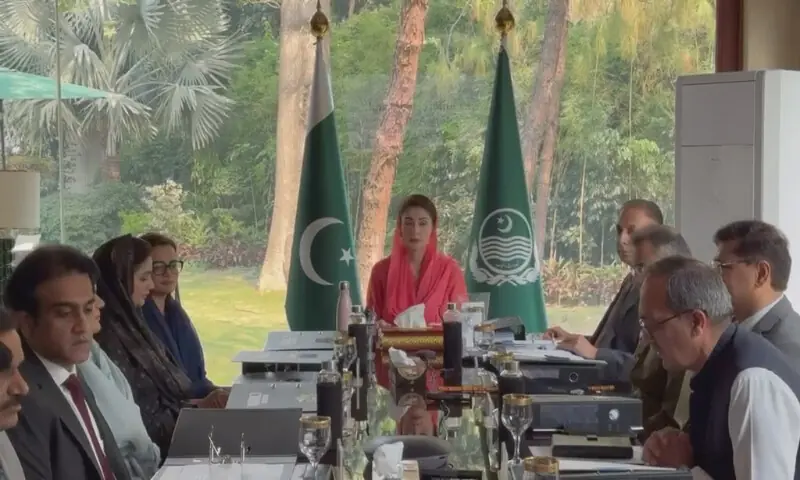
      Lahore: Punjab Chief Minister Maryam Nawaz Sharif has ordered the provincial police authorities to take strict action against officers with records of corruption and misconduct, directing that such officials should not be appointed as Station House Officers (SHOs).   According to sources familiar with the development and officials in the Chief Minister’s Office, Maryam Nawaz has instructed Inspector General of Police Punjab to thoroughly screen officers holding important field positions and remove those found to have questionable records. The IG Punjab has been given one week to complete the process and submit a progress report to the Chief Minister’s Office. The Chief Minister stressed that officers known for corruption should not be given charge of police stations anywhere in Punjab. She directed the police leadership to ensure that appointments to the SHO position are based on integrity, professional conduct and performance rather than influence or other considerations.   Under the new instructions, police officers facing credible allegations or having a record of corruption will not be considered for appointment as SHOs. The police hierarchy has also been directed to identify and remove what the government described as “bad elements” from key positions. Maryam Nawaz further ordered the police department to adopt a zero-tolerance approach toward crimes against women and children. She called for immediate action against suspects involved in such offences and emphasized that cases involving vulnerable groups should be handled promptly and professionally. The Chief Minister’s latest instructions are being viewed as another step toward her administration’s efforts to improve policing and strengthen public confidence in law-enforcement institutions. She has previously emphasized the need for a people-friendly police force that provides services to citizens without discrimination, corruption or unnecessary interference. The Punjab government has also introduced and promoted measures aimed at improving police accountability and public service delivery, including digital mechanisms for handling complaints, performance-oriented postings and action against officers involved in unlawful activities. The latest directive places particular emphasis on the role of SHOs, who serve as the primary point of contact between citizens and the police at the local level. Their conduct and performance can have a direct impact on how people perceive the overall law-and-order system. A senior official in the Home Department said the government’s objective was to restore public confidence by addressing problems within the police structure, particularly at the station level. The instructions have reportedly been conveyed to the IG Punjab and Regional Police Officers (RPOs) for immediate implementation. Police authorities are expected to review the records of officers posted to important positions and take action against those who fail to meet the required standards. Officials are also expected to submit reports detailing the progress made during the seven-day period. The government is closely monitoring the process to ensure that the directives are implemented rather than remaining limited to administrative instructions. The move comes as the Punjab government continues efforts to improve law and order, strengthen police accountability and enhance the delivery of public services across the province. The crackdown on corrupt officers is expected to further intensify scrutiny of police appointments and postings in the coming days.

  • | |

    CTD Karachi nabs most-wanted terror suspect, recov…

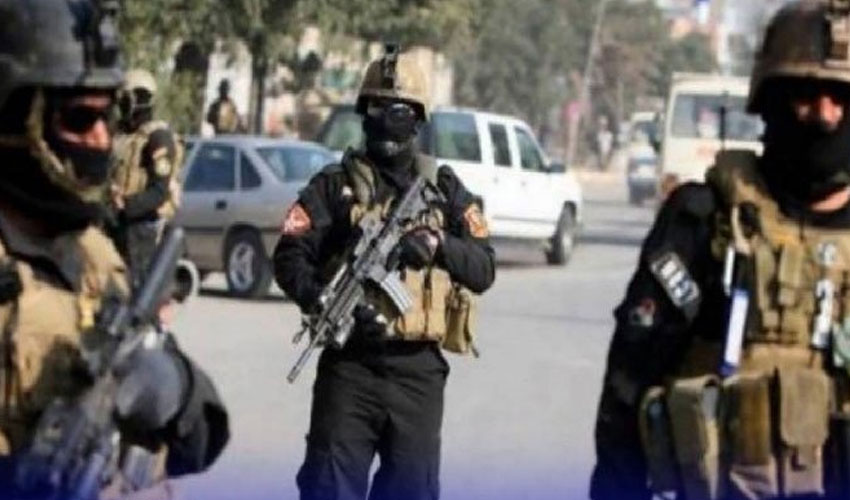
    KARACHI: The Counter Terrorism Department (CTD) Karachi has arrested a key suspected member of a militant network during an intelligence-based operation, officials said on Thursday. According to a CTD spokesperson, Syed Mehdi Nabvi Abidi, who was listed among the top 10 most-wanted suspects on the MQM-L death squad list, was taken into custody over alleged involvement in planning terrorist activities in Karachi and other parts of the country. Officials said the suspect was wanted in several terrorism-related cases registered in Karachi. During preliminary interrogation, he allegedly disclosed that following the arrest of two of his associates, he and other members of the network had planned attacks in Karachi and other cities. The CTD said the suspect had been nominated in multiple cases dating back to 2004 and 2005, including cases involving the killings of religious scholars and the alleged possession of explosives and other prohibited material. A hand grenade and a loudspeaker were reportedly recovered from his possession during the operation. Following the arrest, CTD Karachi registered two new cases against the suspect. One was registered under the Explosive Substances Act, 1908, read with Section 7 of the Anti-Terrorism Act, 1997, while the second was registered under the Anti-Terrorism Act. The department said further interrogation of the suspect is underway. Special teams have also been formed to trace and arrest other alleged facilitators and members of the network based on information obtained during the investigation. The CTD maintained that operations against the network would continue as investigators work to establish the full extent of the suspect’s alleged activities and connections.

  • |

    Nearly 100 children wrongly detained as adults under UK-France migration deal

    At least 94 children were mistakenly identified as adults and held in immigration detention under Home Secretary Shabana Mahmood’s “one in, one out” agreement with France, according to details disclosed in a letter from the Independent Monitoring Boards (IMB). Between August 2025 and May 2026, Home Office officials recorded 304 age-disputed cases arising from the scheme, officially named Operation Hillmore, with 31% ultimately confirmed to be minors. Standard UK policy strictly prohibits the detention of unaccompanied minors beyond 24 hours. The critical findings, sent to Home Office Minister Anna Turley by interim IMB chair Jane Leech, highlighted severe safeguarding and procedural failures. Age assessments at immigration removal centers took up to 40 days to resolve in certain instances, while some individuals faced deportation delays of up to 27 weeks, far exceeding the scheme’s 28-day target. Additionally, detainees were slated for removal despite requiring urgent hospital care or suffering from active tuberculosis. The Refugee Council condemned the findings, urging the government to rely on social-worker-led assessments rather than administrative border checks. In response, a Home Office spokesperson stated that age assessment procedures are being modernized, including plans to roll out AI tools next year to support determinations.

  • | |

    Lahore police intensify crackdown on usury, drugs …

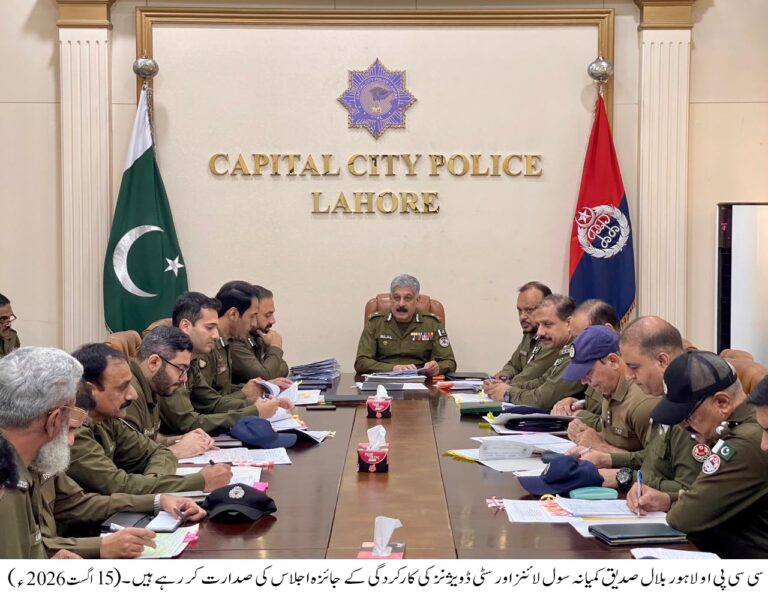
    LAHORE: Capital City Police Officer Lahore Bilal Siddique Kamyana has ordered intensified action against criminal activities while directing officers to improve law enforcement and public service delivery across the city. Chairing a meeting to review the performance of the Civil Lines and City divisions, the CCPO was briefed that 21 suspects allegedly involved in illegal moneylending had been arrested during an ongoing crackdown. He directed police to pursue legal action without leniency and ensure that victims receive protection and timely justice. Kamyana also ordered stronger operations against drug trafficking, calling for targeted action to dismantle narcotics networks and arrest those involved in the illegal trade. The CCPO directed officers to identify foreign nationals residing illegally in Lahore and proceed against them in accordance with the law. He also ordered enhanced surveillance of sensitive areas and monitoring of suspicious activities. He further called for continued combing operations and expanded intelligence-led action against elements posing threats to law and order. Stressing the importance of citizen-focused policing, Kamyana instructed officers to resolve public complaints promptly and prevent citizens from being repeatedly sent from one office to another. Senior police officials, including DIG Investigation Zeeshan Raza, DIG Operations Faisal Kamran and SSP Investigation Muhammad Naveed, attended the meeting.

Leave a Reply

Your email address will not be published. Required fields are marked *