harvey barnes signs
|

Harvey Barnes signs long-term contract extension a…

Harvey Barnes has committed his future to Newcastle United after signing a new “long-term” contract with the Premier League club on Monday, fending off interest from Aston Villa .

Barnes had two years remaining on his previous deal, but Newcastle convinced the England international to extend his stay at St James’ Park ahead of the new season . The 28-year-old winger had been linked with a move to Aston Villa, who are seeking new forwards after selling Morgan Rogers to Chelsea .

“It feels great to sign this new contract so early before the new season starts. It’s been an amazing journey so far and I’m delighted to continue that,” Barnes said . “When I first joined the club I quickly learned what a special place it is, but after three years here I know that even more. I love everything about it the city, the stadium, the people  and I’m really happy extending my time here.”

Barnes, who joined Newcastle from Leicester in 2023, enjoyed a fine campaign last season with 16 goals in 57 appearances across all competitions . He has now scored 30 goals in 120 career appearances for the Magpies .

The winger’s decision is a major boost for manager Eddie Howe, particularly after Anthony Gordon’s move to Barcelona and Sandro Tonali’s switch to Tottenham earlier in the close-season . Newcastle are also hoping to keep captain Bruno Guimaraes amid Arsenal’s interest in the Brazilian midfielder .

Howe saluted Barnes’s consistency over his three years on Tyneside . “Harvey’s new contract is very well deserved and a reflection of the work he’s put in and the quality he’s shown throughout his three years at Newcastle United,” Howe said . “Harvey is a player who has consistently produced special moments at vital times for the team. Harvey has vast experience at the highest level but we believe there is still more to come.”

The extension signals Newcastle’s determination to retain their core players as they prepare for another campaign competing on multiple fronts, including European football .

Similar Posts

  • |

    Pakistan defeat South Korea 3-1 in second hockey Test

    ISLAMABAD: Pakistan continued their impressive run in the four-match hockey Test series by defeating South Korea 3-1 in the second encounter, securing a commanding 2-0 lead in the series. The home side delivered another disciplined performance, building on the momentum from their opening victory to outclass the visitors with clinical finishing and solid defensive play. Pakistan’s star performer was Abubakar, who struck twice to put his team in control, while Abdul Rehman added the third goal to seal another convincing victory. South Korea managed to score once, but failed to recover as Pakistan maintained control throughout the contest. The victory follows Pakistan’s 3-1 triumph in the opening Test, giving the Green Shirts consecutive wins and putting them in a strong position ahead of the remaining two matches of the series. The ongoing series also marks a significant moment for Pakistan hockey, with international hockey returning to the country after nearly two decades. South Korea’s visit has been welcomed by fans and officials alike, who see it as a positive step toward reviving international hockey in Pakistan. Pakistan displayed greater composure in midfield, created more scoring opportunities and converted their chances effectively. The team’s attacking intent, coupled with an organized defensive structure, limited South Korea’s ability to mount a comeback despite their lone goal. The performances of Abubakar and Abdul Rehman have been particularly encouraging, highlighting the emergence of young talent capable of strengthening Pakistan’s hockey squad in future international competitions. With a 2-0 advantage, Pakistan will now look to complete the series in dominant fashion when the two teams meet in the remaining fixtures. Team management is expected to maintain the winning combination while continuing to build confidence and consistency ahead of upcoming international tournaments. The back-to-back victories have generated renewed optimism among hockey supporters, who hope the successful hosting of the Test series and Pakistan’s strong performances will contribute to the revival of the country’s proud hockey tradition and encourage more international teams to tour Pakistan in the future.

  • New Thai Law Mandates Cannabis Shops Convert to Full Clinics

    BANGKOK – Thailand’s cannabis regulatory landscape is undergoing a major transformation, with all licensed cannabis shops now required to convert into full-fledged medical clinics under a new government decree. The move aims to restrict cannabis use strictly to medical purposes and imposes rigorous operational and staffing standards on existing businesses. Thailand to Review Cannabis Regulations […]

  • |

    Carlos Brathwaite applauds Babar Azam’s captaincy

    Former West Indies all-rounder Carlos Brathwaite has praised Pakistan captain Babar Azam for his outstanding leadership, describing his captaincy as a tactical masterclass during the ongoing Test against the Caribbean side. Speaking during his analysis of the match, Brathwaite highlighted Babar’s calm decision-making and ability to read the game under pressure. He said the Pakistan skipper showed excellent awareness by slowing the pace of play at key moments and making smart field changes that unsettled the West Indies batters. According to Brathwaite, one of Babar’s best tactical moves was the field placement against experienced batter Roston Chase. The carefully designed field forced Chase to rethink his natural game and prevented him from scoring freely. “Babar’s field settings kept Roston Chase under constant pressure,” Brathwaite noted. “He had to keep adjusting his approach, and eventually that pressure led to a mistake.” The former all-rounder added that Babar’s leadership reflected a high standard of captaincy, saying every move appeared to be planned according to the match situation rather than following a fixed strategy. Brathwaite believes the Pakistan captain demonstrated maturity, patience and tactical intelligence, qualities that helped his team remain competitive during crucial stages of the contest. Meanwhile, the Test match remains finely balanced. West Indies reached 103-6 in their second innings and currently hold a lead of 60 runs, setting up an intriguing finish over the remaining sessions. Pakistan will now look to capitalize on any opportunity to wrap up the innings quickly, while the West Indies hope to extend their advantage with the lower order. Brathwaite’s glowing assessment has once again placed the spotlight on Babar Azam’s leadership, with many cricket fans praising the Pakistan captain for his strategic approach and composure in high-pressure situations.

  • | |

    Karachi lawyers halt court proceedings over allege…

    KARACHI: Lawyers in Karachi have announced a boycott of court proceedings and barred police personnel from entering the City Courts following an alleged assault on a former member of the Karachi Bar Association’s Managing Committee at Gulbahar Police Station. The Karachi Bar Association (KBA) lawyers shut the main entrances of the City Courts, preventing both police officials and members of the public from entering the court premises. The move came as lawyers protested what they described as the mistreatment of their colleague. The lawyers also stopped police personnel from entering the City Courts and called for a complete boycott of judicial proceedings. Their protest disrupted routine legal activities across the court complex. As a result of the strike, authorities did not bring prisoners from jails to the City Courts for scheduled hearings. The boycott also brought regular court operations to a standstill, leaving several cases and judicial proceedings suspended. The lawyers have taken the action in response to the alleged violence against their former Managing Committee member and are demanding action over the incident.

  • | |

    NAB chairman grilled over bureau’s performance

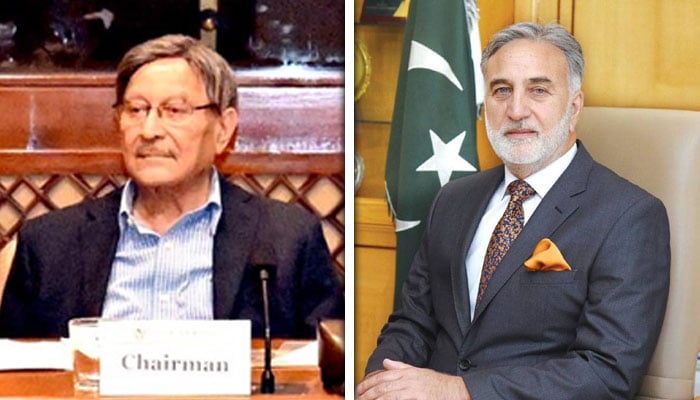
    A meeting of the Senate Standing Committee on Law and Justice was held under the chairmanship of Senator Farooq H Naek, where National Accountability Bureau (NAB) Chairman Nazir Ahmed Butt appeared before the committee on its instructions. During the meeting, Senator Farooq H Naek remarked that the NAB chairman had perhaps appeared before the committee for the first time. In response, Nazir Ahmed Butt said that it was his first appearance before the committee as NAB chairman. He added that he had appeared before the committee several times while performing his previous responsibilities. The NAB chairman said he had been assigned the responsibility in 2023. He recalled that ministers he met during his tenure repeatedly complained that the bureaucracy was afraid to make decisions and was therefore reluctant to work. During the meeting, NAB Director General Operations briefed the committee on the bureau’s powers and performance. The official said NAB had received 505,799 complaints since its establishment. He said NAB also operates as an investigative agency under the Anti-Money Laundering Act, 2010. According to the briefing, NAB has so far completed 12,147 inquiries, conducted 7,339 investigations and filed 4,105 references. The DG Operations further told the committee that NAB had been allocated Rs22.556 billion over the past three-and-a-half years. Despite the expenditure, the bureau reported significantly higher recoveries during the same period. The committee was informed that NAB had recovered Rs1.069 trillion over the past three-and-a-half years. The briefing highlighted the bureau’s role in investigating corruption, financial crimes and other cases falling under its legal mandate. The committee members discussed NAB’s powers, investigations, recoveries and its overall performance during the meeting. The NAB chairman and officials responded to questions from the committee and provided details about the bureau’s operations and financial performance.

  • | |

    Pakistan’s military tightens grip on Islamis…

    Munir’s family background feeds into this shift as well. He is the son of an imam and considers himself a devout, conservative Muslim, and religious identity remains deeply woven into Pakistan’s state institutions. Even so, he has pushed the country toward international engagement through cryptocurrency partnerships, foreign investment deals, a mediating role in the conflict between the United States and Iran, and a mutual defence pact with Saudi Arabia. Data shared with a foreign news agency by the Armed Conflict Location and Event Data Project, a group that tracks conflict incidents worldwide, shows the scale of the shift. Pakistan averaged more than seven blasphemy related riots or attacks annually between 2021 and 2024, but recorded only one such incident over the past twelve months. Economic pressure appears to have played a significant role in prompting the crackdown. Two Pakistani government sources said officials grew alarmed during the summer of 2025 that rising hostility from fundamentalist groups toward France and other European countries threatened to jeopardize a European Union duty waiver covering Pakistani exports. Nearly a third of Pakistan’s total exports go to the EU, and losing that preferential access could have dealt a severe blow to the national economy. Neither the European Commission nor Pakistan’s commerce ministry responded to requests for comment on the matter. Washington has added its own pressure over religious freedom concerns. The US Commission on International Religious Freedom, a government watchdog, recommended last year that Pakistan be placed back on a list of countries of particular concern due to its blasphemy laws, a designation Islamabad has firmly rejected. Analyst Abdul Basit of Singapore’s S. Rajaratnam School of International Studies said worsening insurgent violence in Balochistan and Khyber Pakhtunkhwa, Pakistan’s two most mineral rich provinces, likely added urgency to Munir’s campaign, particularly since he has pitched foreign investment in the country’s mining sector to American officials over the past year. Basit noted that religious groups have lost favor within the state’s priorities, though he cautioned that the militias driving these regional insurgencies are not formally tied to the newly banned Islamist organizations, even if both draw recruits from the same pool of young, radicalized men. Elizabeth Threlkeld, who directs the Stimson Center’s South Asia program, said the open question going forward is whether Pakistan can sustain this level of focus over time. Crackdown targets country’s largest fundamentalist movement The largest of the groups swept up in the crackdown, Tehreek e Labbaik Pakistan, built its identity around the slogan “Death to blasphemers” before authorities banned it late last year. Many of its leaders now sit in jail, its mosques have been sealed shut and its financial accounts frozen. A previously undisclosed government document that laid the groundwork for the ban argued the organization had become a serious threat to Pakistan by damaging both domestic stability and the country’s standing internationally. A spokesperson for the group pointed to a statement it issued last year describing the ban as illegal and unconstitutional. The move against Tehreek e Labbaik follows earlier crackdowns on groups such as Lashkar e Taiba and Jaish e Muhammad, which Pakistan pursued under pressure from the Financial Action Task Force, the international body that monitors terrorism financing. Basit linked the newest crackdown to a period of internal reflection within Pakistan over its historical backing of the Afghan Taliban, whom Islamabad now blames for stoking Islamist insurgencies against the Pakistani state from across the border. The Taliban government in Kabul has dismissed that accusation as baseless, and a spokesperson for its foreign ministry declined to comment further, describing Pakistan’s crackdown as an internal matter. For Pakistan’s Christian, Shia and Ahmadi communities, the change in atmosphere has been dramatic. In the past, suspects in blasphemy related killings, including police officers, were sometimes greeted with rose petals or celebratory receptions, and individuals accused of burning churches or minority mosques often received public praise. Blasphemy remains a capital offense under Pakistani law, and even a rumor of an accusation has historically been enough to spark riots or lynchings. Human rights organizations say victims’ families have rarely obtained justice, since judges and lawyers have often been too frightened to take on such cases. Officer Malik said everyone who confronted the crowd during last month’s incident in Karachi felt genuine fear. The Christian family targeted that day was eventually moved to safety, and an initial investigation has since found the accusations against them to be false. Group’s military links trace back a decade Tehreek e Labbaik formed in 2015 while its founder was imprisoned for shooting and killing a Pakistani provincial governor in 2011 over his support for a Christian woman accused of blasphemy. That gunman, a former police bodyguard, was later convicted and executed months after the group’s founding. Analysts have long suspected the group’s creation received at least tacit support from Pakistan’s military establishment, including its intelligence services, as a tool to keep civilian governments and mainstream political parties in check. Following violent riots led by the group in 2017, then army chief General Qamar Javed Bajwa referred to its protesters as the country’s own people. Pakistan’s Supreme Court later ordered the military and intelligence agencies to stay out of politics but stopped short of directly tying them to the organization. Analysts and former officials say the effects of years of tolerance for the group will not disappear simply because of a ban, and that the shock felt by its supporters could still trigger backlash. Ihsan Ghani, who served as Pakistan’s counter terrorism chief during the 2017 riots, said he worries the group could resurface at full strength if its usefulness to the state changes again. He compared decades of state backed nurturing of the movement to something that cannot simply be switched on and off at will. Within Pakistan’s minority communities, the sudden shift still feels fragile. One of the Christian women rescued during last month’s incident in Karachi said she and her family are now physically safe, but admitted the fear has not fully faded.


Leave a Reply

Your email address will not be published. Required fields are marked *