day one rush
| | | | |

On day one, rush for GCash IPO shares briefly trips up trading systems

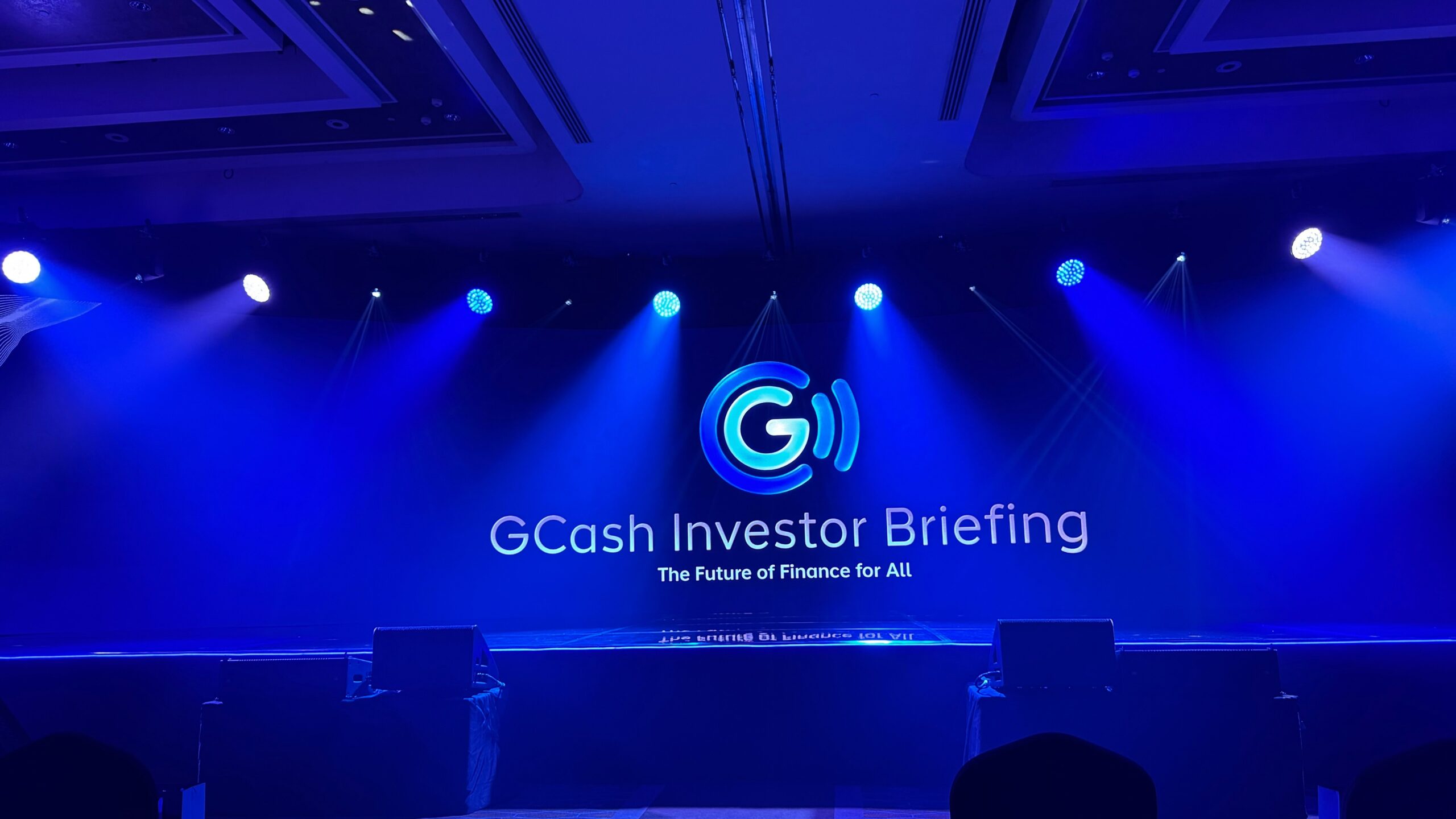
It was a polished courtship of the people being asked to hand over billions of pesos for a piece of GCash. Mynt’s top executives and a troop of underwriters took turns selling investors on the company’s growth story, while food and drinks flowed around the room.

Mynt president and CEO Martha Sazon took the stage, speaking before a packed room of investors, brokers, and bankers in Makati on Tuesday, October 6, just hours after the public offer for GCash’s parent company formally opened.

On day one, rush for GCash IPO shares briefly trips up trading systems

“We see a lot of buzz and a lot of activities,” Sazon said. “I heard some platforms went down because of the traffic. That’s a good problem for all of us, right?” 

inside track logo

And amid all the hype and marketing, there is some truth to the matter too. A screenshot seen by Rappler showed a user attempting to enter GStocks PH through the GCash app before being redirected toward InvestaTrade, the online trading platform offered by AB Capital Securities. 

The screen displayed an error saying there was a “problem communicating with GCash API at the moment.”

Sources close to the incident told Rappler that the disruption was brief and that the platform was back up again shortly afterward.

But if anything, all this goes to show that demand for the homegrown champion is, apparently, red-hot.

An analyst at a prominent local brokerage told Rappler Tuesday that its allocation was already oversubscribed, meaning client orders had exceeded the shares available through the brokerage. In such cases, investors may receive fewer shares than they requested, depending on the final allocation.

Even before the retail offer began, institutional investors had already piled in. Mynt said on October 2 that its institutional bookbuilding was multiple times oversubscribed, with demand going beyond commitments from more than 20 cornerstone investors.

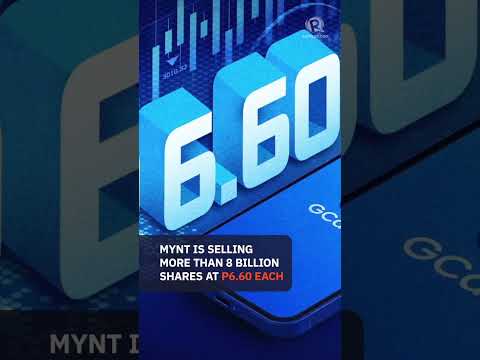
At P6.60 per share, Mynt is selling around 8.03 billion shares worth approximately P53 billion. That remains below Monde Nissin’s more than P55-billion IPO in 2021, but Mynt also has an overallotment option covering another 1.20 billion secondary shares. 

If fully exercised, the deal could raise as much as P60.9 billion and become the largest initial public offering (IPO) in Philippine history.

Must Read

PSE enters new territory with GCash’s IPO. But to thrive, it must go further.


PSE enters new territory with GCash’s IPO. But to thrive, it must go further.

About that P10 price

The audience, meanwhile, had plenty of questions for GCash. Among them was whether the current price was even the right price at all.

When the PSE approved Mynt’s listing application in September, the company initially proposed to sell shares at up to P10 each. The exchange made clear at the time that this was a maximum price and that the final offer price would only be determined after bookbuilding.

“It was an administrative ‘up to’ offer price that is required as part of the Philippines listing application, which is different from listing application processes in other countries,” Mynt chief financial officer Evelyn Ng

The eventual P6.60 price was 34% below that ceiling.

Ng pushed back against the idea that the company had started out expecting investors to pay P10.

“P10 was never the price that we expected to list Mynt,” Ng told the room. 

PANEL. GCash executives line up for a question and answer session with the crowd following the investor briefing on October 6, 2026. Photo by Lance Spencer Yu/Rappler.

“It was an administrative ‘up to’ offer price that is required as part of the Philippines listing application, which is different from listing application processes in other countries,” she added.

Mynt then went through investor meetings and bookbuilding, with input from the company, selling shareholders, prospective investors, and its banking advisers before arriving at P6.60.

That said, is P6.60 the right price? The offer is easier to justify than the original P10 ceiling. 

At P10, Mynt would have been valued at roughly P669 billion, or nearly 39 times its 2025 earnings. At P6.60, that falls to about P442 billion and around 25.6 times 2025 earnings, which is still a hefty premium for the local market. 

Investors also have to consider what they are buying into. GCash is already the dominant e-wallet, so any future gains will likely have to come from lending, investments, insurance, merchants, and overseas expansion rather than simply adding more wallet users. 

Around 80% of the base offer is also made up of secondary shares being sold by existing shareholders, rather than fresh capital going to Mynt. – Rappler.com
Must Read

For GCash’s early private equity backers, record IPO will be ultimate payday


For GCash’s early private equity backers, record IPO will be ultimate payday

Similar Posts

  • | | |

    Pakistan taps global banks for $2bn bond plan to s…

    ISLAMABAD: The federal government has taken a major step toward raising at least $2 billion from international capital markets during the 2026-27 fiscal year by appointing leading global financial institutions to manage its upcoming sovereign bond issuances. After completing a competitive selection process under the Requests for Proposals (RFPs), the government finalized three separate banking consortiums to advise and arrange conventional Eurobonds, International Sukuk, and Pakistani rupee-denominated, US dollar-settled bonds. The move is part of Pakistan’s broader strategy to diversify external financing sources and strengthen long-term access to global capital markets. For the Eurobond programme, the selected consortium comprises Standard Chartered Bank, Citibank, Deutsche Bank AG, Emirates NBD Capital, and MUFG Securities Asia Limited. The International Sukuk consortium includes Standard Chartered Bank, Dubai Islamic Bank PJSC, Citibank, Emirates NBD Capital, and Mashreq Bank PSC. Meanwhile, Standard Chartered Bank, Citibank, and Deutsche Bank AG will oversee the issuance of PKR-denominated bonds settled in US dollars. Finance Minister Senator Muhammad Aurangzeb formally launched the government’s partnership with the selected institutions during a virtual meeting held from Washington, D.C. The discussions focused on implementing Pakistan’s Global Medium-Term Note (GMTN) Programme and International Sukuk Programme, which are expected to support the country’s future borrowing plans. According to the Finance Ministry, the sovereign capital market programme will include both conventional and Islamic financing instruments. Once all regulatory requirements and documentation are completed, Pakistan plans to make regular international bond issuances whenever financing needs arise, rather than treating the initiative as a one-time exercise. Officials said the strategy is designed to establish a more stable, diversified, and sustainable external financing framework. The inclusion of MUFG Securities Asia Limited and Mashreq Bank in the banking consortiums is also expected to expand Pakistan’s engagement with a wider network of leading international financial institutions, enhancing investor confidence and broadening access to global markets.

  • |

    OGRA increases petrol, diesel prices again

    Islamabad – The Oil and Gas Regulatory Authority (OGRA) has announced another increase in petroleum prices marking the fourth consecutive day of fuel price hikes and issued new rates for petrol and high-speed diesel. According to an OGRA notification, the price of petrol has been increased by Rs. 4.40 per litre bringing the new price to Rs. 331.52 per litre. Similarly, the price of high-speed diesel (HSD) has been raised by Rs. 3.62 per litre taking the new price to Rs. 378.66 per litre. The notification states that the revised prices will come into effect from 12:00 a.m. on the night between July 23 and July 24 after which fuel stations across the country will charge customers according to the new rates. OGRA said the price adjustment was made after taking into account global crude oil prices, import costs and other relevant market factors. The continued increase in petroleum prices is expected to raise transportation costs which could in turn push up the prices of essential commodities. Members of the public and the business community have expressed concern over the repeated increases and urged the government to take effective measures to stabilize fuel prices. It is worth noting that this is the fourth consecutive day that OGRA has increased petroleum prices resulting in a significant rise in fuel costs over the past several days.

  • | | |

    Oil prices surges avove $91 as Iran war fuels Horm…

    Oil prices climbed on Tuesday, with Brent crude moving above $91 a barrel as stalled diplomacy over the Iran conflict raised fresh concerns about global energy supplies. Brent futures gained 27 cents, or 0.3%, to $91.14 a barrel, while US West Texas Intermediate rose 42 cents to $85.04. WTI had earlier reached $85.37, its highest level since July 31. Markets remained tense after Iran signalled a shift toward a more offensive military posture, while Washington ruled out extending a temporary ceasefire. Progress toward reopening the Strait of Hormuz to normal tanker traffic has also slowed, adding to fears of prolonged supply disruptions. Only a handful of commodity vessels crossed the strategic waterway over the weekend, sharply below normal traffic levels. Concerns were further heightened by attacks in the Red Sea, reinforcing fears over disruptions at both the Strait of Hormuz and Bab el-Mandeb. Despite the growing tensions, reports of possible back-channel contacts between the US and Iran offered a limited sign of hope for renewed diplomacy. Meanwhile, markets are also watching US crude inventories, which are expected to have declined last week. Earlier, Oil prices climbed on Monday as uncertainty over a possible diplomatic breakthrough between the United States and Iran increased, while a sharp slowdown in tanker movements through the Strait of Hormuz heightened concerns about disruptions to global crude supplies. Brent crude futures gained as much as 1% during early trading to reach $89.40 per barrel. The benchmark was later up 72 cents, or about 0.8%, at $89.20 a barrel by 0229 GMT. US West Texas Intermediate (WTI) crude also moved higher, rising 44 cents to $82.83 per barrel. Both international benchmarks posted gains of more than 5% last week after a series of attacks involving energy and shipping assets in and around the strategically important Strait of Hormuz. The incidents have intensified fears that further escalation could affect one of the world’s most important oil transit routes. Market sentiment was further affected by developments over the weekend, when Iranian Foreign Minister Abbas Araqchi said Tehran had yet to decide whether it would resume negotiations with Washington. US President Donald Trump, meanwhile, told Americans to prepare for somewhat higher gasoline prices as the conflict continues. Analysts said the renewed uncertainty had brought geopolitical risk back into crude markets after oil prices had previously come under pressure on expectations that diplomatic efforts could ease tensions. “Oil prices have now rebounded almost completely from the lows seen in early August, as hopes for a more permanent resolution between the US and Iran have faded and geopolitical risk premiums have returned to the market,” said Priyanka Sachdeva, head of market insights at Phillip Nova in Singapore. Sachdeva cautioned, however, that the rally could lose momentum unless there is evidence of a further deterioration in the situation. She said the market would need to see renewed aggression in the Strait of Hormuz, particularly significant damage to oil tankers or energy infrastructure, before prices were likely to move substantially higher. Hormuz shipping activity slows Concerns over physical supply disruptions increased after ship-tracking data showed a marked decline in vessel traffic through the Strait of Hormuz over the weekend. According to data from Kpler, only five commodity vessels crossed the strategic waterway on Saturday, while no such transits were recorded on Sunday. This compared with 31 commodity vessel crossings during the previous weekend. The slowdown is significant because the Strait of Hormuz is a critical route for international energy shipments. Any prolonged disruption could increase transportation risks, raise insurance costs and place additional upward pressure on crude prices. The United Arab Emirates also accused Iran of attacking another vessel operated by Abu Dhabi National Oil Company (ADNOC) while it was passing through the strait on Friday, according to the Emirati state news agency WAM. The UAE had earlier blamed Iran for two separate incidents involving ADNOC-operated vessels on Thursday evening. The latest incidents have added to concerns among traders that the conflict could increasingly affect commercial shipping and energy infrastructure, rather than remaining confined to military and diplomatic confrontation. The Strait of Hormuz remains particularly important to global oil markets because a substantial volume of crude and petroleum products moves through the waterway. Any sustained interruption could therefore have consequences well beyond the region. For now, traders are closely monitoring developments involving US-Iran diplomatic contacts, attacks on shipping and the movement of tankers through the strait. While the latest price gains reflect a higher geopolitical risk premium, analysts remain cautious about predicting a prolonged rally. If shipping activity resumes and diplomatic channels reopen, some of the premium built into crude prices could quickly unwind. Conversely, additional attacks on tankers, oil facilities or other critical infrastructure could trigger a stronger market reaction and push prices higher as traders reassess the security of regional supplies.

Leave a Reply

Your email address will not be published. Required fields are marked *