hong kong court
|

Hong Kong court convicts Tiananmen vigil group leaders of inciting subversion

HONG KONG – Hong Kong‘s High Court on Friday, August 21, convicted two pro-democracy activists of inciting subversion, highlighting their use of the phrase “end one-party dictatorship” in their political activities.

Lee Cheuk-yan, 69, and Chow Hang-tung, 41, were part of a group known for organising annual vigils marking Beijing’s 1989 Tiananmen Square crackdown on pro-democracy protesters. (TIMELINE: China’s Tiananmen Square demonstrations and crackdown)

Lee and Chow, the former chair and former vice-chair of a now-disbanded group, the Hong Kong Alliance in Support of Patriotic Democratic Movements of China, could be sentenced to as much as 10 years in jail under a China-imposed National Security Law (NSL).


Hong Kong court convicts Tiananmen vigil group leaders of inciting subversion

The judgment issued by three government-approved national security judges said it was the defendants’ repeated if peaceful use of the phrase “end one-party dictatorship” rather than other political actions or beliefs that had breached the law.

The defendants “intended to cause others to lose confidence in the CCP by stirring up hostility and causing division, so as to achieve the objective of undermining the fundamental basic system,” the judges stated in a 16-page ruling summary, referring to China’s ruling Communist Party.

“Even though they believed and envisaged that the acts of resistance may not necessarily involve the use of violence or threat of violence, those acts would be in breach of the NSL, and carry a risk of long-term imprisonment.”

Public commemorations of the 1989 Tiananmen Square protests used to be legal and tolerated in Hong Kong and were seen as a symbol of the Asian financial hub’s relative freedom compared to mainland China. They were effectively outlawed in 2020 with the enactment of the National Security Law.

Prosecutors had argued that the primacy of the Communist Party was enshrined in article 1 of the Chinese constitution. Defence submissions that the defendants genuinely believed they were acting within the law given Hong Kong’s freedoms of speech were rejected by the judges.

“They just refused to pull back from the brink and were bent on embracing the resistance line of the Alliance to the very end,” the judges said.

Some foreign envoys witnessed the events in court, including diplomats from the European Union and the United States.

The National Security Law significantly expands the powers of both the Chinese and Hong Kong governments within Hong Kong, following months of sometimes-violent pro-democracy protests that rocked the Asian financial hub in 2019.

Lee and Chow, who have been detained since 2021, had pleaded not guilty to the charge. Another former chairman of the group and also a former chairman of the city’s largest opposition Democratic Party, Albert Ho, 74, pleaded guilty to the same charge.

Mitigation hearings for Lee and Chow are due to start later this month. Chow, a barrister, was among the most prominent of Hong Kong’s younger generation of emerging pro-democracy activists. She began attending Tiananmen Square protest vigils when she was a primary school student.

Lee’s wife, Elizabeth Tang, said outside the court after the verdict that it was “most unjust”.

“Of course there’s no surprises but still I’m disappointed and I’m angry because I don’t think he has committed any unlawful (acts),” Tang said. – Rappler.com
Similar Posts

  • |

    PNS Taimur rescues 19 fishermen in Arabian Sea

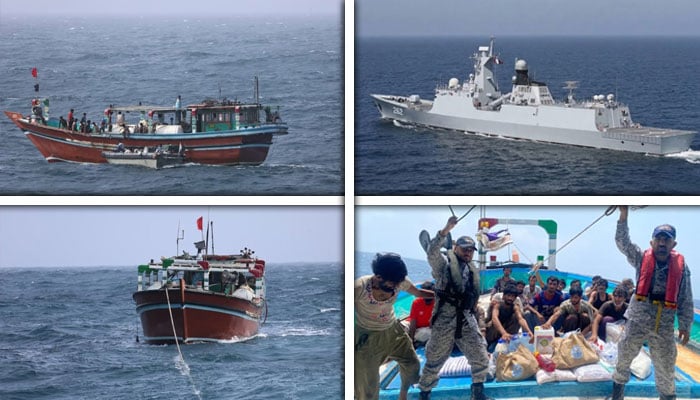
    The Pakistan Navy successfully rescued 19 fishermen stranded in the northern Arabian Sea after their fishing boat developed an engine failure, officials said. Pakistan Navy ship PNS Taimur carried out the rescue operation after the fishing vessel became stranded around 120 nautical miles south of Gwadar. The boat was carrying 19 people, including 11 Pakistani nationals and eight Iranian citizens. The Joint Maritime Information Coordination Centre (JMICC) contacted the Pakistan Navy and requested assistance after the vessel ran into trouble at sea. In response, PNS Taimur launched a search and rescue operation and reached the stranded fishermen. Pakistan Navy personnel provided the fishermen with essential supplies, including food and drinking water, while also offering medical assistance to those on board. The naval crew then helped move the fishing boat safely towards the coast, ensuring that all 19 individuals reached safety. The successful operation highlights the Pakistan Navy’s role in protecting lives at sea and responding swiftly to maritime emergencies in the region. The rescue also reflects the Navy’s commitment to fulfilling its humanitarian responsibilities and supporting fishermen facing difficulties in challenging conditions. President Asif Ali Zardari praised the Pakistan Navy for safely rescuing the stranded fishermen and commended the personnel involved in the operation. The president said the safe rescue of both Pakistani and Iranian nationals demonstrated the Pakistan Navy’s high level of professionalism and operational capability. He also described the mission as a clear example of the Navy’s commitment to protecting human lives at sea and fulfilling its national and international responsibilities. The rescue operation also underscored the importance of coordinated maritime response efforts, with the JMICC and Pakistan Navy working together to provide timely assistance to the distressed fishing crew.

  • | |

    UN raises alarm, 2 aid mission staff detained in A…

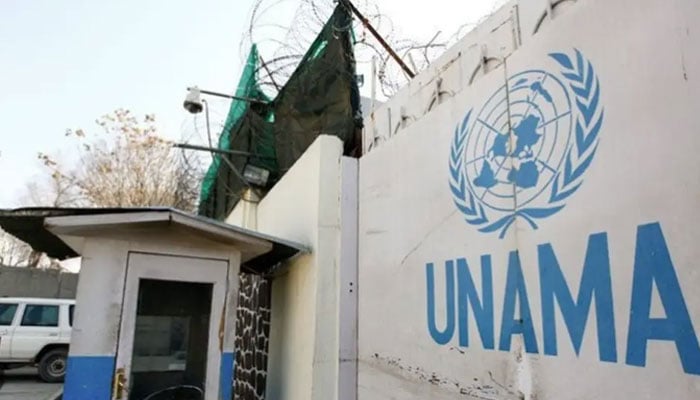
    NEW YORK: The United Nations has called for the immediate protection of its personnel in Afghanistan after two staff members of the UN aid mission were detained by the country’s intelligence authorities. The UN said the two personnel were taken into custody but have not been informed of the allegations or charges against them. The organisation also said it has so far been denied access to the detained staff members. UN Secretary-General Antonio Guterres expressed concern over the detentions and urged Afghan authorities to respect the special legal status of UN personnel. Guterres called on the Taliban authorities to fully uphold the privileges and immunities granted to the United Nations and its staff under international agreements. The UN has continued to provide humanitarian assistance in Afghanistan despite the country’s difficult security and political environment. The detention of its personnel has raised concerns about the ability of international organisations to operate safely and independently in the country. The circumstances surrounding the arrests and the identities of the detained personnel have not been disclosed publicly, while the United Nations continues to seek access to them.

  • |

    Iran’s revolutionary guard claims destruction of US military aircraft and casualties during “Operation Nasr II

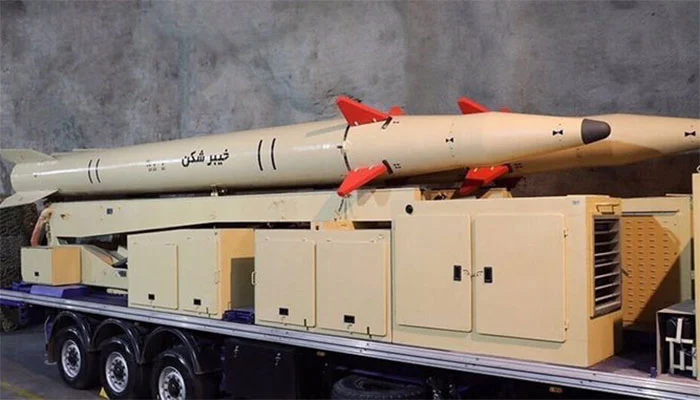
    Iran’s Islamic Revolutionary Guard Corps (IRGC) has claimed that it destroyed 11 fighter aircraft at US military bases and killed 200 American personnel within 15 days during what it described as “Operation Nasr II.” The claims were made by IRGC spokesperson Brigadier General Hossein Mohebi during an interview, in which he discussed Iran’s reported military operations against American targets. According to the IRGC spokesperson, the US defense system had become significantly weakened, allowing Iranian drones and missiles to reach their intended targets without facing major obstacles. He claimed that Iran’s military capabilities had successfully challenged American defense mechanisms and demonstrated the effectiveness of its missile and drone technology. Brigadier General Mohebi stated that Iran targeted eight military deployment centers during attacks on US positions. He further claimed that, at one location, 20 shelters were destroyed as part of the operations. However, the details and figures presented by the IRGC have not been independently verified. The IRGC spokesperson also issued warnings to Israel, stating that if it became involved in the conflict again, it should be prepared to face serious consequences. He said that any renewed Israeli participation in military operations would result in a strong response from Iran. In his remarks, Mohebi also addressed the United Kingdom, warning that a bomber aircraft had recently taken off from a British air base. He stated that if Britain cooperated with the United States in military actions against Iran, British interests could become legitimate targets from Iran’s perspective. The IRGC official called on the US government to allow journalists to visit the damaged military facilities in order to assess the actual scale of destruction and casualties. He argued that allowing independent media access would reveal the real impact of Iran’s reported attacks. The statements come amid heightened tensions between Iran, the United States, and their regional allies. Military confrontations and threats between these countries have repeatedly increased concerns about the possibility of wider conflict in the Middle East. Iran has frequently emphasized its missile and drone capabilities as a key part of its defense strategy. Iranian officials have often stated that their military strength enables them to respond to threats and protect national interests. Meanwhile, the United States and its allies have continued to monitor Iran’s military activities and have expressed concerns about regional security. The claims made by the IRGC spokesperson represent Iran’s official account of the reported military operation. At the same time, independent confirmation of the number of aircraft destroyed, casualties reported, and damage caused has not been provided. International observers have warned that continued military exchanges and aggressive statements from involved parties could increase instability in the region. Diplomatic efforts have repeatedly been encouraged as a way to reduce tensions and prevent further escalation. The situation remains closely watched by governments and security analysts around the world, as any direct confrontation involving major military powers could have significant regional and international consequences. Further developments are expected to determine the accuracy of the claims and the future direction of relations between Iran, the United States, and their allies.

  • | |

    China lodges complaint after New Zealand’s W…

    China’s embassy in New Zealand has filed a formal complaint after Deputy Prime Minister Winston Peters told a Green Party lawmaker of Chinese descent to return to his own country during a heated parliamentary exchange. The clash unfolded Wednesday when Green Party member Lawrence Xu-Nan, who was born in the Chinese city of Tianjin but raised in New Zealand, asked Peters during a debate over the country’s Covid pandemic response whether he was vaccinated. Peters, who leads the populist NZ First party, responded by telling Xu-Nan he had arrived in the country only recently and should return home, adding a remark suggesting dishonesty in China that does not apply in New Zealand. He went on to describe New Zealand as a democracy, in contrast to what he implied Xu-Nan was used to, and told him to go back to where he came from. The remarks prompted an unusual public response from Chinese Ambassador to New Zealand Wang Xiaolong, who said on social media that he generally avoids commenting on domestic politics but suggested the statement revealed more about the speaker than anyone else. China’s embassy in Wellington confirmed it had lodged a complaint with New Zealand’s foreign ministry over what it called negative China related remarks from a New Zealand politician. Peters has stood by his comments, saying New Zealand’s democratic system protects free speech and rights that other countries restrict, at times through force. He said on social media that those offended by his remarks were welcome to the reality of living in New Zealand. New Zealand Prime Minister Christopher Luxon, whose National Party governs in coalition with Peters’ NZ First, criticized the remarks as inappropriate attention seeking behavior. This is not the first time Peters and his party, who hold significant influence as coalition partners in New Zealand’s fragmented political landscape, have faced accusations of racially charged rhetoric. Earlier this year, Peters’ deputy Shane Jones drew criticism for describing a free trade agreement with India as risking what he called a butter chicken flood. Last year, Peters and Jones faced backlash after Jones shouted at another lawmaker to send Mexicans home during a parliamentary debate, a comment aimed at a legislator who was actually born in the Philippines. Peters later told that lawmaker and Xu-Nan that they should show gratitude for being allowed to live in New Zealand. The episode adds to a pattern of controversies surrounding minor coalition partners in small parliamentary democracies, where kingmaker parties often wield outsized influence despite representing a smaller share of the electorate, occasionally straining diplomatic relationships in the process.

  • |

    Progressive Abdul El-Sayed and moderate Haley Stevens lock horns in high-stakes Michigan Democratic Senate primary

    Voters across Michigan headed to the polls on Tuesday for a pivotal Democratic Senate primary that has emerged as a major battleground testing the ideological direction of the party. Former public health director Abdul El-Sayed faced four-term US Representative Haley Stevens in a fierce contest to secure the nomination to replace retiring Democratic Senator Gary Peters. The election night watch party for El-Sayed in Detroit saw left-wing commentator Hasan Piker launch a sharp critique against the Democratic political establishment while speaking to media representatives. Piker praised El-Sayed’s campaign as an “issues-first” movement, asserting that grassroots engagement carried greater weight than financial backing. Piker drew specific attention to external campaign funding, taking aim at the more than $30 million (£23.5 million) poured into the race by political action committees affiliated with the American Israel Public Affairs Committee (AIPAC) in support of Stevens. Describing the influx of negative advertising against El-Sayed as a “heinous smear campaign”, Piker expressed hope that mainstream Democrats would learn from El-Sayed’s approach. He also dismissed suggestions that the candidate or his high-profile backers would prove to be a general election liability, arguing that voters are disillusioned with personality-driven politics and seeking structural policy changes. Throughout the primary, the candidates presented starkly contrasting visions for the party’s future in the battleground state. El-Sayed, who gained endorsement from Senator Bernie Sanders, focused his platform on reducing corporate influence in politics, expanding healthcare access, and providing economic support to working families. Responding to characterisations regarding his political stance, El-Sayed clarified that he advocates for regulated capitalism rather than socialism. Conversely, Stevens leaned on her tenure in the US House of Representatives and her previous role in the Obama administration, positioning herself as a pragmatic candidate with the legislative track record needed to retain the seat. While earlier polling indicated El-Sayed held a slight edge, surveys suggested Stevens might hold broader appeal amongst moderate voters in the upcoming general election. The political friction surrounding the primary also drew public commentary from US President Donald Trump, who characterised the race as a contest between a “communist and a socialist.” The winning Democratic nominee will move on to face Republican candidate Mike Rogers in the November general election, a race anticipated to play a crucial role in determining party control of the US Senate.

  • |

    China missile test deepens pacific’s struggle fo…

    SUVA: A Chinese ballistic-missile test in the Pacific has exposed a growing dilemma for the region’s small island nations: how can they preserve their vision of an “Ocean of Peace” while increasingly finding themselves caught between the military ambitions of major powers? China’s July missile launch, its first known ballistic-missile test into the Pacific since September 2024, has intensified concerns about the region’s rapid militarisation. The test came just hours after Fiji signed a major defence agreement with Australia, its first-ever military alliance. The timing highlighted the competing security interests shaping the Pacific, where the United States and China are increasingly contesting influence. Yet despite widespread concern among Pacific leaders, the region failed to agree on a joint statement condemning the Chinese missile test during a meeting of foreign ministers in Suva last week. Papua New Guinea Foreign Minister Justin Tkatchenko described the launch as “totally inappropriate”, saying that while China remained a close friend and partner of Papua New Guinea, the missile test was not helpful. Beijing had informed Papua New Guinea about the launch beforehand, Tkatchenko said, but did not provide details about where the missile would land. China defended the exercise at the time. Foreign Ministry spokesperson Mao Ning said the test had been conducted safely and urged other countries not to “over-interpret” the event. Pacific caught between major powers The missile launch was the latest in a series of military developments that have transformed the Pacific into an increasingly contested strategic space. Chinese naval deployments and live-fire exercises, including drills in the Tasman Sea, have become more visible. At the same time, US allies have expanded military exercises around Guam and Hawaii, while Washington maintains major military facilities and forces across Hawaii, Guam and the Marshall Islands. For Pacific island governments, the growing military activity creates an uncomfortable contradiction. Many have repeatedly insisted that their region should not become another battleground for global power competition. In September 2025, Pacific leaders endorsed the Ocean of Peace Declaration, pledging to protect the region and strengthen international peace and security. The initiative was intended to put Pacific countries themselves at the centre of discussions about their security rather than allowing outside powers to define the region’s strategic priorities. David Peebles of the Australian National University’s Pacific Security College said Pacific nations had historically resisted security agendas imposed by larger countries. But the growing number of defence agreements is now testing that principle. Defence deals bring benefits — and fears For some Pacific governments, security partnerships offer practical advantages. They can provide surveillance against illegal fishing, disaster-response capabilities, policing assistance, military equipment and training. Australia’s new defence agreement with Fiji, known as the Ocean of Peace Alliance, reflects that approach. But critics fear that a growing network of bilateral security arrangements could gradually draw Pacific nations deeper into the strategic competition between China and the United States. Tuvalu’s permanent foreign secretary, Pasuna Tuaga, speaking in a personal capacity, expressed concern over increasing militarisation, including security arrangements such as the AUKUS partnership between Australia, Britain and the United States. The concern is not simply about military exercises or missiles. Pacific governments also worry that agreements could eventually influence how their territory, waters and critical infrastructure are used. Solomon Islands Foreign Minister Rick Houenipwela, who chaired the Suva talks, stressed that the region’s security agenda must remain “conceived by the Pacific, shaped by the Pacific”. Yet achieving that unity is becoming increasingly difficult. China divides Pacific consensus The failure to produce a common statement on China’s missile test revealed just how sharply interests differ among Pacific nations. Officials familiar with the discussions said Kiribati and Nauru did not support the wording of a proposed statement. Both countries have strengthened relations with Beijing after switching diplomatic recognition away from Taiwan. New Zealand Foreign Minister Winston Peters attributed the failure to reach consensus to foreign influence, although he did not identify any country. The disagreement reflects a broader challenge. Some Pacific governments, particularly those closer to longstanding US military facilities, favour stronger security ties with Washington and its allies. Others remain cautious about becoming involved in military competition between major powers and maintain close economic or diplomatic relations with Beijing. Fiji faces a difficult balancing act Fiji is now at the centre of this debate. The country signed its defence agreement with Australia and participated for the first time in the US-led RIMPAC military exercises last month. At the same time, Fiji has publicly supported the vision of a peaceful Pacific free from major-power confrontation. Foreign Minister Sakiasi Ditoka acknowledged the tension, saying Pacific nations wanted to be free from “all these war-making paraphernalia” while recognising that some security capabilities were necessary to protect them. For Pacific leaders, the challenge is increasingly about finding the right balance. The region does not want to choose sides in a rivalry between Washington and Beijing. But as military exercises expand, defence agreements multiply and missiles are tested in Pacific waters, remaining completely outside that rivalry is becoming harder. The issue is expected to return to the spotlight when Pacific leaders gather in Palau in three weeks for the Pacific Islands Forum summit. The missile test may have lasted only moments, but its political impact could linger far longer — forcing Pacific nations to confront whether their dream of an “Ocean of Peace” can survive amid an increasingly militarised region.

Leave a Reply

Your email address will not be published. Required fields are marked *