humble dandelion unlocks

How a humble dandelion unlocks the meaning of existence

In a world governed by productivity and comparison, it is easy to move through our days completely numb to the extraordinary fact that we exist at all. We go searching for the meaning of life as though it were a hidden treasure or an undiscovered law of physics waiting to be solved. Yet, as writer Maria Popova reflects in an essay on The Marginalian, human meaning does not exist as an immutable physical entity. The fundamental laws of nature that existed long before us and will persist long after we are gone. Meaning is an fragile, temporary interlude. It occurs strictly within the brief window of consciousness between the chaotic formation of our bodies and their eventual collapse back into unfeeling cosmic dust.

The fundamental secret to making sense of this brief interlude lies not in grand metaphysical theories, but in recovering a sense of radical, unearned wonder at the ordinary world around us. This was the central conviction of legendary English writer and philosopher G.K. Chesterton, who famously used the humble dandelion to diagnose the spiritual malady of the modern age. In his autobiography, Chesterton looked back on his early life and realized that his animating purpose as a thinker and writer was to battle the prevailing cultural cynicism and pessimism of his era. He observed that most people spend their adult lives trapped in a kind of waking sleep, viewing their everyday surroundings as mundane, dead, or thoroughly exhausted of fascination.

Chesterton asserted that the true purpose of both spiritual practice and artistic expression is to dig for this submerged sunrise of wonder. It’s to peel away the layers of routine until a person sitting quietly in a chair suddenly awakens to the realization that they are actually alive. Until a person finds joy in that alone.

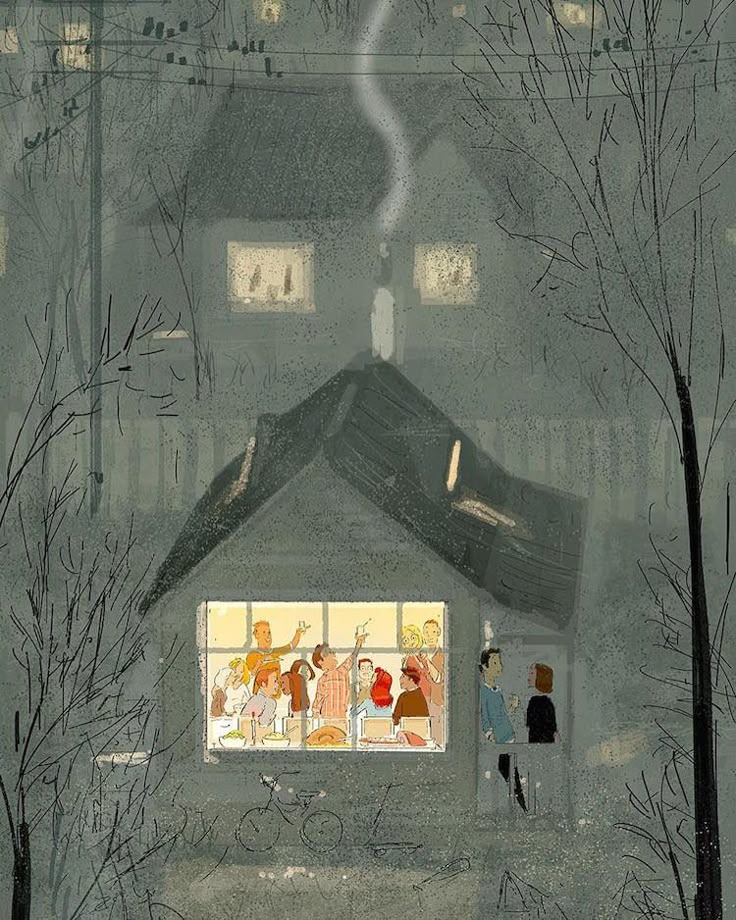
For Chesterton, looking at a common yellow weed pushing through the soil was enough to prompt profound gratitude. He recognized that he had done nothing to earn the miracle of seeing a dandelion, a sunflower, or the sun itself. The sheer improbability that consciousness exists means that everything we encounter is an unbidden gift rather than a right.

Why do so many of us lose this innate childhood astonishment.

Chesterton pointed out that the enemy of wonder is rarely mere familiarity; rather, it is the insidious habit of comparison. We undervalue what is in front of us by constantly judging it against something presumed to be superior, cheaper, or more sophisticated. Chesterton noted how people dismiss a simple dandelion by claiming one could purchase a better or cheaper version at a high-end department store, or by casually remarking that only elite connoisseurs in distant cities truly understand flowers. Others sneer at the simplicity of a dandelion because they feel entitled to an exotic orchid instead.

This constant, demanding comparison is built upon a profound delusion. The arrogant belief that human beings are owed the best that paradise has to offer, without any obligation to feel thankful or surprised by what they receive. When we treat life with this spirit of entitlement, we fall prey to what Chesterton called Presumption, whose twin sibling is Despair.  We destroy our own capacity to enjoy anything at all in demanding more while appreciating less. Ultimately, both Chesterton and Popova remind us that meaning is not something we passively find. Rather, it is something we actively attain through deliberate attention and precision of perspective.

The simple dandelion asks for nothing other than to be noticed. It’s when we stop treating existence as a series of transactions or demands. Only then we begin to realize that the aim of life is pure appreciation. We should stripping away the burden of false expectations and consumerist comparison. We must step into the light of simple awareness. We must wake up to the quiet miracle that we get to exist, observe, and feel in this very moment.


Similar Posts

  • | | |

    Rabindranath Tagore’s statue in Edinburgh

    The Sandeman House garden in Edinburgh holds a bronze statue of Asia’s first Nobel laureate in Literature, Rabindranath Tagore. Inscribed upon the pedestal supporting his likeness are his famous words, “I am a wayfarer on an endless road.” A Cross-Cultural Bridge Travelers often seek out Scotland’s capital for its ancient castles, gothic architecture, and literary heritage tied to the likes of Sir Walter Scott or Robert Louis Stevenson. However, discovering Tagore’s presence in this peaceful courtyard offers a cross-cultural bridge. The statue, unveiled to commemorate the deep-seated connections between Scotland and India. It is particularly the intellectual dialogue between Scottish polymath Patrick Geddes and Tagore himself. This monument serves as a physical testament to a global humanism that transcends geographic boundaries. Tagore’s India Tagore was far more than a celebrated poet and author. He was an uncompromising philosopher, musician, visual artist, and social reformer whose thoughts shaped modern South Asia and beyond. At the heart of his vast body of literature lies a profound critique of borders, nationalism, and sectarian division. Tagore envisioned an India, and indeed a world, defined by radical openness. In his mind, India is a sanctuary where diverse faiths, ethnicities, and cultures could coexist in mutual respect. He rejected narrow chauvinism in favor of an inclusive internationalism, advocating for a world where the mind is without fear and the head is held high. Tagore’s Literary Legacy In the contemporary geopolitical landscape, Tagore’s ideals feel relevant. Across the globe, modern youth face a climate marked by rising social polarization, cultural fracturing, and ideological echo chambers. In response, a growing movement of young activists, writers, thinkers, and students are turning back to Tagore’s literary legacy as a blueprint for unity. They are rediscovering his essays and poetry not merely as historical artifacts, but as active tools to reclaim a society rooted in pluralism and dialogue. By reimagining Tagore’s vision for a modern era, today’s generation is fighting to restore an environment where freedom of thought, artistic expression, and inclusivity thrive over division. His stance on education emphasized learning in harmony with nature and breaking down rigid academic and social silos. Young scholars and community organizers are channeling this exact ethos, utilizing art, literature, and grassroots civic engagement to rebuild cross-cultural bridges in an increasingly fragmented world. Message of Universal Brotherhood   Standing before Tagore’s statue in Edinburgh’s quiet garden, one is reminded that his journey as a “wayfarer” was never meant to be walked alone. His message of universal brotherhood, preserved in stone far from his native Bengal, serves as a timeless compass. For the youth striving to cultivate a more empathetic and open world, Tagore’s endless road remains wide open, inviting everyone to walk forward together.

  • | |

    The rise of Alfred, Lord Tennyson

    On August 6, 1809, one of the defining literary voices of the 19th century was born: Alfred, Lord Tennyson. Tennyson came to embody the doubts, solemnity, and romantic ideals of the Victorian era. He served as Britain’s Poet Laureate for more than four decades during the height of Queen Victoria’s reign. Early Brilliance and Sharp Criticism Tennyson’s journey to becoming a beloved national figure was anything but smooth. Raised in a large, tumultuous household by a clergyman father, young Alfred sought escape through verse. His talents surfaced early; while studying at Cambridge, he won the prestigious Chancellor’s Gold Medal in 1829 for his poem Timbuktu. Shortly thereafter, he published early collections containing works such as Mariana and Claribel. These early publications showcased his extraordinary musicality and eye for detail, yet contemporary critics were not entirely impressed. Severe reviews dismissed his work as overly melancholic, affected, and sentimental. The hostility of these early critiques shook Tennyson deeply, prompting a decade-long period of publishing silence. A phase scholars often refer to as his ten years’ silence. Crafting the Masterpieces Rather than abandoning his craft, Tennyson spent those quiet years refining his technique, studying philosophy, and confronting personal tragedy. The sudden death of his closest friend, Arthur Henry Hallam, plunged Tennyson into profound grief. This loss became the catalyst for his most famous masterpiece, In Memoriam A.H.H. Published in 1850, the massive elegy explored faith, mortality, and scientific progress, striking a deep chord with a Victorian public navigating rapid industrialization and societal change. The immense success of In Memoriam transformed his standing almost overnight. That same year, following the death of William Wordsworth, Queen Victoria appointed Tennyson as Poet Laureate. He went on to compose iconic works that defined the national consciousness, including The Charge of the Light Brigade, Ulysses, and his epic Arthurian cycle, Idylls of the King. A Lasting Literary Legacy While early critics painted him as a sentimentalist, history remembers Tennyson as a master craftsman of English rhythm and sound. Lines like; “To strive, to seek, to find, and not to yield” (Ulysses) have woven themselves permanently into the modern lexicon. His ability to blend intimate personal emotion with grand societal themes elevated him from a criticized young poet to an enduring pillar of world literature. Key Milestones in Tennyson’s Career 1809: Born in Somersby, Lincolnshire on August 6. 1829: Wins the Chancellor’s Gold Medal at Cambridge for Timbuktu. 1830: Publishes Poems, Chiefly Lyrical, introducing works like Mariana and Claribel. 1850: Publishes In Memoriam A.H.H. and is appointed Poet Laureate by Queen Victoria. 1854: Pens The Charge of the Light Brigade, capturing national sentiment during the Crimean War. 1892: Passes away at age 83, buried in Poets’ Corner at Westminster Abbey.

  • |

    Pashtun identity in modern South Asia

    The Pashtuns represent one of the most populous indigenous groups across South and Central Asia, predominantly in Afghanistan and Pakistan. Their social backbone relies on interconnected lineages, extended families, clans, and tribal alliances rather than a centralized political authority. From major confederations like the Durrani and Ghilzai to influential communities such as the Yusufzai, Afridi, Mohmand, Khattak, Wazir, and Mahsud, Pashtun society is a rich tapestry of overlapping regional, religious, and civic loyalties. At the core of their culture is Pashtunwali, an ancient honor code governing daily life through principles of hospitality, courage, asylum, and restorative justice. Historically, community issues and disputes were negotiated collectively through jirgas, or assemblies of local elders, maintaining order through consensus. Empire Builders and Cultural Crossroads Beyond tribal structure, Pashtuns have repeatedly reshaped the political landscape of the Indian subcontinent and Central Asia. Sultanate Dynasties: The Lodi dynasty established its rule over the Delhi Sultanate, paving the way for intricate South Asian governance structures. Administrative Reforms: Imperial leader Sher Shah Suri founded the Sur Empire in North India, pioneering sweeping reforms in taxation, infrastructure development, and currency. Empire Founding: In the 18th century, Mirwais Hotak challenged Safavid Persian dominance, while Ahmad Shah Durrani established the Durrani Empire in 1747, laying the groundwork for modern Afghanistan. This history is far more than military conquest. Pashtun territories served as vital crossroads where Persian, Turkic, Indian, and Islamic traditions converged. Consequently, their heritage spans beyond warrior traditions. It thrives in rich oral poetry, musical compositions, complex embroidery, craftsmanship, and trade networks. The Borderlands and Modern Challenges The 19th century brought prolonged conflict with British imperial forces along the northwestern frontier. A pivotal turning point arrived with the demarcation of the Durand Line in 1893. By drawing an artificial boundary between Afghanistan and British India (now Pakistan), the British divided ancestral Pashtun communities, establishing a geopolitically sensitive frontier that continues to spark debate and shape regional politics today.   In recent weeks, administrative re-alignments and border disputes in provinces like Balochistan and Khyber Pakhtunkhwa have reignited local debate. Prominent political and tribal leaders have voiced strong resistance to state restructuring, asserting that top-down administrative decisions risk erasing historical identities. Through renewed calls for broad political dialogue rather than bureaucratic divisions, modern Pashtun communities continue to rely on unified assemblies to safeguard their cultural heritage, self-determination, and historical voice in a changing region.

  • |

    Saif Ali Khan reveals his Sons are frightened by global wars and conflicts

      MUMBAI:Bollywood actor Saif Ali Khan has revealed that his two sons, Taimur Ali Khan and Jehangir, are frightened by the wars, conflicts and growing tensions around the world. The 56-year-old actor recently spoke about his family and expressed concern over the impact of the current global situation on his children. While discussing his sons with his wife, actress Kareena Kapoor Khan, Saif said that the children are aware of the conflicts taking place in different parts of the world and frequently ask questions about their safety and what the future may hold. Saif Ali Khan made the remarks during a visit to Uri in Jammu and Kashmir as part of a programme series. During his interaction, the actor spoke about the concerns of his children and explained how global conflicts have affected their sense of security. According to Saif, his children often ask him questions about the wars taking place in different parts of the world. Their questions, he said, reflect the fear and uncertainty they experience while watching or hearing about international conflicts. “My children ask about the various wars happening around the world,” Saif said, adding that they are also frightened by the current situation. The actor said that his sons want to know who is responsible for protecting them and whether they are safe. They also ask what could happen in the future and whether the situation around the world could become even worse. Saif recalled some of the questions his children ask, including, “Who is protecting us?” and “What will happen next?” He said they also worry about whether the circumstances could deteriorate further. The actor’s comments highlight how international conflicts can affect children even when they are physically far away from the areas where fighting is taking place. With news about wars and geopolitical tensions spreading rapidly through television, social media and the internet, children can become increasingly aware of events that may otherwise seem distant from their daily lives. Saif’s remarks have also drawn attention to the emotional impact of global instability on families. Parents are increasingly required to explain complex international developments to children while attempting to reassure them about their safety and future. The actor’s comments come at a time when several regions of the world continue to experience conflict and political tensions. The ongoing international crisis involving the United States, Israel and Iran has also contributed to concerns about the possibility of wider instability. The situation has generated anxiety among people across the world, particularly because of concerns that existing conflicts could expand and have broader regional and international consequences. Saif Ali Khan’s disclosure offers a personal perspective on how such developments can affect even celebrity families. Despite living a privileged life, his children, like many others, remain exposed to global news and the uncertainty created by wars and international tensions. His comments also underline the importance of creating a sense of security for children during periods of international crisis. For parents, addressing children’s fears and answering their questions honestly while avoiding unnecessary alarm can be particularly challenging. By sharing his sons’ concerns, Saif has highlighted the wider human impact of global conflicts and the way uncertainty can reach families far beyond the immediate areas affected by war.

Leave a Reply

Your email address will not be published. Required fields are marked *