independence day celebrations
| |

Independence day celebrations continue across Balo…


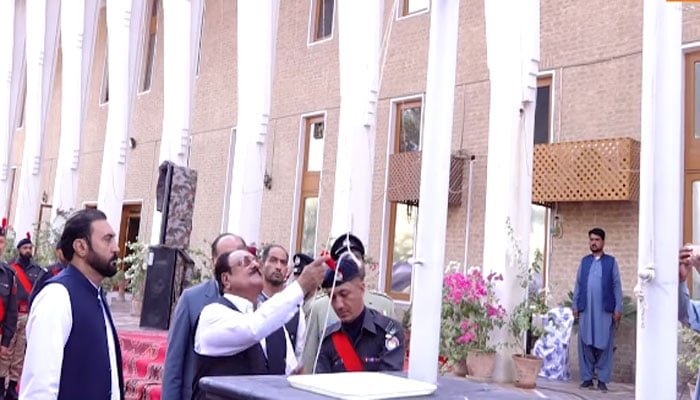
QUETTA: Independence Day celebrations continued across different parts of Balochistan as people from various communities came together to mark the country’s Independence Day with enthusiasm and national spirit.

A number of rallies and public events were organised at different locations across the province, attracting large participation from citizens. People from different backgrounds joined the celebrations to express their love for Pakistan and reaffirm their commitment to national unity.

Rallies were organised in Turbat, Kharan, Taftan and several other areas of Balochistan. The processions were decorated with Pakistani national flags, while participants carried flags and displayed them on vehicles and along the routes of the rallies.

The celebrations reflected a strong sense of national pride, with citizens participating in activities designed to mark the significance of Independence Day. Participants raised slogans in support of Pakistan and expressed their commitment to the country’s peace, stability and development.

In Turbat, residents took part in an Independence Day rally, with people gathering in different parts of the city before joining the procession. National flags were prominently displayed, creating a festive atmosphere across the area.

Similar celebrations were also held in Kharan, where citizens participated in a rally to commemorate the occasion. Participants carried national flags and expressed their solidarity with the country. Families, young people and other members of the community took part in the celebrations.

In Taftan and surrounding areas, Independence Day activities also continued throughout the day. National flags were displayed at public places, vehicles and buildings, while residents participated in rallies and other activities organised to mark the national occasion.

The rallies provided an opportunity for citizens to express national unity and remember the historical significance of Pakistan’s independence. Participants highlighted the importance of maintaining unity, harmony and cooperation among people from different communities and regions.

Independence Day is observed across Pakistan every year on August 14 to commemorate the country’s independence in 1947. The occasion is traditionally marked by flag-hoisting ceremonies, rallies, public gatherings and cultural activities.

Across Balochistan, citizens used the occasion to celebrate the country’s independence while also expressing hopes for peace and prosperity. The widespread display of national flags added to the festive atmosphere, while the participation of people in different cities demonstrated their enthusiasm for the national event.

Local communities also used the celebrations to promote messages of unity and collective responsibility. Speakers and participants at various gatherings stressed that national development requires cooperation and active participation from citizens.

The celebrations in Balochistan were part of nationwide Independence Day activities taking place across Pakistan. From major cities to smaller towns and remote areas, people organised events to commemorate the country’s independence and celebrate their national identity.

The rallies in Turbat, Kharan, Taftan and other parts of the province brought together citizens who wanted to mark the occasion collectively. The participants’ display of national flags and expressions of solidarity reflected the importance attached to Independence Day across the province.

As the celebrations continue, various parts of Balochistan remain decorated with national flags and other Independence Day decorations. Citizens are expected to continue participating in events throughout the day, with celebrations aimed at highlighting national unity, patriotism and hopes for a peaceful and prosperous Pakistan.

Similar Posts

  • |

    Apple forecasts slower sales growth as supply chain problems continue

    Apple has projected slower sales growth for the current quarter, disappointing investors as ongoing supply chain problems continue to limit the company’s ability to meet strong customer demand. The weaker outlook sent Apple shares down by more than five percent in after hours trading despite the company reporting better than expected financial results for the previous quarter. The technology giant said revenue for the quarter ending in September is expected to grow between 9 and 11 percent compared with the same period last year. That forecast fell short of market expectations, which had predicted growth of around 12 percent. Apple also expects iPhone sales to increase at a mid teens rate, slightly below analysts’ forecasts. Chief Executive Tim Cook said the company’s biggest challenge is not weak demand but limited supplies of critical components. He explained that shortages of advanced chip manufacturing technology have reduced Apple’s ability to produce enough of its custom designed processors, especially for its Mac computers. Cook said the company is reviewing all possible options to secure additional supplies, including working with alternative memory chip suppliers. Apple’s Chief Financial Officer Kevan Parekh told investors that the company expects gross profit margins to remain between 47 and 48 percent during the current quarter. Although supply problems remain a concern, executives said demand for Apple products continues to be stronger than expected across several product categories. According to Cook, the company experienced particularly high demand for its Mac lineup during the recently completed fiscal third quarter. Sales of Mac computers rose by nearly 29 percent, driven by strong demand for the entry level MacBook Neo and the premium MacBook Pro models. Cook said the advanced chip manufacturing industry currently lacks the flexibility to respond quickly to unexpectedly high demand, making it difficult for Apple to increase production. Despite concerns about future growth, Apple reported financial results that exceeded most market expectations. Revenue for the fiscal third quarter, which ended on June 27, increased by 16.4 percent to 109.42 billion dollars. Net profit reached 2.02 dollars per share, including benefits from tariff refunds provided by the United States government. Even without those refunds, earnings remained above analysts’ expectations. The company’s strongest performance came from iPhone sales, which climbed 21.7 percent to 54.25 billion dollars. These were Apple’s highest ever third quarter iPhone sales, a period that usually experiences slower demand as customers wait for new models to be released later in the year. Analysts believe some consumers accelerated purchases because of concerns that future price increases could result from the global shortage of memory chips. Mac sales also exceeded expectations, reaching 10.35 billion dollars during the quarter. However, iPad sales declined by 5.9 percent to 6.19 billion dollars. Cook said the decline reflected difficult comparisons with the previous year, when Apple launched a lower priced iPad model that generated unusually strong demand. Revenue from Greater China increased by 22.4 percent to 18.82 billion dollars, although that figure still fell below market forecasts. Analysts said investors remain uncertain about whether demand will remain strong if Apple decides to raise iPhone prices during its expected product launch in September. Although Apple continues to benefit from strong consumer interest and solid financial performance, the company acknowledged that supply chain disruptions remain a major obstacle. Executives said resolving shortages of advanced chips and memory components will be critical to maintaining growth as demand for premium technology products continues to rise.

  • | | |

    President delays assent for 19 high court judges

    The appointment of 19 additional judges to four high courts remains pending as President Asif Ali Zardari has yet to approve the summary. The Judicial Commission of Pakistan (JCP) approved the nominations during meetings held on July 20 and 21. The proposed appointments involve the Lahore High Court, Sindh High Court, Balochistan High Court and Islamabad High Court. Nine days have passed since the JCP approved the nominations. However, the president has not yet given his assent to the summary. The delay has caused concern within the government. A senior cabinet member questioned why the approval had not yet been granted. The official argued that the summary was initiated by the JCP rather than the prime minister. Therefore, according to the government’s position, the president could not send it back to the prime minister for reconsideration. The official also warned that continued inaction could create further tension within the superior judiciary. The government’s legal team is reportedly examining possible options to address the issue. The matter has also exposed differences between the government and the Pakistan Peoples Party (PPP). According to government officials, the PPP leadership is unhappy with the JCP because some of its preferred nominees were not considered for judicial appointments. The PPP had shown particular interest in securing the appointment of two candidates to the Sindh High Court. However, neither the judicial nor executive members of the JCP supported their nominations. Officials said the candidates were below the age of 45. Both government and judicial representatives reportedly agreed that nominees below that age should not be approved. PPP Senator Farooq H Naek, a senior legal figure and member of the JCP, had proposed 33 candidates for the four high courts. His proposed list included 16 candidates for the Sindh High Court, 10 for the Lahore High Court, five for the Balochistan High Court and two for the Islamabad High Court. A member of the commission said the PPP could potentially have secured appointments for other candidates from interior Sindh. Some of those candidates were considered sympathetic to the party. However, the commission member claimed that the party’s insistence on its two preferred nominees affected the outcome. The dispute comes amid wider political and judicial developments involving Sindh. JCP judicial members have already reached a consensus on the performance of constitutional benches in the Sindh High Court. The judges serving on those benches were given three months to demonstrate their performance. The commission’s judicial members also opposed the confirmation of Sindh High Court Additional Judge Syed Fiaz ul Hassan Shah. The development was viewed by some political circles as another setback for the PPP. The party has historically sought influence over judicial appointments in Sindh and other provinces. Last year, the PPP was able to influence appointments in several high courts, including the Sindh High Court, Peshawar High Court and Lahore High Court. The judicial landscape has also changed following the 27th Constitutional Amendment. After the amendment, Justice K K Agha was elevated to the newly established Federal Constitutional Court. Another judge of the Sindh High Court was transferred to the Islamabad High Court.

  • | | |

    Mrunal Thakur warns of legal action over deepfake …

    Bollywood actress Mrunal Thakur has strongly condemned the misuse of artificial intelligence to create fake videos and images using her identity. Expressing serious concern over the growing circulation of AI-generated deep fake content on social media, the actress warned that she will pursue legal action against anyone involved in creating or sharing such material. According to Indian media reports, several deepfake videos and manipulated images featuring Mrunal Thakur have recently appeared across social media platforms. The actress described the unauthorized use of her face and identity through AI technology as unacceptable and called for an immediate end to the practice. Taking to her Instagram Stories, Mrunal Thakur issued a clear warning to individuals responsible for generating or distributing fake AI content using her name or likeness. She urged them to stop immediately, stating that continued misuse of her identity would leave her with no choice but to take legal action against those involved. Deepfake technology, powered by artificial intelligence, allows users to create highly realistic but fabricated videos, images, and audio recordings. While the technology has legitimate applications in entertainment and education, it has increasingly been misused to spread misinformation, damage reputations, and violate personal privacy. Mrunal Thakur’s statement has once again highlighted the growing concerns surrounding the ethical and legal challenges posed by deepfake technology. Experts warn that AI-generated fake content can seriously affect an individual’s reputation, personal life, and professional career. In many cases, victims may also face emotional distress and legal complications as a result of manipulated media circulating online. The issue has become increasingly significant in the entertainment industry, where celebrities are frequent targets of AI-generated fake content. Actors, musicians, and public figures across the world have raised concerns about the unauthorized use of their identities and have called for stronger legal protections against digital impersonation. Governments and technology companies are also working to address the misuse of artificial intelligence by introducing stricter regulations, improving content detection systems, and developing tools to identify manipulated media. However, experts believe that public awareness and responsible use of AI remain equally important in tackling the problem. Mrunal Thakur’s strong response reflects the growing determination among celebrities to protect their privacy and digital identity. Her warning serves as a reminder that while artificial intelligence offers remarkable technological advancements, its misuse can have serious legal, ethical, and social consequences. As deep fake technology continues to evolve, stronger safeguards and greater accountability will be essential to prevent its abuse.

  • | | | |

    Egypt weighs joining Pakistan-Saudi-Türkiye defen…

    CAIRO: Egypt has started a serious review of the possibility of joining the Makkah Joint Defence Agreement between Pakistan, Saudi Arabia and Türkiye. Egyptian Foreign Minister Badr Abdelatty said Cairo has close and strategic relations with all three countries. He said Egypt’s ties with Pakistan, Saudi Arabia and Türkiye extend beyond political cooperation. Abdelatty was asked about Egypt’s possible inclusion in the defence agreement. He said Egypt has been aware of the pact since the beginning. He confirmed that Egyptian state institutions are currently conducting a comprehensive assessment of the agreement. The minister said no final decision has been taken yet. He added that the relevant Egyptian authorities are examining the agreement and its possible implications. Abdelatty stressed that defence agreements involve important commitments. Therefore, Egypt must carefully assess all legal and constitutional aspects before making a decision. He said any possible Egyptian participation would have to comply with the country’s Constitution and existing legal requirements. The review will also consider the responsibilities that could arise from joining the agreement. The development comes days after Pakistan, Saudi Arabia and Türkiye signed the Makkah Joint Defence Agreement. The pact seeks to strengthen defence cooperation among the three countries and enhance their collective security. Under the agreement, an attack against any one of the three countries would be considered an attack against all three. The arrangement has been described as a major step towards closer defence and strategic cooperation.

  • | |

    Punjab cybercrime crackdown, 28 suspects arrested

    LAHORE: Authorities have arrested 28 suspects in Lahore, Faisalabad and Multan as part of a major crackdown on organised online fraud, exposing alleged schemes that relied on impersonation, fake investment opportunities and fabricated official identities to deceive citizens. The arrests were made during a province-wide operation by the National Cyber Crime Investigation Agency (NCCIA) Punjab, directed by Punjab Director Muhammad Ali Wasim, officials said. Investigators also seized 24 mobile phones and a laptop, which are now being examined for evidence that could lead to other members of the alleged network. The investigation has revealed how fraudsters allegedly manipulated trust to convince victims to hand over large sums of money. Millions allegedly lost in Lahore scam In Lahore, 18 suspects were arrested in separate operations. Investigators said the suspects allegedly impersonated relatives, visa agents, government officials and personnel associated with the Punjab Safe Cities Authority. In one case, suspects allegedly posed as both a relative and a visa agent and persuaded a victim to transfer Rs25.86 million. The case has highlighted how scammers can combine apparently familiar identities with urgent requests to make their schemes appear legitimate. Rs54.66m trading fraud uncovered Three suspects were arrested in Faisalabad in connection with alleged online trading fraud and unauthorised access to a company email account. According to investigators, a victim was shown fabricated trading records, digital-wallet balances and purported profit statements to create the impression that substantial returns were being generated. After being persuaded to invest, the victim allegedly lost Rs54.66 million, investigators said. The case demonstrates the growing sophistication of investment scams, where criminals allegedly use manipulated digital information to make fraudulent platforms appear genuine. Multan arrests expose impersonation tactics In Multan, seven suspects were arrested for allegedly posing as relatives, bank employees and individuals claiming to be based in Britain. Officials said victims were approached with various demands, including payments supposedly required for prize money, customs clearance, taxes and visa renewals. Such tactics typically create a sense of urgency, leaving victims with little time to verify the identity of the caller or the authenticity of the demand. Digital evidence now under forensic examination NCCIA investigators are examining the seized devices through forensic analysis. Financial transactions, call records and digital communications are also being reviewed to establish the full extent of the alleged operation and identify other people who may be connected to it. The crackdown comes amid growing concern over online financial fraud in Pakistan. The NCCIA’s own statistics identify financial fraud as a major category of reported cybercrime. The latest arrests underscore a simple but increasingly important warning: an apparently familiar voice, official-looking message or promising investment opportunity may not be what it seems. Authorities are expected to continue the investigation as they trace the alleged network and follow the digital and financial trails left behind.

  • | |

    US unable to verify Israeli claims of Iranian plot…

    The United States has been unable to independently confirm several warnings from Israel alleging that Iran was planning to assassinate President Donald Trump, according to current and former US officials familiar with the intelligence. The warnings were reportedly shared with US intelligence agencies over the past year and, in some cases, communicated directly by Israeli officials to senior members of the White House. The alleged plots included plans to target Trump with a sniper or recruit an attacker to use a knife during a major public gathering. According to the officials, the warnings began emerging before the 12-day Israel-Iran war in June 2025 and became more frequent ahead of the US military campaign against Iran in February. One of the most detailed warnings reportedly came before the NATO summit in Ankara in July. Israeli officials informed the White House that Iran might attempt to target Trump while he was travelling aboard Air Force One, potentially using a shoulder-launched missile. However, US intelligence agencies were unable to independently corroborate several of the specific threats. A Turkish official also said that Turkey’s intelligence services found no evidence supporting the Israeli warning concerning a possible attack on Trump during his visit. Despite the lack of confirmation, US authorities took additional security precautions. Among the measures was an unusual deception operation during Trump’s Turkey trip, in which he was reportedly transferred from Air Force One to another aircraft for his return journey. The episode highlights the growing importance of Israeli intelligence in the Trump administration’s assessment of threats from Iran, while also revealing differences between American, Israeli and Turkish intelligence assessments. US intelligence agencies have long assessed that Iran has an interest in retaliating against Trump over the 2020 killing of Iranian military commander Qassem Soleimani. However, officials said the CIA has not been able to verify some of the specific assassination claims attributed to Iranian operatives. During the recent US military operations against Iran, some American intelligence assessments reportedly assigned low confidence to Israeli intelligence concerning Iranian threats, including alleged plans to assassinate Trump. The Israeli Embassy rejected the suggestion that Israel was using intelligence sharing to influence US policy toward Iran, arguing that intelligence exchanges were part of the countries’ security relationship. The White House and CIA declined to comment on the reports, while the US Secret Service said it continuously evaluates intelligence and other information to protect the president. The revelations come amid broader concerns over coordination within the US intelligence community. Former officials said cooperation between the CIA and the National Intelligence Council had declined, while staff reductions at the Office of the Director of National Intelligence had also contributed to fewer recent assessments concerning Iran. The conflicting intelligence assessments underline the challenges facing Washington as it balances threats from Tehran with intelligence supplied by its closest regional ally, Israel.

Leave a Reply

Your email address will not be published. Required fields are marked *