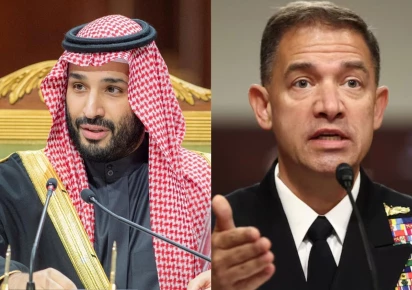
iran attacks bases
|

Iran attacks US bases in Gulf countries despite diplomatic efforts

Gulf countries said on Wednesday, November 18, they intercepted missiles and drones from Iran and its Houthi allies in Yemen, after the United States struck Qeshm Island in the Strait of Hormuz, marking an uptick in hostilities despite efforts to end the nine-month-old war.

The back-and-forth attacks were a reminder of the hurdles facing diplomatic efforts to end a war that has destabilized the Middle East, pushed up global energy prices and helped fuel the US voter anger that punished President Donald Trump’s Republican Party in the November elections.

The Iranian army said it had targeted US drone and missile installations at Kuwait’s Ali Al Salem base, after the US ally said its air defenses were countering hostile drone attacks. It was the first Iranian attack on the oil-rich country since September.

Must Read

Iran, Oman foreign ministers discuss safeguarding maritime corridors


Iran, Oman foreign ministers discuss safeguarding maritime corridors

Neighboring Bahrain said it intercepted Iranian aerial attacks for the third time this week. It accused Tehran of maintaining a “systematic hostile approach” of targeting the country, which hosts the US Navy’s Fifth Fleet.

The Saudi-led coalition fighting the Iran-aligned Houthis in Yemen said it destroyed a cruise missile launched by the militia toward the Saudi capital of Riyadh.

On Tuesday, November 17, on the opposite side of the Gulf, US fighter jets fired on a Revolutionary Guards missile launch site on Qeshm Island, said a US military official, who spoke on condition of anonymity.

The official said the strike was in response to Iran’s attacks on US personnel and assets.

Iranian media, citing an Iranian official, said the US attack did not damage infrastructure.

Threat against Washington

Trump said on Tuesday the US was taking seriously the possibility that Iran could be planning an attack on Washington, when asked about a CNN report that cited US intelligence assessments on a potential Iranian plot involving a so-called dirty bomb.

On Wednesday, US Secretary of State Marco Rubio said he did not think there was any imminent threat to the US capital.

Iran’s Foreign Ministry had denied the allegations on Tuesday, calling them “baseless.”

A dirty bomb uses conventional explosives to disperse radioactive material. Unlike a nuclear weapon, it does not produce a nuclear explosion, but can spread radioactive contamination and cause significant disruption and public alarm.

There are diplomatic efforts to resolve the conflict, which started when the US and Israel struck Iran on February 28 and has since widened to include Iranian strikes on Israel and US assets in the Middle East.

Qatari and Iranian officials met on Tuesday for talks aimed at “bridging perspectives and narrowing the gap between proposals presented on the ground,” Qatari spokesperson Majed Al Ansari said.

That followed a visit to Oman by Iranian Foreign Minister Abbas Araqchi, where he held talks on safeguarding maritime corridors and ensuring the smooth flow of global shipping and trade, Oman’s Foreign Ministry said.

Shipping disrupted

Oman and Iran lie on opposite sides of the Strait of Hormuz, a vital waterway that carried about one-fifth of global energy supplies before the war but which is now partly blocked by Iran.

Araqchi said in a post on Telegram that he met Oman’s Sultan Haitham bin Tariq and informed him about Iran’s diplomatic initiative to end the war.

Oman has previously held talks with Tehran about controlling traffic in the strait, which is a sticking point in negotiations.

A surge in tanker attacks since October threatens to further strain global oil supplies. On Tuesday, a crew abandoned a liquefied petroleum gas tanker off Oman’s Khasab.

Meanwhile, Iran has kept pressure on Washington through its Houthi allies, who have intensified attacks on Saudi Arabia — the world’s largest oil exporter — while tightening control over Yemen’s Bab el-Mandeb Strait, opposite Hormuz, in an effort to squeeze Gulf oil producers. – Rappler.com

Similar Posts

  • | | |

    Pakistan Independence Day celebrated at New York C…

    NEW YORK: Pakistan’s Independence Day was celebrated at the historic New York City Hall this year in a landmark event highlighting the growing presence and contributions of the Pakistani-American community. The ceremony marked the first time that Pakistan’s Independence Day celebrations were held inside New York City Hall, making it a notable occasion for the Pakistani diaspora and a significant moment in Pakistan-US community relations. The event was jointly organised by New York City Council Speaker Julie Menin and Council Member Linda Lee, with support from the American Pakistani Advocacy Group (APAG). Pakistan’s Consul General in New York, Aamer Ahmed Atozai, addressed the gathering and praised APAG and the participating elected representatives for their efforts in arranging the historic celebration. He described the event as a proud and memorable moment for Pakistani-Americans and said holding the ceremony at City Hall reflected the organisers’ strong connection with Pakistan. A large number of Pakistani-Americans, elected officials, community representatives and members of the media attended the ceremony. Speaking at the event, Speaker Julie Menin acknowledged the valuable contributions of the Pakistani-American community to New York City. She highlighted the community’s role in the city’s development while maintaining strong ties with both Pakistan and the United States. Other lawmakers and speakers also commended the Pakistani-American community for its dedication, resilience and continued contributions. They highlighted its role as an important bridge between Pakistan and the United States and recognised its growing influence in the city’s civic, economic and social life. The historic celebration at New York City Hall underscored the increasing significance of the Pakistani-American community and its positive contributions to New York, while also highlighting the enduring people-to-people ties between Pakistan and the United States. Moreover, Pakistan’s diplomatic efforts to promote peace and stability, including its role in mediating during the recent US-Iran tensions, were highlighted at an Independence Day ceremony held at Pakistan House in New York. Speaking at the event, Pakistan’s Permanent Representative to the United Nations, Ambassador Asim Iftikhar Ahmad, said Pakistan had consistently sought peaceful solutions amid growing international instability and conflicts. He urged renewed commitment to the country’s founding principles, sovereignty, security, peace and socio-economic progress. The ambassador paid tribute to Quaid-e-Azam Muhammad Ali Jinnah, describing him as a visionary statesman whose leadership led to the creation of Pakistan. Reflecting on the country’s journey since independence, he praised the resilience and achievements of Pakistanis despite significant challenges. Ahmad also commended the armed forces for their sacrifices in defending the country and protecting its people, while recognising the achievements of Pakistanis abroad in fields ranging from innovation and sports to the arts. He reaffirmed Pakistan’s diplomatic and political support for the people of Indian Illegally Occupied Jammu and Kashmir and for the rights of Palestinians. He also stressed the importance of combating terrorism while advancing economic development and national progress. Consul General Aamer Ahmad Atozai also paid tribute to the leaders and workers of the Pakistan Movement, emphasising that freedom carries both a legacy and a responsibility. He highlighted the Pakistani-American community’s contributions through investment, remittances, philanthropy and expertise, describing it as an important bridge between Pakistan and the United States. The ceremony featured the hoisting of the Pakistani flag and the national anthem, while messages from Pakistan’s leadership were also read out. Addressing children at the gathering, Ambassador Ahmad described them as the country’s future and called for collective efforts to build a peaceful, prosperous and inclusive Pakistan. The event concluded with calls for greater national unity and continued commitment to peace, diplomacy and Pakistan’s progress on the global stage.

  • | |

    Gen Z group behind India’s cockroach protest…

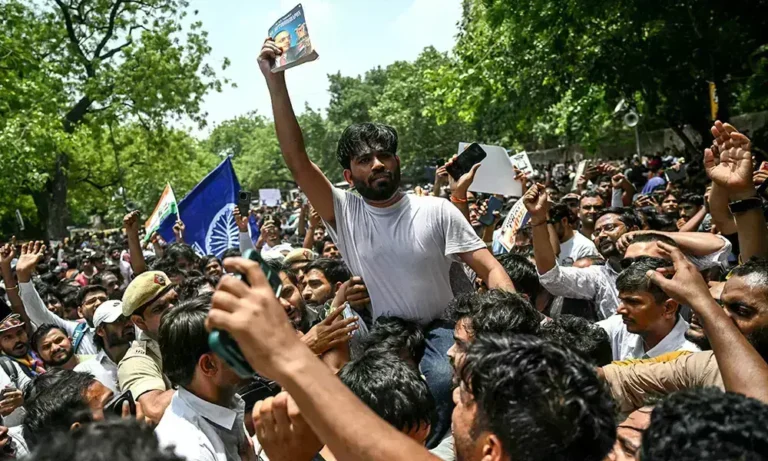
    The Cockroach Janta Party, the youth movement that forced a top Indian minister to quit, says it has no plans yet to contest elections despite its growing influence among young voters. Abhijeet Dipke, the founder of the group, told a foreign news agency on Tuesday that the organization intends to stay focused on grassroots mobilization rather than rush into formal politics. The statement comes weeks after protests led by Dipke swept through Delhi and spread to other parts of the country, ultimately pressuring Prime Minister Narendra Modi’s education minister to step down. Speaking from his family home in Maharashtra, Dipke said the group wants to first understand what young Indians actually want before deciding its next move. He announced that supporters would gather for a two day meeting starting Wednesday to map out priorities for the movement going forward. “The purpose will be to form the agenda for the Cockroach Janta Party and discuss how we can take this social movement forward,” Dipke said, as well wishers arrived at his home carrying flowers and gifts. Dipke made clear that entering electoral politics is not on the table for now, though he left the door open for the future. He said he would only consider building a formal party if a clear majority of supporters pushed for it, and that any decision to contest elections would come later, guided by public sentiment rather than a fixed timeline. He argued that Indian politics does not currently need another party competing for power. Instead, he said, the country requires a broader public campaign aimed at restoring faith in institutions that have lost credibility among ordinary citizens. Dipke said the group’s immediate priority is to give voice to the frustrations of India’s youth, many of whom, in his view, no longer trust the country’s political class, judiciary or press. He emphasized the importance of listening directly to young people before setting any formal agenda, saying it was necessary to understand their actual concerns rather than assume them. Dipke made these comments while still recovering from typhoid, which he contracted during the weeks he spent camped out during the Delhi demonstrations. A hero’s welcome at home Following the 36 day protest, Dipke traveled back to his hometown of Chhatrapati Sambhajinagar, where hundreds of supporters lined up outside his home to greet him, many carrying flowers in celebration of the movement’s success. Dipke’s rise to prominence has been rapid. After returning to India in June from his studies in the United States, he became a household name almost overnight when his call to protest against leaked medical entrance exam papers pulled tens of thousands of young demonstrators onto the streets of the capital. The pressure campaign achieved a significant result on July 25, when Education Minister Dharmendra Pradhan resigned from his post. Authorities had attempted to disperse the crowds using tear gas and baton charges, but the demonstrations continued regardless. In the aftermath, the government announced tougher legal penalties for those involved in leaking exam papers and formed a committee to reassess the broader examination system. The stakes attached to these entrance exams are enormous for India’s youth. Millions of students spend years preparing for them, viewing a strong result as their surest route to stable, well paying careers and financial security for their families. Wary of political traps Dipke explained that he is avoiding a formal political launch partly out of concern that the government could use investigations or legal pressure to undermine the party’s leadership if it formalized too quickly. He also said he has no intention of aligning the movement with any existing political party, even as opposition figures in India have tried to capitalize on the rare momentum the protests created against Modi’s government. Some of that caution appears to draw on regional experience. In neighboring Bangladesh, a youth led party that emerged after mass protests ousted long time leader Sheikh Hasina in 2024 went on to perform poorly in this year’s elections, a result that may be shaping how Dipke approaches the question of formal politics in India. Political observers say the true test of whether young Indians’ frustration translates into votes will come in elections scheduled for next year in Uttar Pradesh, India’s most populous state, along with Punjab and Modi’s home state of Gujarat. A bigger risk for the ruling Bharatiya Janata Party could emerge in the 2029 general election if the Cockroach Janta Party evolves into a formal political force by then. Political analyst Amitabh Tiwari said the movement is unlikely to cause major damage to the BJP in upcoming state elections but could grow into a more serious factor by the time of the next general election. He added that if the group builds a party structure, continues championing youth causes and sustains its current momentum, it stands a real chance of attracting broader support. Security concerns following the protests remain high. More than a dozen police officers have been stationed outside Dipke’s family home after he received threats on social media once his profile surged following the initial call to protest in May, a period in which the Cockroach Janta Party’s Instagram following grew to 22 million within days. Dipke said his greatest worry is not for his own safety but for that of his parents. He expressed relief at being back home and said he trusts that government provided security will keep his family safe in the coming weeks. The episode adds to a growing pattern across South Asia, where youth led movements have increasingly forced political concessions from long entrenched governments, even when those movements stop short of transforming into electoral parties themselves.

  • | |

    Tokyo’s shorts policy for office workers spa…

    Japanese men are showing more leg at work than ever this summer, as the Tokyo Metropolitan Government continues pushing employees toward casual attire that includes shorts alongside t-shirts and trainers. Tokyo Governor Yuriko Koike introduced the initiative, known as Tokyo Cool Biz, in April, aiming to build on her signature cooling campaign that has become a recognized annual tradition across the city each summer. Nearly four months into the programme, the newly permitted office shorts have drawn a mixed reaction from workers and commentators alike. Some people have welcomed the more relaxed dress code, saying it allows them to work comfortably despite the intense summer heat. Others argue the policy creates an unequal standard for women, who remain expected to wear tights even when showing part of their legs, while men can now go bare legged in shorts. A number of women have also described discomfort at having to see male colleagues’ leg hair in the office, a phenomenon some online commentators have labeled leg hair harassment. Noboru Watanabe, an environmental official with the Tokyo Metropolitan Government, said the goal is to give people more clothing options during severe heat rather than dictate what they must wear, adding that there should be no issue as long as workplace attire does not offend anyone. Casual dress has grown more common among Japanese workers in recent years, particularly at startups and technology companies, but this year’s government recommendation has made the shift more broadly acceptable across traditional workplaces as well. Even so, some men have reported feeling self conscious about exposing their leg hair for the first time in a professional setting. Dr. Akifumi Funatsu, director of Gorilla Clinic, said he has noticed a rise in clients visiting the clinic not purely for cosmetic reasons but out of concern for what he described as social etiquette when wearing shorts, suggesting the policy shift has begun influencing personal grooming habits among Japanese men beyond the office itself. The debate reflects a broader tension in Japan between longstanding workplace dress norms and growing efforts to modernize corporate culture in response to increasingly severe summer heat, with officials balancing calls for greater comfort against concerns about fairness between male and female employees navigating different expectations around appropriate office attire.

  • |

    Historic post-Brexit deal eliminates Gibraltar-Spain border fence

    In a landmark shift ending decades of physical and bureaucratic division, Spain and Gibraltar have celebrated the dismantling of the land border fence following a treaty signed in Brussels. The post-Brexit agreement, taking effect at midnight, brings an end to land frontier controls and establishes Gibraltar as a de facto participant in the EU’s Schengen free-movement area. The treaty resolves over four years of complex negotiations between the United Kingdom, Spain, Gibraltar, and the European Union. Beyond removing land border gates that have stood since 1908, the accord places responsibility for Schengen passport checks at Gibraltar’s port and airport with Spanish officials, ensuring fluid transit for tourists and the roughly 15,000 Spanish cross-border workers who sustain the territory’s economy. Visiting the frontier municipality of La Línea de la Concepción to watch the physical removal of the barrier, Spanish Prime Minister Pedro Sánchez stated that the deal marks an end to “the last wall in continental Europe”, laying the groundwork for shared regional prosperity. Gibraltar’s Chief Minister, Fabian Picardo, emphasised that the historic arrangement delivers economic certainty and seamless movement while preserving the territory’s constitutional protections and British sovereignty intact.

  • | |

    Saudi-US talks focus on easing regional tensions, …

    Saudi Crown Prince Mohammed bin Salman and US Central Command chief Admiral Brad Cooper have held talks on regional security and efforts to ease tensions, as the conflict involving Iran continues to threaten stability and global energy supplies. According to Saudi state media, the two officials discussed defence cooperation between Riyadh and Washington, developments across the region and diplomatic efforts aimed at reducing tensions and strengthening security. The meeting came as concerns surrounding the Strait of Hormuz intensified. The strategic waterway remains a major route for global oil and liquefied natural gas shipments, and disruptions caused by the conflict have raised fears of further pressure on international energy markets. Saudi Arabia also announced the launch of a multinational defensive maritime alliance, with 13 countries joining the initiative. Representatives from 39 countries attended a planning meeting held at the Western Fleet Command in Jeddah, which Saudi authorities described as an important step towards putting the alliance into operation. Meanwhile, Washington has signalled that its economic and military pressure on Tehran could intensify. US Treasury Secretary Scott Bessent said the United States was preparing measures against Iran on a scale not previously seen in efforts to economically isolate a country. Bessent said the strategy would combine tougher economic restrictions with continued pressure surrounding the Strait of Hormuz. He indicated that further announcements could come next week as Washington seeks to increase pressure on Tehran. US Defence Secretary Pete Hegseth also said the US Navy could maintain a blockade of Iranian ports and shipping routes for an indefinite period, arguing that American forces had sufficient capacity to rotate vessels and sustain the operation. The standoff has already severely affected shipping through the Strait of Hormuz. Traffic has fallen sharply compared with levels recorded before the conflict, when roughly 130 to 140 vessels passed through the waterway each day. The decline has raised concerns about disruptions to international energy supplies. Tensions escalated further after two vessels operated by Abu Dhabi National Oil Company were reportedly attacked while travelling through the strait. The UAE condemned the incident and blamed Iran for the attacks. Iran has rejected US claims over control of the waterway and has indicated that normal shipping will not resume until its demands are addressed. Tehran has called for the removal of economic sanctions and the release of frozen Iranian assets. The conflict is also putting increasing pressure on global oil markets. The International Energy Agency has revised its estimate for the decline in global oil supply, projecting a reduction of about 4.3 million barrels per day this year, equivalent to around 4% of global supply. Although oil prices fell by more than 2% on Thursday amid concerns over weaker demand and rising US crude inventories, renewed reports of attacks linked to Iran-backed forces have continued to fuel uncertainty in energy markets. The economic consequences are spreading beyond the region, with economists warning that a prolonged conflict could significantly weaken global growth and increase the risk of recession in some economies. US President Donald Trump has faced growing domestic pressure to bring the conflict to an end as higher fuel prices weigh on American consumers and threaten his political standing ahead of November’s midterm elections. While Trump has repeatedly warned that military action against Iran could escalate, he has so far avoided deploying ground troops or launching attacks against some of the region’s most sensitive strategic targets. More recently, he has indicated a greater reliance on economic pressure. Hegseth, meanwhile, said Washington’s priority remained preventing Iran from acquiring a nuclear weapon and declined to comment on whether previous ceasefire decisions had been mistakes. With diplomatic efforts struggling and tensions around the Strait of Hormuz continuing, Saudi-US security coordination is emerging as a key factor in attempts to contain the wider regional crisis and protect vital international shipping routes.

  • |

    Dictator Bashar al-Assad sentenced to death for war crimes

    In a historic ruling issued by the Fourth Criminal Court in Damascus, Syria’s transitional judicial authorities have sentenced deposed former President Bashar al-Assad to death in absentia. Broadcast live on state television, the verdict marks the first official criminal conviction against the long-serving dictator since his regime collapsed in late 2024. Presiding Judge Fakhareddine al-Aryan announced the decision before a packed courtroom and crowds gathered outside the judicial complex in the Syrian capital. The court found Assad guilty of masterminding state-sponsored atrocities. The charges include the intentional murder of civilians and children under 15, widespread torture, systemic forced disappearances, and unlawful detentions. In his declaration, Judge al-Aryan stated that as the regime’s highest authority, Assad systematically deployed state institutions, security apparatuses and military forces to execute war crimes. The crimes against humanity targeting the Syrian populace. The former president, several prominent figures from his inner circle received identical capital sentences. Among those convicted in absentia were Assad’s younger brother, Maher al-Assad, the former commander of the military’s notorious 4th Armored Division. There’s also former Defense Minister Fahd Jassim al-Freij and several high-ranking intelligence commanders. However, one of the trial’s most striking visual moments occurred inside the courtroom itself. Atef Najib, a maternal cousin of Assad and the former head of political security in Daraa province, stood in the defendant’s dock. He was wearing a prison uniform inside a protective security cage. Najib, who was apprehended in early 2025, was tried in person and sentenced to death for orchestrating the initial violent crackdown in Daraa in 2011. The crackdown involved the detention and brutal torture of teenage students accused of scrawling anti-regime graffiti on school walls. This ignited the peaceful pro-democracy protests that eventually escalated into a full-scale, 14-year civil war. Judge al-Aryan noted that Najib showed no remorse throughout the proceedings. The legal action represents a cornerstone of the transitional justice framework established under Ahmed al-Sharaa, who assumed leadership of Syria’s interim administration following the December 2024 offensive that ended five decades of rule by the Assad dynasty. Over the course of the conflict, more than 500,000 people were killed, millions were displaced, and tens of thousands vanished into a brutal network of state prison facilities. Head of the National Transitional Justice Authority, Abdel Basset Abdel Latif, characterized the court’s judgment as a landmark moment in delivering delayed justice to millions of victims. Despite the symbolic weight of the verdict, enforcing Assad’s sentence remains complex. Following the collapse of Damascus in December 2024, Assad and his immediate family fled to Moscow, where they were granted political asylum by Russian authorities. While Syria’s transitional leadership continues to formally request his extradition, Russia has thus far refused to hand over the former leader.   International human rights observers have voiced mixed reactions to the proceedings.  The significance of addressing decades of unchecked state violence organizations such as Human Rights Watch reaffirmed their principled opposition to the death penalty. Urging that transitional justice mechanisms strictly maintain international fair-trial standards and long-term legal integrity as Syria attempts to rebuild its judicial institution.

Leave a Reply

Your email address will not be published. Required fields are marked *