iran vows continue
| | |

Iran vows to continue strikes as regional tensions rise

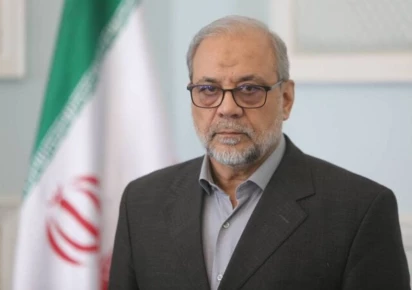
Iran’s Supreme National Security Council Secretary Mohammad Bagher Zolghadr said Saturday that Iranian forces would continue their attacks until they defeat their enemies and take what he called revenge for the deaths of innocent children in Minab and Lamerd.

State news agency IRNA quoted Zolghadr as saying Iran would also seek retribution for the US-Israeli war and the killing of schoolchildren. Iranian authorities say an attack on a girls’ school in Minab caused the highest number of casualties, killing 168 people and injuring 95, most of them children.

Meanwhile, Iranian Foreign Minister Abbas Araghchi said there was no military solution to the growing conflict between Saudi Arabia and Houthi rebels in Yemen. In an interview with the state-run Iran Daily, Araghchi called for dialogue to address tensions involving Yemen, the Bab al-Mandab Strait and other regional disputes.

Iranian Foreign Ministry spokesman Esmaeil Baghaei also accused the European Union of hypocrisy over its criticism of Iran’s human rights record. Responding to EU foreign policy chief Kaja Kallas, Baghaei alleged that European support for military actions against Iran contradicted the bloc’s stated commitment to human rights. He also accused the EU of failing to condemn attacks that Iran says have targeted civilians and critical infrastructure.

Iranian authorities reported no new US strikes overnight into Saturday, marking a pause after nearly two weeks of attacks. Health Ministry spokesman Hossein Kermanpour described the night as peaceful. According to Iranian figures, the conflict has killed more than 3,400 people in Iran, while casualties have also been reported in Israel and other countries across the region.

In a separate development, Egypt’s foreign minister held talks with his Iranian and Omani counterparts on efforts to reduce regional tensions and strengthen maritime security.

Similar Posts

  • | | |

    Shein posts $99m loss ahead of Hong Kong IPO

    Online fashion retailer Shein has reported a $99 million loss for the first quarter of 2026, highlighting the growing impact of higher import costs, weaker US sales and increased regulatory pressure. The company had recorded a $395 million profit during the same period a year earlier. Its latest financial disclosure comes as Shein prepares for a planned listing in Hong Kong. The company has not yet revealed the size of the initial public offering, expected share price, listing date or the amount it hopes to raise. However, the filing provides investors with a clearer picture of the challenges facing the fast-fashion giant ahead of its potential market debut. A major factor behind the weaker performance is the removal of a US duty exemption for low-value packages. The previous system allowed goods worth less than $800 to enter the country without import duties. Shein said the change has negatively affected its US sales and overall growth while increasing operating expenses. Products of Chinese origin sold through the company and shipped to the US are now subject to taxes ranging from 10% to 87.5%, according to the filing. The company said it is considering several measures to manage the higher costs, including raising prices for American customers. Shein’s US revenue fell 14.3% to $2.04 billion in the first quarter, compared with $2.38 billion a year earlier. The US remains one of its most important markets, although its contribution to total revenue has declined. The company is also facing additional pressure in Europe. The European Union has introduced a €3 charge on low-value e-commerce imports, a move aimed at addressing concerns over competition from low-cost overseas sellers. Shein warned that the European market could experience an impact similar to, or greater than, the one seen in the US following the removal of the duty exemption. The retailer’s financial performance had already weakened in 2025. Its annual revenue increased by 8% to $41.85 billion, but net income dropped nearly 39% to $2.06 billion. Growth also slowed significantly compared with the previous year. Part of the latest quarterly loss was linked to a $328 million accounting charge related to the changing value of convertible preferred shares held by investors. Shein has also faced growing scrutiny over labour practices, environmental concerns and the impact of its business model. The company has defended its policies and said it maintains strict standards against labour abuses within its supply chain. Shein received approval from Chinese regulators for its Hong Kong listing in July, clearing an important hurdle after earlier efforts to pursue listings in New York and London did not materialise.

  • | | | |

    Hezbollah signals major u-turn, seeks talks with S…

    BEIRUT/DAMASCUS: In what analysts are describing as a significant policy shift, Hezbollah Secretary-General Naim Qassem has expressed readiness to meet Syria’s new leadership, signaling a potential reset in relations after years of political uncertainty following the fall of former president Bashar al-Assad. Speaking during a televised address, Qassem said Hezbollah seeks “positive, brotherly and cooperative” ties with Syria and has no objection to holding an official meeting with the country’s current leadership if both sides consider the timing appropriate. He added that there were no barriers to public engagement once mutual conditions were met. The remarks mark the first time Hezbollah’s chief has openly endorsed the possibility of direct contact with Syria’s post-Assad leadership, a move that could reshape political dynamics across the region. For years, Hezbollah played a key role in supporting Assad’s government during Syria’s prolonged civil war. Throughout the conflict, Syrian territory served as a vital corridor for the movement of weapons and logistical supplies from Iran to Lebanon, making Damascus a strategic partner for the Iran-backed Lebanese group. However, the regional landscape changed dramatically after Syria’s new government assumed power in December 2024. The political transition created uncertainty over the future of relations between Damascus and Hezbollah, with observers questioning whether the alliance forged during the civil war would survive under the country’s new leadership. Political analysts believe Qassem’s latest comments indicate Hezbollah is adapting to the changing realities of the Middle East. By signaling openness to dialogue, the group appears to be seeking a pragmatic relationship with Syria’s new rulers while protecting its broader regional interests. Experts say any formal meeting between Hezbollah and Syrian officials would carry implications extending beyond the two neighbors. Such engagement could influence Iran’s regional strategy, Lebanon’s internal political landscape, and the broader balance of power in the Middle East. While no timetable for talks has been announced, Qassem’s statement is widely viewed as an important diplomatic opening, suggesting that former rivals and long-time allies alike are reassessing their positions as the region enters a new political era.

  • |

    Iran’s Top Commander issues harsh warning to US forces : ‘their coffins are a part of their equipment’

    The commander of Iran’s Khatam Al-Anbiya Central Headquarters, Major General Ali Abdollahi, has issued a stark warning to US forces, declaring that “their coffins are a part of their equipment” in the region. “Today, the Americans and their mercenaries have realised to the very core of their being that their coffins are part of their equipment in the region,” Abdollahi said, according to the Fars news agency. The warning comes amid heightened tensions between Tehran and Washington, following recent hostilities in the Persian Gulf. The statement also comes as US Senate Republicans blocked a resolution to halt the Iran war, signaling continued congressional support for the administration’s military stance. Meanwhile, Egypt’s president has warned of “escalation” after a port strike, adding to regional instability. Abdollahi’s remarks reflect Iran’s continued defiance in the face of US military pressure and its determination to maintain its position in the ongoing conflict. The rhetoric is likely to further complicate diplomatic efforts, including those being mediated by Pakistan and Qatar, as both sides remain locked in a bitter standoff.

  • |

    Google’s $15bn India data centre faces green bac…

    VISAKHAPATNAM: Google’s ambitious $15 billion data centre investment in India is facing mounting resistance from environmental groups, residents and legal activists, turning what was expected to be a landmark technology project into one of the country’s most closely watched development disputes. The massive project, being developed in partnership with Indian billionaire Gautam Adani’s group, is under construction in Tarluvada near the coastal city of Visakhapatnam in Andhra Pradesh. Touted as Google’s largest-ever investment in India, the facility is expected to strengthen the company’s cloud computing and artificial intelligence infrastructure while generating an estimated 188,000 jobs. However, critics argue that the economic benefits could come at a significant environmental cost. Water concerns spark protests In recent weeks, environmental activists have intensified protests against the project, warning that the data centre could worsen water shortages in a city already struggling to meet daily demand. Demonstrators, including schoolchildren, have marched through Visakhapatnam carrying banners reading “We Cannot Drink DATA”, while others painted handcuffs over Google’s logo to symbolise what they describe as the environmental consequences of unchecked technological expansion. At a public awareness gathering attended by local campaigners, members of the environmental organisation Green Visakha outlined plans for neighbourhood campaigns and beach demonstrations aimed at increasing public awareness. Raja Rama Mohan Roy, founder of Green Visakha, argued that development should never come at the expense of local communities. “Development should not be at the cost of the livelihood of the people,” Roy said, pointing to government figures showing that Visakhapatnam currently receives around 410 million litres of water daily, despite requiring approximately 480 million litres. Water rationing has become a regular feature of life for the city’s 2.5 million residents, raising concerns about future demand. Legal battle gains momentum Opposition to the project has now reached the courts. India’s Andhra Pradesh High Court this week directed the state government to respond to allegations raised by environmental group Jal Biradari (Water Community), which claims the project could place additional pressure on regional water resources. The court is scheduled to hear the public interest litigation again on August 24. Meanwhile, three additional petitions have been filed before India’s National Green Tribunal by the Human Rights Forum. The petitioners argue that authorities approved the project without conducting sufficient environmental assessments regarding water usage and ecological impacts. Environmental groups are questioning the government’s reported commitment to provide guaranteed water supplies for the project over the next two decades while many residents continue experiencing periodic shortages. Wildlife under threat? Another major concern centres on the project’s location. According to campaigners, the construction site lies only about 860 metres from the Kambalakonda Wildlife Sanctuary, a protected forest known for its biodiversity and home to species including leopards, pangolins, spotted deer and numerous bird species. Activists fear continuous construction, heavy machinery and increased industrial activity could disturb wildlife through noise, habitat disruption and increased human presence. The Andhra Pradesh government, however, insists the development complies with all legal requirements and maintains that the sanctuary is located at a safe distance under existing regulations. Google also said it intends to minimise environmental impacts by installing sound-dampening technologies designed to reduce noise pollution around the facility. Government and Google defend project Despite growing criticism, Andhra Pradesh authorities continue to describe the project as transformational for the state’s economy. Officials rejected accusations that environmental clearances were rushed or that local drinking water resources would be diverted for industrial use. In a statement, the state government acknowledged citizens’ right to protest but said many claims circulating about the project were “incorrect and misleading.” It added that authorities remain willing to examine legitimate concerns and provide clarification where necessary. Google has similarly defended the project, stating that construction will comply fully with Indian environmental regulations. The company said it plans to use advanced air-cooling technology, significantly reducing dependence on water compared with conventional cooling systems used by many data centres. Google also stressed that sustainability remains a key part of its global operations and that the Visakhapatnam facility would be designed to protect local water resources while supporting India’s rapidly expanding digital economy. Global debate over data centres The controversy reflects a broader international debate over the environmental footprint of modern data centres. As demand for artificial intelligence, cloud computing and digital services continues to surge, technology companies worldwide are investing billions in new infrastructure. Yet these facilities often require enormous amounts of electricity and cooling, placing additional pressure on local water and power supplies. Similar concerns have emerged across the United States and Europe, where communities have challenged large-scale data centre developments over resource consumption, environmental sustainability and their impact on nearby residents. For Google, the Andhra Pradesh project represents a major strategic investment in one of its fastest-growing markets. But with legal challenges pending and public protests gathering momentum, the future of the project may depend not only on engineering and investment, but also on the company’s ability to convince local communities that technological progress can coexist with environmental protection.

  • |

    China launches Arctic route to bypass global shipping chokepoints

    China is preparing to open a regular container shipping route through the Arctic as disruptions at major maritime chokepoints continue to affect global trade. The new service will operate through Russia’s Northern Sea Route along the Arctic coast. It is being presented as an alternative route between Asia and Europe. Chinese shipping company Sea Legend is expected to launch its first regular service on the route. The service will connect Ningbo in China with Felixstowe in the United Kingdom. The route has been described as the “Ice Silk Road”. It is designed to provide faster access to European markets. It could also improve trade links with Turkey and North Africa. The Arctic route could significantly reduce sailing times between China and Europe. The journey between Ningbo and Felixstowe normally takes around 40 days by traditional routes. The Northern Sea Route could cut the travel time by roughly half under suitable conditions. The route has gained attention as shipping companies look for alternatives to heavily congested and politically sensitive waterways. The Strait of Hormuz and the Bab al-Mandab have become major areas of concern for international shipping. Rising tensions in these regions have increased risks for vessels and raised costs for shipping companies. Marine risk experts say the Arctic is attracting greater interest from shipowners because it can offer shorter journeys and reduce exposure to geopolitical conflict zones. The Northern Sea Route is divided into 28 sections. Different rules and operating requirements apply along the route. Ships generally need permission from the Northern Sea Route administration, which is controlled by Russia’s state nuclear energy company Rosatom. Interest in the Arctic route is not new. Several international shipping companies have previously tested the Northern Sea Route. However, many European operators later avoided regular use of the route because of worsening relations with Russia. Concerns over the potential environmental impact of increased shipping in the fragile Arctic ecosystem have also remained a major issue. The changing climate has added another dimension to the debate. Shrinking sea ice has made some Arctic routes more accessible during parts of the year. The Arctic is now becoming an increasingly important area of competition among major powers. Russia considers the region strategically important for its economy and national security. It also views the Northern Sea Route as a major trade corridor. China has described itself as a “near-Arctic state” and has promoted the concept of a “Polar Silk Road”. Beijing sees greater Arctic access as an opportunity to expand trade and strengthen its global supply chains. The United States, meanwhile, has opposed efforts that could give Russia and China excessive control over Arctic routes. Washington has repeatedly supported freedom of navigation and greater international access to the region. The growing use of the Arctic shipping corridor could therefore have implications beyond commercial trade. For China, the route offers a potential way to reduce dependence on traditional maritime passages. For Russia, it could strengthen the economic importance of its Arctic coastline.

  • |

    Iran’s revolutionary guard claims destruction of US military aircraft and casualties during “Operation Nasr II

    Iran’s Islamic Revolutionary Guard Corps (IRGC) has claimed that it destroyed 11 fighter aircraft at US military bases and killed 200 American personnel within 15 days during what it described as “Operation Nasr II.” The claims were made by IRGC spokesperson Brigadier General Hossein Mohebi during an interview, in which he discussed Iran’s reported military operations against American targets. According to the IRGC spokesperson, the US defense system had become significantly weakened, allowing Iranian drones and missiles to reach their intended targets without facing major obstacles. He claimed that Iran’s military capabilities had successfully challenged American defense mechanisms and demonstrated the effectiveness of its missile and drone technology. Brigadier General Mohebi stated that Iran targeted eight military deployment centers during attacks on US positions. He further claimed that, at one location, 20 shelters were destroyed as part of the operations. However, the details and figures presented by the IRGC have not been independently verified. The IRGC spokesperson also issued warnings to Israel, stating that if it became involved in the conflict again, it should be prepared to face serious consequences. He said that any renewed Israeli participation in military operations would result in a strong response from Iran. In his remarks, Mohebi also addressed the United Kingdom, warning that a bomber aircraft had recently taken off from a British air base. He stated that if Britain cooperated with the United States in military actions against Iran, British interests could become legitimate targets from Iran’s perspective. The IRGC official called on the US government to allow journalists to visit the damaged military facilities in order to assess the actual scale of destruction and casualties. He argued that allowing independent media access would reveal the real impact of Iran’s reported attacks. The statements come amid heightened tensions between Iran, the United States, and their regional allies. Military confrontations and threats between these countries have repeatedly increased concerns about the possibility of wider conflict in the Middle East. Iran has frequently emphasized its missile and drone capabilities as a key part of its defense strategy. Iranian officials have often stated that their military strength enables them to respond to threats and protect national interests. Meanwhile, the United States and its allies have continued to monitor Iran’s military activities and have expressed concerns about regional security. The claims made by the IRGC spokesperson represent Iran’s official account of the reported military operation. At the same time, independent confirmation of the number of aircraft destroyed, casualties reported, and damage caused has not been provided. International observers have warned that continued military exchanges and aggressive statements from involved parties could increase instability in the region. Diplomatic efforts have repeatedly been encouraged as a way to reduce tensions and prevent further escalation. The situation remains closely watched by governments and security analysts around the world, as any direct confrontation involving major military powers could have significant regional and international consequences. Further developments are expected to determine the accuracy of the claims and the future direction of relations between Iran, the United States, and their allies.

Leave a Reply

Your email address will not be published. Required fields are marked *