islamabad district courts
| |

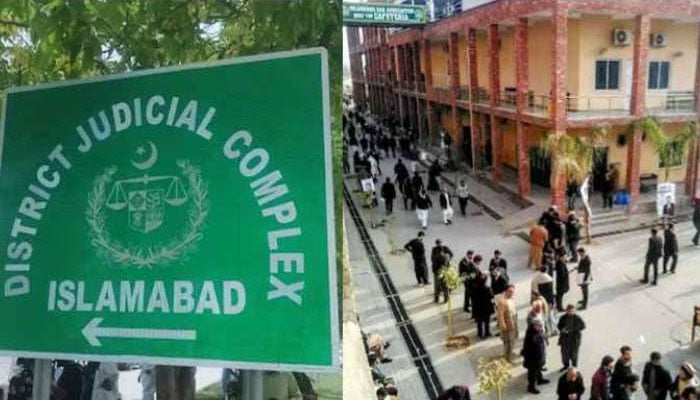
Islamabad district courts begin summer break

The summer vacation in Islamabad’s district and sessions courts began on Saturday and will continue until August 31, according to the official schedule issued by the judicial authorities.

The district judiciary announced that regular court proceedings will remain suspended during the vacation period. However, essential judicial work will continue through designated duty judges to ensure that urgent legal matters are addressed without delay.

The Sessions Judges of both the East and West divisions issued separate duty rosters for the summer break. Under the schedule, one additional sessions judge and one judicial magistrate will remain on duty in each division throughout the vacation period.

The duty judges will hear urgent cases requiring immediate judicial intervention. These include matters related to physical remand, judicial remand, bail applications and other emergency cases that cannot be postponed until the courts reopen after the holidays.

The arrangement has been made to ensure that litigants continue to have access to the courts for urgent legal relief despite the suspension of regular proceedings.

Judicial officials said the vacation roster has been prepared to maintain the smooth functioning of the district judiciary while allowing judges and court staff to observe the annual summer recess.

The district and sessions courts are expected to resume their normal schedule after the summer vacation concludes on August 31. Until then, only cases of an urgent nature will be taken up by the designated duty judges in both the East and West judicial divisions of Islamabad.

Similar Posts

  • | |

    Swabi Tobacco growers burn crop over disputed pric…

    SWABI: Tobacco growers in Swabi took to the streets on Monday, protesting against what they described as unfairly low purchase prices for their crop and demanding enforcement of the official rate announced by the Pakistan Tobacco Board. The protest was held outside the Swabi Press Club, where farmers were joined by political and social activists as well as members of the local community. Growers said they were being offered as little as Rs350 per kilogram, despite the official rate of Rs750 per kilogram. During the demonstration, tobacco grower and former ANP district general secretary Haji Tameez Khan burned around 500 kilograms of his tobacco crop to highlight the financial pressure facing farmers. Speaking at the protest, Khan said the cost of producing tobacco had reached nearly Rs750 per kilogram, making offers of Rs350 to Rs400 per kilogram unsustainable for growers. He said farmers had already suffered substantial losses in the previous season and were now struggling to clear debts owed to labourers and suppliers. Khan said tobacco was a major cash crop and generated significant revenue for the cigarette industry, yet farmers remained uncertain about receiving a price that covered their production costs. He warned that continued failure to address the issue could lead more growers to adopt similar forms of protest. The protesters also criticised the Pakistan Tobacco Board and tobacco companies for failing to resolve the pricing dispute. They called on the authorities to ensure that tobacco-buying companies adhere to the officially approved rate and protect farmers from losses. National Awami Party district chairman Masood Jabbar said tobacco was a key source of income for Swabi’s farming community. He warned that failure to address growers’ grievances could lead to wider protests across the district, with more farmers expected to join future demonstrations.

  • D.I.Khan Youth Hanzala selected as PM’s Skill Ambassador

    DERA ISMAIL KHAN: Young talent from Dera Ismail Khan has achieved a significant national honour as Hanzala has been selected as a “Skill Ambassador for Youth” under the Prime Minister’s Skill Ambassador for Youth initiative. The achievement is being hailed as a proud moment not only for Hanzala and his family but also for Dera Ismail Khan and Pakistan as a whole. The selection was announced at a ceremony marking the formal launch of Pakistan’s first National Youth Employment Policy. Only 16 young people from across the country were selected for the prestigious Skills Ambassador recognition. The selected young ambassadors were specially invited by Prime Minister Muhammad Shehbaz Sharif, who appreciated their achievements and presented them as role models for the youth of Pakistan. Hanzala’s inclusion among the selected ambassadors is being regarded as more than a personal achievement. It represents an inspiring example for young people from Dera Ismail Khan and other areas that dedication, hard work and modern digital skills can lead to recognition at the national level. His selection was particularly based on his expertise and potential in the digital field. Hanzala and the other selected ambassadors have been entrusted with the responsibility of encouraging young people across Pakistan to acquire modern technological and professional skills and helping prepare them for the challenges and opportunities of the future. The achievement has brought pride to Hanzala, his parents, Dera Ismail Khan and the wider Pakistani community, demonstrating that talented Pakistani youth are capable of making their mark at the national level.

  • | |

    Pakistan plans digital system for private Hajj 202…

    The Ministry of Religious Affairs has decided to introduce a new digital system for the private Hajj operation in 2027 in line with Saudi Arabia’s Nusuk Masar system. Under the new arrangement, bookings for private Hajj will be processed through the Ministry of Religious Affairs instead of being handled directly by private Hajj operators. For the first time, both the government and private Hajj operations will come under the direct supervision of the Ministry of Religious Affairs, according to sources. Sources said the private Hajj scheme will be operated through the ministry’s official Pak Hajj app, which will serve as the digital platform for managing bookings and related arrangements. The move is aimed at bringing greater transparency, centralised oversight and digital management to the private Hajj scheme. It will also align Pakistan’s private Hajj operations with the digital procedures being implemented by Saudi authorities. Under the proposed system, pilgrims seeking to perform Hajj through the private scheme will be able to access the relevant services through the official digital platform, while the ministry will maintain direct oversight of the process. The decision marks a significant change from the existing arrangement, under which private Hajj operators play a central role in booking and managing pilgrims. The ministry is expected to announce further details regarding registration, booking procedures, packages, payments and the role of private operators as preparations for Hajj 2027 progress.

  • International Youth Day marked in Peshawar, Youth achievers recognised

    PESHAWAR: The International Youth Day 2026 celebrations in Peshawar brought together young people, educationists, social workers, civil society representatives and government officials to recognise the contribution of youth and discuss ways to create greater opportunities for them. The programme was arranged by the Directorate of Youth Affairs, Government of Khyber Pakhtunkhwa, at Sahibzada Abdul Qayum Hall, University of Peshawar. Taj Muhammad Khan Tarand, Adviser to the Chief Minister for Sports and Youth Affairs, attended the event as chief guest. Muhammad Asif, Secretary Sports and Youth Affairs Department, Khyber Pakhtunkhwa, was also present along with senior officials and youth representatives. The ceremony included the unveiling of a Youth Anthem, a panel discussion, youth-focused activities, success stories, live musical performances and the presentation of Youth Excellence Awards. The Youth Anthem was presented as a reflection of the aspirations, unity and enthusiasm of the province’s young generation. Addressing the participants, Mr Tarand said the provincial government was placing youth development among its key priorities under the leadership of Chief Minister Sohail Afridi. He said the government was focusing on providing young people with opportunities in education, skills, entrepreneurship and sports. He observed that the employment challenge could not be addressed through jobs alone and that young people needed access to finance and practical support to start businesses and build independent livelihoods. Referring to the Ehsaas Naujawan Programme, Mr Tarand said young men and women were being offered interest-free financing to establish businesses. Under the scheme, loans of up to Rs500,000 are available through Akhuwat, while the Bank of Khyber is providing financing of up to Rs5 million. He said the programme’s financial ceiling had been raised from Rs3 billion to Rs5bn, allowing more young people to benefit from the initiative. The adviser encouraged young people to take advantage of government schemes and use them to build sustainable sources of income. He said successful beneficiaries had demonstrated that financial support, combined with determination and the right skills, could help young people become economically independent and create employment for others. Mr Tarand also discussed the proposed new youth policy, saying the existing policy was formulated in 2016 and required revision in view of the changing needs of young people. According to him, the government had sought direct feedback from university students and other young people during the policy formulation process. Their suggestions, he said, would help shape a policy more closely aligned with the aspirations of the province’s youth. He said Rs500 million had been earmarked in the Annual Development Programme 2026-27 for implementation of the youth policy, with spending planned on training, exposure and other youth development activities. The government was also moving ahead with the establishment of Jawan Markaz in districts across the province, he said. The centres are intended to provide facilities including internet connectivity, computer laboratories, auditoriums and training spaces for young people. Speaking about sports, Mr Tarand said the government wanted to expand opportunities for young athletes and provide them with platforms to compete at national and international levels. He highlighted the performance of KP athlete Attaullah, who secured gold medals in the 100-metre and 200-metre events at the National Junior Championship and was later selected to represent Pakistan in the United States. The adviser said the government was also seeking wider participation in sports, with separate sporting activities organised for minority communities, madrassa students and transgender people. He added that plans were also being developed for inter-school and inter-collegiate games to give more young athletes an opportunity to identify and develop their potential. The Youth Excellence Awards formed another important part of the event. Awards and certificates of appreciation were presented to young achievers, social activists and individuals recognised for their contributions to society, community development and youth empowerment. Among those honoured were Hassan Nisar, Founder and CEO of Metrix Pakistan, and Ammad Ali, CEO of RankingGrow, besides several other young achievers from across Khyber Pakhtunkhwa. The panel discussion focused on the challenges confronting young people and the opportunities available to them. Speakers and participants discussed education, skills development, entrepreneurship, technology, innovation and the need for greater exposure and participation in social and economic activities. Director Youth Affairs Abbas Khan Afridi said the event was organised to recognise the achievements of young people and provide them with a platform to express their views and share their experiences. He said the Directorate of Youth Affairs was working to connect young people with opportunities in skills development, education, entrepreneurship, sports and other areas. “KP’s youth have talent, energy and ideas. Our role is to provide them with the right platforms and opportunities so they can turn their potential into meaningful achievements,” Mr Afridi said. He added that the Directorate would continue to organise programmes across the province aimed at bringing young people together, encouraging learning and creating platforms where they could showcase their abilities. The event ended with live musical performances and a celebration of the achievements of the province’s young people. The International Youth Day celebrations underlined the importance of investing in youth and creating space for their participation in the social, economic and civic life of Khyber Pakhtunkhwa. The message of the event was clear: empowering young people today is essential to building a stronger and more progressive future for the province.

  • |

    Solar boom needs battery storage, grid reforms to sustain momentum

    Islamabad: Pakistan’s rapid expansion of solar energy has already generated billions of dollars in savings, but experts and policymakers on Tuesday warned that battery storage, grid modernization and supportive policies are now essential to sustain the country’s clean energy transition. Speaking at the Solar, Storage and Flexibility 2026 Conference, Federal Minister for Power Awais Leghari said Pakistan’s energy mix is already 50% clean and is targeted to reach 90% by 2035. He stressed that local manufacturing of battery storage systems and the introduction of a daytime Time-of-Use (ToU) tariff would be key to integrating growing solar generation into the national grid. Addressing the conference, PPP Vice President Senator Sherry Rehman said solar energy has already saved Pakistan US$12 billion, with another US$6.3 billion in savings expected this year. She said the country now faces an energy management challenge rather than a generation shortfall, calling for major investments in battery storage, smart grids and modern transmission infrastructure. Rehman said one in every five Pakistani households now uses solar energy and urged international climate finance to prioritize distributed renewable energy, battery storage and affordable financing for households and small businesses instead of focusing mainly on large utility-scale projects. She also opposed the proposed 18% GST on solar equipment, saying it would have slowed Pakistan’s clean energy transition, and called for targeted subsidies, microfinance and supportive regulations to expand access to renewable energy, particularly in underserved and off-grid communities. Renewable energy experts noted that Pakistan has installed an estimated 38 gigawatts of distributed solar capacity, while imports of lithium-ion Battery Energy Storage Systems (BESS) surged 220% in 2025, signalling rapidly growing demand for energy storage. Global renewable energy leaders, including Global Solar Council CEO Sonia Dunlop and Renewable Energy Council Asia Pacific representative John Grimes, described Pakistan’s consumer-led solar revolution as a model for other countries but stressed that a comprehensive battery storage policy and modern electricity grid are now critical to maintaining the momentum.

  • | |

    Congo tightens grip on mineral exports with ban on…

    The Democratic Republic of Congo has prohibited exports of copper concentrate and cobalt concentrate, according to a government order reviewed on Thursday, marking the latest step in an ongoing push to force more mineral processing to happen inside the country and capture a larger share of the value generated by its mining sector. News of the ban sent benchmark three month copper prices on the London Metal Exchange up by as much as 1.8 percent to $14,369.50 a metric ton, the highest level since January 29, when the metal touched an all time peak of $14,527.50. Prices stood at $14,300 as of 0930 GMT following the report. Congo holds the position of the world’s largest cobalt supplier and ranks among the top sources of copper and other minerals critical to the global energy transition. The government is using that leverage to encourage the build out of domestic processing capacity rather than allowing raw or partially processed materials to leave the country. The order, dated June 29 and signed jointly by Mines Minister Louis Kabamba Watum, Foreign Trade Minister Julien Paluku Kahongya and Economy Minister Daniel Mukoko Samba, states plainly that exporting copper and cobalt concentrates is now prohibited. The prohibition took effect immediately, though the order allows for one year export waivers to be granted under unspecified strategic circumstances. The same order also establishes a new tax structure covering economically significant mining by products, with a three month transition period built in before the new rules take full effect. Officials said the export ban aims to push mining companies toward marketing or exporting higher value processed mineral products rather than raw concentrate. This marks the fourth time Congo has restricted concentrate exports, following similar bans imposed in 2013, 2019 and 2023, each of which included waivers in cases where domestic smelting capacity could not keep pace with output. The new order formally repeals the 2023 measure and its associated exemptions, replacing it with a broader regulatory framework governing both mineral exports and taxation of significant by products recovered during processing. Congo already exports the vast majority of its copper in refined form. During the first quarter of 2026, the country shipped 696,725 tons of copper cathodes, compared with just 53,926 tons of copper concentrate containing roughly 18,863 tons of copper metal, according to official figures. Over the same period, Congo exported 51,940 tons of cobalt hydroxide containing about 17,054 tons of cobalt metal. Christian Geraud Neema, a mining analyst with the nonprofit China Global South Project, said the new ban is unlikely to significantly disrupt most mining operators since the bulk of Congo’s copper and cobalt already undergoes domestic refining before export. He said the operation most likely to feel the impact is the Kamoa Kakula venture, jointly owned by Ivanhoe Mines, China’s Zijin Mining and the Congolese government, which still exports some volume of concentrate under existing exemptions. Neither Ivanhoe nor Zijin responded immediately to requests for comment, and the Congolese chamber of mines also did not respond. The newly introduced tax regime applies broadly across mineral categories, extending to trace and ultra trace minerals recovered during the refining process. These by products will be taxed using a 55 percent valuation coefficient, with royalties applied alongside those already charged on the primary mineral being extracted. The policy fits into a broader pattern across resource rich African nations seeking to move beyond raw material exports and capture more manufacturing and processing value domestically, a shift that has gained momentum as global demand for energy transition minerals like copper and cobalt continues to grow.

Leave a Reply

Your email address will not be published. Required fields are marked *