jamaateislami announces nationwide
| |

Jamaat-e-Islami announces nationwide protest again…

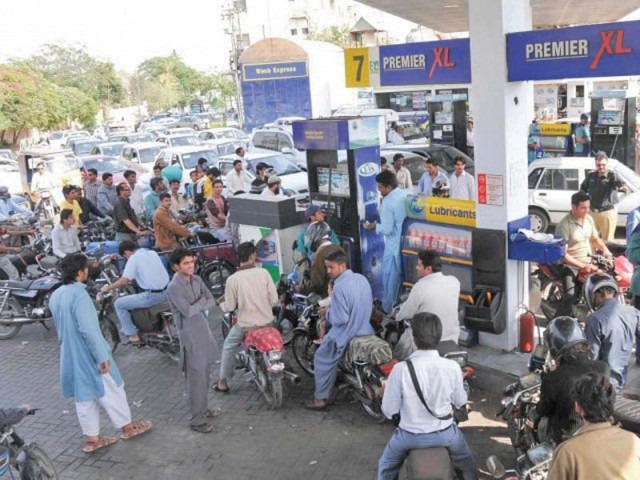
Jamaat-e-Islami (JI) Emir Hafiz Naeem Ur Rehman has announced a nationwide protest against the petroleum levy on Friday, August 7, urging citizens across Pakistan to participate in what he described as a decisive demonstration against rising fuel taxes and worsening economic conditions.

According to a statement issued from the party’s headquarters in Mansoorah, preparations for the nationwide campaign have entered their final phase. Jamaat-e-Islami leaders and workers are actively engaging with communities through corner meetings, public awareness campaigns, and outreach efforts aimed at mobilizing citizens for the protest.

Hafiz Naeem Ur Rehman said the demonstrations are not driven by political interests but are intended to represent the concerns of ordinary Pakistanis struggling with inflation, unemployment, and what he called an unbearable tax burden. He maintained that the movement seeks economic relief for the public rather than political gain.

The JI chief announced that he will address a women’s protest rally on August 6 at Wahdat Road in Lahore, organized by the party’s women’s wing. He said women would also raise their voices against government economic policies and support the campaign demanding relief from rising living costs.

Appealing directly to the country’s youth, Hafiz Naeem urged motorcyclists to join the demonstrations on August 7 and participate peacefully. He stated that protesters would stage sit-ins on major highways and temporarily block roads connecting districts to press the government to address public demands. However, he emphasized that emergency vehicles, including ambulances and rescue services, would be allowed to pass without obstruction.

The Jamaat-e-Islami leader also warned the government against interfering with citizens’ constitutional and democratic right to peaceful protest. He said any attempt to suppress the demonstrations would be the responsibility of the authorities.

Hafiz Naeem Ur Rehman called on the government to immediately abolish the petroleum levy, review expensive agreements with Independent Power Producers (IPPs), eliminate electricity load-shedding, and implement effective measures to control inflation. He added that the party’s peaceful protest movement would continue until what he described as unjust economic policies are reversed.

The planned demonstrations are expected to take place across multiple cities and districts, making them one of Jamaat-e-Islami’s largest nationwide protest campaigns focused on economic issues and public relief in recent months.

Similar Posts

  • | |

    Pakistan’s HIV crisis deepens as child infection…

      Islamabad: Pakistan is facing a growing HIV crisis, with an estimated 369,000 people living with the virus while only about 84,400 cases are formally registered, according to a government Task Force report. Health experts and concerned citizens have warned that the real situation may be much worse because the country still lacks reliable and complete disease data. The warning came during a National Dialogue on HIV and AIDS organised by Lok Sehat, where doctors, public health experts, medical organisations, civil society groups and representatives of communities affected by HIV discussed the growing problem. Lok Sehat Convener Dr Zafar Mirza said the government must stop trying to control the disease by controlling or hiding data. He demanded that reliable information about HIV and other blood-borne diseases should be made available and that the government should take greater financial responsibility for HIV, tuberculosis, and malaria instead of depending heavily on international donors. The issue has become more serious because HIV infections are increasingly being reported among children and people outside the groups traditionally considered at higher risk. The Task Force report estimates that 369,000 people are living with HIV in Pakistan, but only around 84,400 cases are formally registered and about 60,789 people are receiving antiretroviral treatment. The report says the recent appearance of HIV among children in low-risk rural communities points to serious weaknesses in infection control, blood safety, healthcare regulation, and medical management. The situation in Taunsa Tehsil of Dera Ghazi Khan has raised particular concern. The Task Force report says 127 children were confirmed to have HIV during a five-month period between December 2024 and April 2025. Around 79 percent of those children were below five years of age, with the median age only three years. Investigations largely ruled out transmission from mothers because nearly all mothers of the infected children tested negative for HIV. The report identified unsafe blood transfusions and contaminated injection practices as major drivers of the Taunsa outbreak. It also found problems involving blood donor screening, unregulated healthcare providers, reuse of disposable syringes, excessive use of injections, poor sterilisation and weak infection prevention systems. Dr Zafar Mirza said repeated use of syringes and needles was a major suspected route of HIV transmission among people receiving healthcare. He called for proper training of healthcare workers and public awareness so patients and families understand the importance of using new syringes and needles. He also urged doctors to avoid unnecessary injections when oral medicines are medically suitable. The problem is not limited to one area. Former National AIDS Control Programme and IHRA chief Dr Quaid Saeed said 13 HIV outbreaks had been reported in Pakistan during the last 18 years, but only two, including the outbreaks in Jalalpur Jattan and Ratodero, had been extensively investigated. He called for proper investigations into every outbreak. The Task Force report also says the Ratodero outbreak in Sindh in 2019 affected more than 1,000 people, most of them children under 12. Investigations linked the outbreak to contaminated syringes, unsafe injections, unregulated blood transfusions, quackery and serious weaknesses in infection prevention and control. Experts also raised concerns about the treatment of people living with HIV. Dr Zafar Mirza said stigma remains a serious problem, including within parts of the medical profession. He said there had been cases where doctors refused to treat patients after learning that they had HIV. He stressed that HIV does not spread through ordinary contact such as shaking hands or being near an infected person. He called for stronger public awareness through television, newspapers and social media to correct false beliefs and reduce discrimination against patients. In Islamabad, infectious diseases expert Dr. Naseem Akhtar said many of the HIV cases seen at her centre involved people who inject drugs, deportees, transgender persons, men who have sex with men, and female sex workers. She said some cases had also been found among children. Dr Asma Naseem said the situation in Karachi was also worrying, particularly because of a rise in HIV cases among children. She said children with HIV were being brought to the Sindh Institute of Urology and Transplantation with kidney failure, describing the trend as highly concerning. The experts said weak regulation of healthcare facilities was another major part of the problem. Dr. Zafar Mirza called for stronger healthcare commissions, blood transfusion authorities, and other regulators, along with better funding, trained staff, and modern technology. The government Task Force has recommended nationwide surveillance of syringes, stronger regulation of medical devices, and a phased move towards auto-disable syringes. It has also proposed tougher action against unsafe medical practices. Another major recommendation is the creation of a national real-time HIV surveillance dashboard. The system would collect information from treatment centres, blood transfusion centres, provincial disease surveillance units and other health facilities so that new cases could be reported quickly at the national level. The Task Force has also proposed stronger testing and care for children, including early infant diagnosis, trained counsellors and paediatric HIV specialists in areas facing outbreaks. It has recommended social protection for children living with HIV, including support for medicines, nutrition, education, transport and psychological care. The proposed reforms also include stronger laws, mandatory reporting of HIV cases and outbreaks, better sharing of health data between provinces and agencies, and accountability for public and private healthcare providers where negligence contributes to disease transmission. The government report says a high-level National HIV Technical Working Group is also proposed, with experts including Maj. Gen. (R) Dr. Azhar Mehmood Kayani, Dr. Zafar Mirza, Dr. Abdul Wali Khan, Dr. Amjad Mahmood, Dr. Adnan Khan, Dr. Huma Qureshi, Dr. Hasan Abbas Zaheer, Brig. Dr. Nuzhat Mushahid, Dr. Saira Afzal, Dr. Fatima Mir, Dr. Saba Jamal, Dr. Rana Jawad Asghar and Dr. Khalid Rehman. Dr Zafar Mirza also raised concern over Pakistan’s dependence on international funding. During the briefing, he said that around 90 percent of spending on HIV, tuberculosis and malaria over the previous five years had come through the Global Fund. He argued that Pakistan should gradually take full

  • | |

    Cardi B talks about being single forever in new co…

    Cardi B is opening up about her love life once again, making it clear that while she is currently single, she has no intention of staying that way forever. The Grammy-winning rapper recently addressed fans during an X Spaces conversation, where she spoke candidly about relationships, personal growth, and the challenges of dating in the public eye. Her honest remarks come after months of speculation surrounding her romantic life following the end of her marriage to Offset.  During the live discussion, Cardi responded to fans who encouraged her to remain single and focus only on herself. However, the rapper explained that she does not see permanent singlehood in her future. She said she spent her entire Little Miss Drama tour without dating or entertaining anyone romantically, but emphasized that she eventually wants companionship again. According to Cardi, being single has given her time to reflect, but it does not mean she plans to avoid relationships for the rest of her life.  The 33-year-old artist, whose real name is Belcalis Marlenis Almánzar, has experienced several highly publicized relationships over the years. Her marriage to rapper Offset was filled with ups and downs before eventually ending. Since then, Cardi has focused on balancing motherhood with her music career while navigating life in the spotlight. As the mother of four children, she has often spoken about wanting to provide a stable and loving environment for her family while continuing to pursue her professional goals.  Her latest comments have also fueled fresh speculation about her dating life. In recent days, Cardi has been photographed spending time in Italy with Nigerian footballer Maduka Okoye, leading to rumors that the pair could be more than friends. Although the rapper has not confirmed a romantic relationship, she acknowledged that dating as a celebrity is far from easy. She explained that because of her fame, she has to be extremely selective about the people she allows into her personal life.  Despite the ongoing headlines, Cardi’s message was ultimately about moving forward rather than dwelling on the past. She made it clear that she values love and companionship, but she is also committed to protecting her peace and making thoughtful decisions about future relationships. Her comments suggest she is embracing a new chapter—one focused on happiness, stability, and personal growth rather than public expectations.  As fans continue to follow every development in her personal life, Cardi B remains unapologetically honest about her emotions. Whether she chooses to stay single for a while longer or eventually finds a new partner, the rapper’s latest confession shows she is determined to live life on her own terms while staying true to herself and her family. 

  • |

    Buleha” faces suspension as Senate demands name change and removal of Bulleh Shah dialogue

    Islamabad: A controversy over the Pakistani film “Buleha” after a Senate committee questioned whether the movie damaged the image of legendary Sufi poet Baba Bulleh Shah by showing a character connected with violence, weapons and personal justice. During a heated discussion, Senator Pervaiz Rashid questioned how a film carrying the name of a famous symbol of peace and love was approved despite scenes and dialogues that critics said were opposite to Bulleh Shah’s teachings. The controversy intensified when members of the Censor Board admitted that some important points were overlooked during the approval process. Dr. Sultan Azam Taimuri, a senior member of the board, accepted responsibility and said the concerns raised about the connection between the fictional character and Baba Bulleh Shah should have been discussed more carefully. The committee argued that Baba Bulleh Shah was known for promoting peace, humanity and love, while the film appeared to show a character using force and weapons to fight criminals. Members questioned whether such a portrayal could create confusion among young viewers about the real message and personality of one of Punjab’s most respected Sufi poets. The debate became intense when a Senator Pervaiz Rashid asked if a film about another respected poet, such as Khushal Khan Khattak or Ghalib, showed that personality in a completely opposite way, would the Censor Board approve it. A censor board member admitted that such a film would not be acceptable and said it would be wrong to show a historical personality against their actual beliefs. The committee then questioned why the same standard was not applied to “Buleha.” The Censor Board defended its decision by saying the movie was not a biography of Baba Bulleh Shah. Officials explained that the character in the film was fictional and had no direct connection with the real life of the Sufi poet. They said the board considered the movie a fictional story and believed the name alone was not enough reason to stop its release because Bulleh Shah himself used the word “Bullah” in his poetry. However, the committee pointed out that the board’s explanation created confusion. Members questioned how the film could have no connection with Bulleh Shah but still use a name and dialogue strongly linked with him. The discussion became more serious when Dr. Sultan admitted that the committee’s concerns had a point. He said the board did not discuss this angle properly at the time of approval and accepted responsibility. He also admitted that a dialogue in the film where the character compares himself with Bulleh Shah could be controversial. Another Censor Board member, Syed Farooq Hassan, also accepted that the board overlooked this perspective. He said the board knew Baba Bulleh Shah’s teachings were completely different from the violence shown in the film, but members believed the character was fictional and not based on the actual life of Bulleh Shah. The board members also explained that Pakistan’s film industry was already struggling, and they wanted to support local movies within acceptable limits. They said promoting cinema was also one reason behind their decision. The committee, however, questioned whether supporting the film industry should come before protecting the image of respected cultural and historical figures. During the meeting, criticism was also directed at the writer of the film. Members questioned whether being a successful film writer was enough qualification to handle the story of a major historical and spiritual personality. They argued that the writer’s fame came mainly from action based films and said success in commercial cinema does not automatically mean expertise in history, culture or the lives of national figures. One committee member strongly criticised the idea of approving a film simply because it was written by a famous writer. He said the writer was known for introducing violent action elements in films but was not known as an expert on Sufi personalities or Pakistan’s cultural traditions. The committee also rejected the argument that other provincial censor boards had already approved the film. Officials said Punjab and Sindh censor boards had approved the movie without cuts, and it had also been aired on Local TV. However, committee members said approval by other boards did not remove the responsibility of reviewing the film’s impact. The discussion also raised questions about the knowledge and background of Censor Board members. Members suggested that people approving films about major personalities should have knowledge of history, literature, culture and society. They said the selection criteria for board members should ensure they understand how films can influence children and families. The committee argued that showing respected personalities incorrectly could affect how younger generations understand their history. At the end of the meeting, the committee made a strong recommendation regarding the film. The committee suggested that the film name should be changed and the dialogue in which the character calls himself Bulleh Shah should be removed. It further recommended that the film’s exhibition licence should remain suspended until these changes are made and that online versions should also be removed if available. The Senate Standing Committee on Information and Broadcasting has also included the film “Buleha” issue in its upcoming agenda, calling Censor Board members and producers to explain the certification process and the discussions behind the film’s approval.

  • |

    Ronaldo wedding rumor sends fans to wrong Church

    FUNCHAL: Hundreds of Cristiano Ronaldo fans reportedly gathered outside a historic cathedral in Portugal over the weekend, hoping to catch a glimpse of the football superstar on his wedding day — only to discover that they had arrived for someone else’s ceremony. Rumors circulating on social media and in media reports claimed that Ronaldo was set to marry his longtime partner, Georgina Rodriguez, on Saturday in Funchal, the capital of Portugal’s Madeira island. Although Ronaldo’s family reportedly denied the claims, the speculation was enough to send scores of excited fans and journalists to the city’s historic Sé Cathedral. Many waited outside for hours, holding mobile phones and cameras in anticipation of the arrival of the Al Nassr star and Rodriguez. But the expected celebrity wedding never happened. Instead, the cathedral was preparing to host the wedding of a local couple, Nicole and Fabio. Fabio had already arrived at the church, while Nicole faced an unexpected challenge: getting through the crowd that had gathered outside believing Ronaldo would soon appear. The unusual situation created confusion around the cathedral, with tourists, fans and members of the media filling the surrounding streets. The Sé Cathedral administration later addressed the incident on its official Facebook page, congratulating the newly married couple while explaining that the large number of journalists and tourists had caused considerable confusion. The church eventually had to be closed while the wedding ceremony took place. In another post, the cathedral described the scene outside as something it had never experienced before, noting that the bride had difficulty entering the church because of the crowd. The guests also appeared to find the situation amusing. One guest joked to local media that they suddenly felt like celebrities themselves. Another questioned how anyone could have believed Ronaldo would arrive for a wedding without significant security arrangements. Ronaldo himself appeared to see the funny side of the episode. The footballer reportedly reacted to an Instagram post about the confusion with laughing-with-tears emojis, giving fans a glimpse of his reaction without directly confirming or denying any future wedding plans. Ronaldo and Rodriguez have been together for years and became engaged last year. Reports have previously claimed that Ronaldo presented Rodriguez with an expensive engagement ring featuring a large diamond. Despite the latest frenzy in Madeira, the couple has not announced a wedding date. For now, fans hoping to witness Ronaldo walk down the aisle will have to wait — and perhaps check the guest list before heading to the church.

  • Only 7% government school students enter top colleges

    Karachi – The standard of education in Karachi’s government schools has declined to a worrying level with only 7 percent of students admitted to top government colleges this year coming from government schools. Questions are being raised over the quality of education in Karachi’s government schools. Sources in the Education Department have revealed that the admission rate of government school students in top government colleges is extremely low. As many as 93 percent of admissions in Karachi’s government colleges were secured by students from private schools. According to Education Department sources, a total of 13,211 students were admitted to Karachi’s top 10 government colleges. However, only 947 students among them came from government schools. According to the sources, at Adamjee Government Science College, only 28 government school students were admitted out of a total of 613 admissions. At DJ Sindh Government Science College, only 44 government school students secured admission out of 1,258 admissions. Similarly, Delhi Government Science College admitted 801 students of whom only 28 were from government schools. At Government Boys College Nazimabad, only 60 government school students were admitted out of a total of 1,317 admissions.

  • |

    Punjab opposition challenges Green Property Certificate system

    Lahore: Opposition member of the Punjab Assembly Aftab Ahmad Khan has criticised the provincial government’s Green Property Certificate system, claiming that poor implementation has disrupted property transactions and created difficulties for citizens across Punjab. The opposition lawmaker has submitted an adjournment motion in the provincial assembly, highlighting what he described as serious administrative and technical shortcomings in the newly introduced system. According to the motion, the system was implemented across Punjab simultaneously without adequate preparation, complete computerised land records or sufficient training for the staff responsible for processing property transactions. Aftab Ahmad Khan said the system had become particularly difficult for ordinary citizens and overseas Pakistanis seeking to buy or sell property in the province. He claimed that property transactions in several areas had effectively slowed down or come to a halt because of problems associated with the new procedure. According to the motion, people who need to sell properties urgently are facing financial difficulties because transactions cannot be completed promptly. The opposition member also pointed to discrepancies in computerised land records and inadequate staff training. He alleged that errors in records and excessive discretionary powers available to officials could create opportunities for corruption and contribute to disputes over land ownership. Another concern raised in the motion is the certificate’s validity period. The opposition member said the 90-day validity period adds to the difficulties faced by property owners and buyers, particularly when transactions are delayed because of administrative problems. The motion further criticised what was described as a complicated “seven-window operation”. Instead of simplifying property transactions through a one-window mechanism, the current process has allegedly increased the number of offices and stages applicants must navigate. Aftab Ahmad Khan said the situation was particularly problematic for properties owned by multiple people, as co-owners may face additional difficulties in completing transactions within the required time. The opposition has called for immediate correction and updating of land records and better preparation of officials handling the system. It has also demanded the establishment of a user-friendly online portal specifically for overseas Pakistanis so they can complete property-related procedures without repeatedly visiting government offices. An effective grievance redressal mechanism has also been proposed to enable citizens to report problems and obtain timely solutions. The motion states that widespread concern and frustration are emerging among citizens over the implementation of the system.

Leave a Reply

Your email address will not be published. Required fields are marked *