
directs comprehensive review
| |

KP CM directs comprehensive review of hospital saf…

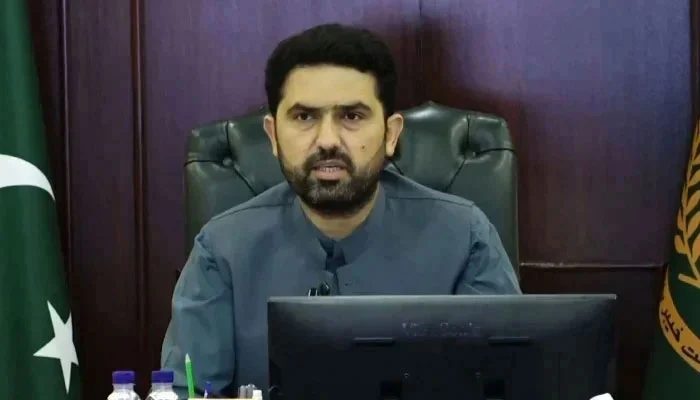
PESHAWAR: Khyber Pakhtunkhwa Chief Minister Sohail Afridi and Chief Secretary Shahab Ali Shah contacted the provincial Health Secretary and directed him to conduct a comprehensive review of security and safety arrangements at hospitals across the province.

During the discussion, it was also decided to establish monitoring teams to inspect and assess safety measures at hospitals. The teams will be tasked with checking whether hospitals are adequately prepared to deal with emergencies and whether the required safety protocols are being properly implemented.

According to sources in Peshawar, the monitoring teams will include officials from several departments, including Civil Defence, the Health Department, Rescue services, the Provincial Disaster Management Authority (PDMA), and other relevant departments. The involvement of multiple departments is aimed at ensuring a coordinated assessment of hospital safety arrangements.

Sources said the monitoring teams will particularly examine fire safety arrangements and other precautionary measures at hospitals. The teams will assess whether hospitals have adequate arrangements to prevent and respond to fire incidents and other emergencies.

The move comes as the provincial government focuses on strengthening safety standards in healthcare facilities and ensuring that hospitals are properly equipped to deal with any untoward incident.

The Health Department has also called a meeting to discuss safety arrangements at hospitals across Khyber Pakhtunkhwa. According to sources, the meeting will review the preparations in place to deal with any untoward incident or emergency situation at healthcare facilities.

Officials will also examine existing safety procedures and identify areas where improvements may be required. The meeting is expected to focus on ensuring that hospitals follow appropriate safety protocols and that relevant departments are prepared to respond quickly in case of an emergency.

Khyber Pakhtunkhwa Health Secretary Fayyaz Ali Shah said that standard operating procedures (SOPs) would be developed for all hospitals across the province.

He stressed the importance of ensuring proper safety arrangements at healthcare facilities and said that negligence regarding fire safety measures would not be tolerated.

The Health Secretary further made it clear that hospital administrations would be expected to comply with the safety requirements and take all necessary precautions to protect patients, attendants, doctors, nurses and other hospital staff.

The provincial government’s decision to establish monitoring teams is expected to provide a mechanism for regularly assessing safety arrangements and identifying shortcomings at hospitals. The teams will inspect facilities and report on the condition of fire safety systems and other emergency preparedness measures.

The inclusion of Civil Defence, Rescue, PDMA and other departments in the monitoring process is also intended to improve coordination between institutions responsible for emergency response and disaster management.

The government has directed the Health Department to ensure that safety standards are implemented effectively across all hospitals in the province. The development of province-wide SOPs is expected to provide hospitals with clear guidelines regarding fire prevention, emergency preparedness and response procedures.

Officials have reiterated that no negligence will be tolerated when it comes to fire safety arrangements in hospitals. The upcoming inspections and departmental meeting will help determine whether existing measures are sufficient and what additional steps may be required to improve safety.

The initiative reflects the provincial government’s efforts to strengthen emergency preparedness and ensure safer healthcare facilities throughout Khyber Pakhtunkhwa.
Similar Posts

  • |

    Powerful 7.7 quake kills 20 in Indonesia

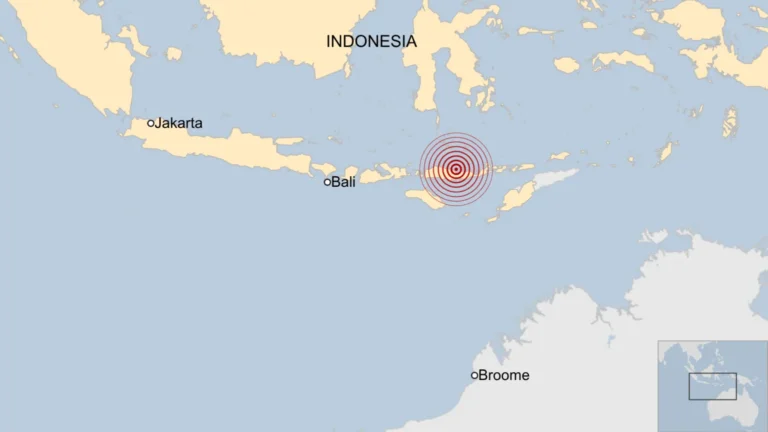
    At least 20 people have been killed after a powerful 7.7-magnitude earthquake struck Indonesia’s Flores Island early Saturday, triggering widespread panic, building damage and a series of strong aftershocks. The earthquake struck shortly before 5am local time at a depth of about 15 kilometres, according to Indonesia’s meteorological and geophysics authorities. The relatively shallow depth increased the potential for severe damage across affected areas. Indonesia’s disaster management authorities said several people were injured, with the figures still considered preliminary as rescue teams continue searching damaged buildings and assessing casualties. The strongest aftershocks included a 6.1-magnitude tremor, forcing residents to remain outdoors because of fears that weakened structures could collapse. Dramatic scenes were reported at the port of Maumere, where sections of a terminal building broke apart during the earthquake. A gangway leading to a ferry also collapsed, sending some passengers into the sea as people attempted to escape. East Nusa Tenggara Governor Emanuel Melkiades Laka Lena said some victims were killed while sleeping after rubble from collapsing structures fell on them. Residents described the earthquake as extremely frightening. People rushed out of their homes and moved towards safer areas, with many heading to higher ground after authorities issued a tsunami warning. The tsunami alert was later lifted about three hours after the earthquake when no significant rise in sea levels was detected. Authorities said around 2,000 people evacuated or moved to safer locations on their own during the warning. Officials reported fatalities in several provinces, including Sikka, Manggarai and East Manggarai. At least two people were seriously injured while 11 others suffered minor injuries. The earthquake also caused extensive structural damage. Initial assessments indicated that dozens of houses had been severely damaged along with healthcare facilities, places of worship, government buildings, an educational institution and a warehouse. Manggarai was identified as one of the worst-affected areas. Rescue and assessment teams are continuing to work in the region, although difficult mountainous terrain could make operations challenging. Authorities have urged residents to remain calm, avoid coastal areas and stay away from buildings that have been damaged or weakened by the earthquake and aftershocks.

  • | |

    Sindh Chief Minister reviews Karachi water reform …

      Sindh Chief Minister Syed Murad Ali Shah met with World Bank Country Director Bolormaa Amgaabazar during a high-level meeting held to review the progress of Karachi’s water reform projects. The meeting focused on accelerating initiatives aimed at improving the city’s water supply and wastewater management systems. It was attended by the Sindh Minister for Local Government, Karachi Mayor Murtaza Wahab, the Chief Secretary, the Principal Secretary, and other senior government officials. During the meeting, Chief Minister Murad Ali Shah and the World Bank Country Director assessed the overall progress of the Karachi Water and Sewerage Services Improvement Project (KWSSIP). Both sides agreed on a fast-track roadmap to improve Karachi’s water supply and drainage infrastructure. The Chief Minister directed all relevant departments to ensure the timely completion of ongoing KWSSIP projects and to accelerate progress on the K-IV water supply project, which is considered one of the city’s most important infrastructure initiatives. Officials informed the meeting that Sui Southern Gas Company handed over the project site on June 22, 2026. Preparations are currently underway for a joint technical inspection of the 96-inch diameter water pipeline. In addition, rehabilitation work on the NIPA Bridge and other related technical activities is progressing according to schedule, with completion targeted for August 20. The briefing also highlighted that the procurement process for the K-IV expansion project has entered its final phase. The World Bank has already issued its No Objection Certificate (NOC), clearing the way for the next stage of implementation. Authorities stated that the official tender for the K-IV project will be advertised shortly. Before large-scale installation begins, a pilot program will be launched to evaluate technical performance and operational efficiency. The meeting included a detailed review of the appointment of consultants and the technical studies required for the project’s successful implementation. Officials emphasized that these studies are essential to ensure that the infrastructure meets international standards and addresses Karachi’s long-term water management challenges. Karachi Mayor Murtaza Wahab informed the participants that chlorination stations have been relocated to their designated sites and are currently undergoing commissioning. Water quality testing is expected to begin on July 30, marking another significant milestone in the project. He also reported that compensation has been paid to 186 out of the 203 individuals affected by the development works, demonstrating continued progress in addressing social and resettlement obligations. Chief Minister Murad Ali Shah instructed the Karachi Water and Sewerage Corporation (KWSC) to complete the commissioning and testing process without delay. He reiterated that providing safe and clean drinking water to the people of Sindh remains one of the provincial government’s highest priorities. The Chief Minister further directed all concerned institutions to strengthen coordination and communication to avoid unnecessary delays. He stressed that modern water utility organizations operate through effective data management, metering systems, and advanced technology, adding that Karachi requires a modern and efficient water management system capable of meeting the demands of its growing population. Speaking at the meeting, World Bank Country Director Bolormaa Amgaabazar reaffirmed the World Bank’s continued commitment to supporting Karachi in achieving sustainable water supply and wastewater management. She emphasized that institutional reforms, good governance, social safeguards, and timely implementation are essential for the long-term success of the projects. She also expressed confidence that continued cooperation between the Sindh government and the World Bank would help improve essential public services and enhance the quality of life for Karachi’s residents.

  • |

    TTAP condemns police violence against protesters in Lahore

    LAHORE: Chief Organiser Tehreek-e-Tahafuz-e-Ayin-e-Pakistan (TTAP) Punjab Ammar Ali Jan and Information Secretary TTAP Punjab Shayan Bashir have condemned the indiscriminate police violence unleashed on peaceful demonstrators outside Aiwan-e-Adl on Wednesday, saying that three years after his incarceration Imran Khan remains the most popular leader in the country and a unifying symbol whose standing continues to terrify the illegitimate rulers of this province. They said the day marked the abandonment of even the pretence that Article 16 of the Constitution still stands in Punjab. Thousands of citizens, workers, lawyers and civil society members had assembled outside the courts when police baton-charged the gathering without provocation, striking women and children present at the site. PTI Lahore President Mian Akram Usman and MPA Sheikh Imtiaz were manhandled, their clothing torn in public view. More than fifty workers, along with sitting members of the Punjab Assembly, were taken into custody. “A government that will not answer an application on paper has chosen to answer it with lathis in the street,” Bashir said. “PTI Lahore applied in writing to the Lahore Deputy Commissioner for permission to assemble peacefully. The administration returned silence. Today it returned batons.” The protests were not confined to Lahore. Demonstrations were held in Faisalabad, Multan, Rawalpindi, Kasur, Jhang, Kamalia in Toba Tek Singh and other districts across Punjab. The state’s own conduct is the measure of what it fears. Permission was refused across three provinces, a courthouse precinct was baton-charged and elected legislators were dragged into custody, all on account of a man who has been in a cell since 2023. Nobody deploys that against a spent force. Ammar Ali Jan said the beating was not aimed at one party alone. “When the state clubs women, children and elected representatives outside a courthouse, it is not policing a crowd, it is informing ordinary people that the Constitution was written for somebody else,” he said. “A right that survives only until the administration is irritated by it is not a right at all.” The warning had already been given. Amnesty International said on Tuesday that ahead of the anniversary gatherings the authorities must facilitate the right to peaceful protest and ensure there was no repeat of unlawful and arbitrary arrests. Punjab read that warning and did the opposite within twenty four hours. The violence reached beyond political workers. Aaj TV court reporter Natiq Rehan was assaulted by police while covering the rally and placed in a prisoners van, filmed and reported in the press. When the state beats the witness alongside the demonstrator, it has said plainly what it wants kept off the record. The leaders demanded the immediate release of every detained worker and legislator, registration of cases against the officers who ordered and carried out the operation, and a judicial inquiry into the conduct of the Lahore administration.

  • | |

    Kabal bomber identified, probe intensifies

    SWAT: Khyber Pakhtunkhwa Inspector General of Police Zulfiqar Hameed has confirmed that authorities have identified the suicide bomber responsible for the deadly attack near Kabal Police Station in Swat, as investigators continue efforts to uncover the network behind the assault. Speaking to the media in Swat, the provincial police chief announced that a Joint Investigation Team (JIT) would be formed to conduct a comprehensive probe into the bombing. He also confirmed that the families of the police personnel martyred in the attack would receive the government’s martyrs’ compensation package. According to the IGP, intelligence agencies had already been alert to potential security threats, prompting heightened security measures around the police station. He said vigilant police officers intercepted the suicide attacker before he could reach his intended target, triggering the explosion. Zulfiqar Hameed praised the courage of the police personnel and reiterated the force’s commitment to strengthening its operational capabilities. He noted that while terrorist groups continue to reorganize, security forces are actively pursuing militants and will not allow them to regain a foothold in the province. The police chief confirmed that the identity of the suicide bomber has been established, while investigations are ongoing to identify his accomplices and determine the circumstances surrounding the attack. The blast near Kabal Police Station claimed the lives of several people, including police personnel, and left many others injured.

  • | | | |

    Oil nears $110 as US-Iran tensions rise

    Global crude oil prices climbed sharply this week as rising tensions between the United States and Iran increased concerns over energy supplies. The escalation in geopolitical risks, combined with ongoing disruptions linked to the wars involving Iran and Ukraine, has pushed physical crude cargo prices to their highest levels in nearly two months. Crude oil cargoes traded across the Middle East, Europe and Africa have risen significantly in value, with some shipments approaching $110 per barrel. The increase reflects growing uncertainty in global energy markets, where buyers are rushing to secure supplies amid fears of further disruptions. Traders say concerns over supply have become the main driver of the latest price rally. Buyers are seeking immediate deliveries from alternative sources as uncertainty over future exports continues to grow. The stronger demand for prompt cargoes has added further pressure on international oil prices. The global benchmark Dated Brent, which is used to price more than 60 percent of physical crude oil cargoes worldwide, climbed to $105.70 per barrel on Thursday, according to market data. The benchmark reached its highest level since late May and moved above the $100 per barrel mark for the first time since early June. Market analysts believe geopolitical developments are having a direct impact on energy prices. Growing fears that conflicts could disrupt production or shipping routes have increased volatility in the oil market. Investors and traders are closely watching developments in the Middle East as they assess the risk of further supply shortages. Oil broker Tamas Varga said supply concerns have once again become the dominant factor influencing the market. He noted that uncertainty over production and exports is encouraging buyers to secure crude oil before prices rise even further. The market was also affected by developments in Kazakhstan. Authorities there announced that the country’s main export terminal for CPC Blend crude oil on the Black Sea had been forced to suspend operations following reported Ukrainian drone attacks. The disruption affected crude exports and reduced oil production. According to a source familiar with the situation, Kazakhstan’s crude oil output has fallen by nearly half, dropping to around 460,000 barrels per day. The decline has added to global supply concerns at a time when markets are already under pressure from geopolitical tensions.

  • | |

    Azma Bukhari fires back at Mohsin Naqvi over gover…

    Lahore: Punjab Information Minister Azma Bukhari has strongly responded to Interior Minister Mohsin Naqvi’s criticism of Pakistan’s governance system, arguing that he should not condemn the same structure that helped him rise to a senior position. In her reaction, Bukhari said Naqvi had advanced through the existing system and was now calling it a failure despite being one of its beneficiaries. She also claimed that the responsibilities entrusted to him had produced disappointing results, adding that the country’s leadership would decide how to address the matter if it was being raised seriously. Her remarks came after Naqvi, speaking at the Pakistan Economic Summit in Islamabad, described the current governance system as ineffective and incapable of solving the country’s long-standing challenges. The interior minister called for sweeping administrative reforms, including decentralizing authority and creating new administrative units, saying such changes are essential to improve governance and prevent Pakistan from facing the same problems in the years ahead.

Leave a Reply

Your email address will not be published. Required fields are marked *