lahore mass transit
|

Lahore Mass Transit Authority phases out tokens and legacy transit cards for digital payments

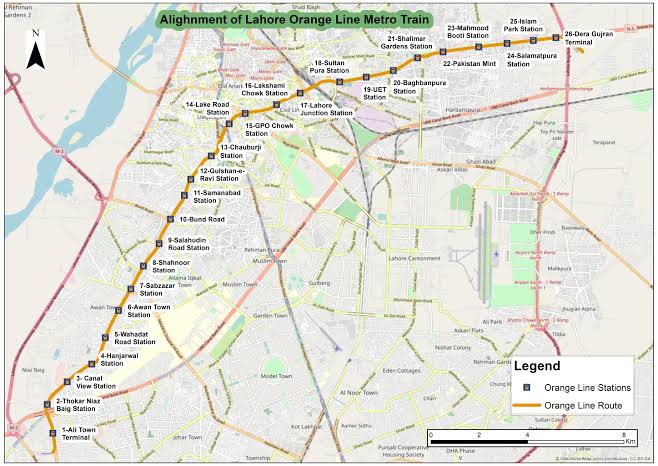
The Lahore Mass Transit Authority (LMTA) has officially discontinued tokens and legacy transit cards across its public transport network, including the Orange Line Train, Speedo buses, and Metro Bus services.

Under the new system, commuters must switch to digital payment methods, which include the official T-Cash Card, the LMTA mobile application, or standard bank ATM cards. LMTA In-charge Uzair Shah confirmed that existing balances on old cards will not be refunded, though passengers can return their physical cards to designated transit stations to claim their security deposit.

The sudden shift has drawn criticism from local commuters, who reported being instructed to recharge the legacy cards shortly before the change and cited a lack of advance public notice.

Similar Posts

  • | |

    US report urges Pakistan to open up budget and deb…

    WASHINGTON: Pakistan needs to improve transparency in its public finances and give Parliament and citizens earlier access to key budget and debt information, according to a new US State Department assessment. The department’s 2026 Fiscal Transparency Report said Pakistan had made progress in making financial information publicly available but still faced important gaps, particularly in the timely release of its proposed budget and disclosure of government liabilities. The report noted that Pakistan’s approved budget and year-end financial reports were easily accessible to the public, including online. However, it found that the government did not release its executive budget proposal within a reasonable timeframe. According to the assessment, publishing the proposed budget earlier would give lawmakers and the public more time to examine the government’s spending and revenue priorities before the document is formally approved. The report also raised concerns over limited public information about government debt, especially liabilities linked to major state-owned enterprises. Greater disclosure, it said, would help provide a clearer picture of the country’s financial position and allow Parliament to better assess potential fiscal risks. Despite these shortcomings, the US assessment acknowledged that Pakistan’s publicly available budget documents contained substantial information on planned government revenues and expenditures, including income from natural resources. Pakistan’s auditing system also received a largely positive assessment. The report said financial information was generally reliable and subject to review by the country’s supreme audit institution, which it found to have an appropriate level of independence under international standards. Audit findings were also made available to the public within a reasonable period. The report found that Pakistan had established legal procedures for awarding natural resource extraction contracts and licences and appeared to follow those rules in practice. It also noted that information on public procurement contracts was accessible and described the legal framework governing the country’s sovereign wealth fund as sound. The State Department identified three major areas where Pakistan could further strengthen fiscal transparency: releasing the executive budget proposal on time, providing more detailed information about government debt, including state-owned enterprise liabilities, and bringing military and intelligence budgets under adequate parliamentary or civilian oversight. Overall, the report did not portray Pakistan’s financial system as broadly opaque. Instead, it recognised several areas of progress while calling for stronger parliamentary scrutiny and greater disclosure of information that could help lawmakers and the public understand the country’s fiscal risks.

  • | |

    The Legend of Maula Jatt’ bags two honours in China

    HARBIN: Pakistani blockbuster The Legend of Maula Jatt has secured two awards at the 7th Jackie Chan International Action Film Week in Harbin, China. The film, directed by Bilal Lashari, received the Special Jury Award and the Best Art Direction honour at the festival’s closing ceremony on August 11. Lashari shared the achievement on social media and described the recognition as a particularly special moment because he grew up watching Jackie Chan’s action films. The award ceremony was held outdoors in Harbin. Rain continued during much of the event, creating an unusual setting for the celebrations. Lashari said receiving the awards on a stage associated with Jackie Chan was an experience he had never imagined when he began working on the film. The filmmaker also spoke about meeting the legendary Chinese actor and action star in person. He said Chan had influenced his interest in action cinema and that representing Pakistan at an event carrying Chan’s name made the occasion even more meaningful. Lashari said action films have a unique ability to connect audiences from different countries. He noted that the genre can communicate emotion and excitement across language barriers. The Best Art Direction award was dedicated by Lashari to production designers Namsa Abbasi and Hamza Bajwa. He praised their work in creating the film’s distinctive visual world. According to Lashari, their contribution went beyond designing sets and helped establish the atmosphere and identity of the entire film. He also acknowledged producer Ammara Hikmat, who could not attend the ceremony in Harbin. Lashari said the team felt her absence during the celebrations. The director thanked the cast and crew for their contribution to the film’s success. He also dedicated the achievement to Pakistani audiences for their continued support. The Legend of Maula Jatt has become one of Pakistan’s most successful films internationally. Its latest recognition adds another major achievement to the movie’s growing list of international honours

  • | |

    Three prisoners seek private hospital treatment in…

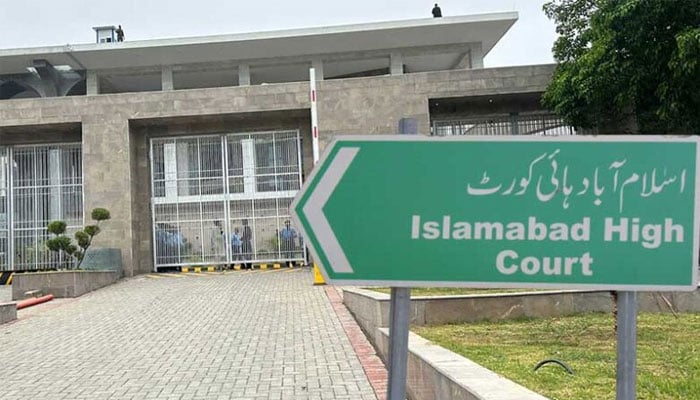
      Three prisoners have approached the Islamabad High Court seeking relief similar to that granted to the founder of Pakistan Tehreek-e-Insaf (PTI), Imran Khan, regarding treatment at a private hospital. The petitions were filed before the Islamabad High Court, with the applicants requesting permission to be transferred from prison to a private medical facility for treatment. The prisoners have specifically asked the court to allow them to receive medical care at either Shifa International Hospital or Quaid-e-Azam International Hospital. The development comes amid continued legal discussions over the medical treatment of prisoners and the circumstances under which an inmate may be allowed to receive treatment outside a prison hospital or government medical facility. During the proceedings, the Islamabad High Court sought a response from the relevant prison authorities by August 27. The court has directed the jail administration to explain its position regarding the requests made by the three prisoners. The court also ordered the superintendent of Adiala Jail to submit the medical reports of the petitioners. These reports are expected to help the court assess the prisoners’ medical conditions and determine whether their requests for treatment at private hospitals have sufficient grounds. Justice Muhammad Asif issued a two-page written order in connection with the petitions. In the order, the court directed the relevant parties to submit para-wise comments before the next hearing. The applicants have argued that they require medical treatment that may not be adequately available within the prison system. Their petitions seek permission to be transferred to either Shifa International Hospital or Quaid-e-Azam Hospital so that they can receive treatment from specialists and access facilities available at private medical institutions. The court has not yet issued a final decision on whether the prisoners will be allowed to move to a private hospital. Instead, it has sought medical documentation and responses from the prison authorities before considering the matter further. The medical reports from Adiala Jail will be particularly important in determining the nature and seriousness of the applicants’ health conditions. The court is expected to examine whether their medical needs justify treatment at a private hospital and whether such a transfer is appropriate under the applicable legal and prison regulations. The petitions also highlight broader questions concerning prisoners’ access to healthcare and the circumstances in which courts can intervene to ensure that inmates receive appropriate medical attention. The applicants’ request for relief similar to that provided to Imran Khan has placed the issue before the Islamabad High Court for judicial consideration. Their lawyers are seeking comparable treatment arrangements based on the medical needs of the petitioners. Under the court’s latest directions, the prison authorities are required to respond by August 27. The superintendent of Adiala Jail must also provide the petitioners’ medical reports, while all concerned parties have been asked to submit their detailed para-wise comments before the next hearing. Following the submission of these documents, the court will have an opportunity to review the medical evidence and the authorities’ position before deciding the applications. For now, the three prisoners remain in custody, and no final order allowing their transfer to a private hospital has been issued. The next hearing is expected to provide greater clarity on whether the applicants will be permitted to receive treatment at Shifa International Hospital or Quaid-e-Azam Hospital. The case could also become significant for future requests by prisoners seeking specialised medical treatment outside jail facilities, particularly where serious health concerns are raised and comparable relief has previously been granted in individual cases.

  • PAAM rejects DRAP Rules 2026, warns alternative medicine sector

    ​LAHORE: Kashif Aslam Malik, Chairman of the Pakistan Association of Alternative Medicine (PAAM), has completely rejected the proposed DRAP Rules 2026, labeling them an unscientific plot against the local alternative pharmaceutical industry, Homeopathy, and Unani medicine. He stated that the allopathic pharmaceutical bureaucracy within the Drug Regulatory Authority of Pakistan (DRAP) is attempting to forcefully impose itself on the alternative medicine sector. In reality, the 5-year Pharm.D curriculum completely lacks education and technical training on homeopathic potentization, Unani herbal formulation, or nutraceutical manufacturing. He questioned the legal and scientific authority of allopathic pharmacists who have never studied these disciplines to act as self proclaimed experts and draft policies for this sector. ​Kashif Aslam Malik emphasized that under the universal principle of “right expertise for the right job,” the regulatory framework, registration, and licensing for alternative medicines must strictly be developed under the direct supervision of qualified specialists in Homeopathy, Unani, and Nutraceutical sciences. Imposing these unilateral rules and rigid allopathic SOPs will bankrupt over 80% of small and medium-sized enterprises (SMEs), resulting in widespread unemployment for thousands of homeopathic doctors, Unani practitioners, and industrial workers, while depriving the public of affordable, natural healthcare options. PAAM demands an immediate halt to these rules, the formation of a committee comprising specialized alternative medicine experts, and the establishment of an independent authority modeled after India’s Ministry of AYUSH. He warned that if DRAP attempts to force these rules through, PAAM will unite all industry stakeholders to fight a nationwide battle across the media, judiciary, and public spheres.

  • |

    Egypt may join Pakistan, Türkiye, Saudi defence pact

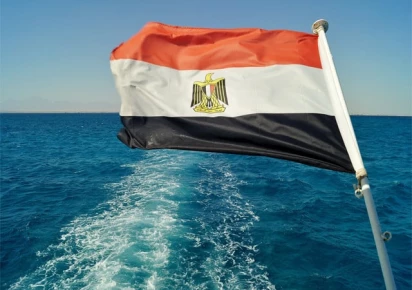
    Egypt could become the next country to join the Makkah Joint Defence Agreement signed by Pakistan, Türkiye and Saudi Arabia, Turkish Foreign Minister Hakan Fidan has said. Fidan said the defence pact is broadly comparable to NATO’s mutual defence principle. He stressed that the agreement is not aimed at Iran or any other country. According to the Turkish foreign minister, the pact is designed to provide a framework for the three countries to support each other’s security. He said the member states would consult each other in the event of an attack. They would then determine the nature and level of assistance required. Fidan said Türkiye’s President Recep Tayyip Erdogan wants the alliance to expand beyond its three founding members. Egypt is among the countries being considered for possible membership. He said some technical issues would need to be resolved before Egypt could join the arrangement. Fidan explained that the alliance would begin with Pakistan, Türkiye and Saudi Arabia. He said the members intended to take gradual but practical steps to build the new security framework. A ministerial committee similar to structures used within NATO is also expected to be established. The alliance will also have a general secretariat based in Saudi Arabia. Further operational details are expected to be discussed during the first meeting of the proposed committee. Fidan said the agreement was the result of negotiations that had continued for more than two years. He also stressed that the new arrangement would not replace existing military alliances. The Turkish minister said the pact was intended to strengthen regional cooperation. He said it could eventually bring more countries together under a common security framework. Meanwhile, the Organisation of Islamic Cooperation welcomed the signing of the agreement. OIC Secretary General Hissein Brahim Taha expressed strong support for the pact. He described it as an important strategic development for regional and international cooperation. Taha said the agreement could contribute to security and stability across the region and the wider Muslim world. He also praised the leadership of Pakistan, Türkiye and Saudi Arabia. He said their efforts had resulted in what he described as a historic agreement. The pact was signed on Friday during a trilateral summit in Makkah. Turkish President Recep Tayyip Erdogan, Saudi Crown Prince Mohammed bin Salman and Prime Minister Shehbaz Sharif signed the agreement at Al-Safa Palace. Under the agreement, the three countries have committed to strengthening defence cooperation and collective security. The pact also seeks to promote peace, stability and prosperity. Officials said the agreement is not directed against any country. They said it is based on a shared approach to security and burden-sharing. The agreement also establishes a collective deterrence principle. An armed attack against any one of the three member states will be treated as an attack against all three.

  • | |

    Dar, Jordan FM discuss West Bank crisis and Palest…

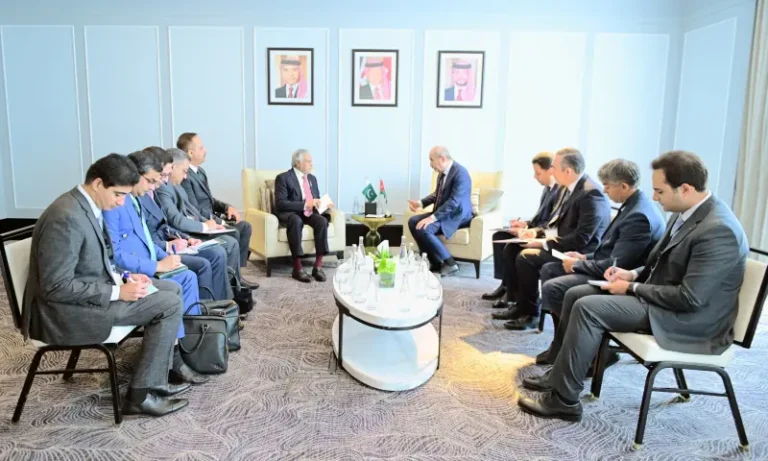
    Deputy Prime Minister and Foreign Minister Ishaq Dar held talks with his Jordanian counterpart Ayman Safadi in Amman on Wednesday, where both leaders reviewed the worsening situation in the occupied West Bank and reaffirmed their support for the Palestinian cause. The meeting took place on the sidelines of a ministerial conference focused on developing a coordinated stance on the situation in occupied Jerusalem. During the discussions, the two foreign ministers exchanged views on recent regional developments, with particular attention to escalating tensions in the Palestinian territories. Dar praised Jordan’s longstanding role in protecting the Islamic and Christian holy sites in Jerusalem and acknowledged Amman’s continued support for the Palestinian people. Both sides also expressed satisfaction over the growing momentum in Pakistan-Jordan relations and pledged to further expand cooperation in political, economic, defence, education, cultural and people-to-people exchanges. The two leaders also discussed broader regional issues, including recent developments involving the United States and Iran. They stressed that dialogue and diplomacy remain essential for reducing tensions and maintaining regional peace and stability. Both ministers agreed to continue close coordination at bilateral and multilateral forums, including the United Nations and the Organisation of Islamic Cooperation (OIC), to address regional challenges and promote peaceful solutions. During his visit, Dar also met Somalia’s Minister for Foreign Affairs and International Cooperation, Abdisalam Abdi Ali. The two leaders reviewed longstanding bilateral relations and explored opportunities to strengthen cooperation in politics, trade, defence, education and capacity-building. They also reaffirmed their commitment to working closely on issues of mutual interest at international forums. Dar is attending the ministerial meeting in Jordan to join foreign ministers from Arab League member states and several Islamic countries in formulating a unified response to developments in occupied Jerusalem. Pakistan is expected to reiterate its consistent support for the Palestinian people and call for the establishment of an independent and sovereign State of Palestine based on pre-1967 borders, with East Jerusalem as its capital.

Leave a Reply

Your email address will not be published. Required fields are marked *