lhc says illness
| |

LHC says illness, physical weakness can justify ba…

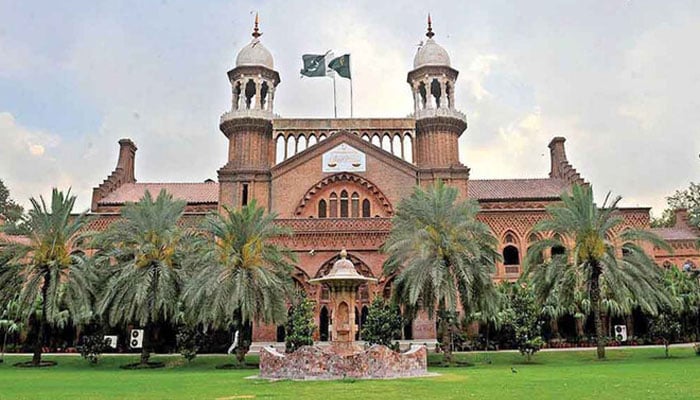
The Lahore High Court (LHC) has ruled that illness, physical weakness, old age or disability can serve as valid legal grounds for granting post-arrest bail, issuing an important judgment on bail applications filed on medical grounds.

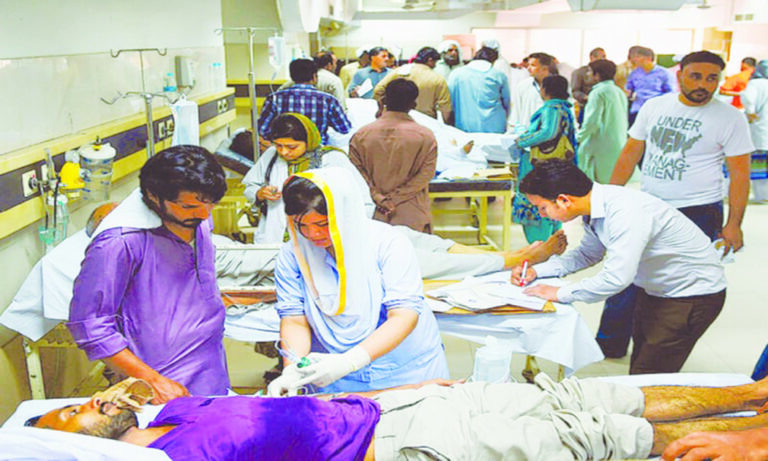
Justice Amjad Rafiq issued a detailed written verdict while deciding the post-arrest bail petition of Dr Iftikhar Ahmed, who is suffering from Parkinsonism, a progressive neurological disorder that affects movement and physical independence.

The court observed that if a prison medical report confirms that an accused is physically weak, there is no need to separately assess the severity of the illness. It held that physical weakness itself may be sufficient to justify consideration for bail.

According to the judgment, illness and physical weakness are separate legal grounds for granting bail. The court noted that imprisonment can cause greater hardship for elderly, physically weak and disabled individuals, and the justice system should protect them from unnecessary physical suffering.

The LHC further stated that the bail application had not been filed on the merits of the criminal case but solely because of the accused’s deteriorating physical condition. The prison medical report confirmed that Dr Iftikhar Ahmed was suffering from Parkinsonism, a disease that gradually limits a person’s physical abilities and independence.

Rejecting the prosecution’s argument, the court ruled that the mere fact an accused is receiving medical treatment in prison cannot, by itself, be used as a reason to deny bail.

The judgment also referred to principles of Islamic law and international judicial precedents, stating that sick, elderly and vulnerable individuals are entitled to special legal protection and humane treatment.

The Lahore High Court granted post-arrest bail to Dr Iftikhar Ahmed against surety bonds of Rs1 million. The court directed the accused not to influence prosecution witnesses, to surrender his passport and not to leave the court’s jurisdiction without prior permission.

Dr Iftikhar Ahmed has been in jail since March 2025 in a case registered at Sabzazar Police Station, where he is accused of administering an incorrect injection to a citizen’s son. The criminal proceedings will continue in accordance with the law.

Similar Posts

  • |

    US Department of Defence orders swift ramp-up in weapons manufacturing as conflict with Iran strains stockpiles

    The United States Department of Defence has called on defence contractors to accelerate weapons production amidst growing anxiety over dwindling military stockpiles as hostilities with Iran persist. Deputy Secretary of Defence Steve Feinberg issued a formal directive on Wednesday, setting a 21-day deadline for defence industry leaders to deliver proposals aimed at driving significantly faster delivery timelines and boosting output for critical capabilities. The directive was initially revealed by The Washington Post following heightened scrutiny regarding the condition of US weapons reserves during the ongoing conflict. Spokesperson for the Department of Defence Sean Parnell verified the authenticity of the directive, noting that the submissions will directly shape the Pentagon’s budget request for fiscal year 2028. “The August 5 memo is real,” Parnell stated. “It will inform the fiscal year 2028 budget submitted to Congress for funding, and it is entirely consistent with our ongoing push to rebuild the defence industrial base.” Parnell added that direct engagement with weapons manufacturers is routine practice, defending the administration’s aggressive measures to expedite procurement schedules. He detailed that Feinberg is actively working to overhaul what he characterized as a broken, outdated, and overly intricate procurement framework, ensuring the military retains the capability to produce equipment at a pace that matches modern threat levels.

  • |

    Aviation bodies to shift headquarters to Islamabad

    The federal government has decided to relocate the headquarters of two key aviation institutions — the Pakistan Civil Aviation Authority (PCAA) and the Pakistan Airports Authority (PAA) — from Karachi to Islamabad. According to sources, both organisations will initially establish temporary headquarters at Islamabad International Airport. The move aims to bring the two aviation bodies closer to the federal government and other key administrative institutions in the capital. A seven-member joint committee, comprising officials from the PCAA and PAA, has been formed to oversee the arrangements for the relocation. Deputy Director General Airports Authority Sadiq Rehman will head the committee. The committee will identify suitable space at Islamabad International Airport for the construction of temporary headquarters and will also examine the logistical requirements involved in shifting the two organisations. Sources said the PCAA is expected to move its headquarters to Islamabad by November, while the PAA will follow by December. The authorities will make necessary arrangements to ensure that the transition does not disrupt the organisations’ routine operations. The headquarters of both aviation bodies are currently located in Karachi, which has traditionally served as an important centre for Pakistan’s aviation sector. However, the government plans to retain their regional offices in Karachi and other parts of the country. The relocation will therefore affect the central administrative setup rather than the wider network of regional operations. Offices and field formations across the country will continue to perform their existing functions. The decision marks a significant administrative shift for Pakistan’s aviation sector and is expected to reshape the way the two authorities coordinate their operations with federal institutions based in Islamabad.

  • |

    Pakistan’s health system requires lasting reform

    By Raja Ashraf A country’s healthcare system is judged not only by the number of hospitals it has but also by whether people can access timely, affordable, and quality medical care. In Pakistan, public confidence in the health sector has weakened due to persistent challenges, including shortages of healthcare professionals, rising medicine prices, under-resourced hospitals, and the continued presence of unqualified medical practitioners. These issues require comprehensive and long-term reforms rather than short-term policy responses Healthcare is a fundamental right closely linked to Article 9 of Pakistan’s Constitution, which guarantees the right to life. The Supreme Court has interpreted this provision to include access to essential healthcare services. Pakistan is also a signatory to the International Covenant on Economic, Social and Cultural Rights, which commits the country to progressively ensuring the highest attainable standard of physical and mental health for its citizens. One of the most pressing concerns is the shortage of qualified doctors in rural and underserved regions. Although medical institutions produce thousands of graduates every year, many public health facilities outside major cities continue to face vacant positions. As a result, many communities struggle to obtain even basic healthcare services and are often forced to travel long distances for treatment. The migration of doctors, nurses, and other healthcare professionals to foreign countries has further weakened the healthcare system. Better salaries, improved working conditions, career opportunities, and greater security abroad encourage many skilled professionals to leave Pakistan, creating significant gaps in public hospitals and specialized medical services. The pharmaceutical sector also faces increasing challenges. Some multinational pharmaceutical companies have reduced their presence in Pakistan, raising concerns about future medicine availability and investor confidence. While local pharmaceutical manufacturers continue to meet much of the country’s demand, policymakers must create a stable regulatory and economic environment that supports both domestic production and responsible international investment. The rising cost of medicines has become another major burden for families already affected by inflation. Patients suffering from chronic illnesses such as diabetes, hypertension, and cardiovascular diseases often require lifelong treatment, making affordability a growing concern. At the same time, the continued circulation of counterfeit and substandard medicines highlights weaknesses in regulation and quality control, despite improvements in oversight by regulatory authorities. Public hospitals also frequently experience shortages of essential medicines and emergency supplies, forcing patients to purchase drugs from private pharmacies. This increases treatment costs and can delay critical medical care during emergencies. Ensuring uninterrupted medicine supplies in government hospitals should remain a national priority. Another persistent issue is the presence of unqualified medical practitioners, commonly known as quacks, particularly in areas where licensed healthcare providers are scarce. Tackling this problem requires stronger enforcement of existing laws alongside improved access to qualified medical professionals. Pakistan’s healthcare challenges extend beyond these issues to include inadequate public health funding, ageing hospital infrastructure, weak primary healthcare services, limited mental health facilities, and uneven implementation of health policies across provinces. Addressing these problems requires a comprehensive national strategy focused on increasing healthcare investment, improving working conditions for medical professionals, strengthening medicine regulation, modernizing pharmaceutical oversight, expanding preventive care, and reinforcing primary healthcare services. Investing in healthcare is not merely a public expense—it is an investment in human capital, economic growth, and national development. Pakistan possesses skilled healthcare professionals, reputable medical institutions, and a capable pharmaceutical industry. With sound policymaking, stronger governance, and sustained investment, these strengths can be transformed into a healthcare system that guarantees every citizen safe, affordable, and quality healthcare. The need for reform is no longer in question; the real challenge is ensuring that action is not delayed any further.

  • |

    Bristol Airport disruption continues as flights resume

    Flights have begun operating again at Bristol Airport after a runway defect caused widespread disruption and left hundreds of passengers stranded overnight. The airport runway was closed shortly after 6pm BST on Friday, forcing all flights to be suspended until 8am Saturday. Although operations have now restarted, passengers continue to face delays, disrupted schedules and flight diversions. Airport authorities warned that some disruption would continue throughout Saturday and apologised to passengers affected by the situation. Travellers were advised to contact their respective airlines for information about individual flights. The airport has not yet provided further details about the nature of the runway defect or explained when normal operations are expected to fully resume. Passengers described the disruption as chaotic, with several criticising the airport for a lack of clear communication and assistance. Paul Smith, who was due to travel to Glasgow for his son’s 20th birthday, said he was forced to cancel his trip. He criticised the information and support provided to passengers during the disruption. Another traveller, Dave Blackwell, said his flight from Rhodes was diverted to Newcastle. He claimed passengers spent several hours at Rhodes Airport without receiving adequate information before being told they would have to travel onward by bus. Eighteen-year-old Finn Holland was also among those affected after his flight to Bristol was redirected to Bournemouth. He said passengers had to arrange their own transport back to Bristol, describing the process as poorly organised. The disruption has affected both departing and arriving passengers, with some travellers facing lengthy delays and complicated onward journeys.

  • | |

    PTI Chairman says Imran Khan’s hospital transfer…

      Pakistan Tehreek-e-Insaf (PTI) Chairman Barrister Gohar Ali Khan has said that the plan to transfer the party’s founder, Imran Khan, to a hospital was changed at the last moment, claiming that significant progress had already been made towards arranging the transfer. Speaking to the media at Dahagal Naka on Adiala Road in Rawalpindi, Gohar said the party’s efforts had been disrupted at the final stage. He expressed regret that Imran Khan could not receive treatment at Shifa International Hospital, saying it would have been a positive development if the former prime minister had been treated there. However, Gohar said he was not disappointed and would make another attempt to ensure that the party founder received appropriate medical treatment. He stressed that political dialogue and communication should not be abandoned, saying that efforts to maintain contact must continue. The PTI chairman clarified that all discussions held so far had focused solely on Imran Khan’s health. He also rejected a video circulating on social media that purportedly showed a meeting between him and Imran Khan, describing the footage as fake. Gohar urged political leaders and other stakeholders not to politicise Imran Khan’s health or turn the issue into a matter of political rhetoric. He maintained that the Supreme Court’s orders regarding the PTI founder’s treatment should have been implemented. According to Gohar, Imran Khan’s medical treatment was a straightforward matter and there was no justification for preventing his transfer. He said whoever stopped the transfer or changed the plan at the last moment had made the wrong decision. He acknowledged that the PTI also had concerns about Imran Khan’s security but said the government had never informed the party that security concerns were preventing his transfer to Shifa International Hospital. Gohar further said the party’s core and political committees had already made their position clear through official statements, asking supporters and party workers not to go to Shifa Hospital. Instead, Imran Khan was transferred to the Pakistan Institute of Medical Sciences (PIMS). However, Gohar claimed that the required treatment was not provided there either. He maintained that the Supreme Court’s directions could still be implemented if the relevant authorities were willing to act on them. The PTI chairman also revealed that the party’s petition had been assigned a case number in the Supreme Court and that a request had been submitted for an early hearing. He said the united opposition would now adopt a joint strategy in both the National Assembly and the Senate. Addressing allegations that the PTI had violated court orders, Gohar rejected the claim, saying the party had not disobeyed any Supreme Court directive. He clarified that Imran Khan’s sister had spoken publicly and confirmed that he had been taken to PIMS. Gohar said the PTI’s contempt petition was intended to seek implementation of the Supreme Court’s orders. He described it as a civil contempt matter rather than an attempt to challenge the court. He also mentioned that Noorain Niazi had been pleased after meeting Imran Khan the previous Tuesday. Gohar concluded by saying that Imran Khan’s health and security remained the party’s primary concerns. He also stressed the importance of opposition parties remaining united, arguing that reforms were urgently needed in the judiciary, Election Commission and provincial affairs.

  • | |

    Khawaja Asif hails Sialkot Medical City project

    Defence Minister Khawaja Muhammad Asif has said that Sialkot urgently needed a medical city. He said the project would help improve healthcare facilities for people in the city and nearby areas. Addressing the inauguration ceremony of Sialkot Medical City, Khawaja Asif praised the business community for supporting the project. He also appreciated the role of the Sialkot Chamber in making the initiative possible. The minister said Sialkot had been facing a major healthcare gap. He said patients often had to travel to Lahore when serious medical emergencies occurred in the city. According to Khawaja Asif, the new medical city will help reduce the need for patients to travel to Lahore. It will also provide better healthcare services closer to the people of Sialkot. He said the project was an important development for the city. He hoped that the medical facilities would further improve the quality of healthcare available to local residents. Khawaja Asif also spoke about major road projects in the region. He said another lane would be added to the Lahore-Sialkot Motorway. He said the Kharian Motorway would be completed before the other project. He added that better road links would further improve connectivity between Sialkot and other parts of Punjab. The defence minister recalled that he had received a positive response when the motorway proposal was presented. He said major road networks had connected several cities and towns with each other. He said the route from Shahdara to Rawat had created stronger links between different urban centres. Such projects, he added, were important for trade, travel and economic activity. Khawaja Asif also highlighted the growing importance of Sialkot International Airport. He said the airport was no longer serving only the people of Sialkot. He said people from Jhelum and Gujrat were also using the airport. Residents of Azad Jammu and Kashmir were also travelling through the facility, he added. The minister credited Sialkot’s business community for many of the city’s major development projects. He said local traders and industrialists had made significant contributions to the city’s growth. Khawaja Asif said the Sialkot business community had established high standards. He added that these standards were recognised internationally. He said the success of Sialkot showed what could be achieved through cooperation between the business community and public institutions. He stressed that continued development could further strengthen the city’s position as an important economic and industrial centre.

Leave a Reply

Your email address will not be published. Required fields are marked *