live longer stay

Live longer stay healthier

If you want to live a longer healthier and more active life experts say it is never too late to start making healthy changes.

A new U.S. study suggests that following a healthy lifestyle could add more than 20 years to your life.

Researchers say you do not have to begin these habits at a young age.  Even people in their 40s, 50s or 60s can still enjoy major health benefits by making better lifestyle choices.

Lead researcher Xuan-Mai T. Nguyen said healthy habits not only improve personal well being but can also support better public health.

The study found that smoking and drug use increase the risk of early death by 30% to 45%.  Ongoing stress poor sleep an unhealthy diet and heavy alcohol use were also linked to about a 20% higher risk of death.

Researchers said men and women who followed eight key healthy lifestyle habits from age 40 could increase their life expectancy by about 23 and 22 years respectively.

•Eat a healthy diet

Choose nutritious foods every day including fresh fruits vegetables grains beans and protein rich foods. A balanced diet supports the immune system and lowers the risk of heart disease and other health problems.

•Avoid smoking

Staying away from cigarettes and other tobacco products is one of the best ways to protect your health.  Quitting smoking can improve your lungs heart and blood vessels over time.

•Get enough sleep

good quality sleep helps your brain work better restores your body balances hormones and reduces the risk of many diseases.

•Stay physically active

regular exercise such as walking cycling swimming or other physical activities helps keep your heart healthy supports a healthy weight and improves overall fitness.

•Manage stress

experts recommend meditation yoga deep breathing hobbies and spending time with family and friends to reduce stress and improve mental well being.

•Avoid alcohol and drugs

Limiting or avoiding alcohol and staying away from illegal drugs can protect the liver heart brain and overall health.

•Build strong relationships

Maintaining close relationships with family friends and your community can improve emotional well being reduce stress and help you live a happier and longer life.

Researchers say small but consistent lifestyle changes can make a big difference,

helping people enjoy better health and a longer life.

Similar Posts

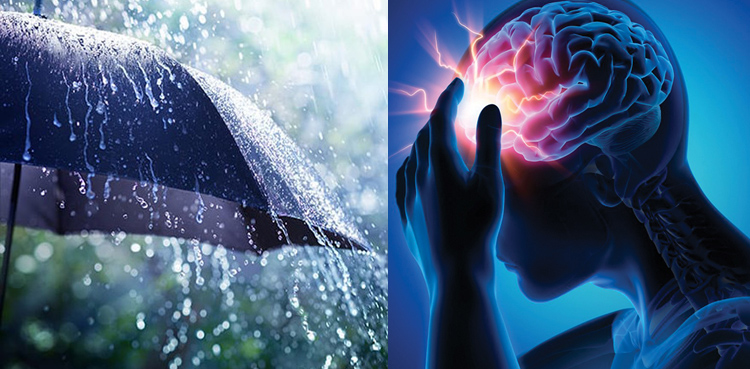
  • Monsoon may raise stroke risk

    The rainy season brings relief from extreme heat and makes the weather pleasant but it can also create health challenges for some people. Health experts say sudden weather changes high humidity and increased chances of infections during the monsoon season may be risky for people who already have conditions like high blood pressure diabetes high cholesterol or heart problems. Neurology experts explain that changes in temperature and humidity can affect the body’s natural system and may cause blood pressure levels to become unstable. This can increase the risk of stroke, especially among people with existing heart or blood vessel problems. During the rainy season cases of viral infections cold cough stomach problems and dehydration often increase. These conditions can put extra stress on the body and disturb blood sugar and blood pressure control. Reduced physical activity poor sleep and improper use of medicines can also increase health risks. Doctors advise people to remember the BE FAST rule to identify early signs of stroke. B – Balance: Sudden loss of balance or coordination E – Eyes: Sudden vision problems F – Face: One side of the face becomes weak or droops A – Arms: Weakness in one arm or leg S – Speech: Difficulty speaking or understanding words T – Time: Get emergency medical help immediately Experts say quick treatment can save lives and reduce the chances of long term disability. Health professionals recommend that high risk people regularly check their blood pressure and blood sugar take medicines on time stay physically active eat a balanced diet reduce salt intake avoid smoking and drink enough water. Experts also highlight that the monsoon season itself is not dangerous. The real risk comes from ignoring existing health conditions. Keeping blood pressure diabetes cholesterol and heart diseases under control throughout the year can greatly reduce the risk of stroke and other complications.

  • Skin Cancer warning signs

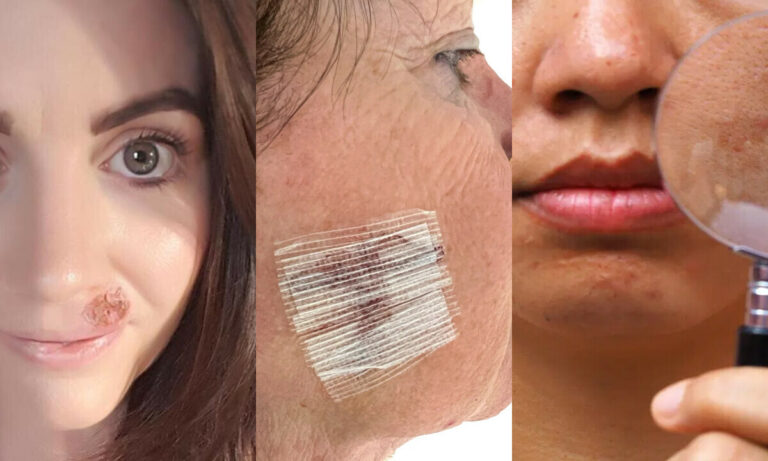
    Skin cancer is one of the most common cancers in the world affecting millions of people every year. It often begins with small changes on the skin that may look harmless causing many people to ignore them.  However spotting these early signs and getting medical advice quickly can help save lives. According to the World Health Organization (WHO) around 330,000 new cases of melanoma the deadliest type of skin cancer were reported worldwide in 2022. About 60,000 people died from the disease that year. Harvard trained dermatologist Dr. Daniel Sugai says people should pay close attention to any unusual skin changes. if a pimple bump or sore on your face does not heal within a month it should be checked by a dermatologist. A spot that keeps bleeding or does not heal can also be a warning sign of skin cancer. Dr. Sugai says these symptoms may point to basal cell carcinoma the most common type of skin cancer. In the United States alone about 3.6 million cases are diagnosed each year. This cancer may appear as a shiny or clear bump a rough or scaly patch or a dark brown black or bluish spot on the skin. He also explained that basal cell carcinoma grows from cells that create new skin cells.  These cancer cells often develop tiny tree like blood vessels which can make the affected area bleed more easily. In people with darker skin tones the cancer may appear as a pigmented or darker colored spot. Experts say any new mole spot sore or skin change that does not heal should never be ignored. Early diagnosis and treatment greatly improve the chances of successful treatment and can help prevent the cancer from becoming more serious.

  • Frailty, thy name is woman

    Frailty, thy name is woman. When William Shakespeare wrote those famous words in Hamlet, he was reflecting a cultural dogma that would shackle women for centuries. For generations, society treated female vulnerability not as a situational condition, but as an inherent biological truth. Women were categorized as delicate creatures requiring protection, physically incapable of heavy labor, and psychologically unsuited for high-stakes conflict. That archaic myth has officially crumbled. Across military frontlines, deep-sea research facilities, high-altitude athletics, and outer space, women are consistently performing tasks once deemed physically and mentally impossible for them. The notion that physical and emotional fragility is uniquely female is just outdated. It is empirically false. To understand how rapidly this paradigm is shifting, one needs to look no further than recent milestones in defense and aerospace news. Over the past decade, armed forces around the globe including the United States, Britain, and Ukraine have systematically opened elite infantry, combat engineering, and special forces units to women. Reporting from military defense outlets highlights that female service members are completing rigorous combat fitness tests, enduring punishing load-bearing marches carrying 80-pound packs, and demonstrating tactical mastery under live fire. During recent global conflicts, female soldiers have served directly on combat lines, driving heavy tactical vehicles, executing artillery strikes, and providing direct tactical support under extreme duress. The old argument that women lack the physical stamina or aggressive grit for battlefield conditions has been disproven not by rhetoric, but by operational reality. Beyond Earth’s atmosphere, space exploration news provided another definitive refutation of female frailty when NASA astronauts Christina Koch and Jessica Meir conducted the world’s first all-female spacewalk. Working outside the International Space Station for more than seven continuous hours, the pair maneuvered massive hardware components while tethered over 200 miles above Earth. Operating in heavy, pressurized extravehicular suits requires immense upper-body endurance, spatial coordination, and psychological coolness under pressure. Their performance demonstrated that when training, gear, and opportunity align, gender is completely irrelevant to high-risk technical performance. For centuries, skeptics cited raw biological differences such as lower average muscle mass compared to men as definitive proof of female inadequacy for physically demanding tasks. However, modern exercise physiology and ergonomics present a far more nuanced picture. While average biological markers differ across populations, top-tier female athletic conditioning overlaps significantly with high-level male capabilities. A trained female soldier or weightlifter easily outperforms the vast majority of untrained men in functional strength, endurance, and power output. Studies in ultra-endurance athletics such as 200-mile marathons and open-water ocean swims show that women often narrow the performance gap as distance increases. Female physiology displays high metabolic efficiency in utilizing fat stores during prolonged exertion, alongside exceptional psychological resilience in managing physical discomfort. Modern warfare, heavy industry, and aviation rely less on brute force and more on endurance, technical precision, decision-making, and specialized gear. Advances in ergonomic equipment and load-distribution technology ensure that operational success hinges on skill and stamina rather than raw power alone. Physical capability is only half the equation. The traditional stereotype of frailty was always as much about mental weakness as physical limitation. Women were portrayed as overly emotional, prone to panic, and ill-equipped for decisive leadership during crises. Real-world experience repeatedly contradicts this bias. From emergency room physicians navigating mass-casualty events to political leaders steering nations through global pandemics and conflicts, women consistently exhibit calm, strategic resolve under fire. Calling frailty a woman’s trait was never a scientific fact. It was a social construct designed to limit access, independence, and authority of women. When women were barred from gymnasiums, sports, military academies, and executive boardrooms, society pointed to their absence as proof of their inability. Once those doors were forced open, the illusion dissolved. Acknowledging that frailty is not a female trait does not mean pretending that men and women are biologically identical. It means recognizing that human potential is defined by discipline not by gender.


  • Bridal brands prepare for the Taylor Swift effect

    Taylor Swift’s wedding dress remains a mystery but bridal fashion companies around the world are already preparing for a possible new trend inspired by the pop star’s style. Fashion experts believe that the design fabric, color shape and overall look of Swift’s wedding outfit could influence what brides choose to wear in the coming years. Swift’s wedding dress remains a mystery According to Reuters, Taylor Swift wore a Christian Dior dress at her private wedding ceremony held at Madison Square Garden in New York on July 3. However full details and clear images of the dress have not yet been widely revealed. Millions of fans are eagerly waiting to see the dior outfit she wore on her special day. Bridal brands are already preparing David’s Bridal, one of the major bridalwear companies has already prepared around two dozen designs that could fit the style Swift may have chosen.  The company operates around 200 stores across the US. CEO Kelly Cook said the company is waiting for more photos and details of Swift’s actual dress.  Once more information becomes available the team will be able to move quickly with designs inspired by its key features. The company has already noticed a major increase in online searches for dresses similar to Swift’s possible style.  Prices for its wedding dresses range from a few hundred dollars to more than $3,000. Three possible swift inspired styles David’s Bridal design chief in Hong Kong, Viola Chan said the team has prepared three general styles inspired by Swift. These include dramatic decorated gowns simple and elegant dresses and shorter wedding gowns. She also believes that Swift’s makeup hairstyle dress color and flower arrangements could influence future bridal trends. Other brands are watching closely Spanish bridal brand Pronovias has also indicated that it is watching Swift’s dress for inspiration.  However the company plans to focus on broader fashion trends rather than directly copying her outfit. Sharon Sever, creative director at designer Galia Lahav, said that if Swift chooses an unusual color fabric or veil it could become a new trend in bridal fashion. New York design director Lisa Ponteroni also pointed out that celebrity photos can have a strong influence on the fashion industry. The Justin Alexander Group is also following the trend and may include some of Swift’s possible dress features in future designs. Brands avoid direct copies Not every bridal company wants to copy Swift’s outfit directly.  Luv Bridal founder and CEO Lane Litt said her company’s new designs would only take small amounts of inspiration from Swift’s style. The company may simply tell customers when it has dresses with features similar to those seen in Swift’s wedding look. Legal issues also matter There is also a legal side to celebrity inspired fashion. Legal experts say that copying the general cut or shape of a dress is not necessarily illegal.  However a company could face legal trouble if it falsely uses Taylor Swift’s or Dior’s name to mislead customers. For this reason most brands are focusing on the fashion ideas rather than using Swift’s name to market their products. Could Swift Start a new bridal trend? Taylor Swift’s wedding dress has become important not only to her fans but also to the bridal fashion industry. If more photos reveal a unique color fabric shape, or design those details could inspire thousands of brides. Swift’s private wedding outfit may therefore become a major source of bridal fashion trends for years to come.

  • Treatment of stress

    Meer Baloch Through the columns of your respected newspaper, I would like to draw attention to the growing problem of stress. Nowadays, many people suffer from stress because of studies, work, financial problems, and family issues. If stress is ignored, it can affect both mental and physical health. People can reduce stress by getting enough sleep, exercising regularly, eating healthy food, and spending time with family and friends. Meditation, prayer, and talking to a trusted person or a counselor can also help. Those who suffer from severe stress should seek professional medical treatment. I request the concerned authorities and health organizations to organize awareness programs so that people can learn how to manage stress and live healthier lives.

  • |

    Tradition, impersonality and mythic structure in “The Waste Land”

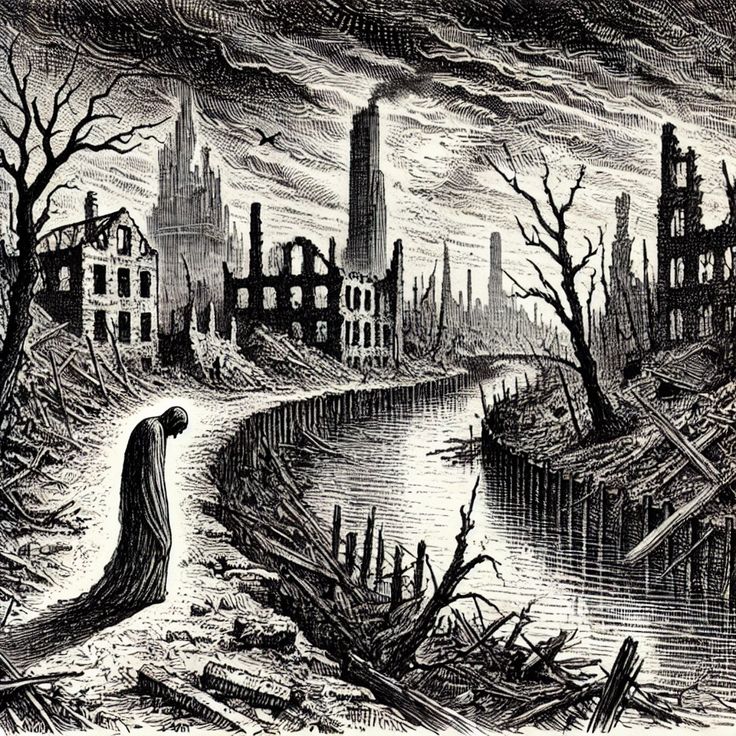
    Eliot’s masterpiece The Waste Land is published in 1922 just three years after “Tradition and the Individual Talent“. The poem serves as the ultimate practical demonstration of his theoretical ideas. Rather than describing tradition abstractly, Eliot uses allusion, polyphony, structural juxtaposing, and mythic framing to explain how a modern poem can absorb European history to process post-WWI disillusionment. Eliot argued that a poet must possess a historical sense. It is an awareness of the past’s presence alongside the contemporary moment. In The Waste Land, centuries of literary tradition exist on a single plane. In Section I (The Burial of the Dead), the speaker encounters acquaintance in modern London named Stetson and asks:    That corpse you planted last year in your garden, Has it begun to sprout?  In the very next line, Eliot links this modern London scene directly to the Punic Wars between Rome and Carthage. You who were with me in the ships at Mylae!   Modern industrial London and ancient Rome are collapsed into the same spiritual wasteland. The historical sense allows Eliot to treat human trauma across millennia as simultaneous rather than sequential. In his Impersonal Theory, Eliot argued that the poet’s mind acts as a catalytic medium. It’s  fusing disparate feelings and literary artifacts into a new substance without injecting personal bias. Throughout the 433 lines of The Waste Land, Eliot incorporates over 35 distinct literary references, 6 foreign languages, and references to sacred texts across Eastern and Western traditions. Eliot quotes Edmund Spenser’s Renaissance poem Prothalamion: Sweet Thames, run softly, till I end my song. He juxtaposes Spenser’s idyllic, nymph-filled river with the industrial Thames of 1920s London, scattered with silk handkerchiefs, cardboard boxes, cigarette ends. As commuters cross London Bridge, Eliot echoes Dante’s Inferno (Canto III): I had not thought death had undone so many. The modern office workers are literally mapped onto the souls trapped in Hell’s vestibule. He isn’t relying on a traditional narrative arc or a subjective personal narrative. Eliot uses what he famously called the Mythic Method (a technique he also praised in James Joyce’s Ulysses)..Eliot grounds the entire poem in two scholarly texts on mythology and ritual. From Ritual to Romance (the Grail Legend and the sterile Fisher King). The Golden Bough (ancient fertility cults, dying-and-rising gods). The underlying archetype, a sterile land awaiting a spiritual rain to restore fertility, unifies the fragmented scenes of modern decay (mechanized sex, empty conversations, spiritual apathy). Therefore, the individual talent grounds chaos in timeless mythic order. In order to achieve the extinction of personality, Eliot abandons a central I persona. Instead, he speaks through a chorus of shifting voices. A Marie in Munich, a hyacinth girl, a cockney woman in a pub, and Saint Augustine. In his famous explanatory notes to line 218, Eliot exposes he unifying center of the poem:  Tiresias, although a mere spectator and not indeed a ‘character’, is yet the most important personage in the poem, uniting all the rest… What Tiresias sees, in fact, is the substance of the poem. Tiresias: the blind, bisexual prophet of Greek myth (from Sophocles and Ovid). It has lived as both man and woman and seen the depths of classical tragedy. Eliot submerges his own biographical ego into an ancient, collective consciousness by adopting Tiresias as the central perspective Eliot’s concept of tradition is not narrowly provincial. His concept relates to the broader heritage of human thought. In the final section “What the Thunder Said”, the modern mind seeks a cure for its spiritual dryness not in the West, but in the Upanishads. The thunder speaks the Sanskrit syllables: Datta (give), Dayadhvam (sympathize) and Damyata (control). The poem concludes with the solemn formal chant: Shantih shantih shantih The Peace which passeth understanding. The final line: “These fragments I have shored against my ruins” summarizes Eliot’s entire philosophy of tradition. Modern civilization may be in ruins, but the individual poet reconstructs meaning by gathering and rearranging the enduring fragments of global tradition.  

Leave a Reply

Your email address will not be published. Required fields are marked *