luton student nawal
|

Luton student Nawal Qazi secures four A grades 


Talented student Nawal Qazi, who hails from Luton in the United Kingdom, has achieved an outstanding academic result by securing four A grades in her A-Level examinations. Her exceptional performance has earned her an offer to study law at Wadham College, one of the renowned colleges of the University of Oxford.

Nawal’s achievement has been widely celebrated by her family and community, as her academic success marks an important milestone in her educational journey. Her offer from Oxford represents an opportunity to study at one of the world’s most prestigious universities and pursue a degree in law.

Nawal is the daughter of Siraj Qazi and the granddaughter of the renowned personality Allama Qazi Abdul Aziz Chishti MBE. She received her education at Bedford Girls’ School, where she completed her studies before appearing in the A-Level examinations.

In her A-Level examinations, Nawal demonstrated strong academic ability across a range of subjects. She achieved an A grade in History, English Literature and Chemistry. She also secured an A grade in the Extended Project Qualification (EPQ), bringing her total achievement to four A grades.

Her results reflect not only her academic performance but also her ability to excel in subjects requiring different skills. History and English Literature demand strong analytical and writing abilities, while Chemistry requires scientific understanding and problem-solving skills. Her success across these subjects demonstrates a broad academic profile.

Nawal’s achievement in the Extended Project Qualification further highlights her commitment to independent academic work. The qualification allows students to undertake an extended research project, requiring them to develop a topic, conduct research and present their findings in a structured manner. Securing an A grade in the EPQ alongside three A-Level subjects further strengthened her academic record.

The offer to study law at Wadham College, University of Oxford, is another major milestone in Nawal’s educational career. Oxford is internationally recognized for its academic excellence, and admission to one of its colleges is considered a significant achievement for students seeking to pursue higher education at the highest level.

Nawal’s success has also brought pride to her family. As the daughter of Siraj Qazi and granddaughter of Allama Qazi Abdul Aziz Chishti MBE, her achievement adds another notable accomplishment to her family’s educational and professional legacy.

Her journey from Bedford Girls’ School to an opportunity to study law at Oxford demonstrates the value of dedication, academic discipline and consistent effort. The combination of her strong A-Level grades and success in the EPQ helped establish an impressive academic profile and contributed to her receiving the opportunity to pursue her chosen field at Oxford.

Nawal is now expected to begin the next stage of her education by studying law at Wadham College. Her achievement serves as an encouraging example for young students, particularly those from British Pakistani communities, who aspire to pursue higher education at leading universities.

With four A grades and an offer from one of the world’s most prestigious institutions, Nawal Qazi’s academic success represents a proud moment for her family, school and wider community. Her achievement reflects both her personal dedication and the support she received throughout her educational journey, while her upcoming studies at Oxford are expected to open the door to further academic and professional opportunities.
Similar Posts

  • |

    US fuel opens a capitalist crack in Cuba

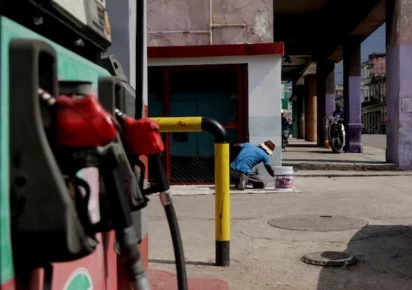
    HAVANA: Gasoline selling for as much as $38 a gallon, diesel advertised on social media and fuel stored inside cramped apartments are offering an unusual glimpse of private enterprise in communist Cuba, where the energy sector has long remained firmly under state control. A US policy allowing American companies to export fuel to private Cuban businesses has triggered an unexpected transformation. As Cuba struggles with shortages, blackouts and a weakened public transport system, imported fuel is creating a growing private market — while also exposing a sharp divide between those who can afford it and millions who cannot. The change follows the collapse of Cuba’s traditional fuel supplies from Venezuela and Mexico after the United States removed Venezuelan President Nicolas Maduro in January. With sanctions discouraging tankers from sailing toward the island, fuel shortages have increasingly affected transport, hospitals, schools and other essential services. Under an exception to Washington’s oil restrictions, however, private Cuban restaurants, retailers, taxi operators and other businesses have been allowed to import fuel. The impact has been striking. Between February and May, around 900,000 barrels of US fuel entered Cuba — enough to meet only about nine days of the country’s energy requirements. Yet those relatively small shipments have helped create a new network of legal wholesalers, private buyers and illegal resellers. Gasoline becomes a luxury For ordinary Cubans, the new fuel market has often brought frustration rather than relief. On a July afternoon in Havana, 53-year-old Amarilis Sanchez waited for hours at a bus stop after attending her daughter’s birthday celebration. Public buses, which normally cost only two pesos, were unreliable. Nearby, taxi drivers offered rides in vintage cars, but one driver quoted Sanchez 1,000 pesos for the journey — roughly 500 times the price of a bus ride. Unable to afford it, Sanchez considered spending the night at her daughter’s home and trying again for a bus the following day. Her experience illustrates how Cuba’s fuel crisis is creating two very different realities: one for people with access to private vehicles and imported fuel, and another for those dependent on the country’s struggling public transport network. Black-market gasoline prices reportedly reached $10 per litre, or about $38 per gallon, during the spring before falling as imports increased. Social media fuels a new market The emerging trade is increasingly visible online. WhatsApp groups and Facebook pages advertise gasoline and diesel, while some sellers store fuel in apartments and small shops despite the dangers posed by fire, explosions and toxic fumes. At one Havana convenience store, a shopkeeper reportedly kept around a dozen 20-litre fuel containers in a backroom, selling gasoline for approximately $5 per litre. Private companies are also moving into the newly emerging legal wholesale market. By late July, almost 200 Cuban businesses had received permission to distribute fuel wholesale to other private companies. One company, A Granel, advertises diesel through social media and charges $2.50 per litre for a 940-litre tank. The promotion reportedly features a model walking through a warehouse of diesel containers while Daddy Yankee’s famous song Gasolina plays in the background — an unusually flashy image for a country where the energy industry has historically been dominated by the state. Are Cuban gas stations next? The transformation could go further. Cuban lawmakers approved a broad package of economic reforms in June aimed at opening the energy sector to private and foreign investment. Prime Minister Manuel Marrero Cruz later announced that Cuba had approved its first foreign investment project focused on importing and selling fuel, although he did not name the company. The reforms have raised the possibility that private operators could eventually take control of some of Cuba’s familiar state-run Cupet petrol stations. For now, however, retail fuel sales remain largely under state control. Some state-owned stations are storing imported fuel but can distribute it only to vehicles belonging to authorised private businesses. Cuban authorities have defended the reforms while rejecting the idea that they represent a move toward large-scale privatisation. President Miguel Diaz-Canel has accused Washington of imposing a “genocidal siege” on Cuba and said economic changes were not being introduced to satisfy the United States. A lifeline with a heavy price The new fuel market has helped prevent some businesses from shutting down completely. During recent power outages, restaurants and shops with generators powered by imported fuel remained illuminated while much of Havana was plunged into darkness. But experts warn that the emerging system could deepen inequality. With the average government salary reportedly around $10 a month, imported gasoline remains unaffordable for most of Cuba’s roughly nine million residents. Cuban sociologist Mayra Espina said the limited fuel supplies had helped prevent “complete paralysis” but warned that the benefits were overwhelmingly concentrated among those able to pay. The result is an extraordinary contradiction: a small opening toward private enterprise is helping Cuba keep parts of its economy running, while simultaneously making access to basic mobility and energy increasingly dependent on wealth. For a country that has spent decades keeping fuel firmly within the state system, Cuba’s new gasoline economy may therefore prove to be more than a temporary response to shortage. It could become an early test of how far Havana is prepared to let capitalism into one of its most tightly controlled sectors.

  • |

    Modi’s Education Minister quits as Indian yo…

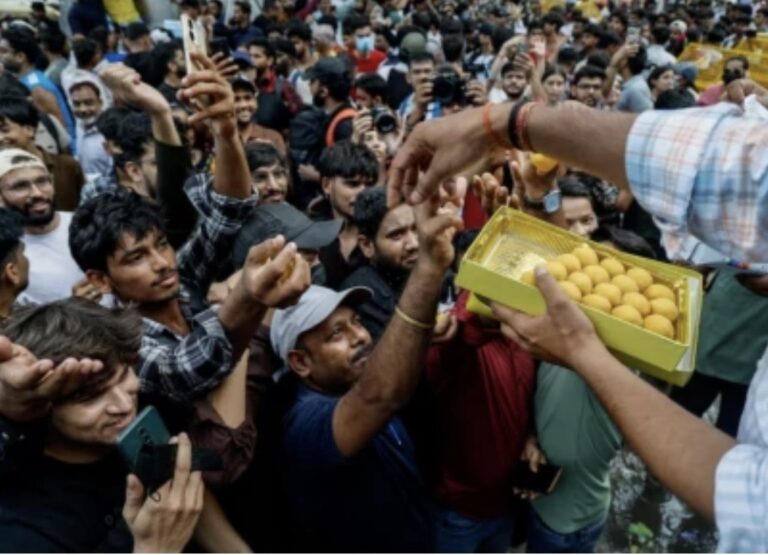
    Indian youth protesters called off weeks of demonstrations and celebrated in the streets on Saturday after Education Minister Dharmendra Pradhan resigned and Prime Minister Narendra Modi’s government bowed to demands including calls to fix a cheating-prone exam system. The worst political crisis of Modi’s third term had peaked this week when thousands of protesters marched on parliament, with police using tear gas to control them. Young voters form a critical base of Modi’s Bharatiya Janata Party. But youths calling themselves “cockroaches” had taken to the streets since late June, after national exam papers were leaked forcing a resit which affected 2 million students and galvanised anger about the lack of prospects for young Indians. The resignation of Pradhan, the students’ primary demand, came as a surprise because Modi’s government had refused to fix the exam system. Celebrations erupted at the Jantar Mantar protest site in the capital Delhi, with thousands of youngsters chanting victory slogans and dancing. The youth-led Cockroach Janta Party movement, which spearheaded the demonstrations, said it would end its protests. “We have done it,” said Abhijeet Dipke, CJP’s founder, to loud cheers at the site. Youngsters shouted “Jai Hind” as the national anthem played on loudspeakers and sweets were distributed. Roads around the central business district of Connaught Place near the protest site were shut amid celebrations and a swelling crowd of thousands of protesters. Delhi Metro rail stations in and around the area that were closed for much of four days this week were also opened. “Young generation is here. This is a win for the constitution,” protester Tluanga Ralte said, walking with a copy of the Indian constitution at the protest site after Pradhan’s resignation. “We are not a lazy generation.” Pradhan, 57, a senior member of Modi’s BJP and the son of a veteran party leader, had been education minister since 2021. He is only the second minister to resign following a scandal since Modi came to power in 2014. Pradhan said he resigned to prevent anti-national forces from exploiting the situation. His resignation marks a significant victory for the youth-led movement, which has highlighted the systemic failures in India’s education system and the broader challenges facing young people in the country. The protests and their resolution reflect the growing political consciousness and mobilisation of India’s youth, who are increasingly demanding accountability and transparency from their leaders. The government’s concession to the protesters’ demands signals a recognition of the power of youth activism in shaping the country’s political landscape. The movement, which began as a response to exam paper leaks, has grown into a broader critique of the government’s education policies and its approach to addressing the concerns of young Indians. The victory at Jantar Mantar has inspired other youth movements across the country, with activists hoping that this momentum will lead to further reforms. The resignation of Pradhan represents a turning point in the relationship between the government and the younger generation, offering a glimmer of hope for a more responsive and accountable governance system in India. The celebrations in Delhi serve as a reminder of the power of peaceful protest and the importance of listening to the voices of the youth, who are the future of the nation. The coming months will be critical in determining whether the government will follow through on its promises to fix the exam system and address the broader concerns of India’s young population. The youth-led movement has shown that collective action can bring about change, and its legacy is likely to inspire future generations to continue fighting for their rights and aspirations. The resignation of Pradhan is a significant milestone, but the journey towards a more equitable and just education system in India is far from over. The country’s youth remain hopeful that this victory will pave the way for meaningful reforms and a brighter future for all.

  • | |

    Hurricane Lala triggers flash flooding across Hawa…

    Hawaii is grappling with widespread flash flooding after Hurricane Lala skirted the Big Island as a category one storm, bringing powerful winds and heavy rain that officials say may have swept some homes off their foundations. Tens of thousands of properties across the islands have lost power, and officials have urged residents to brace for life threatening conditions, including mudslides, as the storm continues tracking westward south of Hawaii. Lala strengthened into a hurricane on Saturday, with wind speeds reaching a peak of 91 miles per hour, or 147 kilometers per hour, and forecasters say the storm could dump as much as 35 inches, or 89 centimeters, of rain in some areas. Hawaii Governor Josh Green said Saturday that one person died in a weather related car accident on Big Island, where numerous roads have been affected by the storm. Hawaii County officials said that as of 1:00 a.m. local time Sunday, two areas on Big Island had experienced flash flooding, warning that several occupied homes may have been swept off their foundations. Big Island Mayor Kimo Alameda said the county’s civil defense agency launched a search and rescue operation to locate residents whose homes may have been carried away by floodwaters. He described the rescue effort as especially difficult given the combination of rushing water, debris, boulders blocking roads and darkness. Footage released by Hawaii’s Department of Transportation shows roads submerged under fast moving water and blocked by fallen trees. Green urged residents to prepare for what he called an incredible amount of water and pleaded with people to stay off the roads during the storm, delivering the warning in a video posted to social media. The governor said 190 flights have been postponed as a result of the storm. At Ellison Onizuka Kona International Airport, Big Island’s largest airport, 40 percent of flights were grounded Saturday according to flight tracking service FlightAware, while roughly 80 percent of flights were canceled at Hilo International, the island’s other major airport. The National Weather Service issued its most severe warnings for areas in Big Island’s southeast, the region that came closest to the hurricane’s center, saying major rainfall flooding could prompt widespread evacuations and rescues as rivers and tributaries rapidly overflow their banks in multiple locations. Nearly 115,000 customers had lost power across Hawaii as of Sunday morning local time, according to the tracking service PowerOutage. Green said three hospitals also lost electricity but continued operating on backup generators. In Maui, some residents have been without water service since Saturday afternoon. A county statement said crews who responded to assess the situation were forced to turn back due to worsening weather and multiple downed trees, adding that repair work would resume once conditions allow safe access. Meteorologist Jennifer Myers, who lives in Hilo on Big Island’s eastern coast, said landslides have already cut off some roads while falling trees have torn down power lines in the area. Describing the view from her apartment overlooking the Wailuku River where it meets Hilo Bay, she said the water level had risen dramatically and that the bay, normally blue, had turned a deep red from sediment and runoff pouring into it. The hurricane ultimately did not make landfall on Big Island as some forecasts had suggested was possible, instead passing within 30 miles, or 48 kilometers, of the island’s South Point. Tropical storm warnings remain in effect across all eight of Hawaii’s major islands, including Big Island, Maui, Molokai, Kahoolawe, Oahu, Lanai, Kauai and Niihau. Big Island had previously been under a full hurricane warning. The National Hurricane Center said damaging winds and heavy rain will continue across Big Island overnight before spreading westward to the smaller islands on Sunday. Officials had repeatedly urged residents to prepare ahead of the storm’s arrival. Social media posts from local community groups showed residents filling sandbags to protect their homes and asking about store hours in the early hours of Saturday. Hawaii County’s Civil Defense Agency said public shelters remain open across every district on Big Island.

  • | | | |

    Meta rejects claims it sought to hook children to Facebook, Instagram as landmark trial begins

    A bipartisan group of 29 US states is suing Meta, seeking potentially tens or hundreds of billions of dollars in penalties and changes to how Meta does business

  • |

    Eight Palestinians killed in fresh Gaza strikes

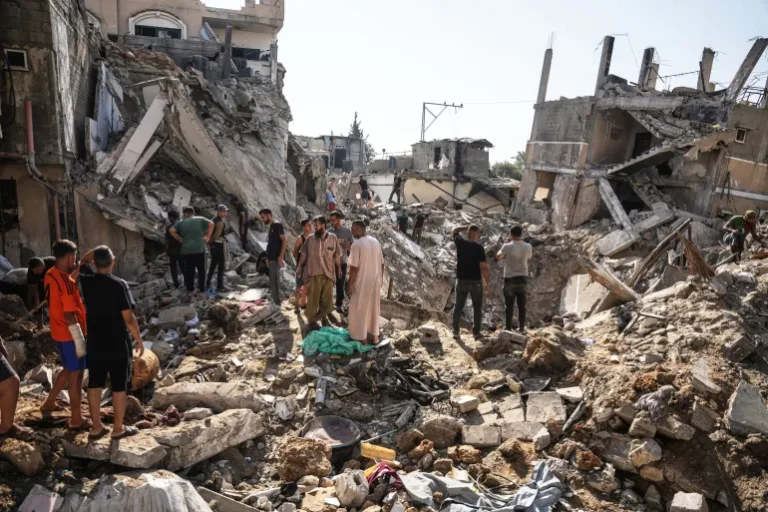
    At least eight Palestinians were killed in fresh Israeli airstrikes across the Gaza Strip on Sunday, according to Gaza’s civil defence authorities, as violence continued despite renewed diplomatic efforts aimed at restoring a ceasefire. Officials said the latest strikes targeted several locations across the enclave, including Deir el-Balah, Khan Younis and Gaza City. Among the victims were a man and a woman who were killed when an Israeli helicopter struck a residential apartment in southern Deir el-Balah. Additional attacks claimed the lives of three people in Khan Younis and another person in Gaza City’s Old City. The latest escalation came just days after the United States unveiled a new roadmap intended to revive the stalled Gaza ceasefire agreement. The proposed plan reportedly includes steps toward Hamas’ disarmament and a phased Israeli military withdrawal from the territory. However, both sides remain divided over the conditions for implementing the proposal. Hamas has maintained that it will only place its weapons under supervision after Israeli military operations end and troops withdraw in accordance with the previously agreed ceasefire framework. Israeli officials, meanwhile, have insisted that any withdrawal depends on what they describe as the complete and genuine disarmament of Hamas. Israeli Prime Minister Benjamin Netanyahu has not publicly commented on the latest proposal, while some members of his coalition have rejected the initiative and called for continued military operations against Hamas. Diplomatic contacts are continuing in an effort to reduce tensions and revive negotiations. Former Palestinian official Mohammed Dahlan said discussions involving senior US representatives were ongoing and focused on securing an end to the fighting, although no breakthrough has yet been announced. Meanwhile, another Israeli strike reportedly destroyed a medical supply warehouse in central Gaza, causing extensive damage and raising further concerns over the humanitarian situation.

  • | | |

    Israel launches second strike in Syria within a we…

    DAMASCUS: Tensions in the region rose again after an Israeli drone strike near the Syrian capital Damascus injured several people, prompting Kuwait to strongly condemn the attack and call for international action to prevent further Israeli operations on Syrian territory. The strike reportedly targeted a civilian vehicle near a village southwest of Damascus. Several people were injured in the attack, according to reports, although the full extent of the casualties was not immediately clear. Kuwait’s Foreign Ministry condemned what it described as repeated Israeli aggression against Syrian territory and urged the international community, particularly the United Nations Security Council, to fulfil its responsibilities and work to stop further attacks. In a statement, the ministry said the targeting of a civilian vehicle had resulted in injuries among civilians. Kuwait called for an effective international response to what it described as continuing violations of Syria’s sovereignty. The incident is particularly significant because it marks the second Israeli attack in Syria within a week, raising concerns that the cycle of strikes could further aggravate tensions in an already volatile region. Israel, however, defended the latest operation. Israeli officials said the strike targeted what they described as “terrorists” and was carried out in response to an immediate threat faced by Israeli troops. The competing accounts highlight the broader security dispute surrounding Israel’s military operations in Syria. Israel has repeatedly said that its forces act to prevent threats from armed groups and to protect Israeli personnel and territory. Syrian and Arab officials, meanwhile, have frequently condemned such operations as violations of Syrian sovereignty. The latest strike comes at a time when the wider Middle East remains under intense pressure from overlapping conflicts and security crises. Any further escalation inside Syria could complicate efforts to maintain regional stability and increase diplomatic pressure on neighbouring countries. Kuwait’s appeal to the UN Security Council reflects growing calls from Arab states for greater international scrutiny of military operations on Syrian soil. The Kuwaiti ministry urged global powers to take concrete steps rather than allowing repeated attacks to continue unchecked. For residents near Damascus, the latest incident adds to concerns over the possibility of renewed violence. Although the immediate strike caused injuries rather than a large-scale loss of life, the frequency of military operations has raised fears that a wider confrontation could develop. With Israel maintaining that its actions are necessary for security and Arab governments calling for an end to attacks, Syria remains caught at the centre of a tense regional confrontation. The latest strike could therefore become another flashpoint in an increasingly fragile security environment.

Leave a Reply

Your email address will not be published. Required fields are marked *