malala expresses grief
| | | |

Malala expresses grief over Swat attack, calls for…

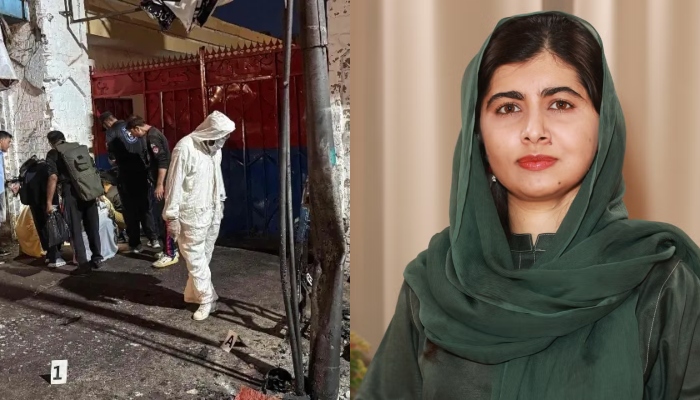
Nobel Peace Prize laureate Malala Yousafzai has expressed deep sorrow over the recent suicide attack in Swat, urging authorities to ensure the protection of civilians and prevent the region from falling back into violence.

In a statement, Malala said she was deeply saddened by the suicide bombing in her hometown of Swat, describing the incident as a tragic reminder of the suffering the region has endured over the years.

She noted that the attack claimed the lives of more than a dozen people, including police personnel, and said she could understand the pain and grief being experienced by the families of the victims.

Malala extended her heartfelt condolences to those who lost their loved ones and prayed for strength and patience for the bereaved families. She also expressed hope for the speedy recovery of those injured in the attack.

Emphasising the importance of public safety, Malala called on the authorities to take all necessary measures to protect the lives and property of citizens and ensure lasting peace and security in the region.

Reflecting on Swat’s past, she said the girls of the valley have always dreamed of living in peace, free from fear and violence. She added that her prayers are with the people of Swat and expressed hope that they would never again be forced to live under the shadow of the Taliban.

Malala said the people of Swat deserve a peaceful future where children can pursue their education, families can live without fear, and communities can rebuild their lives in a secure environment.

Similar Posts

  • | |

    Justice delayed for 40 years is injustice, says Mu…

    Prominent religious scholar Mufti Muneeb-ur-Rehman has called for urgent reforms in Pakistan’s justice and economic systems, saying that a legal framework that fails to deliver justice for decades cannot be considered fair. Addressing a gathering in Karachi on Tuesday, Mufti Muneeb said prolonged court cases lasting 40 years amount to injustice and place an enormous burden on ordinary citizens. He stressed that timely justice is essential for social stability and public trust in institutions. The scholar also urged those in power to focus on resolving Pakistan’s domestic challenges. He said leaders often discuss global issues, but greater attention should be given to pressing national matters, particularly economic concerns affecting millions of people. Referring to the energy sector, Mufti Muneeb called for a solution to issues related to Independent Power Producers (IPPs), which have frequently been debated in Pakistan due to their impact on electricity costs and the national economy. He further highlighted the country’s financial difficulties, saying that after payments related to provincial allocations and debt obligations, limited resources remain for development and public welfare. Speaking at the same event, Maulana Bashir Farooqi expressed concern over the continuation of the interest-based banking system. He said there was a need for serious efforts to move toward alternative financial models and added that his organization was prepared to help train employees of conventional banks if reforms were introduced. The remarks come amid ongoing debates in Pakistan over judicial reforms, economic challenges and proposals for changes in the financial system.

  • | | | |

    Roman-Era masterpiece found hidden beneath fields …

    Archaeologists have uncovered a stunning 4th-century Roman mosaic beneath farmland in England, offering new insight into life during the period when Britain was part of the Roman Empire. The remarkable mosaic was discovered at the remains of an ancient Roman villa in Devon. Made from thousands of colorful stones arranged into intricate floral patterns, the artwork is believed to date back to the fourth century AD. The discovery provides fresh evidence of the wealth, architecture and cultural influence that existed in Roman Britain. The Roman Empire controlled much of Britain from around AD 43 until around AD 410, leaving behind numerous settlements, villas, roads and other archaeological remains. Alongside the mosaic, archaeologists discovered a large and sophisticated Roman bathhouse near the site. The complex reportedly contained several small pools, walls decorated with colorful plaster and a range of other ancient artifacts. The excavation was carried out over a two-month period by archaeologists from the University of Exeter and Cotswold Archaeology. Volunteers also participated in the work, helping researchers investigate the agricultural land located between the Devon villages of Hill Barton and Sampford Peverell. The archaeological team already knew that the Roman villa and surrounding working areas were potentially important for understanding the spread of Roman culture across Devon. However, the latest findings have revealed that the site was considerably larger and more significant than previously understood. Project leader Dr Susan Greaney said the discoveries could help researchers better understand Roman cultural influence and its interaction with local communities in the region. The detailed mosaic is particularly significant because such decorative artwork can provide clues about the status and lifestyle of people who lived at Roman villas. Its elaborate design and the presence of a substantial bathhouse suggest that the site was an important settlement rather than a simple rural dwelling. Archaeologists will now continue studying the discoveries and artifacts recovered from the site. Researchers hope the evidence will shed more light on how people lived, worked and adopted Roman customs in southwest England nearly 2,000 years ago. The Roman mosaic discovered in Devon is another reminder of how much of Britain’s ancient history remains hidden beneath modern farmland. Further archaeological investigation could reveal even more about the communities that lived in the region during the final centuries of Roman rule.

  • |

    PM Shehbaz returns after three-day Saudi Arabia vi…

    Prime Minister Shehbaz Sharif returned to Pakistan on Saturday after completing a three-day official visit to Saudi Arabia, where he held important engagements and participated in discussions focused on regional security and bilateral cooperation. According to the Prime Minister’s Office, Shehbaz departed Madinah after concluding his visit to the Kingdom. Madinah Governor Prince Salman bin Sultan bin Abdulaziz Al Saud was present at the airport to bid farewell to the prime minister and the Pakistani delegation. During his stay in Madinah, Prime Minister Shehbaz visited Al-Masjid an-Nabawi and offered prayers alongside members of his delegation. He also performed prayers at Riyaz-ul-Jannah and prayed for the progress, prosperity and well-being of Pakistan and its people. The prime minister was also given the opportunity to visit the Roza-e-Rasool (PBUH) at the Prophet’s Mosque. Shehbaz was accompanied during the visit by Deputy Prime Minister and Foreign Minister Ishaq Dar, Defence Minister Khawaja Asif, Information Minister Attaullah Tarar and Special Assistant Tariq Fatemi. Earlier, the prime minister travelled to Makkah, where he performed Umrah along with Chief of Army Staff and Chief of Defence Forces Field Marshal Asim Munir. The visit was undertaken at the invitation of Saudi Crown Prince and Prime Minister Mohammed bin Salman. A major outcome of the trip was the signing of the Makkah Joint Defence Agreement between Pakistan, Saudi Arabia and Türkiye. The agreement aims to strengthen defence coordination, collective security and regional stability among the three countries. Under the pact, an armed attack against any one of the signatories will be considered an attack against all three, establishing a framework for collective deterrence. The agreement marks a significant step in strengthening strategic and defence cooperation among Pakistan, Saudi Arabia and Türkiye amid growing security challenges in the region.

  • | |

    LHC Judge appointments spark Rawalpindi lawyers’…

    Rawalpindi: A dispute has erupted among lawyers’ groups in Rawalpindi over recent appointments and nominations of judges to the Lahore High Court, with some bar organisations raising questions over the representation of Rawalpindi Division and demanding a review of the process. The controversy intensified after the Peoples Lawyers Forum Rawalpindi Division called the proposed nominations unacceptable and demanded that the Judicial Commission examine the reasons behind the selections and the rejection of other candidates. The forum questioned why no candidate from Rawalpindi Division was included in the nominations and demanded details about the criteria used for selecting nominees. Meanwhile, the High Court Bar Association Rawalpindi and District Bar Association Rawalpindi also expressed concern over what they described as the continued lack of representation of Rawalpindi Division in Lahore High Court appointments. The District Bar Association Rawalpindi stated that ignoring the region’s experienced lawyers raised concerns about merit, transparency and regional balance. The association said Rawalpindi Division has a large legal community consisting of seven district bars and fourteen tehsil bars, producing many renowned lawyers, judges and legal professionals who have contributed to Pakistan’s judicial system. According to the association, no member of the Rawalpindi Division bar has been confirmed as a Lahore High Court judge since 2017, despite several capable lawyers and additional judges from the region having served with distinction. The High Court Bar Association Rawalpindi described the continued absence of representation as a matter requiring attention and said consultations would be held with district and tehsil bars to decide future steps. The Peoples Lawyers Forum also called on President Asif Ali Zardari and Peoples Lawyers Forum President Nayyar Hussain Bukhari to take notice of the situation. The forum requested that the notification process should be reviewed and that the Judicial Commission should provide details about the nominated candidates, their qualifications, selection reasons and the reasons why other candidates were not considered. The lawyers’ group demanded that if the process was found inconsistent with rules or principles of fairness, recommendations should be reconsidered and a fresh merit based review should be conducted. However, the dispute remains focused on questions of representation and transparency rather than any confirmed wrongdoing. The final decision regarding judicial appointments rests with the relevant constitutional authorities and judicial forums. The issue has now placed attention on the balance between merit based appointments and regional representation in the higher judiciary. Lawyers’ organisations have called for a transparent mechanism that ensures qualified candidates from all regions receive equal consideration while maintaining the independence and quality of the judicial system.

  • | |

    Jewellery emerges as luxury’s fastest-growing segment

    Luxury jewellery is becoming one of the strongest-performing categories in the global fashion industry as demand for traditional products such as handbags and shoes continues to slow. Industry analysts say major luxury houses are increasingly investing in jewellery, viewing it as the sector with the greatest growth potential amid changing consumer preferences. The shift has benefited both established jewellery brands and smaller luxury labels. Companies that were once known primarily for fashion and leather goods are now placing greater emphasis on expanding their jewellery collections to attract consumers looking for timeless, investment-worthy pieces. Among the biggest beneficiaries are luxury groups Richemont and LVMH, which own some of the world’s leading jewellery brands. However, smaller brands have also recorded strong growth, encouraging fashion-focused companies to strengthen their presence in the category. According to the report, the industry’s positive performance has renewed interest in jewellery across the luxury sector. French luxury group Kering, which owns jewellery brands Pomellato and Boucheron, reported particularly strong results earlier this year. The company announced in April that sales from its new jewellery division increased 22% on a comparable basis during the first quarter, outperforming all of its other business segments. The figures highlighted jewellery’s growing importance as a revenue driver. Luxury brand Hermès has also experienced rapid growth in jewellery. Analysts at investment firm Vontobel estimate that the company’s jewellery business has achieved a compound annual growth rate of nearly 30% since 2019, although they note that the division still represents a relatively small part of Hermès’ overall business. Industry experts believe this trend reflects broader changes in consumer behaviour. Luxury analyst Madjo said, “Even at soft luxury players like Hermes, Prada, Gucci, everybody’s putting a bit more emphasis on jewellery because that’s where the growth is coming from right now. So you want to be exposed to that.” At the same time, traditional luxury categories such as handbags and shoes are facing increasing pressure. Hermès, whose reputation has long been built around its highly exclusive Birkin bags, recently saw its shares fall about 10% after reporting weaker-than-expected first-quarter growth. The results prompted questions about whether the company’s scarcity-based business model can continue delivering the same level of success. Claudia D’Arpizio, senior partner at consultancy Bain & Company, said changing consumer tastes are reshaping the luxury market. “Bags and shoes are facing meaningful headwinds, as both have experienced significant softening in consumer desirability, particularly among younger audiences,” she said. She added that these categories have traditionally generated strong revenues and profit margins, but post-pandemic market conditions have made them far more challenging. According to D’Arpizio, luxury brands must now develop new strategies to remain competitive, with jewellery increasingly emerging as one of the industry’s most promising growth opportunities.

  • | | | |

    PTI seeks immediate hospital transfer for Imran Kh…

    The Pakistan Tehreek-e-Insaf (PTI) has demanded the immediate transfer of party founder Imran Khan to a hospital after a medical report highlighted concerns over his blood pressure and anxiety. The demand came after a report from Adiala Jail authorities was submitted to the Supreme Court. The report contains details of Imran Khan’s latest medical condition and recommendations for his care. PTI leaders held a press conference on Monday and expressed concern over the former prime minister’s health. They called for him to be moved to a hospital where he could receive specialised medical treatment. PTI Chairman Barrister Gohar Ali Khan said Imran Khan’s elevated blood pressure was a serious concern. He demanded that the former prime minister receive the best available medical care. Gohar said Imran Khan should also be given access to his personal doctors. He demanded that his family members and lawyers should be allowed to meet him. The PTI chairman said access to Imran Khan had remained restricted for months. He claimed that party representatives had repeatedly approached the courts seeking permission for meetings. According to Gohar, the PTI had approached the high court around 25 times and the Supreme Court around 15 times over the issue. He described meetings with family members, doctors and lawyers as Imran Khan’s fundamental legal right. He urged the judiciary to address the matter and ensure that the former prime minister received appropriate medical attention. Gohar said the party’s concerns would not end until Imran Khan was provided proper medical treatment and regular access to his family and legal team. He also criticised what he described as a prolonged dispute over access to the PTI founder. Gohar said the situation had continued since October and called for an end to what he termed a “cat and mouse game”. The PTI’s demands came shortly before the Supreme Court was scheduled to hear matters concerning Imran Khan. The jail report had recommended increasing family interaction to help manage his anxiety and blood pressure. It also contained details of his medical examinations and treatment. PTI leaders argued that the reported health concerns should be treated seriously and that hospitalisation would ensure closer medical supervision. The party has also continued to call for access to Imran Khan’s personal physicians, saying they should be allowed to assess his condition independently. The issue of Imran Khan’s health has become a major political and legal point of contention. PTI leaders have repeatedly raised concerns over his medical care and restrictions on meetings.

Leave a Reply

Your email address will not be published. Required fields are marked *