marcos suspends excise
| | |

Marcos suspends excise taxes on LPG, kerosene anew

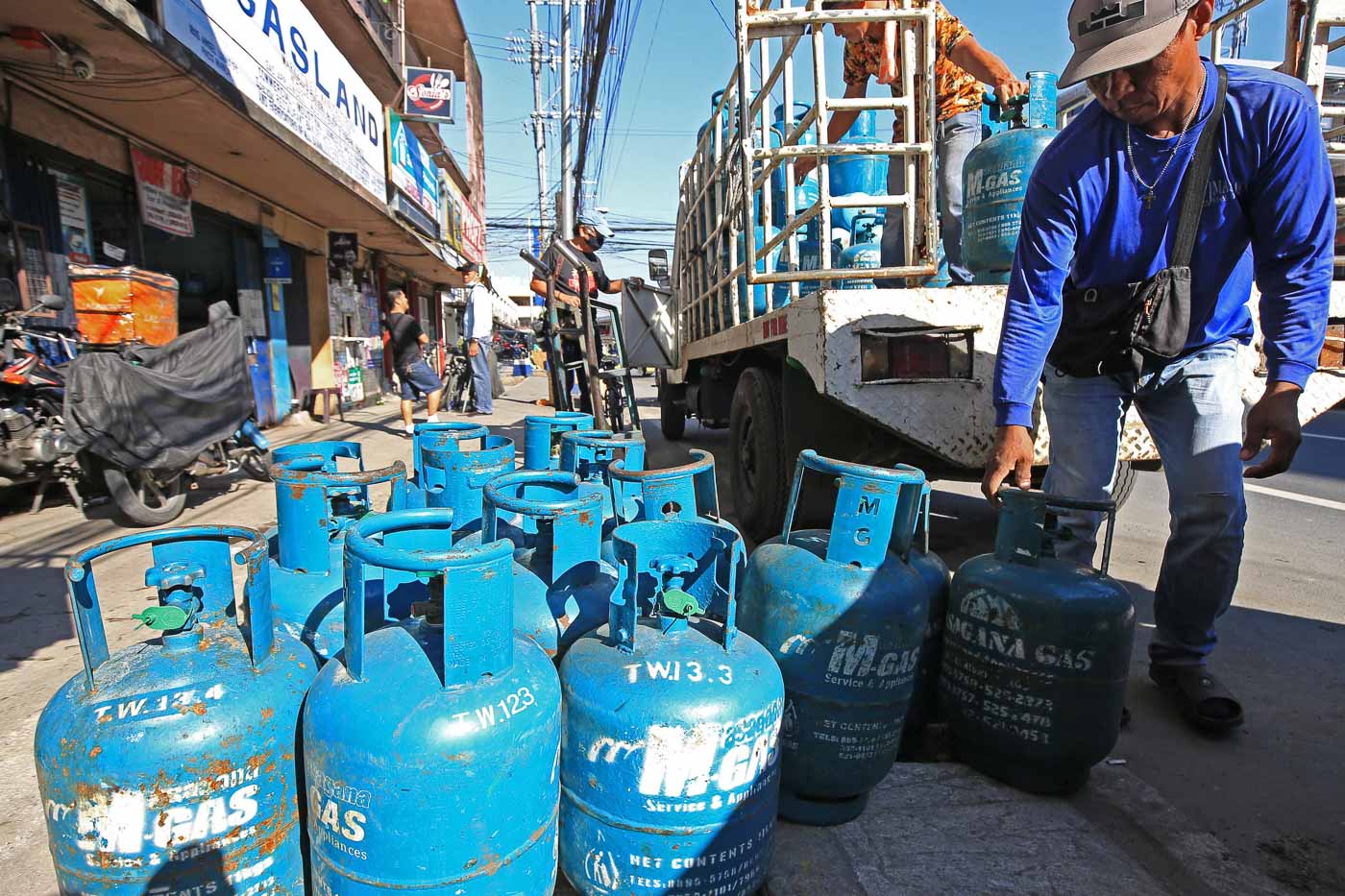
MANILA, Philippines – President Ferdinand Marcos Jr. has ordered the full suspension of excise taxes on liquid petroleum gas (LPG) and kerosene as high global oil prices continue to hit the wallets of Filipino consumers; the relief, however, does not extend to gasoline or diesel.

Marcos issued Executive Order No. 125 on Friday, September 25, following a recommendation from the Development Budget Coordination Committee (DBCC). The order will take effect immediately upon publication in the Official Gazette or a newspaper of general circulation.

The suspension covers LPG, except when used as a raw material for petrochemical production or for motive power, and kerosene, except when used as aviation fuel. Gasoline and diesel, which have seen successive sharp price increases in recent weeks, were not included in the tax break.
Must Read

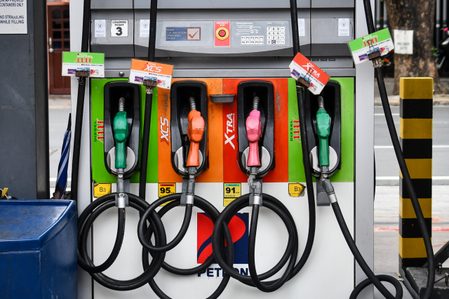
Fuel prices rise again with big hike on September 22


Fuel prices rise again with big hike on September 22

The relief can last a maximum of three months, but may end earlier if the one-month average price of Dubai crude falls below the $80-per-barrel level.

The move came after the Department of Energy (DOE) certified that one-month average Dubai crude price had reached $99.41 per barrel, well above the $80-per-barrel threshold required for the government to suspend fuel excise taxes. The DBCC subsequently recommended full suspension.

The DBCC and DOE are also required to review the measure every month and may recommend whether the suspension should continue, be modified, or ended.

Finance Secretary Frederick Go earlier told senators that suspending excise taxes on gasoline and diesel would “not be progressive,” given that wealthier consumers use more of the two fuels and would capture a larger share of the benefit. The government could also lose about P12 billion in tax revenues each month if the break was extended to gasoline and diesel.

The government previously suspended excise taxes on LPG and kerosene for three months beginning in April after Dubai crude similarly breached the trigger threshold. Gasoline and diesel were also excluded from that earlier round.

The Department of Finance previously estimated that suspending excise taxes for LPG and kerosene for the maximum three-month period would cost the government around P4.1 billion in foregone revenues. – Rappler.com

Similar Posts

  • |

    Pakistan explores digital assets, tokenisation to expand access to finance

    ISLAMABAD: Pakistan is examining the potential use of digital assets and tokenisation in areas including real estate and other investment instruments as part of broader efforts to accelerate digital transformation and expand access to financial services. The matter came under discussion during a meeting between Federal Minister for Finance and Revenue Senator Muhammad Aurangzeb and Pakistan Digital Authority (PDA) Chairperson Dr Sohail Munir on Thursday. The meeting focused on digital finance, technology-driven economic activity and measures aimed at making financial services more accessible and efficient. According to the Finance Division, the participants reviewed the emerging role of digital assets and tokenisation, particularly their possible application in real estate and other investment-related assets. The discussion also stressed the need for an appropriate regulatory and institutional framework to ensure that such technologies are adopted in a responsible and sustainable manner. Tokenisation generally involves representing ownership or economic rights in an asset through digital tokens. The approach has attracted growing international attention because it can potentially make certain investment opportunities easier to access, improve transaction efficiency and broaden participation in financial markets. The finance minister stressed that Pakistan’s regulatory and institutional arrangements must keep pace with rapid developments in digital technology and new business models. He emphasised that emerging technologies should be supported by clear rules and mechanisms that provide certainty to businesses, investors and financial institutions. The meeting also examined the need to create an enabling environment for electronic transactions and encourage the wider adoption of digital processes across trade and financial activities. Aurangzeb highlighted the importance of using technology to reduce procedural barriers and improve access to finance. In this regard, the participants discussed simplifying customer onboarding procedures, strengthening mechanisms for sharing financial data and improving interoperability among different financial systems. Greater connectivity between banks and capital markets was also identified as an important area for development. The participants considered how digital platforms and simplified account-opening procedures could encourage more people to participate in the capital market and gain access to a broader range of investment opportunities.   The finance minister also called for stronger integration of banking and capital-market systems, noting that better-connected digital infrastructure could help improve financial inclusion while making investment processes more convenient and efficient. Another key area discussed during the meeting was the use and interoperability of data across government institutions. Aurangzeb noted that better integration of government data could improve the quality and speed of policymaking, planning and decision-making. The meeting also considered the growing role of Artificial Intelligence (AI) and other digital technologies in strengthening government systems and improving the delivery of public and financial services. The participants reviewed opportunities to enhance Pakistan’s digital infrastructure so that government departments, financial institutions and businesses can operate through more efficient and interconnected systems. Aurangzeb appreciated the initiatives being undertaken by the Pakistan Digital Authority and stressed the need to prioritise practical projects capable of delivering measurable improvements in efficiency, financial access and digital capacity. He further emphasised continued coordination among government institutions, regulators, financial-sector stakeholders and technology organisations to ensure that digital initiatives translate into tangible economic benefits. The discussions form part of wider efforts to strengthen Pakistan’s digital economy by modernising financial processes, expanding technology-based services and creating an environment in which emerging financial technologies can develop within an appropriate regulatory framework. With digital assets, tokenisation, artificial intelligence and data-driven financial services developing rapidly worldwide, Pakistan’s efforts to establish suitable frameworks could play an important role in determining how effectively the country participates in the next phase of digital financial development.

  • |

    Pakistan reports major gas discovery in Sarani block

    ISLAMABAD: Pakistan has recorded a significant milestone in its hydrocarbon exploration sector with the discovery of high-quality gas from an exploration well in Sindh, marking the country’s first reported hydrocarbon find from the Jurassic-era Chiltan Formation of the Lower Indus Basin. Pakistan Petroleum Limited (PPL) announced that its exploration well Dolphin, drilled in the company-operated Sarani Block in District Sujawal, Sindh, has encountered a potentially commercially important gas accumulation. The company described the discovery as unique and strategically significant for Pakistan’s future exploration activities. According to PPL, the discovery confirms the existence of an active petroleum system in an area that had previously presented considerable exploration challenges. The find is particularly important because it demonstrates the hydrocarbon potential of the Jurassic-age Chiltan Formation, opening up new possibilities for further exploration in the region. The company said the Dolphin well has provided valuable geological evidence that could help redefine exploration prospects in the onshore swampy areas of the Lower Indus Basin, as well as their possible extensions into shallow marine zones. The discovery is being viewed as an important development for Pakistan, which continues to face a growing gap between domestic energy demand and local oil and gas production. New indigenous gas reserves could help reduce reliance on imported energy resources, although the commercial scale and recoverable reserves associated with the discovery would depend on further evaluation and development work. PPL’s latest find also highlights the potential of relatively underexplored geological formations in the country. The identification of hydrocarbons in the Chiltan Formation could encourage exploration companies to reassess nearby acreage and investigate similar geological structures. The Dolphin discovery is therefore significant not only because of the gas encountered but also because it may establish a new exploration play in the Lower Indus Basin. Further appraisal and technical studies will be required to determine the size, quality, production potential and commercial viability of the discovery. Industry experts have long emphasized the need for increased domestic exploration to strengthen Pakistan’s energy security. Successful discoveries such as Dolphin could support that objective by expanding the country’s indigenous resource base and creating opportunities for additional exploration and investment. PPL said the discovery has effectively opened a new exploration frontier, particularly in the swampy onshore terrain and potentially adjoining shallow marine areas. The company is expected to undertake further technical assessment to establish the full potential of the newly identified gas-bearing formation.

Leave a Reply

Your email address will not be published. Required fields are marked *