meghan markle feels
|

Meghan Markle feels vindicated as William, Kate ‘failed’ to block her return

Meghan Markle and Prince Harry reportedly do not need approval from Prince William and Kate Middleton to reconnect with the royal family. Insiders say the shift has significantly boosted Meghan’s confidence.

The claims emerge as King Charles pushes for reconciliation with his son and daughter-in-law. Sources close to the family say the monarch is actively working to move past the years-long rift.

An insider told the Examiner that it it becoming increasingly clear the couple does not need William and Kate’s blessing to rejoin royal circles. That realisation, the source said, has given Meghan a real sense of confidence.

Another confidant claimed the California-based couple believe William, and likely Kate too, tried hard to make things difficult for them. They reportedly felt the couple attempted to block their path at nearly every turn.

Despite those efforts, the source said the future king and queen ultimately failed to keep Harry and Meghan out. A separate palace insider described King Charles’s reconciliation efforts as deeply satisfying to watch unfold.

The insider added that Charles is not just focused on healing the rift for Harry and Meghan themselves. He’s reportedly laying groundwork meant to benefit their children and future generations of the family as well.

Royal commentator Dan Wootton added further detail during a recent appearance on The Megyn Kelly Show. He revealed that the king has offered Meghan and Harry open access to the palace whenever they’d like to visit.

Wootton said Charles has also invited the couple to join him this summer at Balmoral, the family’s private Scottish estate. That invitation is seen as a significant gesture toward mending ties.

Sources close to Harry and Meghan say the couple feels genuinely vindicated by these developments. At the same time, they reportedly remain hopeful about eventually improving their relationship with William and Kate specifically.

Insiders say the couple intends to keep working toward that goal moving forward, even as tensions with the Wales household persist behind the scenes.

Similar Posts

  • | |

    Peshawar court rejects asylum pleas of ex-Afghan o…

    The Peshawar High Court has rejected asylum petitions filed by two former Afghan military officers seeking temporary protection and permission to remain in Pakistan. The petitioners, Abdul Mujeeb Ghairat and Baryalai Sharifi, had approached the court after expressing fears for their safety if they were forced to return to Afghanistan. They requested permission to stay in Pakistan temporarily. They also sought extensions of their visas and protection from arrest, harassment and deportation. The former Afghan servicemen argued that returning to Afghanistan could expose them to serious threats to their lives because of their previous positions in the Afghan security establishment. According to court documents, Ghairat had worked as a special agent with the protective service of the former Afghan president. Sharifi had served as a general in the former Afghan National Army. The two petitioners submitted Afghan passports and other documents to support their requests. They also referred to their need for emergency medical treatment and temporary residence in Pakistan. Ghairat told the court that he had already submitted an online application seeking an extension of his Pakistani visa. After examining the petitions, the court ruled that the applicants had not established any violation of their fundamental constitutional rights. The court observed that fears about possible threats after returning to Afghanistan, without sufficient supporting evidence, could not by themselves justify intervention under Article 199 of the Constitution. The court also clarified that decisions concerning the stay of foreign nationals in Pakistan fall within the authority of the relevant government departments. It said matters involving the issuance, extension or cancellation of visas and immigration status are governed by applicable laws and are primarily handled by the executive authorities. The court therefore declined to grant the requested relief to the two former Afghan officers.

  • |

    Hamas accepts breakthrough disarmament framework as US announces Gaza peace deal

    US President Donald Trump announced that the international Board of Peace has reached a historic agreement for the complete disarmament of Hamas and all other armed groups in the Gaza Strip. Under the proposed framework, Hamas has agreed to the phased inventorying, storage, and decommissioning of its heavy and light weaponry under Palestinian supervision, marking the first time in the group’s history that it has accepted a formal plan to disarm completely. The agreement forms the core of the second phase of the US-brokered 20-point peace plan designed to end the long-running war. According to the terms, Israeli military forces will gradually withdraw from Gaza as disarmament milestones are met, transferring local security to an International Stabilisation Force operating alongside a newly formed Palestinian police force. Civil administration will simultaneously transition to a technocratic governing body, the National Committee for the Administration of Gaza. The breakthrough follows months of intensive negotiations in Cairo mediated by Egypt, Qatar, and Turkey. Internal momentum within Hamas shifted following leadership elections that elevated Gaza-based leader Khalil al-Hayya, alongside mounting pressure from the severe humanitarian crisis affecting over two million residents in the enclave. Senior Hamas officials confirmed their acceptance of the framework and indicated an official statement would be issued shortly, expecting mediators and the Board of Peace to guarantee Israeli compliance with the withdrawal timeline. Uncertainties remain regarding full implementation, as Israeli officials have expressed skepticism and maintained that complete demilitarisation remains a non-negotiable prerequisite. US officials acknowledged that whilst full disarmament and troop withdrawal could take up to a year, the consensus represents the most viable operational roadmap for ending the conflict to date.

  • | |

    Torrential rain floods low-lying areas of twin cit…

    RAWALPINDI/ISLAMABAD: Torrential rainfall for the second consecutive day has inundated several low-lying areas of Rawalpindi and Islamabad, disrupting normal life and prompting authorities to step up emergency measures. According to the Managing Director of the Water and Sanitation Agency (WASA), Shamsabad received the highest rainfall, with 116 millimetres recorded in the area. WASA has declared a rain emergency and cancelled the leave of field staff to ensure an immediate response to any emergency. Heavy machinery has been positioned at vulnerable locations, including Liaquat Bagh, Committee Chowk Underpass, Murree Road, Dhok Khuba, Circular Road and Sadiqabad, to accelerate drainage operations. The agency said the water level in Nala Lai had reached 10.5 feet at Katarian and 8.5 feet at Gowalmandi. Authorities are closely monitoring the situation as further rainfall could increase the risk of urban flooding in vulnerable areas. Moreover, Lahore is experiencing hot and humid weather, with the current temperature recorded at 31°C and the maximum expected to reach 35°C. The minimum temperature is likely to remain at 28°C, while humidity stands at 75 percent and winds are blowing at 6 kilometres per hour. The Meteorological Department has forecast heavy rainfall in Lahore from August 17 to 20 as part of the sixth monsoon spell, with rain expected across Lahore and other districts of Punjab until August 21. Authorities have warned of possible water accumulation in low-lying areas and urban flooding. In view of the forecast, WASA Lahore has been placed on high alert on the special directives of Punjab Chief Minister Maryam Nawaz Sharif. WASA Vice Chairman Chaudhry Shahbaz Ahmed, DG WASA Punjab Tayyab Fareed, and MD WASA Lahore Ghufran Ahmed have directed officials to ensure that all major roads and underpasses remain clear and drainage operations continue without interruption. DG WASA Punjab directed all field teams to remain fully mobilised, while MD WASA Lahore instructed officials to operate disposal stations on generators in areas facing power outages to ensure uninterrupted drainage operations. The WASA Vice Chairman directed officials to keep pumps at all disposal stations operational and ensure that screens are regularly cleaned to prevent blockages. MD WASA Lahore also directed all Town Directors to closely monitor their respective areas and take immediate action wherever necessary. Meanwhile, WASA Lahore has released the latest rainfall record, with 21mm recorded at the Nishtar Town Director Office, 2.2mm in Kahna and 25.4mm at the Nishtar Town Disposal Station. The Nishtar Town Disposal Station recorded the highest rainfall among the reported locations. Under the directives of MD WASA Lahore Ghufran Ahmed, continuous monitoring of drainage operations is underway, with field officers and staff remaining fully mobilised to ensure the timely disposal of rainwater. The Meteorological Department has also advised citizens to take precautionary measures during rainfall and avoid unnecessary travel. Relevant authorities have been directed to remain alert and take all necessary measures to deal with any emergency situation.

  • | |

    Iran shifts to offensive posture as Hormuz standof…

    Iran has moved from a defensive to what a senior Iranian official called a fully offensive strategy, citing a deadlock in efforts to reach a lasting end to its war with the United States, according to a person familiar with the matter who spoke to a foreign news agency on Monday. Progress toward peace talks and the resumption of oil tanker traffic through the Strait of Hormuz has stalled, with no indication that either side is moving closer to ending the conflict the United States and Israel launched on February 28. The official said Iranian entities must prepare to escalate tensions in the strait and across the wider region, adding that Tehran stands ready to make difficult decisions and would carry out a precise military strike to break the US naval blockade if diplomacy collapses. Washington did not immediately respond to those remarks, though President Donald Trump told Fox News earlier in the day that Iran should raise the white flag of surrender. Throughout the conflict, Trump has swung between threats of further escalation and claims that a peace deal sits within reach. Iran’s Islamic Revolutionary Guard Corps pushed back hard on one such claim Monday, rejecting as false Trump’s assertion that Washington maintains backchannel contact with IRGC officials on matters related to the war. Spokesman Hossein Mohibbi told Iran’s Tasnim news agency that no talks are taking place between IRGC officials and American counterparts, describing Trump’s claims as fantasies stemming from desperation over battlefield setbacks. Mohibbi said diplomatic matters fall to other Iranian institutions and remain outside the Guard’s purview, adding that current information from the Foreign Ministry confirms no talks are underway even at that level. He argued Trump’s statements amount to an attempt to influence global energy prices. Trump had told reporters earlier Monday that his administration keeps a backchannel with the IRGC and speaks directly with its officials inside Iran. Trump also issued a separate warning aimed at Oman, saying Washington would respond with force if the sultanate interferes with US Iran negotiations. Asked about Oman’s role in talks touching on Iran and the Strait of Hormuz, Trump told Fox News the United States would bomb Oman if it gets in the way. The comment came after Iran said Saturday that it had reached agreement with Oman on a shipping route map for the strait following weeks of technical talks. Trump separately confirmed the administration’s direct channel with the IRGC and repeated that Tehran should surrender, calling Iranian officials skilled negotiators who are nonetheless losing ground. Fighting also intensified elsewhere in the region. Yemen’s Houthi movement claimed Monday that it struck several Saudi naval vessels along with a weapons depot in a broad missile and drone assault. Spokesman Yahya Saree said a Saudi amphibious transport ship and accompanying vessels were hit in a precise aerial attack involving multiple ballistic missiles, claiming several ships sank while others caught fire. He said Houthi forces also used multiple drones to strike a Saudi weapons depot at the Sahn al Jin camp in Yemen’s Marib province. Saudi authorities had not confirmed the claims as of publication. Separately, Yemen’s army said Monday it detected two hypersonic ballistic missiles fired by Houthi forces toward the city of Mocha and the Red Sea, launched from a former air defense brigade headquarters east of Taiz. No information on casualties or damage was immediately available, and the Houthis did not comment. The launch followed a claim from Yemen’s National Resistance Forces that Houthi fighters had targeted Mocha with seven drones a day earlier, adding to fears of renewed full scale conflict in a country that had seen relative calm since April 2022 following nearly twelve years of civil war. On the Iranian side, IRGC Deputy Commander in Chief Major General Mostafa Izadi said Iranian forces shot down more than 200 enemy aircraft during the recent war with the United States and Israel, according to Iran’s Fars news agency. Izadi said the conflict left the Islamic system undamaged and demonstrated Iran’s strength to the world. Parliament speaker Mohammad Bagher Ghalibaf went further, declaring both a military and political victory over Washington and Israel on the day a 60 day ceasefire under the Islamabad memorandum was set to expire. Ghalibaf said the US and Israel failed to achieve any of nine publicly stated objectives in the war, calling it their biggest failure. Trump, meanwhile, reiterated on his Truth Social platform that Iran cannot possess a nuclear weapon in any form, describing this as Washington’s permanent top priority. Iran also pressed a separate grievance Monday, with Foreign Ministry spokesman Esmaeil Baghaei blaming pollution in Gulf waters on decades of US military presence and operations in the region. Baghaei said the environmental damage stems from American military activity over the past five decades and called for Washington to be held accountable, estimating losses in the trillions of dollars. His comments followed Iran’s request last week for compensation after an oil slick reached the island of Qeshm, which officials said has since been cleaned up. Separately, salvage efforts continued for a grounded tanker leaking Russian crude off Oman’s coast, with officials citing monsoon weather and the shallow, rocky seabed as major obstacles. Mohammed bin Abdullah al Rawahi of Oman’s transport ministry said the conditions expose salvage vessels to operational and navigational risks, compounded by flooding damage to one side of the tanker. Diplomatic efforts on Gaza also advanced Monday, with Israeli Prime Minister Benjamin Netanyahu due to meet Trump envoy Jared Kushner a day after a rare meeting between Kushner and Hamas officials in Cairo. A diplomatic source said Hamas leader Khalil Al Hayya attended some sessions with Kushner and Gaza peace envoy Nickolay Mladenov. Trump said in late July that a deal had been reached on the complete disarmament of Hamas and other armed groups, though Netanyahu, facing an October re election vote, has publicly rejected the plan. Trump separately welcomed the signing of the Makkah Joint Defence Agreement by Turkiye, Pakistan and Saudi Arabia, saying on Truth

  • | |

    Khawaja Asif calls bureaucracy Pakistan’s real r…

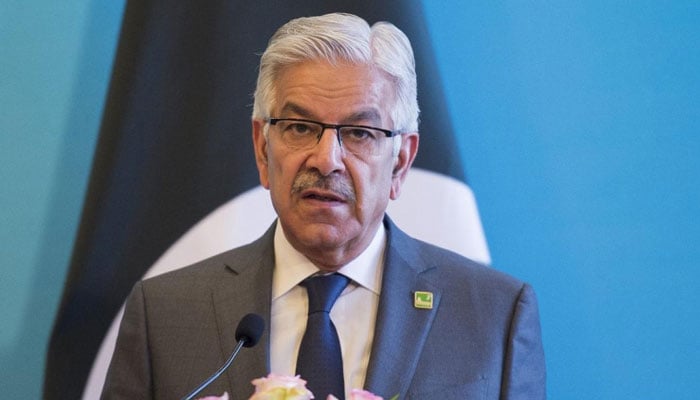
    ISLAMABAD: Defence Minister Khawaja Asif has criticised Pakistan’s bureaucracy. He described it as the country’s “real and permanent rulers.” Asif said bureaucrats had remained largely beyond effective accountability during Pakistan’s 78-year history. He said politicians had faced accountability on numerous occasions. Other powerful groups had also been held accountable at different times. However, he said it was difficult to find similar examples involving senior bureaucrats. The defence minister made the remarks while sharing a social media post about alleged financial corruption involving a senior bureaucrat. Asif said the bureaucracy had gradually become a powerful and largely untouchable class. He questioned why bureaucrats had not been subjected to the same level of scrutiny as politicians. According to Asif, politicians themselves were partly responsible for the situation. He said political leaders had failed to establish an effective system to hold the bureaucracy accountable. The minister also referred to a former bureaucratic ruler while discussing the influence of senior officials in Pakistan. He said the former official used highly inappropriate and insulting language against politicians. Despite this behaviour, politicians continued to tolerate him, according to Asif. Asif’s comments highlight his criticism of the imbalance in accountability among powerful sections of Pakistani society. His remarks also raise questions about the role of the bureaucracy in governance and decision-making. The minister maintained that stronger accountability was needed for all powerful groups. He suggested that politicians could not blame bureaucrats alone for the existing system because political leaders had also contributed to its continuation.

  • | | | |

    Mohsin Naqvi begins official visit to Iran

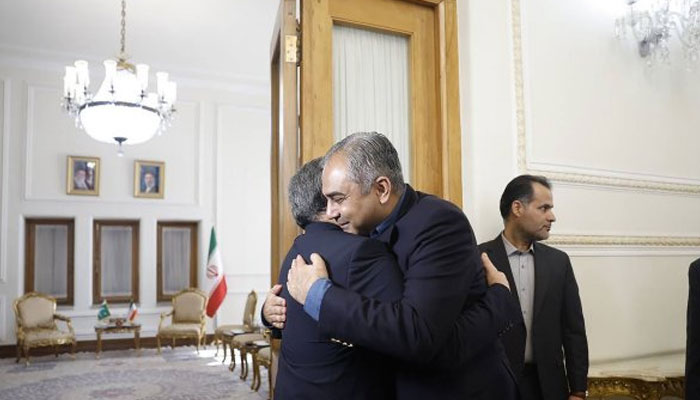
      Federal Interior Minister Mohsin Naqvi has arrived in Iran on an official visit, where he is set to hold meetings with senior Iranian officials, according to Iranian media reports. Naqvi’s visit is expected to focus on strengthening relations between Pakistan and Iran and improving coordination on issues of mutual interest. During his stay, the interior minister will meet high-ranking Iranian officials and exchange views on matters concerning the two neighbouring countries. The visit comes amid continued diplomatic engagement between Islamabad and Tehran, with both sides seeking to enhance cooperation and maintain regular contact at the leadership and ministerial levels. Discussions during Naqvi’s meetings are likely to cover bilateral relations as well as regional developments that have implications for both Pakistan and Iran. The two countries share a long border and have close historical, cultural and economic ties, making regular coordination between their governments important. Pakistan and Iran have also been working to improve cooperation on border management and other issues affecting communities along their shared frontier. High-level visits and official meetings provide an opportunity for both sides to review progress, address outstanding concerns and explore new areas of cooperation. Iranian media said Naqvi will meet senior officials during his visit, although further details about his schedule and the specific issues to be discussed were not immediately disclosed. The minister’s visit is part of Pakistan’s broader efforts to maintain engagement with neighbouring countries and strengthen bilateral ties through diplomatic and official channels. His meetings in Tehran are expected to contribute to continued dialogue between the two countries and provide a platform for discussing matters of shared concern.

Leave a Reply

Your email address will not be published. Required fields are marked *