meghan mccain gives
| |

Meghan McCain gives scathing response to trolls ca…

Meghan McCain is refusing to let online criticism define her. The former The View co-host recently fired back at social media trolls after they mocked her appearance, calling her “old” and “ugly.” Instead of ignoring the comments, McCain delivered a firm response, making it clear that she will not allow online bullies to dictate how she feels about herself.

The television personality addressed the criticism on X (formerly Twitter), where she called out the growing culture of appearance-based insults on social media. McCain said she finds it disturbing that women continue to be judged so harshly for how they look, particularly as they get older. Rather than engaging in personal attacks, she used the moment to highlight the unrealistic beauty standards many women face online. (people.com⁠)

“I don’t care if strangers think I’m old or ugly,” McCain wrote, adding that she is proud of the life she has built. She emphasized that she has a loving family, a successful career, and priorities that go far beyond social media opinions. Her message quickly gained attention, with many supporters praising her confidence and willingness to speak openly about online harassment. (people.com⁠)

McCain has long been known for expressing her opinions without hesitation. During her years on The View, she frequently made headlines for passionate political debates and outspoken commentary. Since leaving the daytime talk show in 2021, she has continued sharing her views through her podcast, television appearances, and social media platforms. Her latest response reflects the same direct communication style that has defined much of her public career. (people.com⁠)

The incident has also sparked broader discussions about online bullying, especially toward women in the public eye. Celebrities often face criticism over their appearance, regardless of age or accomplishments. Many fans argued that comments focusing on physical appearance contribute to harmful beauty standards and discourage healthy conversations online. McCain’s supporters applauded her for challenging those attitudes instead of remaining silent. (today.com⁠)

In recent years, McCain has frequently spoken about balancing her professional life with motherhood and family responsibilities. She has said that becoming a parent has changed her perspective, making her less concerned about public approval and more focused on what truly matters. That outlook was evident in her latest response, as she reminded critics that confidence comes from personal fulfillment rather than strangers’ opinions on the internet. (people.com⁠)

Although online criticism remains a reality for many public figures, McCain’s response has resonated with people who believe social media should encourage respectful discussion instead of personal attacks. By confronting the insults directly, she transformed a negative experience into a wider conversation about self-confidence, kindness, and the importance of refusing to let anonymous critics define one’s worth. (people.com⁠)

Similar Posts

  • | |

    Anas Sarwar joins UK Cabinet as Trade Minister

    Anas Sarwar has resigned as leader of the Scottish Labour Party after accepting the post of Minister of State for Trade in Prime Minister Andy Burnham’s government. The move ends his five-year leadership of the party and opens a new chapter in his political career at the national level. Sarwar confirmed that he will step down from the Scottish Parliament and will receive a life peerage, allowing him to take a seat in the House of Lords. From there, he will serve as a minister in the UK government and take responsibility for trade-related matters. In a statement, Sarwar said it was a great honour to be asked to join the government. He said public service has always been the driving force behind his political career. He added that serving the entire United Kingdom in the new role is a responsibility he accepts with humility and determination. Sarwar also reflected on Scottish Labour’s disappointing performance in the recent Scottish Parliament elections. The party won only 17 seats in the 129-member parliament, its worst result on record. He admitted that he shares responsibility for the defeat and said he was sorry that the party had failed to meet expectations. Despite the setback, Sarwar said the country faces serious political and economic challenges that require strong leadership. He warned that the rise of right-wing politics presents a major test for the United Kingdom. He said the Labour government must succeed in delivering stability, economic growth and better opportunities for people across the country. Following his resignation, Scottish Labour deputy leader Dame Jackie Baillie has taken over as acting leader. She thanked Sarwar for his leadership and praised his commitment to equality, fairness and public service. She said the party’s executive committee will soon announce the timetable for electing a new permanent leader. Sarwar’s departure from the Scottish Parliament will not trigger a by-election because he was elected through the regional list system. Under parliamentary rules, the next eligible Labour candidate on the Glasgow regional list is expected to replace him. His decision has sparked strong political debate. Opposition parties accused him of changing his position after previously supporting the abolition of the House of Lords. Critics also pointed to his earlier statements in which he said his main goal was to become Scotland’s first minister and remain focused on Scottish politics. Political leaders offered mixed reactions to the announcement. Some congratulated Sarwar on his new role and wished him success in government. Others argued that accepting a seat in the House of Lords contradicts his previous promises and could damage public confidence in politics.

  • |

    Abu Dhabi T10 League faces big changes after scandals

    The Abu Dhabi T10 League is preparing for a major transformation as it heads towards its 10th season, with new ownership and stronger institutional oversight expected to reshape the tournament following a series of controversies. The league, launched in 2017 as the world’s first major T10 cricket competition, has attracted international players and significant attention for its fast-paced format. However, allegations and investigations linked to corruption, payment disputes involving players and frequent changes in franchise ownership have affected its reputation in recent years. In response to these challenges, the Abu Dhabi government has taken a more direct role in the competition. Through the Abu Dhabi Cricket and Sports Hub, the government has acquired a majority stake in the league, a move aimed at bringing greater stability and long-term planning to the tournament. The authorities are now seeking new franchise owners through a competitive bidding process being conducted under the supervision of Deloitte. Final offers are expected to be submitted later this week, potentially marking a new chapter for the league. Abu Dhabi Sports Council chief executive Matt Boucher said the focus is on creating institutional stability and establishing longer-term agreements with franchise owners. The move is expected to provide teams with greater certainty while helping the competition strengthen its commercial and sporting foundations. Despite the planned restructuring, officials have indicated that the league will retain its current eight-team format. There are no immediate plans to increase the number of franchises, while expansion over the next three years is also not considered a priority. With fresh ownership, tighter management and a focus on stability, the Abu Dhabi T10 League now hopes to rebuild its credibility and establish itself as a sustainable annual cricket competition in the region.

  • | | |

    King Felipe and Queen Letizia break silence after …

    King Felipe VI and Queen Letizia of Spain have expressed their solidarity with Colombia following the devastating 7.4-magnitude earthquake that struck the country, leaving at least 132 people dead and more than 570 injured. Rescue teams continue searching for survivors as authorities assess the extensive damage across western Colombia. In an emotional message shared by the Spanish Royal Household, the King and Queen conveyed their deepest sympathy to the Colombian people during what they described as an extremely difficult time. They offered their support to families who have lost loved ones and to everyone affected by the disaster. The Spanish monarchs also expressed concern for people who remain missing following the powerful earthquake. Among those unaccounted for are 164 Spanish citizens, according to Spain’s foreign minister. Spanish authorities have said there are currently no reports of Spanish nationals being injured or killed. The earthquake struck on Monday near San José del Palmar in Colombia’s Chocó department. The powerful tremor was felt across a wide area and caused serious damage in several cities, including Cali, Pereira, Quibdó and Manizales. Emergency crews have been working through damaged buildings and rubble in an urgent effort to locate survivors. King Felipe’s connection to the country is particularly notable because he was in Colombia only days before the disaster. He traveled to Cali to attend the inauguration of newly elected Colombian President Abelardo de la Espriella. His visit formed part of a long-standing tradition in which the Spanish monarch has represented Spain at presidential inaugurations across Latin America. The Royal Household said Felipe also sent a telegram to President de la Espriella, conveying condolences to the families of those who died and wishing injured victims a full recovery. The King also offered support to Colombian authorities as they begin the difficult task of reconstruction. The disaster has triggered an international response as rescue operations continue. Authorities are facing the dual challenge of finding people who may still be trapped while providing shelter and assistance to thousands affected by the destruction. For Colombia, the immediate priority remains saving lives and supporting survivors. The Spanish royals’ message underscores the international solidarity surrounding the country as it confronts one of its most serious recent natural disasters.

  • |

    Petrol prices may bring relief in two days if global oil rates stay stable

    LAHORE: Federal Petroleum Minister Ali Pervaiz Malik has indicated that consumers could receive some relief in petroleum prices within the next two days if international crude oil rates remain stable, while acknowledging that elevated fuel costs continue to place pressure on households and the wider economy. Speaking in Lahore, the petroleum minister said the government was closely monitoring developments in the international oil market and would take the prevailing global prices into account during the next petroleum price review. Malik explained that petroleum prices in Pakistan are linked to international market trends and are calculated on the basis of a seven-day average. He said the Oil and Gas Regulatory Authority (OGRA) is responsible for determining the prices under the existing mechanism. He added that the movement of global oil prices during the next couple of days would be particularly important in determining whether consumers could receive positive news in the upcoming review. Government averts fuel supply crisis The minister said Pakistan had managed to maintain uninterrupted supplies of petroleum products despite severe pressure created by regional tensions and volatility in international energy markets. According to Malik, Prime Minister Shehbaz Sharif and his team took measures on both the economic and diplomatic fronts to ensure that the country did not experience a fuel shortage. He said the government had continued supplying petroleum products across the country even during a period when uncertainty in the region was creating serious risks for energy-importing nations. “There was no shortage of petroleum products in Pakistan during the tension,” Malik said, stressing that maintaining fuel supplies remained one of the government’s key priorities. He acknowledged, however, that preventing a shortage did not eliminate the financial burden caused by high international oil prices. International oil market remains a major concern Malik said the recent regional conflict created extraordinary volatility in global energy markets. He pointed to sharp increases in crude oil, petrol and diesel prices during the period of heightened tensions. He said crude oil prices had at one stage climbed as high as $170 per barrel, while diesel prices reached around $280 and petrol prices also touched $170. The minister further referred to periods when market expectations pointed towards even more dramatic increases, with petrol and diesel prices moving towards levels of around $500. Such volatility, he said, demonstrated the difficulties faced by countries that rely heavily on imported energy to meet domestic requirements. Pakistan, being an energy-importing country, remains particularly vulnerable to sudden increases in international oil prices because changes in global rates can quickly affect domestic fuel prices, transportation expenses and industrial costs. Expensive fuel putting pressure on people The petroleum minister conceded that high fuel prices are creating difficulties for ordinary citizens and businesses. He said an increase in petroleum prices does not remain confined to fuel stations, as higher transportation and energy costs eventually affect the prices of goods and services throughout the economy. According to Malik, expensive petroleum products increase the cost of moving agricultural produce, industrial raw materials and finished goods, thereby adding to inflationary pressure. “The people are suffering” because petroleum products are expensive, he said, while maintaining that the government was making efforts to provide relief within its available financial capacity. Petroleum levy collection exceeds target Malik also disclosed that the government collected around Rs1,900 billion through the petroleum levy during the previous year, exceeding the official target of Rs1,700 billion. The collection represents an important source of government revenue, but the minister acknowledged the broader economic implications of relying on petroleum-related revenues while consumers are already facing high fuel costs. He said the government had to balance revenue requirements with the need to protect consumers from excessive increases in petroleum prices. Prices cut when conditions allowed The minister said the government reduced petroleum prices whenever international market conditions and other relevant factors created room for downward revisions. He said Prime Minister Shehbaz Sharif had ordered reductions when an agreement was reached and circumstances permitted the government to pass on the benefit to consumers. Malik said the administration was attempting to manage fuel prices within the limits imposed by international markets and domestic economic conditions. He also recalled the prime minister’s commitment to introducing greater transparency in the petroleum pricing mechanism. The minister said the government had been required to make difficult decisions as part of broader efforts to stabilise the economy and place Pakistan on a sustainable development path. Heavy reliance on imported energy questioned Malik also raised concerns over Pakistan’s longstanding dependence on imported energy. He questioned why the country had continued relying on overseas energy supplies for decades despite having significant potential for developing domestic oil and gas resources. The minister said Pakistan obtains around 90% of its energy requirements from foreign sources, leaving the economy exposed to fluctuations in global energy prices and geopolitical developments. He argued that reducing this dependence should be treated as a long-term national priority. According to Malik, Pakistan has promising gas resources in areas such as Waziristan and Balochistan, and greater efforts are required to explore, develop and utilise domestic reserves. He said increasing local production could eventually reduce pressure on the country’s import bill and provide greater protection against international price shocks. Focus shifts towards domestic energy development The minister said Pakistan could not continue responding to every international energy crisis after it had already occurred. Instead, he stressed the need for long-term investment in exploration, infrastructure and domestic energy production. He said the government wants to move the country away from a cycle in which international price increases immediately translate into domestic economic difficulties. Malik described development of local energy resources as an important component of Pakistan’s broader economic strategy. He said the government was working towards an environment in which energy availability could support industrial expansion, investment and economic growth. Major energy infrastructure initiative planned Malik also referred to a new infrastructure initiative, saying the prime minister and the field marshal had assigned a major internationally recognised company to undertake energy infrastructure work within a

  • |

    Pakistan, Kazakhstan agree to accelerate trade and agricultural cooperation

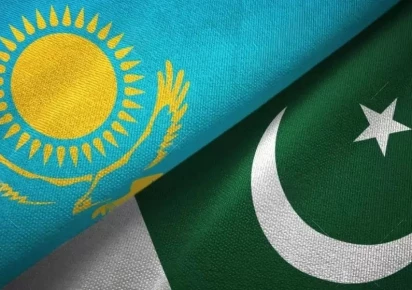
    ISLAMABAD: Pakistan and Kazakhstan have agreed to speed up the implementation of previously signed agreements and memorandums of understanding (MoUs), with both sides seeking to convert existing commitments into practical trade, investment and business opportunities. The understanding was reached during a meeting between Federal Minister for National Food Security and Research Rana Tanveer Hussain and Kazakhstan’s Ambassador to Pakistan Yerzhan Kistafin in Islamabad, where the two sides reviewed a broad range of issues related to agriculture, food security, connectivity, farm mechanisation and private-sector cooperation. According to the Ministry of National Food Security and Research, the meeting focused on identifying areas where bilateral cooperation could produce commercially viable projects and contribute to stronger economic relations between the two countries. Rana Tanveer Hussain said agriculture represented one of the most promising areas for expanding Pakistan-Kazakhstan relations, particularly given the potential for increased trade in agricultural commodities, machinery and technology. The minister stressed that bilateral agreements should move beyond formal commitments and result in concrete projects that could benefit businesses and farmers in both countries. He also called for closer coordination among government departments, research institutions, agricultural organisations and the private sector to facilitate investment and technology transfer. Joint agriculture working group to meet in Kazakhstan Pakistan and Kazakhstan also agreed to hold the next meeting of their Joint Working Group on Agriculture in Kazakhstan. The forum is expected to assess progress on previously identified areas of cooperation and explore additional opportunities in agricultural trade, food security, mechanisation and related fields. The proposed meeting is also expected to provide a platform for officials and private-sector representatives to discuss practical barriers to trade and develop proposals aimed at increasing agricultural exchanges between the two countries. Kazakhstan, meanwhile, showed interest in supplying wheat to Pakistan. Pakistani authorities agreed to examine the proposal while taking into account factors including the prevailing price, quality standards and reliability of supply. The development comes as Pakistan continues to explore ways to diversify its sources of food commodities and strengthen trade relationships with Central Asian economies. Pakistan seeks greater access for agricultural exports During the discussions, Pakistan highlighted the export potential of several agricultural products, including mangoes, guava, dates, bananas, potatoes and onions. The Pakistani side expressed interest in securing greater access for these products in Kazakhstan and other Central Asian markets. Improved market access, the officials noted, could create new opportunities for Pakistani growers, exporters and agribusinesses. The two sides also discussed the importance of improving transport and logistics infrastructure to support agricultural trade. Connectivity was identified as a critical factor in expanding commercial relations, particularly through proposed rail and regional transportation routes linking Central Asian countries with Pakistan. Better transport links could reduce freight and transit costs, improve the movement of perishable agricultural goods and provide businesses in both regions with access to new markets. Mechanisation offers new area of cooperation Agricultural mechanisation was also identified as an area with considerable potential for joint ventures and investment. Particular attention was given to affordable tractors and agricultural machinery that could be used by small and medium-sized farmers. Cooperation in this field could help improve farm productivity while creating opportunities for manufacturers and investors from both countries. The Pakistani side also emphasised the importance of exchanging agricultural technology and research expertise, saying stronger institutional links could support innovation and improve agricultural productivity. The minister underscored the need for closer engagement between research organisations, agricultural institutions and business communities so that technical cooperation could be translated into commercially sustainable ventures. Kyrgyzstan supports stronger Pakistan business ties Separately, Pakistan’s private sector has also taken steps to deepen economic engagement with another Central Asian country, Kyrgyzstan. Kyrgyzstan’s Chargé d’Affaires Aibek Tilebaliev held a meeting with Federation of Pakistan Chambers of Commerce and Industry (FPCCI) President Atif Ikram Sheikh, during which the two sides discussed bilateral trade, investment and direct business-to-business contacts. The participants agreed that stronger interaction between companies from Pakistan and Kyrgyzstan would be essential for expanding bilateral commerce and identifying new investment opportunities. Atif Ikram Sheikh welcomed the increasing high-level engagement between the two countries, saying that considerable potential existed to expand trade and investment but that greater efforts were needed to convert this potential into actual business activity. He suggested that a Pakistani business delegation could visit Kyrgyzstan under the FPCCI platform to explore commercial opportunities, establish direct contacts with local companies and develop partnerships in different sectors. Joint Business Council proposed A key outcome of the meeting was agreement to accelerate the establishment of a Joint Business Council between Pakistan and Kyrgyzstan. The proposed council is expected to provide a formal platform for representatives of the two countries’ business communities to discuss trade barriers, investment opportunities, market access and potential joint ventures. Both sides agreed to expedite the necessary steps for setting up the council. Sheikh also highlighted the importance of regional forums, particularly the Shanghai Cooperation Organisation (SCO), in facilitating greater economic integration among member states. He said the platform could be used more effectively to promote trade, investment and business-to-business cooperation across the region. Tilebaliev reaffirmed Kyrgyzstan’s interest in strengthening economic and commercial relations with Pakistan. He stressed that more frequent and direct interaction between business communities would be important for translating political goodwill into tangible economic gains. The parallel initiatives involving Kazakhstan and Kyrgyzstan reflect Pakistan’s broader efforts to deepen economic engagement with Central Asia. Improved connectivity, stronger private-sector links and greater agricultural and industrial cooperation could provide new avenues for Pakistani exporters while opening opportunities for investment and regional trade.

  • | |

    Pakistan rise in WTC standings after West Indies w…

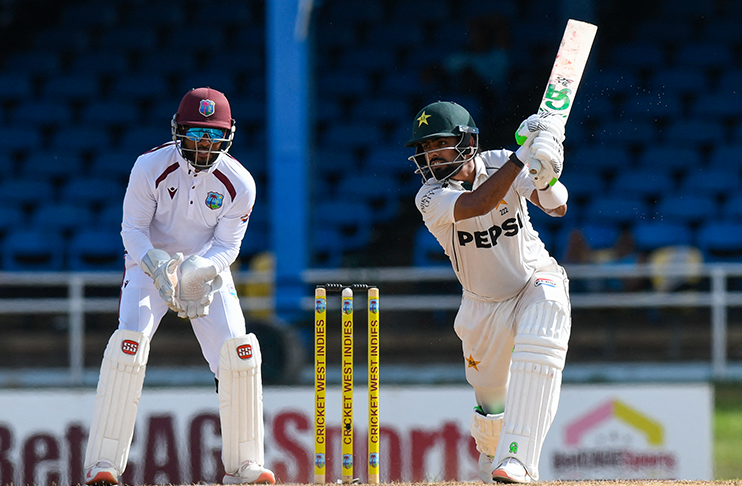
    Port of Spain: Pakistan breathed new life into their ICC World Test Championship (WTC) 2025-27 campaign after defeating the West Indies by eight wickets in the second and final Test, a victory that lifted them off the bottom of the standings and restored confidence under new captain Babar Azam. The convincing win helped Pakistan move up to seventh place in the WTC table with a points percentage of 22.22, replacing the West Indies, who dropped to the bottom after another disappointing result. Pakistan have now won two of their six matches in the current championship cycle, while the Caribbean side have managed just two victories in 12 Tests. At the top of the standings, Australia remain the dominant force with seven wins in eight matches and a remarkable winning percentage of 87.50. Defending champions South Africa occupy second place, followed by New Zealand, Bangladesh, India, Sri Lanka, England, Pakistan and West Indies. Pakistan entered the Caribbean series under fresh leadership after Babar Azam replaced Shan Masood as Test captain. However, the new chapter began on a disappointing note as the visitors suffered a 90-run defeat in the opening Test at Tarouba. The Green Shirts responded in style in the second Test at Queen’s Park Oval with an impressive all-round performance. After electing to bat, the West Indies posted 344 thanks to fighting half-centuries from captain Roston Chase and Justin Greaves. Pakistan answered with determination as opener Abdullah Shafique produced a magnificent unbeaten 160, anchoring the innings from start to finish. Captain Babar Azam added a composed half-century as Pakistan reached 387, taking a valuable first-innings lead of 43 runs. The turning point came in the West Indies’ second innings when Pakistan’s spin duo completely dominated the hosts. Sajid Khan and Ali Usman claimed four wickets each to dismiss the West Indies for just 117, leaving Pakistan a modest target of 75. Pakistan completed the chase comfortably with eight wickets to spare. Shafique and Babar remained unbeaten on 24 each, guiding their team to its first away Test victory since July 2023. Teams Matches Wins Losses Draw Points Winning Percentages Australia       8    7      1     0    84        87.50 South Africa       4    3      1     0    36           75 New Zealand       6    4      1     1    52        72.22 Bangladesh       4    2      1     1    28        58.33 India       9    4      4     1    52        48.15 Sri Lanka       4    1      1     2    20        41.67 England      13    4      8     1    38        24.36 Pakistan       6    2      4     0    16        22.22 West Indies      12    2      8     2    30        20.83   The morale-boosting triumph not only squared the two-match series 1-1 but also revived Pakistan’s hopes in the World Test Championship race. With Babar Azam’s captaincy beginning to take shape and key players delivering under pressure, Pakistan will now look to build momentum in the remainder of the WTC cycle.

Leave a Reply

Your email address will not be published. Required fields are marked *