monthly car rental

Why Monthly Car Rental in Abu Dhabi Is the Smartest Choice for Long-Term Visitors, Expats, and Business Professionals

Abu Dhabi, the capital of the United Arab Emirates, is a city of remarkable contrasts — where gleaming modern skyscrapers stand alongside serene cultural landmarks, and bustling business districts sit just minutes from pristine coastline and desert dunes.

Whether you are relocating for work, managing an extended business project, planning a long family holiday, or simply visiting for an extended stay, one question quickly becomes paramount: how will you get around?

While public transport and ride-hailing apps are available, neither offers the freedom, convenience, or cost-effectiveness of having your own vehicle — especially for stays lasting a month or more. Buying a car, on the other hand, ties up significant capital and comes with depreciation, insurance, and maintenance headaches.

That is precisely why a monthly car rental in Abu Dhabi has become the go-to solution for thousands of expats, business travellers, and long-term visitors alike — offering the perfect balance of flexibility, affordability, and peace of mind.

The Abu Dhabi Car Rental Market: A Growing Industry

The UAE car rental market has experienced remarkable growth. The market is valued at AED 12,000 million based on a five-year historical analysis, driven primarily by the increasing influx of tourists. Annual passenger footfall at Dubai International Airport rose from 25.9 million in 2020 to 95.2 million in 2025, strengthening both leisure and business rental demand. The UAE’s expatriate population also increased from 9.6 million in 2021 to 11.4 million in 2025, with expatriates accounting for around 90% of the population.

The Middle East car rental market as a whole was valued at USD 3.23 billion in 2025 and is estimated to grow to USD 3.41 billion in 2026, reaching USD 4.48 billion by 2031 at a CAGR of 5.62%. Abu Dhabi plays a significant role in this expansion, with steady demand for rental vehicles throughout the year, particularly during public holidays and high-profile events.

What does this mean for you? More choice, more competitive pricing, and a market that is adapting rapidly to consumer needs.

The Financial Case: Why Monthly Car Rental Outperforms Daily Hire

The numbers speak for themselves. A typical economy car rented daily in Abu Dhabi might cost AED 70–90 per day. Over 30 days, that adds up to AED 2,100–2,700 — before fuel, tolls, and extras.

Monthly plans, by contrast, offer significantly better value. Monthly car rental options in Abu Dhabi offer significant cost savings compared with daily or weekly rentals, as well as with ownership. Rental companies typically set the monthly rate so that the implied daily price is much lower than standard daily rates. Monthly packages often slash the daily rate by 40–60%.

Monthly rates in Abu Dhabi typically range from approximately AED 1,364 to AED 7,000 depending on the car category. Economy cars sit at the lower end of this range, while larger or luxury vehicles cost more. For example, a leading rental firm might offer a starting rate of AED 70 per day, AED 536 per week, or AED 1,575 per month. A Montero Sport 3.0 HL SUV commands AED 189 daily, AED 1,134 weekly, or AED 3,150 monthly.

Through platforms like Yango Drive, economy cars are available from as low as AED 844 per month — working out to roughly AED 28 per day. The longer you rent, the more you save, with deals starting as low as AED 999 to AED 1,300 per month for economy models.

Here is how monthly rates generally break down by vehicle category:

  • Economy / Compact cars — from AED 844 to AED 2,000 per month
  • Sedans and midsize models — AED 2,000 to AED 3,500 per month
  • SUVs and crossovers — from AED 2,000 to AED 5,500 per month
  • 7‑Seaters and MPVs — from AED 2,500 to AED 4,000+ per month
  • Luxury and premium vehicles — from approximately AED 5,500 to AED 12,000+ per month

The cost savings are undeniable. Securing a monthly car rental can drop the effective daily rate significantly, making it the smart financial choice for anyone staying in Abu Dhabi for more than a couple of weeks.

Monthly Rental vs Buying a Car: Which Makes Better Sense?

Buying a car in Abu Dhabi involves substantial costs that many newcomers underestimate:

Ownership costs breakdown:

  • Large upfront deposit — often 20% or more of the vehicle’s value, tying up tens of thousands of dirhams
  • Monthly loan payments — easily AED 1,500 or more
  • Insurance premiums — AED 5,000 to AED 10,000 annually for mid-range vehicles
  • Servicing and maintenance — AED 200+ per month
  • Rapid depreciation — new vehicles can lose 20–30% of their value in the first year alone

By the time you add it all up, owning a car can cost over AED 2,000 per month before you have even turned the key.

A monthly rental, by contrast, requires:

  • No large deposit — many providers offer no-deposit options
  • No loan commitments — pay as you go, with no interest or financing charges
  • No maintenance worries — servicing and insurance are typically included
  • No depreciation risk — the vehicle’s value loss is the provider’s concern, not yours
  • No resale stress — simply return the car when your stay ends

A flat monthly fee typically starts from AED 1,500–2,500 depending on vehicle type, with insurance and maintenance included. This means no surprise repair bills and no time wasted at garages.

For professionals on fixed-term contracts, project-based assignments, or temporary relocations, the financial case for renting is clear. It preserves working capital, simplifies expense reporting, and eliminates the administrative burden of vehicle ownership.

What’s Included in a Typical Monthly Rental Package?

One of the biggest advantages of monthly car rental in Abu Dhabi is the all-inclusive nature of the package. Most providers bundle everything into a single, predictable monthly payment:

  • Comprehensive insurance — covering accidental damage and third-party liability
  • Routine maintenance and servicing — oil changes, tyre rotations, and mechanical checks
  • VAT included — no surprise tax add-ons
  • 24/7 roadside assistance — support in case of breakdowns or emergencies
  • Mileage allowance — typically 5,000 kilometres free on monthly rates
  • Convenient delivery — to your home, hotel, or office across Abu Dhabi

Fuel and toll charges (Abu Dhabi uses the Darb toll system) are usually billed separately based on your actual usage. This structure means no surprise repair bills, no unexpected service costs, and no time wasted at garages — allowing you to focus on what matters most.

Yango Drive: A Transparent, Tech‑First Solution

Among the many car rental providers in Abu Dhabi, Yango Drive stands out as one of the most convenient and transparent options. Yango Drive is a car rental service and part of the global tech company Yango Group. It has published its 2025 Mobility Report, an industry analysis exploring how AI is reshaping mobility across the UAE.

What Sets Yango Drive Apart

  • Fully digital booking — Everything from selecting your vehicle to uploading your driving licence and Emirates ID is done online. Approval is fast, and you can pick up your car at a convenient location or have it delivered.
  • Clear, upfront pricing — Yango Drive displays the total monthly cost before you book, with no hidden fees or surprise add‑ons.
  • No deposit on most bookings — Many vehicles on the platform are available with no security deposit.
  • Maintenance, servicing, and insurance included — All the essentials are bundled into one transparent fee.
  • Wide range of vehicles — From economy hatchbacks starting at AED 844 per month to SUVs, 7‑seaters, and luxury models.
  • Flexible rental periods — Whether you need a car for a day, a week, a month, or longer, Yango Drive adapts to your requirements.
  • Free delivery — To your home, hotel, or office across Abu Dhabi.
  • 24/7 customer support — Assistance available around the clock.

Yango Drive makes it easy to rent a comfortable car in Abu Dhabi and across the UAE in just a few taps. With transparent pricing, flexible rental periods, and 24/7 support, you stay in control of every journey.

What You Need to Rent a Car Monthly in Abu Dhabi

The requirements are straightforward, whether you are a resident or a visitor.

For UAE Residents

  • Valid UAE driving licence
  • Valid Emirates ID
  • Credit or debit card for the security deposit
  • Minimum age: 21 for most vehicles (some providers require 23+ for certain vehicles; premium categories may require 25+)

For Tourists and Visitors

  • Valid passport with UAE entry stamp or valid UAE visa
  • Valid home-country driving licence
  • International Driving Permit (IDP) — required if your licence is not in English or if you are from a non-GCC country
  • Credit card for the security deposit
  • Minimum age: 21

Digital copies of documents may not be accepted. With these documents, you can typically be driving a rental car within hours of arriving in Abu Dhabi.

Practical Tips for a Smooth Rental Experience

To get the best value and avoid unexpected charges, keep these practical tips in mind:

  • Book in advance — Especially during peak seasons (November to March) and around public holidays, availability can be tight, and prices tend to rise.
  • Inspect the vehicle — Take photos and videos of the car’s exterior, interior, and dashboard before driving off to avoid disputes later.
  • Read the fine print — Understand the mileage limits, fuel policy, insurance excess, and any fees for additional drivers.
  • Know the traffic rules — Abu Dhabi has strict speed cameras with no speed buffer. City limits are typically 60–80 km/h, while highways are 100–140 km/h.
  • Carry your documents — Always have your licence, Emirates ID or passport, and rental agreement with you while driving.
  • Understand toll charges — Abu Dhabi uses the Darb toll system. When you pass through a toll gate, a small fee is automatically deducted.

Who Benefits Most from Monthly Car Rental in Abu Dhabi?

Monthly car rental solutions cater to a diverse range of users:

  • Business executives and corporate travellers — Attend meetings across the city and neighbouring emirates with predictable costs that simplify expense reporting.
  • Consultants and project managers — Move between client sites efficiently, without relying on taxis or ride-hailing apps.
  • Expats and new arrivals — While you settle in and assess long-term options, a rental gives you breathing space and flexibility.
  • Families — SUVs and 7‑seaters provide ample space for family outings and shopping trips.
  • Tourists on extended stays — If you are visiting Abu Dhabi for 30 days or more, a rental unlocks all the attractions at your own pace.
  • Remote workers and digital nomads — Abu Dhabi’s growing business ecosystem attracts a global workforce seeking flexible mobility solutions.
  • Property seekers and investors — Tour multiple listings across different communities in a single day without relying on agents or taxis for transport.

Final Thoughts

Abu Dhabi is a city that rewards independence. From the Corniche to the desert dunes, from the cultural district of Saadiyat Island to the business hubs of Al Maryah Island, having your own vehicle transforms your experience. Monthly car rental offers the ideal middle ground — cheaper than daily hires, more flexible than ownership, and increasingly streamlined thanks to digital platforms like Yango Drive.

With the UAE car rental market continuing to expand and Abu Dhabi’s rental sector growing steadily, there has never been a better time to secure reliable, cost-effective transportation for your visit.

So, whether you are here for business or pleasure, consider making your time in Abu Dhabi more productive and enjoyable with a monthly car rental in Abu Dhabi. With transparent pricing, a wide choice of vehicles, and the convenience of online booking, you can focus on what truly matters — your work, your family, and your journey in the UAE’s dynamic capital.

Trending News:

Don Mueang Airport Opens Automated Passport Gates for Departures

UAE Visa Ban Update Amid Regional Tensions from 9 Countries

 

Similar Posts

  • Chiang Rai Launches East-Northern Industrial Fair 2026

    Chiang Rai has announced the East-Northern Industrial Fair 2026, a five-day showcase featuring more than 100 businesses from four provinces in Upper Northern Thailand: Chiang Rai, Phayao, Phrae, and Nan. The event will take place from August 12 to 16, 2026, at BCC Hall, Central Ladprao in Bangkok. Visitors can browse, taste, shop for, and […]

  • |

    GIDC Amendment Bill to unlock Rs400bn stuck dues

    ISLAMABAD: The National Assembly is expected to consider the Gas Infrastructure Development Cess (Amendment) Bill, 2026, a proposed legal change aimed at resolving more than Rs400 billion in disputed and outstanding Gas Infrastructure Development Cess (GIDC) payments currently tied up in litigation. The proposed legislation seeks to amend the Gas Infrastructure Development Cess Act, 2015, and comes after years of legal disputes between the government and major gas consumers, including industrial, fertiliser and CNG sectors. The Cabinet Committee for Disposal of Legislative Cases (CCLC) approved the proposed amendments in principle earlier this year, paving the way for the government to move forward with the legislative process. The GIDC was originally introduced to generate funds for major gas infrastructure projects, including the Iran-Pakistan (IP) gas pipeline, the Turkmenistan-Afghanistan-Pakistan-India (TAPI) pipeline, LNG-related projects and other associated infrastructure. However, progress on several of these projects has remained slow, while the collection and utilisation of the cess became the subject of prolonged litigation. Legal history of GIDC According to a briefing provided by the Petroleum Division to the CCLC, the original Gas Infrastructure Development Cess Act, 2011, and the GIDC Ordinance, 2014 were struck down by the Supreme Court in 2014. The government subsequently enacted the GIDC Act, 2015, in May that year. The new legislation also provided retrospective legal cover to the cess that had been charged and collected under the 2011 Act and the 2014 ordinance. Section 4(1) of the 2015 law specifies that the cess is to be utilised by the federal government for infrastructure development related to the IP pipeline, TAPI pipeline, LNG projects and other ancillary schemes. The constitutional validity of the 2015 legislation was subsequently challenged by consumers from the industrial, fertiliser and CNG sectors before different high courts. The disputes eventually reached the Supreme Court. In its judgment of August 13, 2020, the Supreme Court dismissed the civil appeals and connected petitions and upheld the constitutionality of the GIDC Act, 2015, including its retrospective application. The court, however, did not permit the government to impose a fresh cess under the disputed arrangements. Instead, it allowed recovery of outstanding arrears through instalments. Supreme Court links cess to infrastructure projects A significant aspect of the Supreme Court’s ruling was its observation that GIDC constituted a fee rather than a conventional tax. As a fee, the court noted, there must be a corresponding benefit or service associated with the amount collected. The infrastructure projects identified under Section 4 of the Act therefore formed an important basis for the continuation and utilisation of the cess. The court also observed that failure to pursue the specified gas infrastructure projects could undermine the purpose for which the cess had been imposed. Despite the Supreme Court judgment, the dispute did not come to an immediate end, as consumers continued pursuing related matters before the high courts. This resulted in a substantial amount of GIDC remaining locked in prolonged litigation. Government forms high-powered committee In an attempt to find a solution, Prime Minister Shehbaz Sharif constituted a high-powered GIDC Committee on November 8, 2022, to examine the issue of outstanding amounts exceeding Rs400 billion. The committee held several meetings following its formation, but progress remained limited because of continuing litigation in different high courts. The matter was again taken up on March 19, 2025, when the committee met under the chairmanship of the federal Minister for Finance and Revenue. The meeting was attended by the Minister for Petroleum Division, the Attorney General for Pakistan and senior officials from the Petroleum, Finance and Law divisions. During the meeting, participants agreed in principle that Section 4 of the GIDC Act, 2015 should be amended to help address the long-running legal disputes. Following the committee’s recommendations, the Petroleum Division prepared a proposal for amendments and submitted a summary seeking approval of the draft GIDC (Amendment) Act, 2025. First amendment proposal rejected The initial proposal, however, was not approved by the CCLC at its meeting on September 3, 2025. The committee directed the Petroleum Division to revisit the draft and ensure that the proposed changes remained within the original scope and objectives of the GIDC Act, 2015. The Petroleum Division subsequently revised the draft after consultations with the relevant government departments. The amended draft was sent to the Law and Justice Division for legal scrutiny, which gave its concurrence on December 15, 2025. The Petroleum Division then sought formal approval of the revised GIDC amendment bill under the relevant provisions of the Rules of Business, 1973. The Finance Division had also been consulted during the process and conveyed that it had no objection to the proposal contained in the summary submitted to the CCLC. CCLC gives approval to revised proposal The CCLC considered a Petroleum Division summary dated January 1, 2026 concerning amendments to the GIDC Act, 2015. The committee approved the proposal, subject to the incorporation of amendments recommended by the CCLC into the draft legislation by the Law and Justice Division before the bill was submitted to the federal Cabinet. The approval represents another attempt by the government to break the deadlock surrounding billions of rupees in GIDC dues and bring a degree of finality to disputes that have continued for more than a decade. TAPI project remains slow The government’s original justification for GIDC included financing major regional gas infrastructure projects. However, the implementation of these projects has remained challenging. The TAPI pipeline, envisioned to transport natural gas from Turkmenistan through Afghanistan and Pakistan to India, has faced repeated delays because of financial, security and geopolitical challenges. Although work has reportedly begun on an initial 153-kilometre section extending from Serhetabat on the Turkmenistan-Afghanistan border towards Herat in western Afghanistan, the broader project remains far from completion. The slow progress of the pipeline and other proposed infrastructure projects has also remained relevant to the broader debate over the purpose and utilisation of GIDC collections. The proposed amendment is therefore being viewed as an effort to address both the legal complications surrounding outstanding dues and the government’s

  • | |

    Russia extends fuel export ban until January 2027

    Russia has extended its ban on diesel and petrol exports until January 31, 2027, as the government seeks to stabilise domestic fuel supplies and curb rising prices. In a statement, the Russian government said the export restrictions will remain in force until the end of January next year. The move is aimed at ensuring adequate fuel availability in the domestic market amid continued pressure on the country’s energy sector. The latest decision follows an earlier temporary ban on diesel exports that was imposed from July 8 to July 31. Russia has also previously restricted exports of petrol and jet fuel in an effort to address supply shortages at home. According to reports, the export curbs come after repeated Ukrainian drone attacks on Russian oil refineries, which have disrupted refining operations and reduced fuel production in several regions. The attacks have contributed to fuel shortages and rising domestic prices, prompting authorities to prioritise local demand over exports. The government believes extending the restrictions will help ease pressure on consumers and maintain stability in the country’s fuel market. Russia is one of the world’s leading exporters of refined petroleum products, and any changes to its export policy are closely monitored by global energy markets. Analysts say prolonged export restrictions could influence regional fuel supplies and international energy prices if they remain in place for an extended period. The government has not indicated whether the ban will be lifted before the January deadline, saying it will continue to monitor domestic fuel availability and market conditions.

  • |

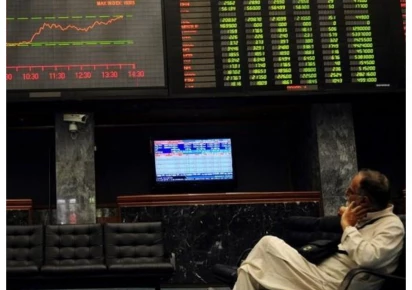
    PSX faces heavy selling as KSE-100 index drops over 1,300 points

    KARACHI: Selling pressure intensified at the Pakistan Stock Exchange (PSX) on Tuesday as investor sentiment weakened amid growing uncertainty over the prospects of a peace agreement between the United States and Iran and the reopening of the strategically important Strait of Hormuz. The benchmark KSE-100 Index came under pressure during the trading session, losing more than 1,300 points as investors remained cautious and reduced exposure to major stocks across several sectors. At around 2pm, the KSE-100 Index stood at 179,996.62 points, showing a decline of 1,313.66 points, or 0.72%, from the previous close. The market witnessed broad-based selling, with several major sectors contributing to the decline. Automobile assemblers, cement companies, commercial banks, fertiliser manufacturers, oil and gas exploration firms and oil marketing companies (OMCs) remained under pressure. Several index-heavy stocks also traded in negative territory. Prominent companies including HUBCO, Mari Petroleum (MARI), Oil and Gas Development Company (OGDC), Fauji Fertilizer Company (FFC), Habib Bank Limited (HBL), MCB Bank, Meezan Bank (MEBL) and United Bank Limited (UBL) were among the stocks weighing on the benchmark index. Previous session also ends lower The latest decline follows a weak close in the previous trading session. On Monday, the PSX initially moved higher but lost momentum during the second half of the session as investors opted to book profits in heavyweight shares. The KSE-100 Index eventually closed at 181,310.28 points, down 119.74 points, or 0.07%. The continued weakness suggests that investors are closely monitoring developments in international markets, particularly the situation surrounding oil supplies and the Strait of Hormuz. US-Iran tensions keep markets on edge Global financial markets remained unsettled on Tuesday as hopes for an agreement between Washington and Tehran appeared to fade. Negotiations aimed at ending the conflict and restoring normal shipping through the Strait of Hormuz have encountered fresh difficulties. US President Donald Trump on Monday responded to Iran’s conditions for a possible peace agreement by putting forward his own demands, including calls for compensation related to deaths and losses associated with wars, attacks and protests. The tougher rhetoric has raised concerns that diplomatic efforts could take longer, potentially prolonging disruptions around the crucial maritime route. The Strait of Hormuz is one of the world’s most important energy corridors, and prolonged disruption to shipping through the waterway could have significant consequences for crude oil supplies and global energy prices. Oil prices climb to highest level since July 31 The uncertainty surrounding the situation was reflected in international oil markets. Brent crude futures climbed to around $88 per barrel, while US West Texas Intermediate crude futures rose to approximately $82.45 per barrel. Both benchmarks reached their highest levels since July 31 after recording gains of roughly 5% during Monday’s trading session. Higher oil prices are a major concern for economies that depend heavily on imported energy. For Pakistan, sustained increases in global crude prices could increase the country’s import bill and place additional pressure on external accounts, inflation and domestic fuel prices. The rise in energy prices is also being closely watched by investors because higher input costs can affect corporate profitability and influence monetary policy expectations. Asian markets remain cautious The uncertainty was not limited to Pakistan. Asian equity markets moved within a narrow range as investors assessed the potential impact of rising energy prices on inflation and economic growth. MSCI’s broadest index of Asia-Pacific shares outside Japan moved between gains and losses before trading modestly higher. South Korea’s Kospi also recorded a slight increase. However, the escalation in tensions around the Gulf kept overall market sentiment fragile, with investors remaining wary of further developments that could affect energy supplies and global trade. US stock futures were also slightly positive on Tuesday. Nasdaq futures rose around 0.28%, while S&P 500 futures gained approximately 0.1%, following a weaker session on Wall Street on Monday. Inflation data in focus Investors are also awaiting the latest US consumer price data, which could provide further clues about the direction of interest rates and inflationary pressures in the world’s largest economy. The increase in crude oil prices has added another element of uncertainty ahead of the inflation report. A sustained rise in fuel and energy costs could complicate efforts to bring inflation closer to central-bank targets. For Pakistani investors, the combination of geopolitical uncertainty, higher global oil prices and pressure on heavyweight shares is likely to remain a key factor influencing trading sentiment in the near term.

  • | | |

    PSX ends week lower as KSE-100 loses 4,781 points

    The Pakistan Stock Exchange (PSX) closed the trading week with a significant decline, as the benchmark KSE-100 Index recorded heavy losses amid continued market volatility. The negative trend reflected cautious investor sentiment and sustained selling pressure across several sectors. During the week, the KSE-100 Index fell by 4,781 points to close at 171,021 points. The decline marked a weak performance for the stock market after several volatile trading sessions. Investors remained cautious throughout the week, resulting in fluctuations in share prices. The market witnessed wide swings during the five trading days. The benchmark index moved within a range of 8,857 points. It touched a weekly high of 178,370 points before dropping to a weekly low of 169,512 points, highlighting the uncertainty that dominated market activity. Despite the fall in the benchmark index, trading volumes remained healthy. Investors traded a total of 3.48 billion shares during the week. The combined value of these transactions reached Rs138 billion, indicating that market participation remained active despite the downward trend. The market decline also affected the overall value of listed companies. The total market capitalisation of the Pakistan Stock Exchange dropped by Rs512 billion during the week. As a result, the market’s total value stood at Rs19.278 trillion at the close of trading. Market analysts said investors adopted a cautious approach due to uncertainty surrounding economic conditions and profit-taking after recent gains. Selling pressure in key sectors also contributed to the decline in the benchmark index. Experts believe investors will continue to closely monitor economic indicators, corporate earnings, monetary policy developments and government decisions that could influence market sentiment in the coming weeks. Any positive economic developments or improved investor confidence may help the market recover, while continued uncertainty could keep volatility elevated. The week’s performance underscores the sensitivity of the Pakistan Stock Exchange to economic and financial developments, with investors expected to remain watchful as the new trading week begins.

  • Thailand Court Green Lights Historic Facebook Scam Lawsuits

    BANGKOK – A major legal battle is currently heating up in Thailand over the issue of online scams. The nation is taking a bold and unprecedented stand against widespread digital fraud. Consumer rights advocates are actively targeting businesses that operate on major social media platforms. The Bangkok South Civil Court recently moved these important fraud […]

Leave a Reply

Your email address will not be published. Required fields are marked *