| | |

PSX ends week lower as KSE-100 loses 4,781 points

The Pakistan Stock Exchange (PSX) closed the trading week with a significant decline, as the benchmark KSE-100 Index recorded heavy losses amid continued market volatility. The negative trend reflected cautious investor sentiment and sustained selling pressure across several sectors.

During the week, the KSE-100 Index fell by 4,781 points to close at 171,021 points. The decline marked a weak performance for the stock market after several volatile trading sessions. Investors remained cautious throughout the week, resulting in fluctuations in share prices.

The market witnessed wide swings during the five trading days. The benchmark index moved within a range of 8,857 points. It touched a weekly high of 178,370 points before dropping to a weekly low of 169,512 points, highlighting the uncertainty that dominated market activity.

Despite the fall in the benchmark index, trading volumes remained healthy. Investors traded a total of 3.48 billion shares during the week. The combined value of these transactions reached Rs138 billion, indicating that market participation remained active despite the downward trend.

The market decline also affected the overall value of listed companies. The total market capitalisation of the Pakistan Stock Exchange dropped by Rs512 billion during the week. As a result, the market’s total value stood at Rs19.278 trillion at the close of trading.

Market analysts said investors adopted a cautious approach due to uncertainty surrounding economic conditions and profit-taking after recent gains. Selling pressure in key sectors also contributed to the decline in the benchmark index.

Experts believe investors will continue to closely monitor economic indicators, corporate earnings, monetary policy developments and government decisions that could influence market sentiment in the coming weeks. Any positive economic developments or improved investor confidence may help the market recover, while continued uncertainty could keep volatility elevated.

The week’s performance underscores the sensitivity of the Pakistan Stock Exchange to economic and financial developments, with investors expected to remain watchful as the new trading week begins.

Similar Posts

  • |

    Trump sends Saudi nuclear deal to Congress, ties i…

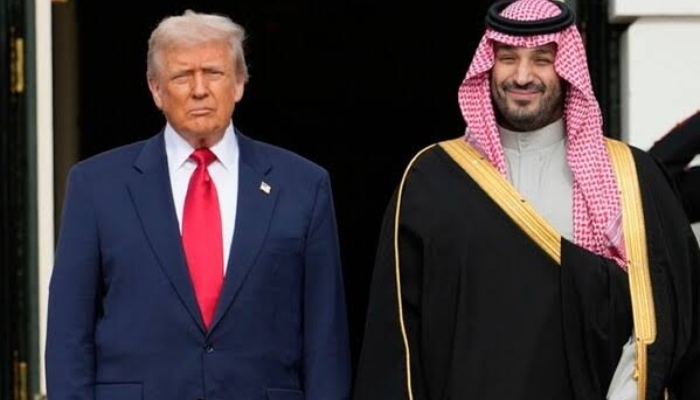
    WASHINGTON: The Trump administration has submitted a landmark civil nuclear cooperation agreement with Saudi Arabia to the US Congress for review, but President Donald Trump has maintained that the deal will only move forward if Riyadh agrees to normalize relations with Israel. The agreement, reached between the United States and Saudi Arabia in July, would allow American companies to provide civilian nuclear technology to the kingdom. It was formally submitted to Congress on Monday under procedures required by US law, according to US officials. The move puts a potentially major energy partnership into a closely watched congressional review process while adding another layer to Washington’s efforts to reshape relations between Saudi Arabia and Israel. Trump has said the nuclear agreement is conditional on Saudi Arabia joining the Abraham Accords, the US-backed framework that established diplomatic ties between Israel and several Arab and Muslim-majority countries. Riyadh has not agreed to normalize relations with Israel and has repeatedly linked such a move to progress toward Palestinian statehood. The nuclear agreement is intended for peaceful energy purposes and could support Saudi Arabia’s plans to develop nuclear power as part of its broader effort to diversify its economy and reduce reliance on oil. The pact would also open opportunities for US nuclear companies to participate in the kingdom’s planned nuclear infrastructure. However, the deal has already attracted scrutiny from lawmakers and nuclear nonproliferation experts. A key concern is whether the agreement would place sufficient restrictions on Saudi Arabia’s ability to enrich uranium or undertake other activities that could potentially be used for weapons development. Trump previously said the arrangement would not permit uranium enrichment and would be limited to civilian, non-military purposes. However, reports on the agreement have raised questions over the precise safeguards and long-term provisions surrounding Saudi Arabia’s nuclear programme. Congress now has a review period under US law during which lawmakers can examine the agreement and potentially object to it. The classified nature of the submitted document is expected to add to congressional scrutiny. For Saudi Arabia, the agreement could mark a major step toward nuclear energy. For Washington, however, the deal has become intertwined with one of the Middle East’s most sensitive diplomatic questions: whether Riyadh will ultimately establish formal relations with Israel.

  • | |

    Former Queen bassist Barry Mitchell dies at 80, le…

    The Queen family is mourning the loss of Barry Mitchell, an early bassist who played an important role during the legendary rock band’s formative years. Mitchell died on August 17, 2026, according to reports, prompting tributes from fans and people connected to Queen. (The Sun⁠) Although Mitchell was not part of Queen’s classic lineup, his contribution came during a crucial period when the band was still finding its sound. He joined Queen in 1970 after original bassist Mike Grose left. The official Queen live archive confirms that Mitchell played the next 11 shows during the band’s earliest performing days. (Queen Online⁠) At the time, Queen consisted of Freddie Mercury, Brian May, Roger Taylor and Mitchell on bass. The group had not yet become the worldwide rock phenomenon fans know today. John Deacon would join later in 1971 and complete the classic lineup. Mitchell’s time with Queen was brief. He remained with the band for around six months before leaving in early 1971. Reports say he played approximately 13 performances, mostly in the United Kingdom. (The Sun⁠) Even though his time in the group was short, Mitchell was present while some of Queen’s earliest songs were being developed. His period with the band included work around tracks such as “Liar,” “Son and Daughter” and “Keep Yourself Alive,” giving him a unique connection to the band’s beginnings. (Queen Vault⁠) Queen’s official archivist Greg Brooks confirmed the sad news and remembered Mitchell warmly. He described the former bassist’s stories about Queen’s early years as fascinating and said he would be greatly missed. (Edinburgh Live⁠) For longtime Queen fans, Mitchell represented a piece of the band’s history that is often overlooked. Before Queen filled stadiums and produced some of rock’s most famous albums, the group was a young band playing small venues and experimenting with its musical identity. Mitchell later returned to music after spending some time away from the industry. He also remained connected with the Queen fan community, attending conventions and sharing memories from his time alongside Mercury, May and Taylor. (The Sun⁠) His death marks another poignant moment for fans looking back at Queen’s remarkable journey. While Barry Mitchell may not have been part of the lineup that eventually conquered the world, he was there when the story was only beginning. His contribution lasted just months, but his place in Queen’s history will remain part of the band’s extraordinary early chapter.

  • | | | |

    Hormuz uncertainty pushes global oil prices higher

    KARACHI: Global oil prices edged higher on Monday as uncertainty over the reopening of the Strait of Hormuz continued to unsettle energy markets. Brent crude climbed by more than 1% in Asian trading, moving above $84 a barrel, while US crude prices also posted gains of over 1%. The market remains focused on the situation surrounding the Strait of Hormuz, a critical maritime route through which a significant share of the world’s oil supplies passes. Any prolonged disruption or uncertainty over shipping through the waterway could put further pressure on global energy prices. Iran has indicated that discussions with Oman on establishing alternative shipping routes are nearing completion. However, Tehran says the United States still needs to fulfil additional conditions before arrangements concerning the waterway can move forward. With the situation still unresolved, traders are closely watching developments around the Strait, with concerns over supply disruptions continuing to influence crude prices.

  • |

    Mali junta pardons French national sentenced over alleged coup plot

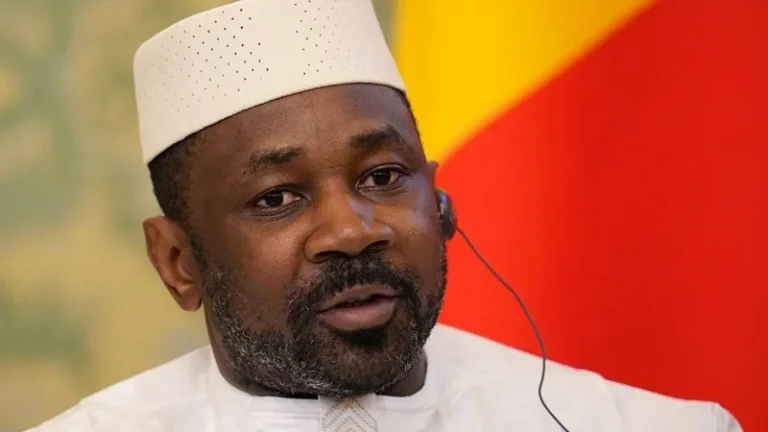
    Malian junta leader President Assimi Goïta has granted a presidential pardon to French national Yann Vezilier, who was serving a 20-year prison sentence following allegations of orchestrating a coup attempt against the military government. Vezilier was detained last year alongside several Malian military officers and political figures. Authorities accused him of acting on behalf of French intelligence services to destabilize the regime in Bamako. France’s Foreign Ministry consistently rejected the espionage allegations as unfounded. Malian state officials announced that the clemency order includes Vezilier’s immediate deportation from Malian territory. The unexpected decision comes during a period of ongoing political instability and severe security challenges, with insurgent groups expanding blockades around key cities, including the capital, Bamako.

  • | |

    Three prisoners seek private hospital treatment in…

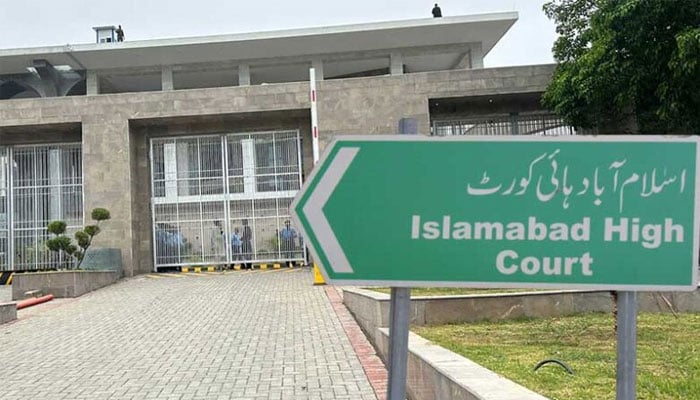
      Three prisoners have approached the Islamabad High Court seeking relief similar to that granted to the founder of Pakistan Tehreek-e-Insaf (PTI), Imran Khan, regarding treatment at a private hospital. The petitions were filed before the Islamabad High Court, with the applicants requesting permission to be transferred from prison to a private medical facility for treatment. The prisoners have specifically asked the court to allow them to receive medical care at either Shifa International Hospital or Quaid-e-Azam International Hospital. The development comes amid continued legal discussions over the medical treatment of prisoners and the circumstances under which an inmate may be allowed to receive treatment outside a prison hospital or government medical facility. During the proceedings, the Islamabad High Court sought a response from the relevant prison authorities by August 27. The court has directed the jail administration to explain its position regarding the requests made by the three prisoners. The court also ordered the superintendent of Adiala Jail to submit the medical reports of the petitioners. These reports are expected to help the court assess the prisoners’ medical conditions and determine whether their requests for treatment at private hospitals have sufficient grounds. Justice Muhammad Asif issued a two-page written order in connection with the petitions. In the order, the court directed the relevant parties to submit para-wise comments before the next hearing. The applicants have argued that they require medical treatment that may not be adequately available within the prison system. Their petitions seek permission to be transferred to either Shifa International Hospital or Quaid-e-Azam Hospital so that they can receive treatment from specialists and access facilities available at private medical institutions. The court has not yet issued a final decision on whether the prisoners will be allowed to move to a private hospital. Instead, it has sought medical documentation and responses from the prison authorities before considering the matter further. The medical reports from Adiala Jail will be particularly important in determining the nature and seriousness of the applicants’ health conditions. The court is expected to examine whether their medical needs justify treatment at a private hospital and whether such a transfer is appropriate under the applicable legal and prison regulations. The petitions also highlight broader questions concerning prisoners’ access to healthcare and the circumstances in which courts can intervene to ensure that inmates receive appropriate medical attention. The applicants’ request for relief similar to that provided to Imran Khan has placed the issue before the Islamabad High Court for judicial consideration. Their lawyers are seeking comparable treatment arrangements based on the medical needs of the petitioners. Under the court’s latest directions, the prison authorities are required to respond by August 27. The superintendent of Adiala Jail must also provide the petitioners’ medical reports, while all concerned parties have been asked to submit their detailed para-wise comments before the next hearing. Following the submission of these documents, the court will have an opportunity to review the medical evidence and the authorities’ position before deciding the applications. For now, the three prisoners remain in custody, and no final order allowing their transfer to a private hospital has been issued. The next hearing is expected to provide greater clarity on whether the applicants will be permitted to receive treatment at Shifa International Hospital or Quaid-e-Azam Hospital. The case could also become significant for future requests by prisoners seeking specialised medical treatment outside jail facilities, particularly where serious health concerns are raised and comparable relief has previously been granted in individual cases.

  • |

    25 US states challenge Trump’s new tariffs in court

    NEW YORK: A coalition of 25 US states has filed a lawsuit against the administration of President Donald Trump, seeking to block a new round of tariffs imposed on imports from dozens of countries. The legal challenge was submitted to the US Court of International Trade in New York, where the states asked the court to suspend the tariffs, declare them unlawful and order the federal government to refund businesses that have already paid the import duties. The coalition argued that the administration exceeded its legal authority by introducing sweeping tariffs under Section 301 of the Trade Act of 1974. According to the lawsuit, the investigations cited by the administration as justification for the tariffs were used as a pretext to impose broad trade restrictions. The disputed tariffs, ranging from 10% to 12.5%, were introduced last month and apply to imports from 60 trading partners, covering a significant share of goods entering the United States. The Trump administration has defended the measures, saying they are intended to address concerns related to forced labour in international supply chains and to protect American trade interests. The White House maintains that the tariffs were imposed within the government’s legal authority and remain an important tool for securing fair trade practices. A White House spokesperson said the administration is using powers granted under US trade law to respond to what it considers unfair policies and practices affecting American commerce. Officials also argued that Section 301 tariffs have previously withstood legal scrutiny and continue to be a lawful instrument of trade policy. The lawsuit follows earlier legal disputes over President Trump’s tariff policies. Previous tariffs introduced under emergency economic powers were struck down by the US Supreme Court earlier this year, prompting the administration to replace them with the current Section 301 measures after a temporary global tariff expired in July. The states involved in the case contend that the latest tariffs are arbitrary and unlawful, arguing that while they support efforts to combat forced labour worldwide, such concerns cannot be used to justify what they describe as an illegal expansion of presidential tariff powers.

Leave a Reply

Your email address will not be published. Required fields are marked *