murree imposes section
| |

Murree imposes Section 144 ahead of Independence D…

Authorities in Murree have imposed Section 144 to maintain law and order during the Independence Day celebrations.

According to an official notification, the restrictions came into effect on August 10 and will remain in place until August 16, 2026.

The decision has been taken ahead of August 14 celebrations. Murree is expected to receive a large number of visitors during the holiday period. Officials have therefore introduced restrictions to manage crowds and prevent any situation that could affect public safety.

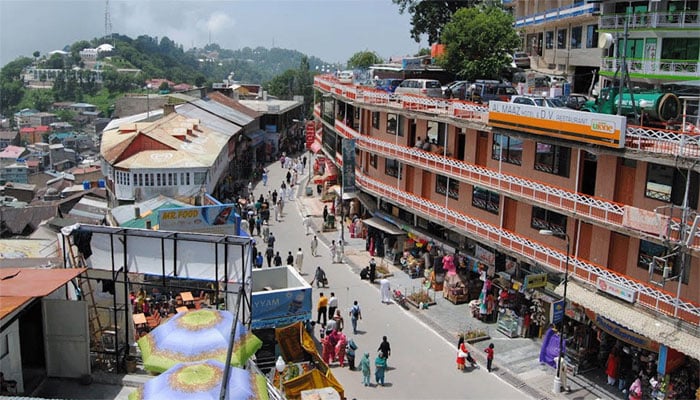
Under the notification, access to key areas of the hill station will also be regulated. Only families will be allowed to visit Mall Road and GPO Chowk during the restriction period.

Mall Road is among Murree’s busiest areas and usually attracts large crowds during public holidays. GPO Chowk is also a major gathering and commercial point. Limiting access to these locations is expected to help authorities control movement and reduce overcrowding.

Security personnel will remain alert during the Independence Day period. Visitors have been advised to cooperate with law-enforcement personnel and follow the restrictions announced by the authorities.

The administration is also expected to monitor the situation closely as visitor numbers increase. Any further measures required for crowd management and public safety may be taken during the restriction period.

Similar Posts

  • | | |

    Russia, Pakistan advance Moscow-Karachi rail link

    Russia and Pakistan are working to launch a new freight railway service connecting Moscow with Pakistan, Russian Ambassador to Islamabad Albert P. Khorev has said. The proposed rail link is aimed at improving trade connectivity between the two countries and creating a more direct overland route for the movement of goods. In comments published by the Russian newspaper Izvestia on August 8, Khorev said Moscow and Islamabad were jointly working on launching freight railway services along the Moscow-Faisalabad and Moscow-Karachi corridors. The proposed routes would operate in both directions, allowing goods to be transported between Russia and Pakistan through a dedicated rail-based trade network. Khorev said the possibility of including Belarus in the project was also being examined. If the Belarusian side joins the initiative, the route could provide a wider connection across parts of Eastern Europe and South Asia. The project has faced delays because of changing geopolitical conditions in the region. According to the Russian ambassador, heightened geopolitical tensions during 2025 and early 2026 resulted in several postponements to the planned launch. Despite the delays, work on the project is continuing. Khorev said the countries involved are currently finalising a contract covering the required freight railway services. At the same time, officials are identifying companies in the countries along the proposed route that could use the railway network to transport commercial cargo. The identification of potential cargo owners is considered an important step before the service can begin. A stable volume of goods would be needed to make the railway corridor commercially viable. The Moscow-Karachi route could provide Pakistani and Russian businesses with another option for moving goods between the two markets. It could also reduce reliance on traditional maritime routes for certain types of cargo. The Moscow-Faisalabad corridor would provide a direct connection to one of Pakistan’s major industrial and commercial centres. Faisalabad is an important manufacturing hub, particularly for textiles and other export-oriented industries. For Russia, improved rail connectivity with Pakistan could open additional opportunities for trade with South Asia. Pakistani businesses could also gain access to wider markets through connections with Russia and potentially Belarus. The possible involvement of Belarus could further expand the corridor’s geographical reach. It may also strengthen transport cooperation among the countries involved. However, the project still requires the completion of commercial and logistical arrangements before the first freight service can be launched. The parties are therefore focusing on finalising the service contract and securing interest from companies that can provide regular cargo for the route. The proposed railway initiative is part of broader efforts by Russia and Pakistan to strengthen economic and transport cooperation.

  • PAAM opposes DRAP’s proposed alternative medicine rules 2026

    LAHORE: A covert gambit by the Drug Regulatory Authority of Pakistan (DRAP) to impose arbitrary regulations on the alternative medicine sector has been laid bare, sparking widespread outrage across the pharmaceutical industry. ​The regulatory body is accused of using an upcoming ‘Pak Health Expo’, organized by an association at a local hotel in Islamabad on August 12–13, as a smokescreen to push through controversial policies. Reliable sources revealed that the final draft of the highly contentious “Alternative Medicines Rules 2026” has already been finalized behind closed doors, completely bypassing key industry stakeholders. According to these sources, the draft has already been forwarded to the Law and Justice Division for formal vetting. Against this backdrop, the industry has termed DRAP’s sudden announcement of a “consultative session” at the expo issued on a mere 48-hour notice as a farcical exercise in paperwork, designed solely to create a false record of stakeholder consensus. Insiders further alleged that top DRAP officials had been cold-calling homeopathic and Unani pharmaceutical firms over the past several days, pressuring them to purchase expensive stalls worth hundreds of thousands of rupees at the private event. Following a widespread boycott of the expo by established manufacturers, DRAP reportedly engineered the controversial regulatory session within the event to corner the industry into participation. Reacting strongly to the development, Kashif Aslam Malik, Chairman of the Pakistan Association of Alternative Medicine (PAAM), categorically rejected DRAP’s maneuvers, stating that the leadership had anticipated the bureaucratic trap. ​”When the final draft has already been sent to the Law and Justice Division for vetting, this sudden drama of a consultative session at a private venue is nothing but an absolute mockery,” Malik questioned while speaking to journalists. The PAAM chairman emphasized that leaning on private event platforms to legitimize sensitive, sector-defining legislation is clear evidence of regulatory bad faith. He maintained that if DRAP were genuinely sincere about consultation, it would have convened an official, independent roundtable with all veteran associations where the actual draft could be scrutinized transparently. The PAAM leadership has announced that any back-door attempt to benefit a favored private group or to bulldoze industry-hostile clauses under the guise of an expo crowd will be resisted tooth and nail. Kashif Aslam ​Malik reiterated that this persistent bureaucratic high-handedness and regulatory blackmail are precisely why PAAM continues to spearhead the movement for a dedicated, independent federal ministry for alternative medicine. The association demands that policies governing traditional and alternative health sciences be framed by domain experts who understand the discipline, rather than traditional regulators.

  • | | | |

    Attack on one, defence of all: Makkah pact

    Saudi Arabia, Türkiye and Pakistan have signed a joint defence agreement aimed at strengthening collective security and defence capabilities among the three countries. According to the Foreign Office spokesperson, the agreement was signed during a trilateral joint defence summit held in Makkah. Saudi Crown Prince and Prime Minister Mohammed bin Salman, Prime Minister Shehbaz Sharif and Turkish President Recep Tayyip Erdogan signed the agreement. Under the pact, an armed attack against any one of the three countries will be treated as an attack against all three. The Foreign Office said the agreement is aimed at strengthening the three countries’ collective defence capabilities against any act of aggression. The development came after Prime Minister Shehbaz Sharif met Saudi Crown Prince Mohammed bin Salman in Makkah. Field Marshal Syed Asim Munir and other members of the Pakistani delegation also attended the meeting. The leaders discussed the regional situation and ways to further strengthen the strategic partnership between Pakistan and Saudi Arabia. Earlier, a trilateral summit involving Saudi Arabia, Pakistan and Türkiye was scheduled to take place in Jeddah, with expectations of important developments concerning regional peace and security. According to Turkish media reports, the three countries were set to sign an agreement concerning regional security during the summit. Turkish President Recep Tayyip Erdogan also arrived in Saudi Arabia to participate in the high-level meeting. Prime Minister Shehbaz Sharif and Field Marshal Syed Asim Munir had arrived in Saudi Arabia a day earlier at the invitation of the Saudi Crown Prince. During their visit, the Pakistani delegation also performed Umrah and offered prayers at the Holy Kaaba.

  • | |

    Pakistan information commission declares Pakistan …

    ISLAMABAD: The Pakistan Information Commission (PIC) has declared the Pakistan Bar Council (PBC) a public body under the Right of Access to Information Act, 2017, and directed it to provide within 15 days information sought regarding lawyers’ degrees, licence cancellations, government grants and governing body proceedings. The order was issued in appeal titled Saddia Mazhar vs Pakistan Bar Council, by Chief Information Commissioner Shoaib Ahmad Siddiqui and Information Commissioner Ijaz Hassan Awan. The applicant had sought eight categories of information, including province-wise numbers of PBC members or licence holders; those who had submitted attested degrees; lawyers whose licences were cancelled for failing to submit attested educational documents; and those whose licences were cancelled over fake degrees. She also sought copies of circulars and notifications concerning degree attestation, details of federal and provincial government grants received since 2020, including amounts and dates, and a copy of the latest minutes of the PBC Governing Body meeting. In its reply to the Commission, that the PBC maintained that it was an autonomous statutory body generating its own funds and did not fall within the definition of a public body. Its representatives argued that the government exercised neither financial nor administrative control over it, while acknowledging that the Attorney General for Pakistan is its ex officio member. The Commission rejected the PBC’s position, holding that it is a statutory organisation established under the Legal Practitioners and Bar Councils Act, 1973, and performs important public functions relating to legal education, recognition of law degrees and regulation of legal practitioners. It also observed that Bar Councils receive public funds or government grants and their offices are located in public buildings. The PIC ruled that the PBC falls within the definition of a public body under Section 2(ix)(g) and (h) of the Right of Access to Information Act, 2017. It further held that none of the eight information requests attracted an exemption under the law. The Secretary, Pakistan Bar Council, was consequently directed to provide the requested information within 15 days of receiving the order. The case was adjourned until September 2, 2026.

  • | |

    Supreme Court upholds death sentence in woman’s …

    The Supreme Court has issued a landmark ruling concerning women’s rights, declaring that a woman’s right to seek khula (judicial divorce) is a constitutional right and that violence against a woman exercising this right amounts to an attack on the Constitution. A three-member bench of the Supreme Court dismissed the jail petition filed by convict Waseem Abbas and upheld his death sentence. Justice Muhammad Hashim Khan Kakar authored the four-page detailed judgment. According to the judgment, women are fully protected under Articles 9, 14 and 25 of the Constitution, which guarantee their security, dignity and equal rights. The court said that anyone who uses violence against a woman seeking khula would face the full force of the law. It observed that killing a woman for exercising her legal right is an act of brutality and open defiance of the law. The Supreme Court further ruled that a convict involved in a cold-blooded and planned murder does not deserve any concession. The judgment also clarified that the testimony of relatives cannot automatically be rejected in cases involving crimes committed within the privacy of a home. The court said forensic evidence recovered from the crime scene provided conclusive evidence against the accused. The forensic examination established a match between the recovered bullet casings and the pistol linked to the crime. The Supreme Court found no legal or factual flaw in the decisions of the lower courts and upheld the death sentence awarded to Waseem Abbas. According to the case record, Waseem Abbas shot and killed his former wife, Shehnaz Bibi, on October 11, 2020. She had obtained a legal khula decree from a family court before the incident. The convict allegedly entered the woman’s home and killed her around 48 hours after she obtained the decree. A trial court subsequently sentenced Abbas to death and awarded him 10 years in prison. The Lahore High Court later upheld the death sentence.

  • |

    Rosie O’Donnell says Mounjaro helped her feel better at 64

    Rosie O’Donnell says she has never felt healthier than she does now, crediting the weight-loss drug Mounjaro for the change. The comedian opened up about her health journey during a recent podcast appearance. Speaking with Amy Poehler on the “Good Hang” podcast on Tuesday, O’Donnell shared how much more comfortable she feels in her body today. She admitted it’s bittersweet that it took until age 64 to reach this point. O’Donnell explained that Mounjaro played a significant role in that shift. She revealed she started taking the drug three years ago after her doctor prescribed it specifically to manage her diabetes. She was clear that weight loss was never the original goal or focus. According to O’Donnell, her doctor was solely concerned with improving her blood sugar numbers at the time. She recalled first noticing changes in her appetite around the time of her son’s engagement dinner. At that event, she found herself completely unable to eat. Initially, O’Donnell assumed the loss of appetite was tied to emotional grief. She was missing her late mother deeply during that period and thought sadness was affecting her eating. But when she eventually stepped on the scale, the results alarmed her enough to call her doctor immediately. She feared something serious might be wrong with her health. O’Donnell recalled breaking down in tears during that call, worried she might have cancer. She explained that she had lost 12 pounds without making any conscious changes to her routine. She said the sudden, unexplained weight loss was unlike anything she had experienced before. That moment marked a turning point in understanding how the medication was affecting her body. Mounjaro is commonly prescribed for both type 2 diabetes and long-term weight management. The drug received FDA approval back in 2022 and has since become widely discussed among public figures. O’Donnell’s candid reflection adds to a growing number of celebrities openly discussing their experiences with prescription weight-loss medications. Her comments offer a personal look at how a treatment meant for one condition ended up reshaping another part of her life entirely.

Leave a Reply

Your email address will not be published. Required fields are marked *