punjab drainage projects
| |

Punjab drainage projects curb monsoon flooding: Ma…

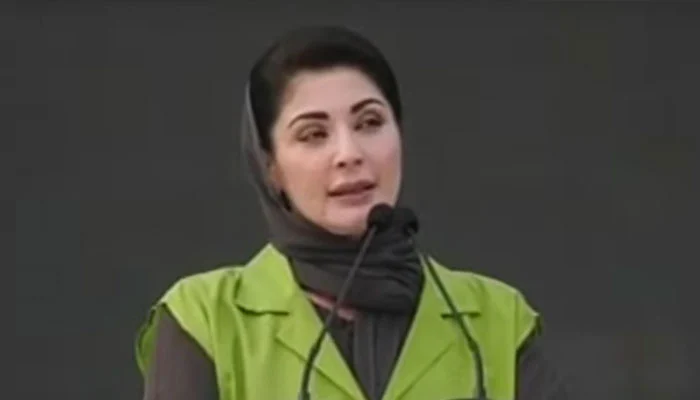
Punjab Chief Minister Maryam Nawaz Sharif has said drainage projects carried out across the province have helped reduce the impact of monsoon rains.

She said areas that previously remained submerged for days, weeks or even months were now seeing rainwater cleared within hours.

The chief minister made the remarks during a meeting with Punjab Assembly members from Vehari. The meeting reviewed development schemes, political matters and initiatives aimed at improving public services in the district.

Maryam said the Punjab Development Programme was promoting more balanced development across the province. She added that the government was focusing on projects designed to address long-standing problems faced by residents.

According to the chief minister, improved drainage infrastructure had made a noticeable difference during the current monsoon season. She said the government was working to ensure that heavy rainfall did not cause prolonged water accumulation in populated areas.

Maryam also highlighted several initiatives for farmers and students in southern Punjab. She said farmers were benefiting from the Kisan Card programme, while students were receiving laptops and Honhaar Scholarships.

The Vehari lawmakers appreciated the government’s development work in the district. They particularly highlighted the reconstruction and expansion of the Vehari-Multan Road.

The lawmakers said the previously narrow and deteriorated road had been transformed into a modern dual-carriageway. They described the project as an important development for the region.

They said residents of several districts would benefit from improved connectivity between Vehari and Multan. The upgraded road is expected to facilitate travel, transportation and commercial activity in the area.

The lawmakers also welcomed the launch of an electric bus service connecting Vehari with Burewala and Tibba Sultanpur. They said the service had provided residents with a new public transport option.

Free travel facilities for students, women and senior citizens were also appreciated during the meeting.

The MPAs further said development schemes worth around Rs21 billion had been initiated in Burewala, Mailsi and Vehari. They described the projects as a major step towards improving infrastructure and public facilities in the region.

They also pointed to the beautification of Vehari Rail Bazaar, saying the project had helped improve the appearance and overall environment of the city.

Separately, Maryam Nawaz praised security forces for their recent operation against militants in Balochistan.

She commended the personnel for their efforts and sacrifices in the fight against terrorism. According to the information shared by the chief minister, 15 terrorists were killed during the operation and a significant quantity of weapons was recovered.
Similar Posts

  • | |

    Government raises petrol price despite global decl…

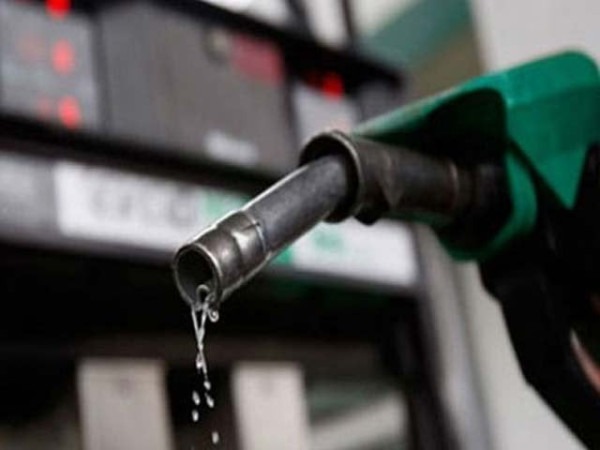
    The federal government has increased the price of petrol by Rs4.45 per litre, despite a reported decline in international petroleum prices, according to a notification issued by the Ministry of Energy. The revised fuel prices will come into effect from August 6, 2026. The latest notification states that the new prices have been determined in line with the pricing mechanism recommended by the Oil and Gas Regulatory Authority (OGRA) and approved by the federal government. Under the revised rates, the price of petrol has increased from Rs328.56 to Rs333.01 per litre, representing an increase of Rs4.45 per litre. The decision comes only a day after the government had announced lower fuel prices for August 5. In contrast, the price of high-speed diesel (HSD) has been reduced by Rs2.00 per litre. Following the reduction, the retail price of diesel has declined from Rs385.86 to Rs383.86 per litre, providing limited relief to transport operators and commercial users who rely heavily on diesel. According to government sources, the increase in petrol prices is linked to adjustments in the petroleum levy. The government has reportedly increased the petroleum levy on high-speed diesel by Rs1.44 per litre, raising it from Rs70.86 to Rs72.30 per litre. Officials say such adjustments form part of the government’s broader fiscal strategy while maintaining the petroleum pricing framework. The announcement has drawn attention because global crude oil prices have softened in recent weeks, leading many consumers to expect a reduction in domestic fuel prices. However, local retail fuel prices are influenced by several factors in addition to international oil prices, including exchange rate fluctuations, taxes, petroleum levy, transportation costs, and other government-imposed charges. The revised fuel prices are expected to affect transportation expenses, logistics costs, and overall inflation, as petrol remains a key commodity for private motorists and commercial activities across Pakistan. The government had previously announced reduced prices for August 5, lowering petrol by Rs3.39 per litre and high-speed diesel by Rs4.07 per litre. However, the latest notification revises those rates, resulting in a fresh increase in petrol prices while providing only a modest reduction in diesel prices. The new pricing structure will remain in effect until the government announces its next scheduled review of petroleum product prices.

  • | |

    Pakistan’s civil awards triple in nine years…

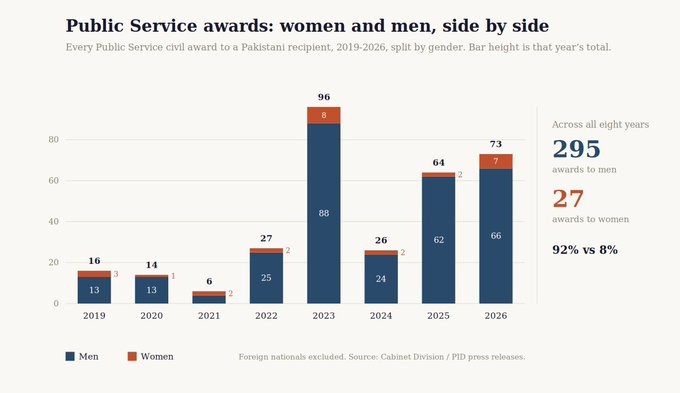
    ISLAMABAD: The number of people receiving Pakistan’s civil awards has increased sharply over the past nine years, but the share of women among the recipients has remained almost unchanged, according to an analysis by economist Zehra Farooq. Farooq, who has analysed civil award lists from 2018 to 2026, said she compiled all 2,209 awards announced during the nine-year period and examined each award by field, gender, level of award and nationality. Her analysis shows that the number of award recipients increased more than three times during the period, rising from 73 people in 2018 to 372 in 2026. However, the share of women receiving the awards did not show a similar increase. Women made up between roughly 10% and 16% of civil award recipients in each year from 2018 to 2026. Ms Farooq said the figures show that while the size of the annual awards lists changed greatly, the share of women remained within almost the same range. The lowest share was around 10% in 2023, while the highest was 16% in 2018 and 2021. The share stood at 15% in 2024 before falling to 12% in 2025 and 11% in 2026. Her analysis also looked at the figures after excluding gallantry awards. Gallantry awards were kept separate because they mainly relate to military and police roles. Even after removing these awards, the overall share of women increased only from around 12% to 14%, according to the analysis. This suggests that the low share of women is not limited to gallantry awards. Farooq said the same pattern can also be seen in civilian awards. Public service awards show a wider gap The Public Service category is the largest civilian category in the dataset and shows a particularly large difference between men and women. Among Pakistani recipients of Public Service awards, 295 were men and only 27 were women. This means men received about 92% of these awards, while women received only around 8%. Farooq noted that in several years, the entire Public Service list included only one or two women. The figures raise questions about how women are represented among people being recognised for public service. The analysis does not, however, establish why the gap exists. Farooq suggested that one possibility worth examining is whether the awards reflect the existing structure of Pakistan’s civil bureaucracy. She noted that the quota for women in the civil bureaucracy is around 10%, while the share of awards going to women remains below or around that level. This raises a question about whether the civil awards are reflecting the existing gender structure in public institutions rather than creating a separate pattern of their own. Major changes in fields The analysis also found major changes in the fields represented in the civil award lists. Science and engineering together accounted for close to one-third of the 2021 list. However, by 2025 and 2026, the two fields together made up less than 2% of the list. At the same time, some new categories appeared. Information technology appeared as a category for the first time in 2021, while climate appeared in 2025. Farooq said these changes raise questions about how the state decides which areas deserve recognition. She asked whether the decline in science and engineering awards reflects fewer major contributions in these fields, fewer people entering these professions, or a change in the areas where the state looks for achievement. The appearance of IT and climate-related awards also raises another question: whether official recognition is beginning to follow changes in the areas where Pakistan’s talent and work are growing. Women receive fewer top-level awards The analysis also examined the civil awards according to their level. The awards are divided into different levels, with Nishan and Hilal at the senior end, followed by Sitara and Tamgha. Ms Farooq found that the share of women becomes smaller as the level of the award becomes higher. At the two highest levels, women account for less than 5% of recipients. At the more common lower levels, the share of women is higher, generally ranging between 11% and 14%. This means that the overall percentage of women receiving civil awards does not tell the full story. Women may represent around 10% to 16% of all recipients in a year, but their representation becomes much smaller when only the highest-level honours are considered. The findings therefore point to two separate issues: the overall number of women receiving civil awards and the level of recognition they receive. Nine years provide a wider picture Ms Farooq said looking at the awards over several years gives a clearer picture than looking at a single annual list. The civil awards are announced every August, and each year’s list can show changes in the number and type of recipients. But when the lists are combined over nine years, longer-term patterns become visible. The biggest pattern in the data is the contrast between the rapidly growing number of awards and the almost unchanged share of women. From 73 recipients in 2018, the annual list reached 372 in 2026. Yet women remained within roughly the same 10% to 16% range throughout the period. The analysis also shows that the composition of the awards has changed in other ways, including the fields being recognised and the introduction of new categories. She said the data does not provide all the answers, but it raises questions that can be examined further.

  • | |

    Exhumation uncovers bullet wound and pre-death inj…

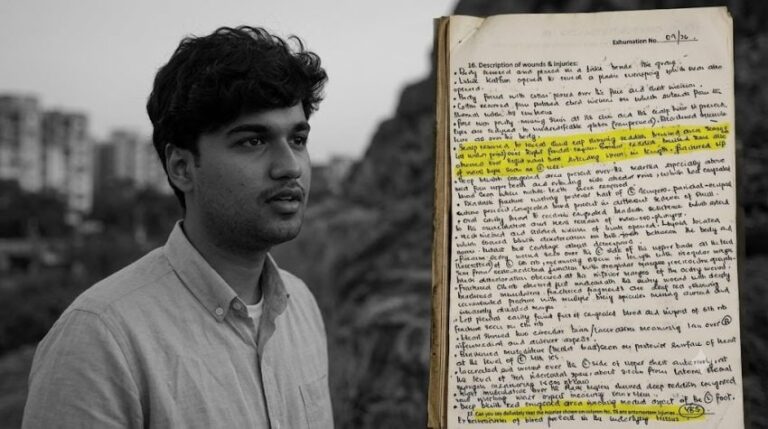
    An eight-member medical exhumation board has confirmed that Mir Raza Ali suffered a fatal gunshot wound to the back alongside multiple severe pre-death injuries, drastically shifting the trajectory of the high-profile investigation. The four-page preliminary report, issued following an court-ordered grave exhumation at Karachi’s Rehmanial Masjid Graveyard, reveals extensive physical trauma sustained prior to death. Pathologists identified a 0.8-centimeter entry wound on the left side of the upper back, which fractured the sixth rib and tore through the heart before exiting the right side of the upper chest. Forensic examiners confirmed the presence of extravasation of blood in the underlying tissues, answering affirmatively that these injuries were inflicted while the victim was still alive. Beyond the firearm damage, the post-mortem detailed significant blunt-force trauma across the victim’s head, face, and neck. Doctors documented deep bruising on the skull, fractures to the nasal bone, tissue congestion over the maxilla, and a diastatic fracture running along the posterior sutures of the skull filled with congealed blood. Discoloration was also noted around the hyoid bone, though advanced decomposition hindered complete soft tissue analysis. While the medical board has verified antemortem bleeding and severe skeletal fractures, a final determination on the official cause of death remains reserved. Pathologists have submitted collected skin, muscle, hair, and bone samples for detailed chemical, forensic, and gunshot residue testing. The findings provide critical scientific evidence that redefines the ongoing investigation from a missing person query into a detailed homicide inquiry.

  • | |

    Transporters announce nationwide wheel-jam strike

    A nationwide wheel-jam strike is set to begin on August 8 after transporters’ associations announced a complete suspension of freight operations in protest against rising operational costs, frequent fuel price revisions and what they described as unfair treatment by authorities. The Pakistan Mini Mazda Association and the All Pakistan Goods Transport Owners Association said the strike could bring cargo movement across the country to a standstill, warning that imports and exports may face serious disruptions if the government fails to address their concerns. Addressing a joint press conference in Lahore, Pakistan Mini Mazda Association Central President Tanveer Jatt urged the government to hold immediate talks with transport representatives. He demanded that petroleum prices be revised on a monthly basis instead of daily and called for relief from toll taxes and excessive traffic fines, arguing that current policies have placed an unbearable financial burden on transport operators. All Pakistan Goods Transport Owners Association President Chaudhry Owais Gujjar stressed that axle-load regulations should be enforced strictly according to the law and alleged that corruption had become widespread during implementation. He also claimed that transporters, despite paying billions of rupees annually in toll taxes, continue to face poor road infrastructure, which contributes to accidents. Gujjar further accused officials of the Regional Transport Authority (RTA) Secretariat and the Highway Patrol Police of routinely harassing transporters on highways, urging the authorities to focus on their official responsibilities instead of creating difficulties for drivers. Transport leader Khalid Arain said the government’s policies had left transporters with no option but to protest. He maintained that transport operators in Pakistan receive little support despite paying advance taxes and claimed that no compensation had been provided to vehicle owners whose trucks were destroyed in militant attacks. He also criticized the heavy use of traffic fines, saying overloading rules should be enforced through consultation rather than punitive measures. Arain expressed hope that the dispute could be resolved quickly if meaningful negotiations were held between the government and transport representatives before the strike begins.

  • |

    Canadian carrier resolves cabin crew strike through provisional labor agreement

    The industrial action carried out by WestJet flight attendants concluded following overnight negotiations that yielded a provisional contract between the Canadian airline and the Canadian Union of Public Employees Local 8125. The resolution arrived early Monday morning after a brief strike that disrupted travel plans nationwide over the weekend. Union leadership confirmed that the consensus marks progress regarding operational credit structures, ensuring better recognition and wage distribution for duties performed on the ground prior to takeoff, including passenger boarding and delay management. Management at the carrier expressed satisfaction with the outcome, highlighting the dedication of the workforce. Unofficial terms indicate the proposal includes an immediate pay raise retroactive to the start of the year, alongside adjusted duty allocations. While flight operations are slated to rebuild gradually pending safety verifications and roster adjustments, the negotiated terms remain subject to formal ratification by the union membership.

  • | | |

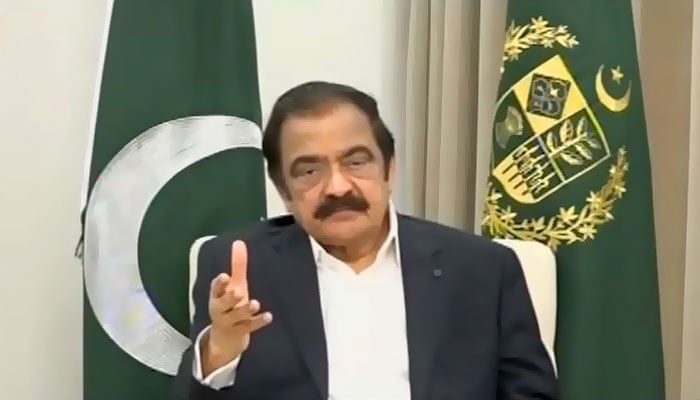
    Rana slams Naqvi’s ‘confusing’ provinces rem…

    Prime Minister Shehbaz Sharif’s Adviser on Political Affairs, Rana Sanaullah, said it was true that former prime minister Nawaz Sharif had instructed party leaders not to respond to Interior Minister Mohsin Naqvi’s recent statements. He added that the Pakistan Muslim League-Nawaz (PML-N) strongly disagreed with both the content and tone of Naqvi’s remarks. Speaking on a television programme, Rana Sanaullah described Mohsin Naqvi’s comments as “meaningless” and lacking context. He said he had listened to Naqvi’s speech but could not understand what message he was trying to convey. “It appeared that he wanted to make a significant point but failed to explain it properly. Once he made the statement, his subsequent remarks contradicted one another. I simply could not understand what he was saying or why he was saying it,” Rana Sanaullah said. He stressed that whenever a person makes a public statement, it reflects their personal opinion, adding that it was up to Mohsin Naqvi to clarify the intent behind his remarks and take responsibility for their interpretation. Responding to Naqvi’s proposal regarding the creation of new administrative units or provinces, Rana Sanaullah said such matters could not be decided merely through public statements. “You cannot simply talk about new provinces and expect them to come into existence. The Constitution clearly defines the procedure for creating new provinces or administrative units,” he said. He maintained that the issue should first be debated in Parliament, while the final decision would rest with the leadership of the political parties. Rana Sanaullah recalled that during the PML-N government in Punjab from 2013 to 2018, the party had formally proposed the creation of new provinces. He said he had personally presented both the resolution and the proposal for establishing a commission to examine the matter. He explained that a national commission would have to be formed to review all aspects of creating new provinces, including financial resources, administrative arrangements and constitutional requirements. “The commission would also need to consult on representation in the National Assembly, provincial assemblies and the Senate. This is a highly complex issue that requires serious deliberation by experienced policymakers,” he said. Rana Sanaullah added that Pakistan could adopt smaller provinces, a stronger local government system, or even both, but such decisions should be made collectively by political parties after thorough consultation

Leave a Reply

Your email address will not be published. Required fields are marked *