mushtaq ahmad released
| |

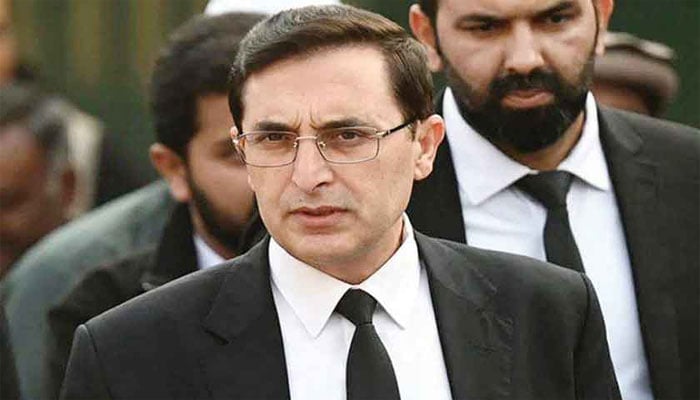
Mushtaq Ahmad released after brief detention

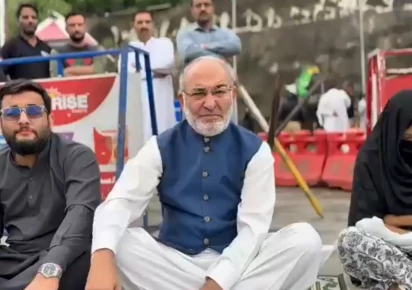
Former Jamaat-e-Islami senator Mushtaq Ahmad Khan was released on Thursday after his supporters claimed he had been held for more than 24 hours following his attempt to travel to Azad Jammu and Kashmir (AJK), where protests have intensified in recent days.

According to his team, Mushtaq Ahmad was stopped by authorities after being denied entry into AJK while travelling to express solidarity with families affected by the recent unrest. They alleged that he was later taken into custody while returning to Islamabad and remained out of contact for several hours before his release.

Following his release, his official social media account confirmed that he was safe and announced that he would address a press conference in Islamabad to share details of the incident.

Supporters claimed that he was intercepted near Kahuta by Punjab Police and taken away without any formal arrest warrant or explanation. They further alleged that authorities did not disclose his location during the period of detention, prompting concerns among family members and political colleagues.

The alleged detention triggered strong reactions from opposition leaders and rights advocates, who demanded transparency and adherence to legal procedures. Several political figures called for an explanation from the authorities, while human rights groups stressed the importance of protecting civil liberties and ensuring due process.

The incident comes amid heightened tensions in Azad Jammu and Kashmir following clashes between security personnel and protesters. The unrest has resulted in casualties and injuries, leading to widespread political criticism and renewed calls for an independent investigation into the violence.

Political parties have urged the government to exercise restraint and resolve disputes through dialogue, warning that excessive use of force could further inflame the situation.
Similar Posts

  • | |

    PTI chairman Gohar Khan’s mother passes away

    Pakistan Tehreek-e-Insaf (PTI) Chairman Barrister Gohar Khan’s mother has passed away. Gohar Khan confirmed the news through a post on his social media account. He shared the information with his followers and expressed grief over the death of his mother. According to the PTI chairman, his mother’s funeral prayers will be offered on Saturday at 4pm. The prayers will be held in Dagar village in Buner district. Gohar Khan also informed people about the location of the funeral so that relatives, friends and well-wishers could attend. The death of his mother comes as a personal loss for the PTI leader. Political figures, party colleagues and supporters are expected to extend their condolences to him and his family. Gohar Khan has remained active in national politics and is among the prominent leaders of the PTI. He has represented the party on several important political and legal matters. The funeral prayers will be held in Dagar at 4pm on Saturday. Family members and local residents are expected to attend the funeral. Further details about the burial arrangements have not been shared so far.

  • |

    Pentagon drops 41 new UFO files spanning 1950 to 2026

    The Pentagon has released 41 new declassified documents related to unidentified flying objects. The files span an enormous timeframe, covering incidents from 1950 all the way through 2026. Among the most striking entries is a 1963 telegram from Brazil, describing a dead crewman found inside a crashed metal balloon. A follow-up cable sent just six days later, however, called the entire report fabricated. This marks the fifth batch of declassified UFO material released so far this year. Chief Pentagon spokesman Sean Parnell announced the files on Friday under the Presidential Unsealing and Reporting System for UAP Encounters, known as PURSUE. The collection draws from multiple agencies, including the Pentagon, FBI, CIA, State Department and the Executive Office of the President. Parnell confirmed that additional releases are already being prepared for the future. Interestingly, these documents predate today’s broader UFO disclosure movement by decades. The earliest file dates back to January 1947, referencing so-called “ghost rockets” spotted over Finland and Denmark the year before, believed at the time to be Soviet rocket tests. A separate 1948 memo sent to Wright-Patterson Air Force Base confirmed that some kind of flying object had genuinely been sighted, though no explanation was ever given. More recent entries include a 2021 account from military personnel in the Gulf of Oman. They reported spotting 25 objects moving at speeds up to 1,300 miles per hour during a live-fire operation. Another document details a former service member’s account of a massive, silent, triangular object seen over Bagram Airfield in Afghanistan back in 2002. The object was reportedly around 500 feet long and blocked out the stars as it passed overhead. Two additional triangle sightings, both from Colorado Springs, were digitally rendered by the FBI based on witness testimony rather than actual photographs. One reconstruction dates to 2011, the other to 2023. Together, the newly released files offer a rare, wide-ranging look into decades of military encounters with unexplained aerial phenomena.

  • | |

    Pakistan faces population planning crisis, Senate …

    Islamabad: Pakistan’s population planning system has come under serious criticism after a Senate committee expressed concern over the absence of updated population data, warning that outdated information could damage government planning and decision making. The Senate Standing Committee on Planning, Development and Special Initiatives questioned why the country’s latest population and health information was still based on the Pakistan Demographic and Health Survey conducted in 2017 and 2018, despite the survey being planned every five years. The committee said that without fresh population data, it becomes difficult for the government to properly plan healthcare services, allocate resources and create policies according to people’s needs. The issue was discussed during a meeting chaired by Senator Quratulain Marri at Parliament House, Islamabad, where the committee reviewed the implementation of the National Action Plan on Population 2021 to 2026. Officials from the Ministry of National Health Services informed the committee that the population action plan was approved in May 2021 with a total cost of Rs1,996.683 million. The project covers areas including Azad Jammu and Kashmir, Gilgit Baltistan, and the Islamabad Capital Territory. The committee was informed that a major portion of the project budget, around Rs1,679.6 million, has been allocated for purchasing contraceptives. Officials said these contraceptives are being imported for population welfare programmes. For the financial year 2026 and 2027, Rs250 million has been allocated mainly for awareness campaigns and procurement of contraceptives. However, the committee questioned the effectiveness of these efforts and demanded complete details on resource allocation and the number of beneficiaries. Senator Quratulain Marri expressed concern that the Ministry’s briefing did not fully answer the questions raised by the committee. She directed the ministry to provide a detailed presentation in the next meeting covering the purchase, distribution, usage and challenges related to contraceptives. The chairperson said that population planning decisions must be based on accurate and updated information. She questioned why the Pakistan Bureau of Statistics had not completed the population and health survey within the expected timeframe. Officials informed the committee that the Pakistan Bureau of Statistics is currently conducting the next survey to update population and health indicators for the period up to 2025 and 2026. The committee said delays in collecting population data create serious problems because the government cannot accurately estimate the needs of hospitals, schools, employment opportunities and public services. Members stressed that a growing population requires proper planning to ensure that citizens receive enough healthcare, education and basic facilities. The committee reviewed the National Action Plan on Population as part of wider discussions about Pakistan’s future development challenges. Lawmakers said population growth is directly connected with economic pressure, healthcare demand and availability of public resources. The committee directed officials to improve monitoring and provide clearer information about the progress of population related programmes. Senator Quratulain Marri emphasized that government projects must deliver real results and that public money should be used effectively. The committee decided to continue reviewing the population action plan in future meetings and seek further details from relevant departments.

  • | |

    Saeed Ghani says ethnic voting trend Is fading in …

    Pakistan Peoples Party (PPP) leader Saeed Ghani has said that the trend of securing votes in Karachi primarily on the basis of ethnicity is gradually losing its influence. Addressing a PPP public gathering in Union Council 8 of Korangi, Ghani said voters were increasingly making political choices based on a party’s performance, ideology and vision rather than ethnic identity. He claimed that the PPP government had carried out extensive development work in District Central and Korangi, arguing that these projects had strengthened the party’s connection with residents and addressed long-standing civic needs. Ghani said Karachi’s political landscape was changing as people became more focused on issues that directly affected their daily lives. According to him, voters now paid greater attention to development, public services and the performance of political representatives when deciding which party to support. The PPP leader maintained that political parties could no longer rely solely on traditional ethnic or linguistic loyalties to win elections. He said improved performance and engagement with local communities would play a more important role in shaping voters’ decisions in the future. Ghani also highlighted the importance of development initiatives in strengthening public confidence, saying continued work in areas such as infrastructure and civic facilities could help political parties earn lasting support from Karachi’s residents.

  • | |

    Sindh extends Section 144 for one more month

    The Sindh government has extended Section 144 across the province for another month, keeping several restrictions in place to maintain law and order. According to a notification issued by the Sindh Home Department in Karachi, the renewed restrictions will come into effect on August 1 and will remain enforced for the next month. The notification states that wall chalking, public rallies, demonstrations and the display of weapons in public places will continue to remain prohibited throughout the province. The government said the measures have been taken as part of efforts to preserve public peace and prevent any activities that could disrupt law and order. Authorities have directed law enforcement agencies to ensure strict implementation of the restrictions. Officials said action will be taken against anyone found violating the provisions of Section 144 during the enforcement period. The notification also clarified that only security guards employed by registered private security companies will be permitted to carry weapons while performing their official duties. No other individuals will be allowed to display or carry weapons in public unless authorised under the law. Section 144 is a legal provision that empowers district administrations to impose temporary restrictions on public gatherings and certain activities in the interest of public safety. It is often enforced during periods of heightened security concerns or to prevent possible disturbances.

  • | | |

    FO rejects India’s criticism of AJK elections

    Pakistan’s Foreign Office (FO) has strongly rejected India’s criticism of the ongoing Azad Jammu and Kashmir (AJK) legislative elections, saying New Delhi has neither the legal standing nor the moral authority to question the democratic process in the region. Speaking at the weekly media briefing on Thursday, Foreign Office spokesperson Tahir Andrabi dismissed remarks made by India’s Ministry of External Affairs (MEA), which had described the AJK elections as a “farce.” He termed India’s comments baseless, politically motivated and an attempt to undermine a democratic process being conducted under the constitutional and legal framework of Azad Jammu and Kashmir. Andrabi said the elections are taking place in a peaceful, transparent and orderly manner despite security challenges, reflecting the democratic aspirations and political will of the people of AJK. He added that Pakistan remains committed to ensuring a free and fair electoral process in the region. The spokesperson said India’s criticism comes as the seventh anniversary of New Delhi’s August 5, 2019 decision to revoke the special constitutional status of Indian Illegally Occupied Jammu and Kashmir (IIOJK) is being observed. He maintained that those unilateral measures violated international law, relevant United Nations Security Council (UNSC) resolutions and India’s own international commitments. He reiterated Pakistan’s position that Jammu and Kashmir remains an internationally recognised disputed territory, whose final status should be determined through a UN-supervised plebiscite in accordance with relevant UNSC resolutions and the wishes of the Kashmiri people. Andrabi also accused India of attempting to divert global attention from alleged human rights violations and restrictions on political freedoms in occupied Kashmir. He said references to casualty figures and other claims made by Indian authorities cannot overshadow concerns raised by the international community over the situation in the region. Responding to another question regarding India’s reaction to Deputy Prime Minister and Foreign Minister Ishaq Dar’s recent remarks on Youm-e-Istehsal, Andrabi described the Indian statement as an effort to justify its policies in occupied Kashmir. He alleged that a heavy military presence, strict security laws and demographic changes continue to affect the Muslim-majority character of the territory. He further claimed that development projects promoted by India cannot replace the Kashmiri people’s right to self-determination

Leave a Reply

Your email address will not be published. Required fields are marked *