
naqvis remarks backed
| | |

Naqvi’s remarks backed administrative reforms, s…

ISLAMABAD: Interior Minister Mohsin Naqvi’s recent remarks about Pakistan’s governance system reflected ongoing discussions on improving administrative efficiency through the creation of new provinces or administrative units, according to informed sources.

Naqvi made the comments while addressing the Pakistan Economic Summit 2026 on Thursday. During his speech, he described the country’s governance system as “broken” and urged political parties to develop a consensus on the issue of creating new provinces. His remarks triggered widespread debate among political leaders, analysts and journalists, with many questioning the message behind his statement.

According to sources familiar with the matter, the minister’s comments should not be viewed as criticism of the federal government or as a sign of differences within the state institutions. Instead, they said the remarks were aimed at highlighting the need for administrative reforms to improve governance and ensure better delivery of public services.

Speaking at the summit, Naqvi said the existing governance structure was no longer capable of addressing Pakistan’s growing challenges. He warned that unless major reforms were introduced, the country would continue discussing the same problems even after another 10 years.

The interior minister stressed that Pakistan needed a long-term solution rather than temporary measures. He said the issue of creating new administrative units should be placed before the people so that a national consensus could be developed through public debate.

Naqvi also referred to the prime minister’s reported long working hours, saying that working 18 to 20 hours a day reflected commitment but could not permanently solve structural governance problems. He said such efforts were similar to dealing with emergencies instead of addressing the root causes of the country’s administrative challenges.

His remarks immediately sparked political speculation in Islamabad. Some observers interpreted the statement as an acknowledgment that the current governance model was not delivering the desired results. Others suggested the comments reflected dissatisfaction with the existing administrative structure.

Some political analysts also linked the statement to speculation about differences between the civil government and the military establishment. However, informed sources firmly rejected that interpretation.

A source with knowledge of the matter said there was no disagreement between Islamabad and Rawalpindi regarding the issue. The source emphasized that Naqvi’s speech was focused solely on promoting the idea of administrative reforms through the establishment of additional administrative units.

According to the source, the purpose of the remarks was to encourage discussion among policymakers, political parties and the public about whether Pakistan should adopt a new administrative framework to improve governance across the country.

Observers believe supporters of the proposal argue that Pakistan’s existing provincial structure has become too large and complex to effectively manage the country’s administrative and development needs. They maintain that smaller provinces or administrative units could bring government institutions closer to the people, improve service delivery, strengthen local administration and make governance more efficient.
Similar Posts

  • | |

    Sindh faces prolonged nursing shortage, says healt…

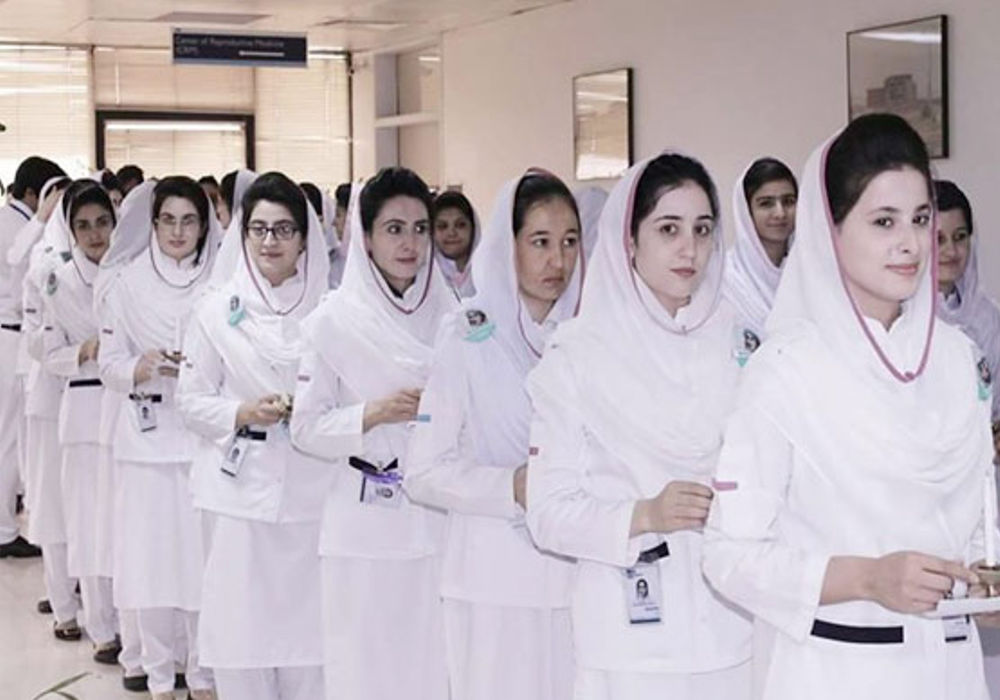
    Sindh Health Minister Dr Azra Fazal Pechuho has said the province has been facing a shortage of nurses for a long time, while many other countries are also struggling to meet the growing demand for nursing professionals. Speaking at a press briefing on the overall health situation in Sindh, Pechuho said the provincial government was taking steps to increase the number of nurses and improve nursing education and training. She said work on health policies and legislation was carried out last year, while several initiatives were continuing this year to strengthen different areas of the healthcare system. According to the minister, discussions are also under way with the Asian Development Bank to support efforts aimed at increasing the nursing workforce. Pechuho said a unified admission policy was being introduced for nursing colleges across Sindh. The policy is intended to improve the standard of nursing education and training and ensure greater consistency among institutions. She said around 5,000 nurses currently complete their education and enter the profession every year. The government aims to increase the number of nursing graduates to around 46,000 in the coming years. The health minister said many nurses come from financially disadvantaged families, which is one of the reasons a significant number seek employment opportunities abroad. She said two nursing centres were also being established under a pilot project to expand training and educational opportunities for aspiring nurses. Pechuho further announced that recruitment had been approved for staff at Jinnah Hospital and the National Institute of Cardiovascular Diseases (NICVD). She also highlighted several developments in Sindh’s healthcare infrastructure. According to the minister, the Sindh Institute of Urology and Transplantation (SIUT) has been expanded to provide additional healthcare services. A new block has also been established at NICVD, while vascular surgery services have started at the Trauma Centre. The minister said the government was continuing efforts to improve healthcare facilities and expand specialised medical services across the province. Pechuho also said that the rate of maternal deaths had increased in connection with surgical deliveries, highlighting the need for greater attention to maternal healthcare and safer childbirth practices.

  • | |

    ECP begins Islamabad local polls preparations

    The Election Commission of Pakistan (ECP) has started the delimitation process for holding local government elections in Islamabad. The commission said the formal process will begin on August 1, 2026, and will continue until October 13, 2026. The delimitation of constituencies is a major step before announcing the election schedule. An ECP spokesperson said that after the completion of the delimitation process and publication of the final constituencies, the commission will consult the federal government regarding the date for Islamabad’s local government elections. The spokesperson also shared updates about local government elections in Punjab and Khyber Pakhtunkhwa. In Punjab, delimitation authorities have been directed to submit their decisions to the relevant committees by August 7. The final delimitation list for the province will be published on August 17. The ECP said it is fully prepared to conduct local government elections in Punjab after completing all necessary legal requirements and consultations. Regarding Khyber Pakhtunkhwa, the commission said delimitation has been completed in 23 districts, while work is continuing in seven more districts. The spokesperson said the ECP held discussions with the Khyber Pakhtunkhwa chief secretary and local government secretary on July 14 about the election schedule. Provincial authorities were given additional time after requesting support for completing arrangements. The commission said recent amendments to the Khyber Pakhtunkhwa Local Government Act created legal issues that affected the delimitation process. The ECP informed the provincial government about these concerns and sought cooperation to resolve the matter. The spokesperson said the commission has faced delays in local government elections because federal and provincial governments often change local government laws close to election dates. He said the ECP has repeatedly completed delimitation exercises and prepared election schedules, but changes in legal frameworks affect the process. The commission recommended that major changes to local government laws and boundaries should be completed at least one year before elections. It said this would help ensure a smooth and timely electoral process.

  • | |

    Europe encounters greatest solar eclipse in decade…

    Daylight dissolved across the United Kingdom and continental Europe as millions of onlookers turned to witness the most spectacular solar eclipse the region has seen since 1999. From packed coastal beaches in southwestern England to historical strongholds in northern Spain, the cosmic alignment delivered an breathtaking celestial display that left crowds cheering, whispering, and in some places, standing in complete, awestruck silence. The majority of the UK experienced a deep partial eclipse with the Moon blocking out over 90% of the Sun’s face. A sselected orridor running through Iceland and northern Spain was treated to the coveted prize: a rare total solar eclipse. A Shared Experience Across the British Isles Across Britain, ordinary routines came to a sudden halt as people gathered on hilltops, city plazas, and seafront promenades equipped with protective eclipse glasses and homemade pinhole projectors. In Cornwall, the atmosphere at a seaside beach cafe was described by locals as absolutely buzzing. As the lunar shadow gradually bit deeper into the solar disk, the bright summer sunlight faded into an uncanny, metallic haze, accompanied by a noticeable drop in temperature. Further north in Scotland, grey weather initially threatened to ruin the party. Hundreds had gathered on Edinburgh’s iconic Castle Rock, anxiously watching a thick blanket of cloud. Just as the peak of the eclipse approached, a sudden break in the overcast weather revealed the glowing crescent Sun above, prompting a massive roar of applause and collective relief from the crowd below. Chasing Totality: 84 Seconds of Pure Wonder For those who traveled to the narrow path of totality in Western Europe, the event transformed from a impressive atmospheric novelty into a profoundly emotional moment. In the town of Benavente, located in northwestern Spain, an estimated 84 seconds of complete totality turned day directly into night. As the Moon entirely covered the Sun, revealing the ghostly white halo of the solar corona, the cheering crowd fell completely silent. For nearly a minute and a half, the town stood wrapped in twilight, suspended in a collective hush before the sun’s edge re-emerged and brought back the day. Nearby in Burgos, science journalists and eclipse chasers found themselves caught up in the raw emotion of the event. Even veterans who had traveled the world noted that watching the horizon glow in a 360-degree sunset never loses its magic. They described the sudden arrival of the Moon’s umbral shadow as an experience that triggers goosebumps. A Once-in-a-Generation Celestial Event Solar eclipses themselves are not inherently rare. However, having a total shadow track across populated European landmasses is an event that occurs only a few times a century. For many young observers, this was their very first taste of a major astronomical event. On contrary, older generations recalled the legendary 1999 eclipse that captivated the continent previously.

  • | |

    New provinces debate gains momentum as coalition p…

    A renewed debate over the creation of new provinces in Pakistan has gathered political momentum after two major coalition partners publicly endorsed Interior Minister Mohsin Naqvi’s proposal to restructure the country’s administrative system. However, the ruling Pakistan Muslim League-Nawaz (PML-N) has yet to officially comment, fueling speculation over its stance on the sensitive issue. The discussion began after Naqvi argued that Pakistan’s existing administrative framework had become ineffective and called for a national consensus on establishing smaller provinces to improve governance and public service delivery. His remarks quickly drew support from coalition allies, including the Muttahida Qaumi Movement-Pakistan (MQM-P) and the Istehkam-e-Pakistan Party (IPP). Federal Health Minister Mustafa Kamal described the proposal as an urgent national necessity rather than a political choice, stressing that decentralizing administrative powers was essential for effective governance. The MQM-P has long advocated the creation of an additional province in Sindh, making the party one of the strongest supporters of the initiative. Privatization Minister Abdul Aleem Khan of the IPP also endorsed the proposal, suggesting that each of Pakistan’s four existing provinces could eventually be divided into three administrative regions. He argued that smaller provinces would bring government closer to the people and reduce the hardships faced by citizens traveling long distances to provincial capitals. Despite growing support from coalition partners, the proposal faces significant constitutional and political challenges. Any change to provincial boundaries requires a two-thirds majority in the affected provincial assembly, making consensus difficult to achieve. The Pakistan Peoples Party (PPP), which governs Sindh and is also part of the federal coalition, has expressed strong reservations, warning that such a move could create more problems than solutions. Opposition leaders have also criticized the proposal, arguing that the government lacks the political mandate for such a major constitutional change. They insist that strengthening democratic institutions and improving governance should take priority over redrawing provincial boundaries. Political analysts have offered differing views on the initiative. Some believe creating new provinces could deepen ethnic and regional divisions, while others see the debate as an attempt to shift public attention away from pressing national issues, including recent unrest in Azad Jammu and Kashmir and ongoing security challenges in Balochistan. Many experts argue that empowering local governments under the 18th Constitutional Amendment would be a more practical and effective way to improve governance without altering provincial boundaries. Mustafa Kamal also acknowledged that stronger local governments are essential regardless of whether new provinces are eventually created. With the PML-N maintaining silence and key coalition partners taking opposing positions, the proposal has opened a fresh political debate that is likely to remain at the center of Pakistan’s national discourse in the coming months.

  • |

    Ronaldo hints at retirement as 1,000-goal dream nears

    LISBON: Cristiano Ronaldo has given his clearest indication yet that the end of his extraordinary football career could be approaching, saying the upcoming season may be his final one as a professional. The 41-year-old Portugal captain, however, appears determined to make his final chapter memorable. Ronaldo is chasing the extraordinary milestone of 1,000 goals and wants to leave the sport with a legacy that reflects more than two decades at the highest level. “This is probably my last year of football, and I want to leave a spectacular legacy,” Ronaldo told Vogue in an interview published on Sunday. Ronaldo made his senior debut for Sporting CP in 2002 and has since built one of the most decorated careers in football history. He has played for Manchester United, Real Madrid and Juventus before continuing his career with Saudi Pro League club Al-Nassr. The five-time Ballon d’Or winner has also become one of international football’s most prolific scorers with Portugal. Ronaldo currently has 976 goals for club and country, leaving him just 24 goals short of the unprecedented 1,000-goal mark. Reaching that figure before retirement would add another remarkable achievement to a career already filled with records. Yet one major prize remains missing from his collection: the FIFA World Cup. Portugal’s failure to win the 2026 tournament means Ronaldo will likely finish his international career without lifting football’s biggest trophy. Despite his latest comments, Ronaldo has not announced a specific retirement date, leaving open the possibility that he could continue beyond the coming season. The veteran forward has also begun thinking about life away from football. He said he has plenty of interests that could keep him occupied once he finally steps away from the game. Ronaldo mentioned travelling more, playing padel and enjoying the rewards of a career built on years of discipline and sacrifice. For now, though, his focus remains on football — and perhaps the most eye-catching target of all: becoming the first player to reach 1,000 career goals.

  • |

    Global food prices hit 3-year high as FAO warns of hunger risk

    World food prices climbed in July to their highest level in more than three years. The UN Food and Agriculture Organization says extreme weather and escalating conflicts are driving the surge. According to FAO’s food price index, prices averaged 131.1 points in July, up from 130.3 points in June. That marks the strongest reading recorded since January 2023. Experts describe the trend as a “perfect storm” of overlapping pressures hitting global agriculture at once. Multiple factors are compounding each other, making the situation harder to control. Reuters reported that FAO’s chief economist pointed to severe weather, including intense heatwaves and El Niño effects, as major contributors. These conditions have damaged crop yields in several key farming regions. On top of that, escalating conflicts in the Black Sea and Gulf regions have added further strain. Together, these factors have disrupted supply chains and pushed prices higher across multiple food categories. Cereal prices led July’s overall rise, climbing 3.4% month-on-month. That increase was largely driven by a sharp 5.8% jump in wheat prices specifically. FAO said wheat markets were rattled by fears over disrupted Black Sea exports. Heat damage to crops in major producing regions added even more pressure on supply. Vegetable oil prices also rose, climbing 2% to their highest level since June 2022. Higher crude oil prices, tied partly to the ongoing Iran conflict, helped push palm and soy oil prices upward. Rapeseed and sunflower oil prices moved in the opposite direction, declining slightly during the same period. Sugar prices rose too, up 5.6%, driven by weather concerns across Europe and Asia. Stronger expected demand for ethanol in Brazil added further support to sugar prices. Meat prices, however, told a different story entirely, falling 2.8% after hitting a record high in June. Poultry, pork and beef prices all declined during the month. Sheep meat was the exception, hitting a record high due to tight export supplies from Oceania. Dairy prices dipped slightly as well, down 0.7% overall. Despite July’s increase, the latest reading remains 18.2% below the record peak set in March 2022, following Russia’s invasion of Ukraine. Even so, economists warn that these combined pressures could trigger a fresh wave of global food inflation in the months ahead

Leave a Reply

Your email address will not be published. Required fields are marked *