netanyahu visits white
|

Netanyahu visits White House for first Trump talks…

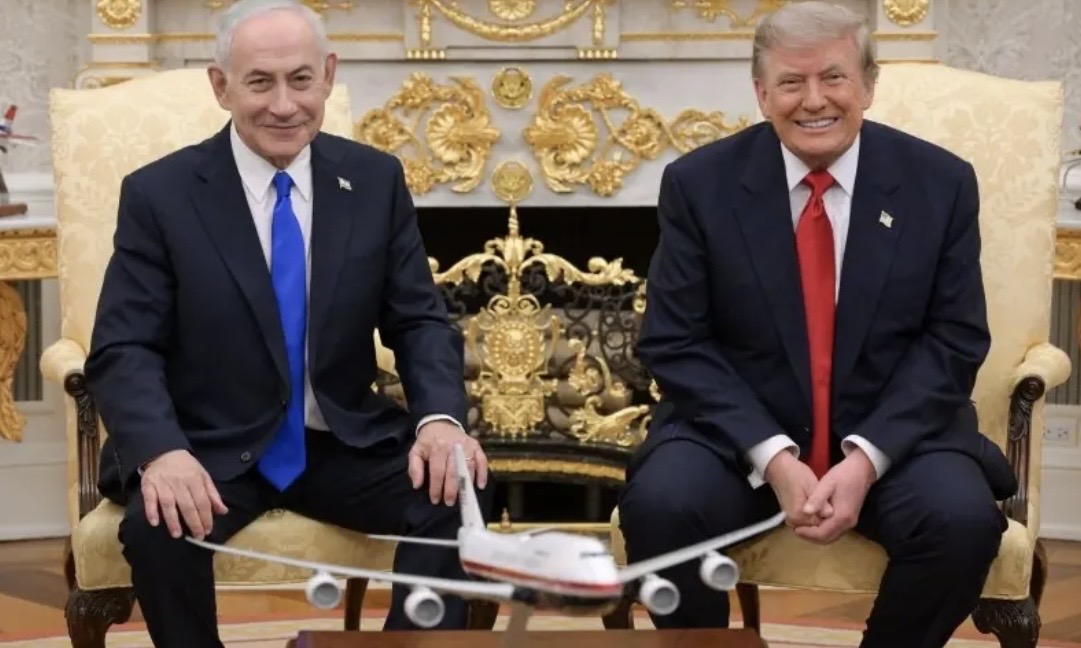
Israeli Prime Minister Benjamin Netanyahu visited the White House on Tuesday for his first in-person meeting with US President Donald Trump since the Iran war began, as the two leaders held closed-door talks dominated by the conflict and regional security.

The meeting, described by the White House as “positive and productive,” lasted about an hour and a half. It came amid a recent pause in the fighting between the US and Iran, with Washington signaling it wants to give negotiations a chance. Israel has not taken part in the latest round of hostilities, which flared earlier this month after an April ceasefire collapsed.

Relations between Trump and Netanyahu reached a low point in April during negotiations on the ceasefire with Iran, with Trump unleashing profanity-laced tirades against his Israeli ally. Trump later described Netanyahu in an interview as a “very difficult guy,” while Netanyahu downplayed the exchanges as “tactical disagreements” that were “drawn out.”

Upon arriving in Washington, Netanyahu attended a private memorial dinner on Monday evening in honor of the late US senator Lindsey Graham, and he was also scheduled to attend Graham’s memorial service later on Tuesday.

Observers suggest that any differences between Trump and Netanyahu concern the means  timeline, intensity, and immediate objectives of operations rather than the ends of the war. Analysts believe Trump would mainly seek to focus on his two regional priorities: Iran and the expansion of the Abraham Accords, the US-brokered normalisation agreements signed during his first term that established formal diplomatic relations between Israel and the United Arab Emirates, Bahrain, and Morocco.

Gaza is seen as less of a priority for Trump, but other observers believe the talks could also address the possible easing of Israel’s military presence elsewhere in the region, such as in Lebanon, Syria, or Gaza. The meeting comes as diplomatic efforts to end the broader conflict continue, with Pakistan and Qatar playing mediation roles between Washington and Tehran.
Similar Posts

  • | | | | |

    US offers $15 million reward for Iran drone networ…

    WASHINGTON: The United States has announced a $15 million reward for information leading to the disruption of an alleged financial network linked to Iran’s drone programme, escalating pressure on entities accused of supporting the country’s military operations. The reward was announced by the Rewards for Justice programme run by the US State Department. According to the programme, the offer targets information about financial networks associated with Kimia Pars Sepehran Company (KIPAS), which Washington alleges is involved in producing drones for Iran’s Islamic Revolutionary Guard Corps (IRGC) Quds Force and its regional allies. In a statement posted on the social media platform X, the programme said it is seeking information on seven senior officials, their associates and the financial infrastructure that allegedly supports the company’s operations. US authorities said individuals who provide credible and actionable information may qualify not only for the financial reward but could also receive assistance with relocation if necessary. The announcement identified the individuals of interest as Hassan Aram Banizadeh, Reza Naharvani, Mehdi Naqaneh, Hadi Zavaraki, Abolfazl Meshkani, Abbas Sartaji, and Ehsan Mohaghegh. The latest reward offer is part of Washington’s broader campaign to disrupt networks it believes are involved in the financing, development and distribution of unmanned aerial vehicles used by Iran and affiliated groups across the Middle East. US officials have repeatedly accused Iran of supplying drones and military technology to allied armed groups operating in the region. Tehran, however, has consistently rejected allegations that it provides weapons in violation of international obligations, maintaining that its military activities are conducted within its national defence framework. The new announcement comes amid continued tensions between Washington and Tehran over regional security, sanctions and Iran’s military capabilities. Analysts say targeting financial facilitators has become a key element of the US strategy to weaken supply chains supporting Iran’s drone programme. The Rewards for Justice initiative has previously offered multimillion-dollar rewards for information related to terrorism, sanctions evasion and other activities considered threats to US national security. The latest offer underscores Washington’s continued focus on disrupting networks it believes contribute to Iran’s expanding drone capabilities.

  • | |

    14 security personnel martyred, 27 injured in suic…

    TANK: At least 14 security personnel were martyred and 27 others injured in a major suicide attack on the Manjhi Khel Joint Check Post in Tank district after terrorists rammed an explosives-laden vehicle into the facility late Thursday night, triggering a massive blast. According to security and police sources, the powerful explosion caused extensive destruction to the check post, completely demolishing seven to eight rooms and damaging nearby houses. Shortly after the blast, an intense exchange of gunfire erupted between the attackers and security forces and continued for a considerable period. Sources said all attackers were killed during the ensuing security operation. A clearance and search operation remains underway as authorities continue removing debris and recovering bodies. The martyred personnel reportedly include two police officials, seven members of the security forces, and one Forest Guard. Among the police personnel who embraced martyrdom were Constable Bilal and driver Tala Muhammad. The injured include four police officials Constable Ismatullah Akbari, Constable Jasim, Constable Muhammad Dawood, and Constable Pir Ghulam along with other security personnel. All the wounded were shifted to the District Headquarters Hospital, Tank, for medical treatment. According to sources, two of the attackers were wearing uniforms resembling those of the Pakistan Army in an apparent attempt to deceive security personnel. Preliminary information suggests the suicide attack was carried out using a Datsun/Mazda vehicle loaded with approximately 1,500 kilograms of explosives. Sources also claimed that a white Toyota Corolla GLi was used by the attackers, apparently to facilitate their movement after the explosion. Following the attack, security forces cordoned off the area and launched a large scale search and clearance operation. Officials are collecting evidence to determine the full circumstances of the attack. However, an official statement confirming the casualty figures and operational details is still awaited. Meanwhile, the funeral prayers for the martyred personnel are expected to be attended by Inspector General of Khyber Pakhtunkhwa Police Zulfiqar Hameed and Chief Secretary Khyber Pakhtunkhwa Syed Shahab Ali Shah. In response to the security situation, the district administration has imposed a district-wide curfew in Tank from 6:00 a.m. to 6:00 p.m., with all entry and exit routes to the city closed until further notice. Authorities have urged residents to cooperate with law enforcement agencies and avoid unnecessary travel during the curfew.

  • | | | |

    Six Palestinians killed, 37 injured in fresh Gaza …

    GAZA: At least six Palestinians have been killed and 37 others injured in fresh Israeli attacks on the Gaza Strip, according to the Palestinian Ministry of Health, adding to the mounting toll since the ceasefire in October 2025. The latest casualties were reported as attacks continued to affect different parts of the besieged territory. The deaths and injuries have once again raised concerns over the fragile situation in Gaza, where civilians continue to face the consequences of the prolonged conflict. According to the Palestinian Ministry of Health, more than 1,100 Palestinians have been killed and nearly 4,000 wounded since the ceasefire began in October 2025. The ministry said that more than 800 bodies have also been recovered from various locations since the ceasefire. The figures highlight the scale of the devastation and the continuing challenges faced by emergency teams searching affected areas. The latest violence comes despite the ceasefire that was expected to reduce bloodshed and provide relief to Gaza’s population. The renewed casualties have added further uncertainty to an already fragile situation. Meanwhile, tensions have also continued in the occupied West Bank. Palestinian authorities said 66 Palestinians were arrested in different parts of the territory. The developments come as the humanitarian situation remains a major concern, with communities in Gaza continuing to deal with the aftermath of months of fighting, widespread destruction and loss of life. For families in the territory, every new round of violence brings fresh fear and uncertainty. The latest deaths have once again put the spotlight on the fragile ceasefire and the urgent need to prevent further escalation. As the death toll continues to rise, attention remains focused on whether diplomatic efforts can restore lasting calm and protect civilians caught in the conflict.

  • | | | | |

    Trump claims limited talks with Iran are underway …

    WASHINGTON: US President Donald Trump has claimed that limited negotiations with Iran are currently taking place, while indicating that Washington is not pursuing an aggressive new military escalation against Tehran at this stage. Trump’s comments come amid continued tensions between the United States and Iran and growing international attention on efforts to reduce the conflict. Recent reports have also indicated that talks involving Iran and Oman have been taking place, although no final agreement has been reached. According to Trump, the United States is currently keeping a lower profile on the issue and is engaged in what he described as limited negotiations with Iran. He also claimed that Iran is facing severe economic difficulties and suggested that the country is under significant financial pressure. Trump argued that Iran’s economic situation has deteriorated considerably, making it difficult for the government to meet some of its financial obligations. These remarks were presented as part of his argument for maintaining economic pressure rather than immediately launching another major military campaign. The US president also referred to the wider impact of the conflict on energy markets and American consumers. Oil prices have remained closely linked to developments surrounding the Strait of Hormuz, a strategically important route for global energy shipments. Recent market reports have shown that investors have been watching diplomatic developments closely as hopes for an agreement affect oil prices. Trump described the confrontation with Iran as a complicated strategic contest, comparing the situation to a game of chess. He suggested that a solution could eventually be reached through negotiations and pressure. US officials have reportedly been considering different approaches to the conflict, including diplomatic engagement and economic measures. Recent reporting indicates that progress has been discussed in Iran-Oman talks, although significant issues remain unresolved. The latest developments come as Washington continues to monitor Iran’s military and economic position while seeking leverage in negotiations. For global markets, the outcome of the diplomatic efforts could be particularly important. Any agreement that improves the security of shipping through the Strait of Hormuz could influence crude oil prices and energy supplies worldwide. However, the situation remains fluid, and claims about the extent of direct negotiations have not been uniformly confirmed by all sides. Further diplomatic contacts are expected as the United States and its partners seek a way to reduce tensions and address the broader issues at the center of the conflict.

  • |

    UK government unveils £130m boost for zero-emission vehicle technology

    The British government has announced a joint public-private investment package worth nearly £130 million to advance zero-emission vehicle technologies across the United Kingdom. The funding model combines almost £65 million in public investment alongside matching contributions from private automotive industry partners. Under the initiative, nearly £50 million in government grants will go directly to car manufacturers and research institutions to develop and scale clean vehicle tech. An additional £17 million has been allocated to nine projects targeting connected and automated mobility, including advanced sensors, brake-by-wire systems, and artificial intelligence simulation platforms. Industry Minister Blair McDougall stated that the package aims to secure the future of British manufacturing, noting that the country is determined to ensure next-generation vehicles are designed and produced domestically. The financial injection aligns with the UK’s legal mandate to end sales of new petrol and diesel cars by 2030, ahead of a complete transition to zero-emission new vehicles by 2035.

  • | |

    Pakistan’s olive oil export dream at risk, g…

    LAHORE: Pakistan’s rapidly growing olive oil industry has reached a defining moment, with growers and processors warning that the country’s ambitions to become a major exporter could be undermined unless authorities introduce stricter quality standards, certification systems and stronger market regulation. Industry stakeholders say Pakistan has made significant progress in expanding olive cultivation over the past decade, but the absence of an effective regulatory framework now poses the biggest challenge to long-term growth. Dr. Qurat-ul-Ain Irfan, founder of Meshak Farms in Mardan, believes the focus should now shift from planting more olive trees to protecting product quality and building consumer confidence. “There is no proper implementation framework,” she said, noting that products of varying quality can currently be marketed as olive oil with little monitoring. “Consumers deserve to know whether they are buying premium extra virgin olive oil, blended oil or another edible oil altogether.” According to growers, the lack of routine laboratory testing, nationally recognized grading standards and certification mechanisms has made it difficult for genuine producers to distinguish their products from adulterated or lower-quality alternatives. Pakistan imports an estimated $5-6 billion worth of edible oil annually, making it one of the country’s largest import expenses. Policymakers have promoted olive cultivation as a strategic alternative capable of reducing dependence on imports while creating new export opportunities. Government-backed initiatives have led to the plantation of millions of olive trees, particularly across Potohar, Khyber Pakhtunkhwa and Balochistan, where nearly 10 million acres are considered suitable for olive cultivation. The industry’s latest boost has come through the OliveCulture Scale-Up Project (2024–2027), funded by the Italian Agency for Development Cooperation (AICS) and implemented by CIHEAM Bari, which aims to strengthen Pakistan’s olive value chain from cultivation to processing and marketing. Despite these initiatives, growers argue that commercial olive farming requires long-term investment and stronger policy support. Unlike seasonal crops, olive orchards often take several years before generating meaningful yields and may require 10 to 15 years to reach peak production. Meshak Farms reflects this long-term approach. Established on previously uncultivated land in Mardan, the farm uses imported Arbequina olive saplings, modern drip irrigation systems and internationally recognized cultivation techniques learned through collaboration with Italian experts. Dr. Irfan, who also leads a pharmaceutical company exporting to the United Kingdom and the European Union, said the same principles of traceability, laboratory testing and quality assurance should become standard across Pakistan’s olive industry. She revealed that representatives of an Italian company had expressed interest in sourcing Pakistani olive oil if producers consistently met internationally recognized certifications, including ISO 14000, and maintained premium quality standards. Experts also point to changing global market conditions as an opportunity. Climate change, ageing orchards and declining olive production in parts of the Mediterranean have encouraged international buyers to diversify their supply chains, potentially opening doors for emerging producers like Pakistan. However, industry leaders caution that export ambitions will remain difficult to achieve without mandatory grading systems, accredited testing laboratories, traceability mechanisms and consumer awareness campaigns promoting authentic Pakistani extra virgin olive oil. They also argue that reducing taxes and offering incentives for growers would encourage investment and help lower domestic prices. “The challenge is no longer proving that olives can grow in Pakistan,” Dr. Irfan said. “The real test is whether policy reforms can keep pace with an industry that is ready to compete in international markets.”

Leave a Reply

Your email address will not be published. Required fields are marked *