north korea warns
|

North Korea warns US nuclear strategy could trigger arms race

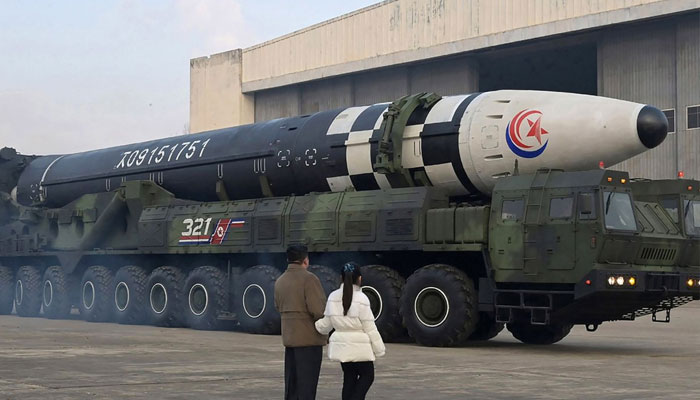
PYONGYANG: North Korea has warned that a new nuclear strategy being considered by the United States could trigger a fresh global arms race and increase the risk of nuclear conflict.

A spokesperson for North Korea’s Foreign Ministry criticised the proposed US nuclear policy and accused Washington of using nuclear weapons for strategic dominance and political and military objectives.

The spokesperson described the reported US strategy as a serious and dangerous development. North Korea said the policy could undermine the existing nuclear balance and accelerate the development and deployment of nuclear weapons around the world.

According to the North Korean statement, continued expansion of nuclear capabilities could push the international security environment closer to the threshold of nuclear war.

However, US Deputy Secretary of Defense Elbridge Colby said on Thursday that he did not expect any major or fundamental changes in the nuclear strategy currently under consideration.

North Korea also criticised planned joint military exercises between the United States and South Korea. It warned that it would exercise what it described as its right to self-defence in response to what it considers hostile military activities.

A statement carried by North Korean state media said Pyongyang would not tolerate what it described as an increasingly confrontational situation created by hostile states.

The United States and South Korea are scheduled to begin their joint military exercises on August 17. The drills are expected to continue until August 27.

The exercises are also expected to take into account possible lessons from North Korea’s involvement in Russia’s war in Ukraine, particularly its military experience and battlefield capabilities.

The latest warnings came after North Korea conducted its second missile test in less than a week.

On Wednesday, Pyongyang launched a ballistic missile from its eastern coast towards the sea. Six days earlier, it had conducted another test involving a short-range missile.

North Korea’s latest military activity comes amid continued tensions with Washington and Seoul. Diplomatic efforts to restart talks have so far failed to produce a breakthrough.

According to reports, North Korean leader Kim Jong Un has largely rejected recent calls for renewed diplomatic engagement with the United States and South Korea.

Since the collapse of diplomatic efforts involving former US President Donald Trump in 2019, Kim has instead focused on strengthening North Korea’s nuclear and missile capabilities.

Analysts believe Pyongyang could eventually use its expanding nuclear capabilities as leverage to seek concessions from Washington.

These could include relief from international sanctions and other measures imposed on North Korea over its nuclear and missile programmes.

Similar Posts

  • | | | |

    Oil prices fall as Hormuz shipments resume

    Global oil prices fell sharply on Friday, extending weekly losses as crude exports through the Strait of Hormuz gradually resumed, easing fears of prolonged supply disruptions despite a fresh maritime security incident near Oman. Brent crude dropped nearly 2% to $73.76 per barrel, while US West Texas Intermediate (WTI) crude also declined around 2% to $70.43 per barrel during trading. The decline reflected growing market confidence that oil supplies from the Gulf were beginning to recover after months of disruption. Saudi Arabia’s state-owned energy company resumed crude loading operations at the Ras Tanura export terminal after a suspension of almost four months. Shipping data indicated that two very large crude carriers were loading oil at the terminal, with another tanker waiting offshore, signalling a gradual restoration of export activity. Market analysts said traders were reacting positively to the increase in tanker movements through the Strait of Hormuz, one of the world’s most important energy corridors. However, they noted that crude demand from China remains weaker than expected, adding downward pressure on prices. The market had briefly rallied a day earlier after a commercial cargo vessel was struck by an unidentified projectile near Oman, prompting the United Nations’ shipping agency to suspend its voluntary evacuation programme in the area. US officials later alleged that Iranian forces had fired on the vessel as it attempted to transit the strait, while Iranian authorities maintained that security could not be guaranteed for ships operating outside designated navigation routes. Although oil shipments through the Strait of Hormuz have reached their highest level since the outbreak of the US-Israel-Iran conflict in February, overall maritime traffic remains well below normal levels recorded before the crisis. Analysts observed that much of the recent increase in tanker traffic reflects vessels that had been stranded during the conflict finally leaving the Persian Gulf. They cautioned that inbound shipping remains limited, suggesting export flows could slow again once the backlog of delayed vessels has cleared. Adding another layer of uncertainty, earthquakes in Venezuela raised fresh concerns about global oil supplies. Initial assessments indicated that the country’s major oilfields, refineries and export facilities escaped significant damage because they were located away from the hardest-hit regions. Nevertheless, widespread power outages have created uncertainty over whether Venezuela can maintain crude production near its recent level of approximately 1.2 million barrels per day. Despite ongoing geopolitical tensions and supply risks, the resumption of Gulf oil exports outweighed immediate concerns, leaving both Brent and WTI crude on course for weekly losses of around eight percent.

  • |

    Air India appoints CEO amid mounting financial losses

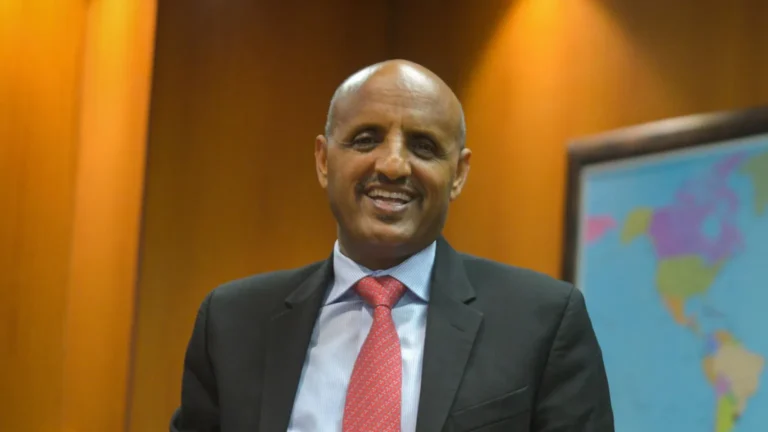
    Air India has appointed former Ethiopian Airlines chief Tewolde Gebremariam as its new chief executive officer, entrusting him with leading the airline through a challenging period marked by financial losses, operational setbacks and heightened safety concerns. Gebremariam succeeds Campbell Wilson, who stepped down in April after overseeing the airline’s initial restructuring following its acquisition by the Tata Group in 2022. The Air India board unanimously selected Gebremariam after an extensive global search, citing his leadership experience and strong operational record. During more than a decade at Ethiopian Airlines, he expanded the carrier’s fleet significantly and helped transform it into one of Africa’s leading and most profitable airlines. His appointment comes at a difficult time for Air India, which continues to recover from last year’s fatal Ahmedabad–London plane crash that claimed 260 lives. The airline is also dealing with mounting financial pressure after reporting a record loss of nearly $2.3 billion and reducing a significant portion of its international operations. In recent months, Air India has faced several operational disruptions, including flight delays, route adjustments and unexpected diversions. The broader aviation industry in India has also been affected by higher operating costs, aircraft delivery delays, disrupted international routes and stricter regulatory oversight. Industry analysts believe Gebremariam’s experience managing Ethiopian Airlines through the Boeing 737 Max crisis and the Covid-19 pandemic could prove valuable as Air India works to restore public confidence. Experts say his immediate priorities will include strengthening safety standards, improving employee morale, modernising the airline’s fleet, expanding its network and returning the carrier to long-term profitability.

  • | |

    Supreme Court upholds death sentence in woman’s …

    The Supreme Court has issued a landmark ruling concerning women’s rights, declaring that a woman’s right to seek khula (judicial divorce) is a constitutional right and that violence against a woman exercising this right amounts to an attack on the Constitution. A three-member bench of the Supreme Court dismissed the jail petition filed by convict Waseem Abbas and upheld his death sentence. Justice Muhammad Hashim Khan Kakar authored the four-page detailed judgment. According to the judgment, women are fully protected under Articles 9, 14 and 25 of the Constitution, which guarantee their security, dignity and equal rights. The court said that anyone who uses violence against a woman seeking khula would face the full force of the law. It observed that killing a woman for exercising her legal right is an act of brutality and open defiance of the law. The Supreme Court further ruled that a convict involved in a cold-blooded and planned murder does not deserve any concession. The judgment also clarified that the testimony of relatives cannot automatically be rejected in cases involving crimes committed within the privacy of a home. The court said forensic evidence recovered from the crime scene provided conclusive evidence against the accused. The forensic examination established a match between the recovered bullet casings and the pistol linked to the crime. The Supreme Court found no legal or factual flaw in the decisions of the lower courts and upheld the death sentence awarded to Waseem Abbas. According to the case record, Waseem Abbas shot and killed his former wife, Shehnaz Bibi, on October 11, 2020. She had obtained a legal khula decree from a family court before the incident. The convict allegedly entered the woman’s home and killed her around 48 hours after she obtained the decree. A trial court subsequently sentenced Abbas to death and awarded him 10 years in prison. The Lahore High Court later upheld the death sentence.

  • | |

    Why was Imran Khan taken to Pims, not Shifa hospit…

    Federal Minister for Information Attaullah Tarar has issued a statement regarding the transfer of Pakistan Tehreek-e-Insaf (PTI) founder and former prime minister Imran Khan from Adiala Jail for medical examination. Tarar said Imran was taken to hospital between the night of August 20 and 21 under strict security arrangements. According to the minister, Imran was examined by qualified doctors, including an ophthalmologist, cardiologist and physician. The doctors declared him medically fit, he said. Tarar clarified that the medical examination was conducted at the Pakistan Institute of Medical Sciences (Pims), where doctors from Shifa International Hospital were also present. He said Imran was initially scheduled to be taken to Shifa International Hospital. However, PTI workers allegedly created a security situation outside the hospital and along the route, prompting authorities to take him to Pims instead. The minister said the medical examination at Pims found Imran to be in good health. Tarar added that Imran’s sister, Uzma Khan, remained present throughout the medical examination and treatment process. Imran Khan returns to Adiala Jail After completing the medical examination, Imran was shifted back to Adiala Jail at around 5am on August 21, Tarar said. The minister maintained that medical facilities had previously been provided to Imran whenever required and that the government would continue to ensure necessary healthcare in the future. Jail sources also confirmed that Imran had been taken back to Adiala Jail. According to the sources, he was transported from the hospital to the prison under extremely tight security.

  • |

    India passes bill prescribing three-year Jail term 

      India has passed a controversial bill that introduces penalties for insulting or disrupting the singing of Vande Mataram, the country’s national song. Under the proposed legislation, anyone found guilty of obstructing the performance of Vande Mataram or showing disrespect toward it could face up to three years in prison. The bill has triggered widespread political debate, with opposition parties and minority groups expressing concern that it undermines India’s secular principles and religious freedoms. The bill was presented by India’s Minister of State for Home Affairs, Nityanand Rai. Once it receives the approval of the President, it will officially become law. According to Rai, the legislation is not aimed at targeting any individual, religion, or political ideology. Instead, he argued that it is intended to safeguard the dignity of the nation and strengthen a shared sense of national identity and unity among Indian citizens. However, the bill has faced strong opposition from several political parties, including the Indian National Congress and other opposition groups. Critics argue that the legislation violates the secular character of the Indian Constitution and threatens the constitutional right to freedom of religion. Opposition leaders have warned that compelling citizens to participate in or show reverence toward Vande Mataram could create unnecessary religious and social tensions in a country known for its cultural and religious diversity. Opposition parties also pointed out that there was no need to enforce the entire version of Vande Mataram through legislation. They noted that during the framing of the Indian Constitution, the Constituent Assembly had recognized only the first two stanzas of the song for official purposes. In their view, extending legal protection to the entire composition goes beyond the historical constitutional understanding and could lead to disputes over interpretation and implementation. All India Majlis-e-Ittehadul Muslimeen (AIMIM) President and Member of Parliament Asaduddin Owaisi strongly criticized the bill, describing it as a violation of the constitutional guarantee of religious freedom. He argued that Vande Mataram contains references to the worship of Hindu goddesses and deities, making it incompatible with the religious beliefs of many citizens, particularly those belonging to non-Hindu faiths. Owaisi claimed that forcing respect for the song through legal penalties amounts to imposing a particular religious belief on the entire population. He further alleged that the legislation reflects an attempt to transform India into a “Hindu Rashtra,” or Hindu nation. According to Owaisi, such measures weaken India’s constitutional commitment to secularism and equal treatment of all religious communities. He warned that laws based on religious symbolism could deepen divisions rather than promote national unity. The All India Muslim Personal Law Board also expressed serious concern over the bill’s approval. In its statement, the organization argued that using legislation to impose a specific religious concept or belief on all citizens contradicts the fundamental spirit of the Indian Constitution. The Board maintained that India’s democratic framework guarantees equal rights and religious freedom for people of all faiths and that no law should compel citizens to endorse religious practices or beliefs that conflict with their convictions. The debate surrounding the bill has highlighted the broader discussion over nationalism, constitutional values, and religious freedom in India. Supporters believe the legislation promotes national pride and respect for national symbols, while critics argue that it risks eroding the country’s secular foundations. As the bill now awaits presidential approval, it continues to generate significant political and public debate across the country.

  • | | | |

    PM, Field Marshal inaugurate Sky47 Karakoram One D…

    Prime Minister Shehbaz Sharif and Field Marshal Syed Asim Munir have inaugurated the Sky47 Karakoram One Data Centre, marking a major step towards strengthening Pakistan’s digital infrastructure. During a briefing at the facility, the prime minister was informed that the data centre would provide a strong foundation for cloud computing, data hosting and advanced digital services. Officials said the project would help Pakistan move towards technological self-reliance. The Sky47 Data Centre has the capability to support emerging technologies, including artificial intelligence (AI), machine learning and high-performance computing. It is expected to play an important role in meeting the country’s growing digital and technological needs. Addressing the inauguration ceremony, Prime Minister Shehbaz Sharif described the modern data centre as an impressive and remarkable achievement. He praised the completion of the project in a short period, saying it reflected strong commitment, expertise and determination. The prime minister appreciated the leadership of Field Marshal Asim Munir and the contribution of technology partner ZTE in making the project possible. He said the country’s achievements during difficult times showed that challenges could be overcome through unity, determination and hard work. Shehbaz Sharif said projects like Sky47 represent Pakistan’s future and would contribute to national progress. He thanked all stakeholders involved in delivering the facility and said such initiatives would enhance the country’s digital security and technological capabilities. Federal Minister for Information Technology Shaza Fatima Khawaja said the inauguration of the Sky47 Data Centre marked the beginning of a new era of artificial intelligence in Pakistan. She said the project would open doors to new economic opportunities and allow Pakistan to better utilise its resources, data and skilled workforce. The minister added that transforming data into practical solutions and converting artificial intelligence into economic value would be crucial for future growth. She said the global AI race would depend on secure, affordable and effective use of technology.

Leave a Reply

Your email address will not be published. Required fields are marked *