new provinces needed
| |

New provinces needed to improve governance: speake…

Speakers at a seminar on the creation of new provinces in Pakistan have said that establishing new administrative units could directly benefit the public.

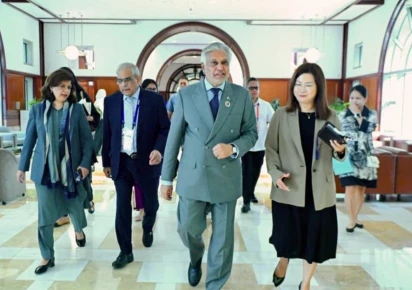
The seminar was organised by the Sustainable Development Policy Institute (SDPI) in Islamabad. MQM leader Mustafa Kamal, PPP leader Qamar Zaman Kaira and PTI Secretary General Salman Akram Raja addressed the gathering.

The speakers described the creation of new provinces as necessary to address public problems. They also stressed the need for a strong and empowered local government system.

The participants said Pakistan needs new administrative units to improve governance and ensure that resources are distributed at the grassroots level.

Mustafa Kamal said the existing system had failed to ensure effective accountability of governments. He added that even if new provinces were created, a strong local government system would remain necessary.

PPP leader Qamar Zaman Kaira suggested that the debate over creating new provinces should take place within the constitutional framework. He also called for strengthening the local government system.

PTI Secretary General Salman Akram Raja said that even after the creation of new provinces, some provinces would still have populations running into millions.

The speakers agreed that administrative reforms were necessary to improve governance and ensure a more effective distribution of resources among the people.

Similar Posts

  • |

    MH370 families renew search for answers as Beijing court hears appeal

    Twelve years after Malaysia Airlines Flight MH370 disappeared without a trace, relatives of Chinese passengers returned to a Beijing court seeking answers they say they have been denied for more than a decade. The families insist that financial compensation alone cannot resolve their pain and are urging the court to focus on establishing the truth behind one of aviation’s greatest unsolved mysteries. The appeal comes after a Beijing court ruled in December that Malaysia Airlines should pay compensation of 2.9 million yuan to each of eight Chinese families. While the ruling acknowledged their loss, two families challenged the decision, arguing that it failed to address the airline’s responsibility or explain what happened to the aircraft and the 239 people on board. Flight MH370, a Boeing 777 travelling from Kuala Lumpur to Beijing on March 8, 2014, disappeared from radar with 239 passengers and crew members. Nearly two thirds of those on board were Chinese nationals. Despite years of international search operations across the Indian Ocean, investigators have never located the aircraft’s main wreckage or recovered its flight recorders, leaving the fate of those on board unknown. The latest court hearing in Beijing was held behind closed doors, but family members gathered outside to express their frustration. Li Eryou, whose son was among the passengers, said the original court ruling left him feeling insulted because it focused only on financial compensation while ignoring the deeper questions surrounding the disappearance. Li said no one had apologized to the families during the past 12 years and argued that the case deserved to be treated as an international tragedy rather than a routine legal dispute. He believes the compensation awarded by the lower court does not reflect the seriousness of the disaster or the emotional suffering experienced by relatives who continue to live without closure. Over the years, aviation experts have proposed several possible explanations for the disappearance. Theories have included deliberate actions by the pilot, hijacking, a missile strike or a technical failure. Another widely discussed possibility suggests that a fire involving electronic equipment may have filled the cabin with smoke, causing everyone on board to lose consciousness before the aircraft continued flying on autopilot until it ran out of fuel and crashed into the Indian Ocean. However, none of these theories has been confirmed because investigators have never recovered enough evidence to determine exactly what happened. The absence of definitive findings has continued to fuel uncertainty and speculation, leaving many families convinced that important questions remain unanswered. Jiang Hui, whose mother was on the missing aircraft, said the appeal is not primarily about receiving more money. Instead, he said the families want the court to establish the facts surrounding the case and examine whether Malaysia Airlines responded appropriately after the aircraft disappeared. According to Jiang, determining responsibility and uncovering the truth are far more important than the compensation itself. People from 14 different countries were on board Flight MH370, including 50 Malaysian passengers and crew members. While legal proceedings continue in China, there are currently no similar cases pending against the airline in Malaysia. Last month, the Malaysian government announced that the search for MH370 would continue until June next year. The renewed operation is being carried out by private exploration company Ocean Infinity, which has previously led several unsuccessful search missions in the southern Indian Ocean. Although earlier efforts failed to locate the aircraft, relatives remain hopeful that new technology and expanded search areas could finally provide long awaited answers. Jiang welcomed Malaysia’s decision to extend the search and urged authorities to allow families to organize their own independent search missions alongside official efforts. For many relatives, discovering what happened to Flight MH370 remains their greatest priority, believing that only the truth can finally bring closure after more than a decade of uncertainty.


  • | |

    POC holders allowed to perform Hajj under Pakistan…

    ISLAMABAD: Holders of the Pakistan Origin Card (POC) will now be able to perform Hajj under Pakistan’s official Hajj quota, according to sources familiar with the development. Sources said one per cent of Pakistan’s total Hajj quota will be reserved for POC holders. The decision is expected to provide an opportunity for overseas Pakistanis of Pakistani origin who no longer hold Pakistani citizenship or passports to perform Hajj through Pakistan’s quota for the first time. Under the arrangement, 1,792 POC holders will be eligible to perform Hajj using Pakistan’s allocated quota. The sources said Saudi Arabia has allowed POC holders to be included in Pakistan’s Hajj quota. The permission is being described as a significant development for people of Pakistani origin living abroad who have surrendered their Pakistani citizenship or passports but retain their connection with the country through the Pakistan Origin Card. POC holders will reportedly be eligible to benefit from both the government and private Hajj schemes. This will give eligible applicants the option of choosing between the two arrangements, subject to the applicable rules and requirements. The allocation of one per cent of the overall quota means that a specific number of pilgrims of Pakistani origin will be accommodated within Pakistan’s annual Hajj arrangements without holding Pakistani citizenship. The facility is particularly significant for overseas Pakistanis who have maintained strong links with Pakistan despite giving up their citizenship. The Pakistan Origin Card provides such individuals with a formal connection to the country and facilitates their access to several rights and services. Sources said the inclusion of POC holders in Pakistan’s Hajj quota has been permitted by Saudi authorities following discussions concerning arrangements for Pakistani pilgrims. The move is expected to benefit members of the Pakistani diaspora who have previously faced limitations in performing Hajj through Pakistan because they no longer possess Pakistani passports. The development comes as preparations for the upcoming Hajj season continue. A large number of Pakistani pilgrims are expected to travel to Saudi Arabia under both government and private schemes. The government has also been working on arrangements concerning accommodation, transportation, medical facilities and other services for Pakistani pilgrims. The inclusion of POC holders could further strengthen the connection between Pakistan and its overseas community, particularly those who continue to maintain cultural, family and social ties with the country.

  • | | |

    DPM Dar boosts Pakistan-ADB partnership

    Deputy Prime Minister and Foreign Minister Ishaq Dar visited the headquarters of the Asian Development Bank (ADB) in Manila on Wednesday to review the bank’s partnership with Pakistan and discuss ways to strengthen future cooperation. The visit took place on the sidelines of the 33rd ASEAN Regional Forum Ministerial Meeting, where Pakistan is participating in a series of high-level diplomatic engagements with regional and international partners. Upon his arrival at the ADB headquarters, Dar was welcomed by senior officials of the bank. He signed the visitors’ book before holding discussions on the institution’s evolving development agenda and its ongoing collaboration with Pakistan. The meeting focused on expanding cooperation in several important sectors, including infrastructure, energy, climate resilience, education, economic reforms and sustainable development. Both sides also discussed future opportunities to support Pakistan’s economic growth and development priorities. Dar later attended a working luncheon hosted by Pakistan’s Executive Director to the ADB, Nashita Mohsin. The event was attended by Pakistani professionals serving in senior leadership positions across different departments of the bank. During the interaction, Dar appreciated the contributions of Pakistani professionals working at the ADB. He said their expertise and leadership have strengthened the institution’s work while enhancing Pakistan’s image at the international level. He also congratulated Nashita Mohsin on assuming her responsibilities as Pakistan’s Executive Director to the Asian Development Bank and expressed confidence that she would further strengthen Pakistan’s engagement with the institution. On the sidelines of the ASEAN forum, Dar also met Bangladesh’s Foreign Minister Khalilur Rehman. The two leaders reviewed the positive momentum in bilateral relations and discussed ways to expand cooperation between the two countries. Both sides welcomed the steady improvement in diplomatic ties and appreciated the growing engagement in trade, communication and people-to-people contacts. They noted that the launch of direct flights earlier this year has further improved connectivity and created new opportunities for cooperation. The two ministers reaffirmed their commitment to maintaining the positive momentum in bilateral relations and agreed to continue close engagement in areas of mutual interest. Dar and Rehman also exchanged views on regional and international developments, including issues affecting South Asia and broader global challenges. They emphasized the importance of dialogue and cooperation in promoting regional peace, stability and economic development. Earlier, Dar arrived in Manila with a Pakistani delegation to participate in the 33rd ASEAN Regional Forum Ministerial Meeting. During the visit, he is expected to attend the forum’s plenary session and hold several bilateral meetings with foreign ministers from participating countries. The ASEAN Regional Forum brings together foreign ministers and senior diplomats from ASEAN member states and major global powers to discuss regional security, economic cooperation, energy security, food security, geopolitical developments and other international issues. Representatives from the United States, China, Japan, India, Australia, South Korea, Russia, the United Kingdom and the European Union are also participating in the meeting.

  • | |

    Sharjeel Memon slams PML-N over ‘fake mandat…

    Sindh Senior Minister Sharjeel Inam Memon on Tuesday launched a strong criticism of the Pakistan Muslim League-Nawaz (PML-N), accusing the party of relying on what he described as a “fake mandate” while campaigning for the upcoming Azad Jammu and Kashmir (AJK) elections. In a statement, Sharjeel Memon said the people of Azad Kashmir had rejected what he called “manufactured political representation” in the past and would make the same decision in the upcoming elections. He expressed confidence that voters would once again support democratic values and reject politics based on disputed electoral mandates. The senior minister alleged that the PML-N had come to power through a questionable electoral process and was now attempting to present itself as a defender of the Kashmiri people. He said a party that, in his view, failed to respect the public’s vote could not claim to protect the democratic rights of others. Sharjeel Memon said the people of Pakistan and Azad Kashmir were fully aware of the country’s political history and would decide their future through the power of the ballot. He maintained that genuine public support could only be earned through transparent elections and good governance. Referring to the Pakistan Peoples Party’s (PPP) performance in Gilgit-Baltistan, he said the party had secured the confidence of voters through democratic means. He added that the people of Azad Kashmir would also reject what he described as the politics of a disputed mandate. The Sindh minister also criticised the Punjab government’s performance. He claimed that many residents of Punjab continued to travel to Karachi for advanced medical treatment and better healthcare facilities. He urged the PML-N leadership to focus on addressing public issues instead of criticising political opponents during election campaigns. Sharjeel Memon said the PPP remained committed to constitutional supremacy, democratic principles and respect for the people’s mandate. He added that the party believed in serving the public through practical governance rather than political slogans.

  • |

    Germany’s delayed lignite review fuels debate over coal exit

    BERLIN: Germany’s decision to postpone an interim assessment of its planned lignite phase-out in North Rhine-Westphalia has raised speculation that some coal-fired power plants could remain available for longer than originally scheduled to protect the country’s electricity supply. The German government had been expected to publish an interim report by August 15 examining the consequences of the planned early shutdown of lignite-fired generation in the country’s largest state. However, the economy ministry has delayed the assessment while it awaits the outcome of tenders for new gas-fired power plants being conducted this year. The development has attracted attention because the report is expected to play an important role in determining whether Germany can maintain electricity security while moving ahead with its ambitious coal-exit strategy. Agreement with RWE Under an agreement reached in 2022 between the German government and energy company RWE, lignite-fired electricity generation in North Rhine-Westphalia is scheduled to end by March 2030. The timetable brought forward the shutdown of several lignite plants by eight years compared with Germany’s broader national coal phase-out target. Lignite, commonly known as brown coal, is among the most carbon-intensive fossil fuels and has long been a major target of Germany’s efforts to reduce greenhouse-gas emissions. The government nevertheless retained the possibility of reassessing the situation by 2026. If the review finds that electricity supplies could be threatened, some RWE facilities could potentially remain available until 2033. Delay raises market expectations The postponement of the interim report has prompted speculation in energy markets that Berlin may eventually use the security provisions included in the agreement. Market expectations have centred on around 3.6 gigawatts (GW) of RWE’s lignite-fired capacity potentially being placed into a so-called security standby arrangement. Under such a mechanism, plants could remain available to operate if the electricity system faces supply shortages, potentially extending their role through the end of 2033. The government, however, has not announced any decision to extend the operating life of the plants. RWE Chief Executive Markus Krebber said on Thursday that the company had not been informed of any change to the agreed 2030 shutdown date. He also indicated that the government had not approached RWE about extending the plants’ operations. Gas power becomes increasingly important The delay comes as Germany seeks to strengthen its electricity system with additional gas-fired generation. Germany has approximately 266 GW of installed electricity-generation capacity, but a substantial portion comes from solar and wind power. While renewable energy has expanded rapidly, both technologies are weather-dependent and cannot independently guarantee continuous electricity production around the clock. That has intensified concerns about how the country will maintain reliable power supplies as coal-fired generation is gradually removed from the system. Gas-fired plants are increasingly being considered as a flexible source of electricity that can support the grid when renewable generation is insufficient. The government’s current tenders for new gas capacity are therefore closely linked to the broader debate over how quickly Germany can retire coal-fired plants without creating supply risks. Security of supply remains a key concern Germany’s energy transition has faced a difficult balancing act between climate objectives and electricity reliability. The country wants to expand renewable generation while reducing its reliance on fossil fuels, but the retirement of conventional power plants removes generation capacity that can be dispatched when required. The issue became particularly sensitive following the country’s decision to phase out nuclear power, leaving policymakers with fewer sources of low-carbon, dispatchable electricity. Supporters of a rapid coal exit argue that expanding renewable generation, electricity storage, grid infrastructure and flexible gas capacity can compensate for the closure of coal plants. Critics maintain that Germany could face periods of tight supply unless sufficient backup generation is available. AfD presses for reversal The issue has also become politically contentious. The far-right Alternative for Germany (AfD), currently the country’s largest opposition party and leading nationwide opinion polls, has strongly opposed Germany’s coal and nuclear phase-out policies. The party has called for a reversal of the energy-exit strategy, arguing that the closure of conventional power stations could increase the risk of electricity shortages and potentially lead to blackouts. The government, meanwhile, faces the challenge of ensuring that its climate commitments do not undermine electricity security.

  • | |

    Mir Raza’s father raises new questions over son?…

    The father of businessman Mir Raza Ali has raised fresh concerns about the investigation into his son’s death. Speaking to the media on Monday, Mir Hassan claimed that his son’s business partner went missing after being questioned by police. He said police had questioned the business partner once. The man was allegedly not seen again after the questioning. Hassan said the family had not been informed about the investigation involving employees of the guest house in Gulistan-e-Johar. Mir Raza’s body was found near the guest house. “We have not been told what investigations were conducted with the employees,” he said. The victim’s father also questioned why CCTV footage from the guest house had not been made public. The latest concerns have emerged as investigators continue to review the circumstances surrounding Mir Raza’s death. The case took a new turn after the businessman’s body was exhumed for a second post-mortem examination. The second medical examination found a firearm injury and several wounds that had occurred before death. It also reported signs of internal bleeding. According to the findings, a bullet entered the upper right side of Mir Raza’s back and exited through the left side of his chest. The bullet fractured his sixth rib and caused internal bleeding. The report also documented injuries to different parts of his head, face, neck and chest. Following the medical findings, police added Section 302 of the Pakistan Penal Code to the case. The section relates to murder. The original FIR had been registered under Section 365, which concerns kidnapping. Mir Raza, 25, was allegedly abducted from the PECHS area. His body was later found in bushes near a wedding hall in Gulistan-e-Johar. Police had earlier suspected that he may have been tortured before being shot. The case initially faced uncertainty over whether Mir Raza had been murdered or had died by suicide. His family, however, consistently rejected the suicide theory. The second post-mortem has strengthened the family’s claim that Mir Raza was killed. Questions had also been raised about the first post-mortem report. Karachi Police Surgeon Dr Summaiya Syed had pointed out several issues in the initial examination. She had questioned why the body was not X-rayed and why hand swabs were not collected for gunshot residue testing. She had also raised concerns over the scientific measurement and photography of firearm injuries. Questions were further raised about the documentation of the bullet’s path and the examination of the entry and exit wounds. Following these developments, police dissolved the previous investigation team. A new team was formed under the leadership of DIG Crime and Investigation Amir Farooqi. The new team was tasked with conducting a fresh investigation based on the latest medical findings. Investigators were also expected to revisit the crime scene. They were directed to re-question the victim’s family and other relevant individuals. The team was also expected to examine forensic, technical, physical and circumstantial evidence. Mir Raza’s family has repeatedly criticised the handling of the case. They have maintained that he was murdered and demanded that those responsible be identified and brought to justice. The family’s lawyer, Jibran Nasir, had also alleged that investigators pressured the family to accept a suicide theory. He called for an independent and impartial investigation. The Sindh government has meanwhile decided to establish a judicial commission headed by a Sindh High Court judge. The commission is intended to oversee a transparent and impartial investigation into Mir Raza’s death.

Leave a Reply

Your email address will not be published. Required fields are marked *