ngcp ends yearslong
| |

NGCP ends years-long fight over regulatory fees with ERC

MANILA, Philippines – The National Grid Corporation of the Philippines (NGCP) has agreed to stop contesting permit and regulatory fees imposed by the Energy Regulatory Commission (ERC), settling years of litigation over whether the grid operator’s franchise exempts it from the charges.

The ERC and NGCP signed a compromise agreement on Thursday, October 1, covering disputes over permit fees imposed on individual transmission projects and annual supervision and regulation fees.

NGCP had consistently paid the charges under protest while challenging them before the Court of Appeals and Supreme Court. The grid operator argued that its congressional franchise exempted it from the fees, while the ERC maintained that the charges were regulatory and administrative in nature rather than taxes.

Under the settlement, NGCP recognizes the permit and supervision and regulation charges as regulatory fees imposed under the ERC’s mandate. It also agreed that it would no longer contest that characterization in the cases covered by the agreement.

Fees that NGCP has already paid will be recognized as satisfying its obligations in the covered cases.The past collections and future fees will be remitted to the National Treasury. 

The ERC, however, did not disclose the total amount covered under the compromise agreement, how much had already been collected from NGCP, and how much is left to collect. (READ: No more VAT on system loss in electricity bills starting October)

“For years, this dispute stood in the way of a clear and settled understanding between the ERC and NGCP on the nature of these fees. This Compromise Agreement finally puts that question to rest, in a manner that respects the ERC’s mandate, gives NGCP the certainty it has sought, and ensures that the public benefits through funds that will now flow to the National Treasury,” ERC Chairperson Francis Juan said.

The agreement was signed by Juan and NGCP president and CEO Anthony Almeda during a visit by NGCP officials led by Henry T. Sy Jr., vice chairman of NGCP and son of SM founder Henry Sy Sr.

The settlement is not yet final. The ERC and NGCP said they will submit the agreement to the Supreme Court and Court of Appeals for approval within 30 days, after which they will await the courts’ action. – Rappler.com

Must Read

[READOUT] The race to deliver cheaper power


[READOUT] The race to deliver cheaper power

Similar Posts

  • | | |

    Lab report finds 176 substandard samples of oil, g…

    ISLAMABAD: A laboratory assessment has found that 176 out of 491 samples of packaged edible oil, ghee and milk failed to meet national quality standards. According to a statement issued by the Ministry of Planning, a total of 491 samples of packaged cooking oil, ghee and milk products were tested. Of these, 315 samples were found to comply with national standards, while 176 were declared substandard. The ministry said approximately 36% of the tested samples failed to meet the required quality standards. The assessment showed significant variations across different products. Of the 204 samples of vanaspati ghee tested, 98 were found to be below the required standards. Similarly, 40 out of 146 samples of blended cooking oil failed the quality assessment, while 26 of 104 samples of packaged liquid milk were declared substandard. The report also found quality concerns in milk powder, refined palm oil and refined canola oil. Eight of the 18 milk powder samples failed to meet national standards, while three of four refined palm oil samples were found to be substandard. In the case of refined canola oil, one out of 13 tested samples did not meet the required standards. The findings have highlighted concerns over the quality of commonly consumed food products and the need for stronger monitoring and enforcement to ensure that packaged edible oils, ghee and dairy products available in the market comply with national quality requirements.

  • | | | |

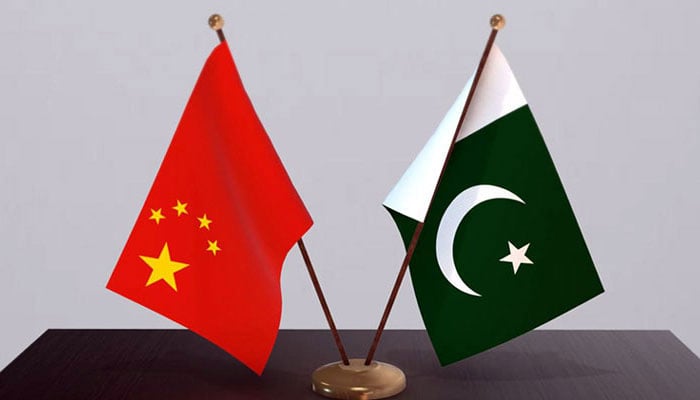
    Pakistan repays $1.4bn China loan

    Pakistan has repaid a $1.4 billion commercial loan to China, with refinancing expected within the next few weeks, State Bank of Pakistan (SBP) Governor Jameel Ahmad said on Wednesday. Speaking to reporters after attending a meeting of the Senate Standing Committee on Finance at Parliament House, the SBP governor said the country had made external debt repayments worth $2.2 billion during July 2026. The repayments included the $1.4 billion commercial loan to Chinese banks, while the remaining $800 million was used to settle other external liabilities. Ahmad said the refinancing from Chinese banks had not yet been received but was expected shortly, adding that the funds would be made available to Pakistan after a brief delay. The central bank governor also revealed that the SBP had purchased $28 billion over the past three years to strengthen the country’s foreign exchange reserves. He said Pakistan’s external debt repayment requirement had declined from $26.5 billion to $21.5 billion, easing pressure on the country’s finances during the current fiscal year. According to Ahmad, around $3.5 billion of the remaining repayments will be used to service interest obligations. He said the government would continue its strategy of increasing foreign exchange reserves while maintaining external financial stability. The SBP governor further noted that Pakistan would require the rollover of nearly $12 billion in deposits from Saudi Arabia and China to support its external financing position. He expressed confidence that the country’s debt repayment burden would remain lower this year compared with previous years, helping improve Pakistan’s overall economic outlook.

  • | | |

    PSX extends decline as KSE-100 drops over 1,260 po…

    The Pakistan Stock Exchange (PSX) remained under pressure on Friday, with the benchmark KSE-100 Index extending its recent losing streak during the morning trading session as investor sentiment stayed weak. By the time trading was suspended for the routine Friday prayer break, the KSE-100 Index had fallen 1,264.14 points, or 0.74%, to 170,475.30. The market opened in negative territory and continued to fluctuate throughout the session. The index reached an intraday high of 171,208.55 before declining to a low of 169,512.88, reflecting persistent selling pressure across the market. Trading activity remained moderate, with more than 114 million shares changing hands during the morning session. The total value of traded shares stood at approximately Rs7.83 billion before the temporary suspension. Market participants said investors remained cautious as profit-taking continued in several heavyweight stocks. The absence of strong buying interest also contributed to the downward trend, keeping the benchmark index below its previous closing level. The market moved within a wide range of nearly 1,700 points during the session, highlighting continued volatility as investors assessed economic conditions and overall market sentiment. Analysts said investors are closely monitoring developments that could influence market direction, including corporate earnings, economic indicators and broader financial conditions. They added that confidence has remained subdued in recent sessions, resulting in increased selling activity. Trading is expected to resume after the Friday prayer break, with investors watching for signs of a recovery. Market experts believe the direction of the afternoon session will determine whether the benchmark index can recover some of its losses or end the week on another negative note.

  • | | |

    Pakistani envoy highlights investment opportunitie…

    Pakistan’s Ambassador to the United States, Rizwan Saeed Sheikh, has held a series of meetings with American business leaders. The discussions focused on expanding economic and investment ties between Pakistan and the United States. The ambassador encouraged US investors to explore opportunities in Pakistan. He particularly highlighted the country’s mining and surgical instruments sectors. Sheikh said American investment could play an important role in developing Pakistan’s mineral resources. He stressed the need to add greater value to these resources through modern technology and investment. The ambassador also highlighted opportunities in Pakistan’s mineral sector. He said stronger cooperation with American companies could help improve processing and value addition. During the meetings, Sheikh welcomed an ongoing $200 million joint venture related to the export of Pakistani pink salt. He described such projects as an important step towards expanding trade and investment links between the two countries. He also called for increased US investment in Pakistan’s surgical instruments industry. The sector has significant potential for growth, particularly through modern production methods, advanced technology and international market access. As part of his engagements, Sheikh visited a facility in Naperville involved in the finishing, packaging and distribution of Pakistani surgical instruments. During the visit, he discussed the need to further develop the sector. He said Pakistani businesses could benefit from modern technology, better training and improved technical skills. The ambassador stressed that investment in skills and technology was important for increasing the quality and competitiveness of Pakistani surgical products. Sheikh also met officials of the Pakistan-American Chicago Land Chamber of Commerce. The meeting focused on strengthening commercial links between Pakistani and American businesses. He encouraged closer interaction between business communities in both countries. He said stronger business-to-business connections could help identify new investment opportunities and expand bilateral trade. The ambassador’s engagements form part of efforts to promote Pakistan as an attractive destination for foreign investment. The focus on minerals, surgical instruments and other export-oriented sectors is aimed at creating stronger commercial partnerships with US businesses.

  • |

    Wheat, flour prices surge in Hyderabad

    HYDERABAD: The prices of wheat and flour have witnessed a fresh increase in Hyderabad, putting additional pressure on household budgets and raising concerns among consumers already struggling with rising food costs. According to market sources, flour is currently being sold at prices ranging between Rs135 and Rs145 per kilogram in different parts of the city. The increase has triggered concern among citizens, particularly low- and middle-income families, who rely on flour as a staple food item. Flour mill owners said the price of a 10-kilogram flour bag has risen from Rs1,350 to Rs1,450, marking an increase of Rs100. They attributed the latest rise primarily to higher wheat prices in the open market. The price of wheat has also recorded a significant increase. According to grain market traders, the price of a 100-kilogram wheat sack has climbed from Rs10,800 to Rs11,800, reflecting an increase of around Rs1,000. Traders said fluctuations in wheat prices in the open market were directly affecting flour prices, leaving millers with little option but to revise their rates. Citizens have expressed frustration over the continued increase in the prices of essential food items. They urged the authorities to monitor wheat and flour markets and take effective measures to prevent unnecessary price hikes. Consumers also called for stronger market oversight and action against profiteering so that essential food commodities remain available at affordable prices.

Leave a Reply

Your email address will not be published. Required fields are marked *