nicki minaj blasts
| |

Nicki Minaj blasts Dr. Fauci over COVID-19 hearing

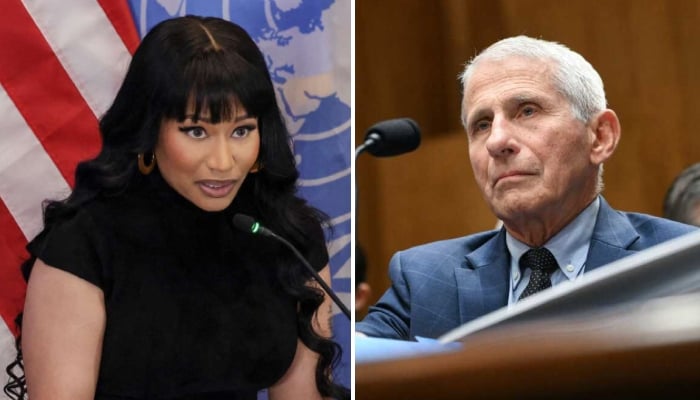
Rapper Nicki Minaj has once again criticised former White House Chief Medical Advisor Dr. Anthony Fauci, following his appearance before a U.S. Senate committee, where he invoked his Fifth Amendment rights and declined to answer questions related to his handling of the COVID-19 pandemic.
The Barbie World hitmaker took to X (formerly Twitter) on July 30 to share a lengthy statement expressing her frustration over the Senate hearing and the lasting impact she believes the pandemic response had on millions of people.
In one of her strongest remarks, Minaj wrote, “Feeding tubes will be his portion. He will lose the ability to speak & then & only then will he feel the collective pain & long term ramifications he caused to new borns, young children who are still trying to become acclimated into society & schools, traumatized pregnant women who couldn’t even have family in the delivery rooms & visits.”
She continued by listing other groups she believes were deeply affected during the pandemic.
“The elderly who died alone & afraid, young ppl still struggling w/mental health, suicide, people turned away from hospitals at their most vulnerable moments, the trust that is now gone from innocent people toward their governments forever, billions of stolen money from hard working tax payers via con artists…” she wrote.
Concluding her message, the rapper reflected on the emotional toll of the pandemic.
“I’ve been struggling to find the humor in any of this. God bless everyone who made it to the other side. You’re stronger than you thought. God is in control,” Minaj added.
Her comments came a day after Dr. Fauci appeared before a Senate hearing examining decisions made during the COVID-19 pandemic. During the proceedings, Fauci repeatedly invoked his Fifth Amendment rights, declining to answer questions regarding his role in the government’s pandemic response.
The latest exchange revives a public disagreement between Minaj and Fauci that began in September 2021 during the global vaccination campaign.
At the time, Minaj claimed on social media that her cousin’s friend in Trinidad became impotent and suffered swollen testicles after receiving a COVID-19 vaccine. The post quickly gained international attention and sparked widespread debate online.
Health experts, however, said there was no scientific evidence linking COVID-19 vaccines to those reported side effects.
Responding to the claims in 2021, Dr. Fauci said there was no evidence supporting the allegation and urged the public to rely on verified scientific research instead of unconfirmed reports circulating on social media.
The disagreement quickly became one of the most talked-about celebrity-public health controversies of the pandemic, raising broader discussions about misinformation, vaccine confidence, and the influence of high-profile public figures on health-related issues.
With her latest post, Minaj has once again reignited debate surrounding the pandemic years and the role of public officials in shaping COVID-19 policies, while her criticism of Fauci continues to draw strong reactions across social media.
Similar Posts

  • |

    Pakistani celebrities who faced backlash for criticizing fellow stars

    Public figures are often judged not only for their professional achievements but also for how they speak about others. In Pakistan’s entertainment industry, several well-known personalities have sparked backlash after making controversial comments about fellow celebrities. While many of them built strong reputations through years of successful work, repeated public criticism and high-profile disputes have affected how sections of the audience view them. Veteran actor Firdous Jamal is one such example. Widely respected for memorable performances in television dramas, he found himself at the center of controversy after making remarks about actress Mahira Khan’s age and suitability for leading roles. His comments drew widespread criticism from both fans and members of the entertainment industry. In the years that followed, he continued making critical statements about several actors and industry veterans, further fueling debate. Personal family matters that became public also contributed to the negative attention surrounding him. Acclaimed writer Khalil-ur-Rehman Qamar has also remained a frequent topic of discussion due to his outspoken views. Known for penning some of Pakistan’s biggest television hits, he has often generated headlines for controversial interviews and public disagreements. His criticism of fellow celebrities, debates over social issues, and several personal controversies have divided public opinion, with supporters praising his honesty while critics accuse him of unnecessary hostility. Television host Nadia Khan, once celebrated as one of Pakistan’s pioneering morning show presenters, has faced criticism in recent years for her role as a drama reviewer. Her reviews, impersonations, and candid remarks about actors and television serials have often gone viral. While many viewers appreciate her straightforward opinions, others believe her comments sometimes cross the line and unfairly target fellow artists. Actor and producer Fahad Mustafa also came under public scrutiny after responding to comments made by senior actress Atiqa Odho regarding casting choices. His remarks during the exchange were widely criticized on social media, with many users describing them as disrespectful and ageist. The controversy prompted significant online debate and placed the star under intense public attention. Veteran actress, director, and filmmaker Sangeeta has similarly attracted criticism over her public statements. Some of her comments about fellow celebrities and revelations about past industry relationships were viewed as unnecessary by many fans. More recently, her remarks regarding actress Naeema Butt also generated discussion on social media, leading to mixed reactions from audiences. Television anchor Iqrar Ul Hassan, known for investigative journalism, has also seen his public image become increasingly polarizing. While he earned widespread recognition through his reporting career, his involvement in political matters, public disputes, and controversies surrounding his personal life have led to divided opinions among viewers. Viral incidents and outspoken statements have continued to keep him in the headlines. Media personality Dr. Omer Adil, once admired for hosting cultural and entertainment programs, has built a strong online presence through podcasts and YouTube discussions. However, his frequent criticism of celebrities and commentary on entertainment industry figures have changed how some longtime followers perceive him. Although he continues to attract viewers with his opinions, his style has also invited criticism from those who believe his remarks have become overly confrontational. These controversies highlight how public statements can significantly influence a celebrity’s reputation. In today’s digital era, where interviews and social media clips spread rapidly, even a single comment can shape public perception and spark widespread debate across the entertainment industry.

  • |

    Arijit Singh ends playback singing retirement

      Indian playback singer Arijit Singh has officially ended his retirement from playback singing and is set to make a much-anticipated return to the music industry, delighting millions of fans who had been disappointed by his earlier announcement. According to reports, Arijit Singh is returning to playback singing through a collaboration with a well-known filmmaking team with whom he has previously delivered several chart-topping songs. His comeback marks an important moment for Bollywood music, as the singer has into long been regarded as one of the industry’s most celebrated voices, known for his soulful melodies and emotional performances. Reports reveal that Arijit Singh has reunited with producer Vishesh Bhatt for the first song of Bollywood actor Emraan Hashmi’s upcoming film Awarapan 2. The track, titled “Yeh Awarapan,” has been composed by music director Amaal Mallik. The song is scheduled to be released on July 21 across all major music streaming platforms, where fans are eagerly awaiting its launch. According to media, producer Vishesh Bhatt wanted the song to capture the emotional journey of Emraan Hashmi’s iconic character, Shivam Pandit, who is expected to return in the sequel. Bhatt believed that Arijit Singh’s expressive and heartfelt voice would perfectly convey the emotions and depth required for the character, making him the ideal choice for the project. The collaboration has already generated significant excitement among Bollywood fans, especially those who have admired the successful partnership between Emraan Hashmi, the Bhatt camp, and Arijit Singh in the past. Their previous musical projects have produced several memorable hits that continue to enjoy immense popularity among audiences. Arijit Singh’s return is being viewed as a major boost for Bollywood’s music industry, where his songs have consistently dominated streaming charts and playlists over the past decade. His ability to deliver emotionally rich performances has earned him a loyal fan base not only in India but also across South Asia and among international listeners. It is worth mentioning that earlier this year, Arijit Singh surprised his fans by announcing on Instagram that he was stepping away from playback singing. While extending New Year greetings to his followers, the singer shared that he was retiring from recording songs for films. The unexpected announcement left many of his admirers saddened, with fans expressing their disappointment and hoping that the decision would not be permanent. Since then, speculation about a possible comeback had continued, but no official confirmation had emerged until reports of his involvement in Awarapan 2 surfaced. His decision to return has now been warmly welcomed by music lovers, many of whom have taken to social media to celebrate the news and express their excitement for his upcoming release. With “Yeh Awarapan” set to mark his comeback, expectations are running high. Fans are hopeful that the song will once again showcase Arijit Singh’s signature vocal brilliance and recreate the magic that has made him one of Bollywood’s most beloved playback singers. His return is expected to be one of the most talked-about musical moments of the year.

  • | | |

    Rising energy costs expand trade deficit

      Pakistan’s trade deficit widened considerably in July 2026 as increasing energy prices pushed the country’s import bill higher, despite continued growth in exports. According to data released by the Pakistan Bureau of Statistics (PBS), the trade gap reached $3.95 billion, representing an increase of more than 25 percent compared with $3.15 billion recorded in July 2025. The official figures revealed that imports increased by nearly 18 percent on a year-on-year basis, while exports also recorded an encouraging rise of almost 10 percent during the same period. Although export earnings improved, they were insufficient to offset the rapid increase in import payments. Saad Hanif, Head of Research at Ismail Iqbal Securities, said the latest figures indicate that Pakistan’s demand for imported goods remains strong. According to him, economic activity has continued to recover, resulting in higher import volumes across several sectors. He noted that the country’s reliance on imported products has remained significant despite efforts to improve the trade balance. Import payments climbed to $6.89 billion in July, compared with $5.84 billion during the same month last year. Hanif explained that the main reason behind the sharp increase was the rise in global energy prices, particularly due to ongoing tensions in the Middle East. He said petroleum products and Re-gasified Liquefied Natural Gas (RLNG) became around 40 to 50 percent more expensive than they were a year earlier. Since Pakistan depends heavily on imported fuel, energy purchases typically account for between one-fifth and one-quarter of the country’s total import expenditure. In addition, higher imports of automobiles, industrial equipment and agricultural machinery also contributed to the increase in the import bill. Exports, however, showed positive momentum. Pakistan earned $2.94 billion from exports in July, compared with $2.68 billion in the corresponding month of 2025. Hanif attributed this improvement mainly to stronger food exports, especially rice, which regained momentum in international markets. He also highlighted that the textile industry continues to be Pakistan’s largest export sector, contributing more than half of the country’s total export earnings. Textile exports remained stable throughout the previous fiscal year, helping maintain overall export performance. When compared with the previous month, Pakistan’s trade position showed some improvement. The trade deficit had reached $4.66 billion in June 2026 but narrowed by more than 15 percent in July. This improvement was largely driven by a remarkable 31 percent monthly increase in exports, one of the strongest monthly gains recorded in recent years, while import payments remained almost unchanged. The Ministry of Finance described the development as a positive beginning to the new fiscal year and linked it to government measures aimed at supporting exports, improving industrial productivity and reducing the cost of doing business. Meanwhile, Prime Minister Shehbaz Sharif has directed authorities to accelerate the privatisation of state-owned electricity distribution companies by attracting reputable international investors. During a review meeting in Islamabad, he instructed the Privatisation Commission to complete its restructuring within one month and ensure that the entire process follows international standards, transparent procedures and fixed timelines. He also stressed that consumer interests should remain fully protected throughout the privatisation process. The prime minister welcomed the positive response received during recent investor roadshows held in Pakistan, Turkey, Saudi Arabia and China for the first-phase privatisation of Gepco, Fesco and Iesco. He further instructed the Privatisation Commission to recruit qualified professionals in finance, law and information technology to strengthen its institutional capacity. In addition, he ordered the establishment of an effective grievance mechanism to address consumer complaints after the companies are transferred to private ownership. The government expects bidding for the three electricity distribution companies to take place between October and December 2026, with the aim of attracting investment from Gulf and other Asian markets.

  • |

    Netflix addresses Gandhari plagiarism allegations before release

    Netflix has finally addressed the plagiarism controversy surrounding its upcoming film Gandhari, following allegations by writer Kalyan Bandi that the project bears similarities to an original story he claims to have developed several years ago. The controversy gained attention after Bandi alleged that he had written a story titled Gandhari in 2019. According to the writer, his concept revolved around a mother who transforms into a powerful, almost divine figure while trying to rescue her child from a human trafficking network. He claimed that he later pitched the idea to Monika Shergill, who was associated with Voot at the time and is now Netflix India’s Vice President of Content. Bandi said he submitted an eight-page document containing his story and synopsis but was informed that the project did not fit the platform’s content slate. However, after Taapsee Pannu’s Gandhari was announced in 2025, he raised concerns over what he believed were similarities between his concept and the upcoming film. The writer subsequently sent a legal notice seeking Rs 40 lakh in compensation. However, Bandi has maintained that financial compensation was never his primary objective. Instead, he has repeatedly said that he wants his contribution to be acknowledged if his original idea was used. Netflix has now responded to the allegations through Ruchikaa Kapoor Sheikh, Director of Original Films at Netflix India. Speaking at the film’s trailer launch in Mumbai, she said the streaming platform takes questions surrounding artistic attribution seriously. She explained that Netflix receives numerous pitches and maintained that the story presented by Bandi is different from the film created by writer Kanika Dhillon and actress Taapsee Pannu. She also urged audiences to watch the movie before drawing conclusions about the allegations. She further emphasized Netflix’s commitment to supporting original storytelling and giving recognition to writers regardless of their previous experience in the industry. According to her, the platform values originality whether a storyteller has already worked on several films or is making their first project. Meanwhile, Dhillon’s production company, Kathha Pictures, has strongly rejected the plagiarism allegations. The production house stated that the claims are false and unequivocally denied them, maintaining that Gandhari is an original project written and produced by Dhillon and developed under Kathha Pictures. The controversy comes shortly before the film’s release, placing additional attention on the project as audiences await its arrival on the streaming platform. Directed by Devashish Makhija, Gandhari features Taapsee Pannu in the lead role and also stars Ishwak Singh, Chhaya Kadam, Swastika Mukherjee, Mita Vashisht and Jatin Sarna. The film is expected to explore themes of motherhood, revenge and the lengths a parent may go to protect a child. Despite the ongoing dispute, Netflix and the filmmakers have maintained that the film is an original work. With the allegations now publicly addressed by the streaming platform, viewers will have the opportunity to watch Gandhari themselves and assess the story when it premieres on Netflix on September 3.

  • |

    Sultana Siddiqui reveals women empowerment approach

    Sultana Siddiqui, the founder of HUM Network and one of Pakistan’s most influential television producers, has spoken about her long-held belief in empowering women by giving them meaningful leadership roles. During a recent podcast appearance, she reflected on how she entrusted her daughters-in-law with running production houses, saying she has always believed women should be encouraged to take responsibility and shape the future of the entertainment industry. Sharing her journey, Siddiqui explained that she never considered it wrong to empower women, especially within her own family. She revealed that when her elder daughter-in-law, Moomal, got married, she established Moomal Entertainment and handed over its management to her. Later, after Momina joined the family, Siddiqui launched MD Productions and entrusted the company to her as well. According to Siddiqui, Momina had completed a degree in business and initially had no plans to work in television. However, after observing the creative atmosphere around her, she gradually became interested in the industry and accepted the challenge of contributing to meaningful storytelling. Recalling their conversations, Siddiqui said Momina told her that she wanted to educate audiences through television content rather than simply produce entertainment. That vision, she said, inspired the production of several memorable dramas that combined strong storytelling with social messages. The veteran producer highlighted that Pakistani television was going through a difficult period at the time. She remembered that audiences were increasingly drawn to Indian television serials, making it challenging for local productions to compete. Even attracting sponsors for new dramas was a major hurdle, as confidence in the local industry had declined. Despite these obstacles, Siddiqui said her team remained determined to revive Pakistani dramas by focusing on quality scripts and emotionally engaging stories. She credited the dedication of her production houses and creative teams for helping restore viewers’ interest in local television. Reflecting on that era, she pointed to critically acclaimed projects such as Dastaan as examples of the kind of meaningful content that helped bring audiences back to Pakistani dramas. She said productions like these played an important role in rebuilding the industry’s reputation and proving that locally produced stories could resonate with viewers. Siddiqui also recalled how the revival of Pakistani dramas required patience and persistence. She noted that the industry had to overcome financial challenges, limited sponsorship opportunities, and tough competition before eventually regaining its strong position in the entertainment landscape. Throughout the discussion, Siddiqui emphasized that empowering women has always been one of her core values. Rather than limiting opportunities, she believes women should be trusted with leadership positions and given the freedom to make important decisions. Her remarks offered a glimpse into the philosophy that has shaped both her family and professional life. By placing confidence in the abilities of her daughters-in-law and encouraging them to lead successful production houses, Siddiqui said she hoped to create an environment where women could thrive, innovate, and make a lasting impact on Pakistan’s television industry.

  • | | | |

    Makkah pact cements Pakistan-Türkiye-Saudi defenc…

    The newly signed defence agreement between Pakistan, Saudi Arabia and Türkiye marks a significant step towards formalising their longstanding security and strategic cooperation, while establishing a framework focused on collective defence and regional stability. The trilateral partnership brings together three countries with strong historical, political, economic and defence ties. Their cooperation has grown over decades and is now being shaped into a more structured security framework amid a rapidly changing regional environment. The agreement comes as conflicts, emerging security threats and evolving forms of warfare continue to reshape the strategic landscape. Supporters of the pact say closer coordination among the three countries can contribute to regional stability and strengthen their ability to respond collectively to security challenges. Focus on defence and deterrence The agreement has been described as defensive rather than offensive. Its central principle is collective security, under which an armed attack against one member is considered a threat to all three. The arrangement is aimed at strengthening deterrence and reducing the possibility of conflict by demonstrating that aggression against one country could trigger a coordinated response from the other two. The framework is not intended to target any particular country, according to the explanation of the agreement. Instead, it seeks to promote peace, stability and security through stronger defence cooperation. Complementary strengths Pakistan, Saudi Arabia and Türkiye bring different strategic capabilities to the partnership. Pakistan contributes extensive military experience and defence expertise, including experience in managing complex security challenges. Saudi Arabia brings its strategic position in the region, economic strength and political influence. Türkiye contributes advanced defence technology, a growing defence industry and substantial industrial capabilities. Together, these capabilities could provide the three countries with a broader platform for strategic coordination and defence preparedness. The partnership could also encourage greater cooperation in areas such as military coordination, intelligence sharing, defence technology and strategic planning. Pakistan’s regional role The agreement also highlights Pakistan’s expanding engagement with different regional and global actors. Islamabad maintains strategic and diplomatic relations with Saudi Arabia and Türkiye while also engaging Iran, China, the United States and other international partners. This network of relationships could allow Pakistan to play a constructive role in regional diplomacy and help facilitate communication among countries with differing interests. The effectiveness of the trilateral framework, however, will depend on how consistently the three countries translate the agreement into practical cooperation. Not a NATO-style alliance The partnership has also been described as not a Muslim NATO and not a mechanism for providing nuclear protection to its members. Instead, it is presented as a defensive arrangement designed to strengthen collective deterrence and security cooperation while supporting regional peace. The agreement effectively formalises much of the strategic cooperation that Pakistan, Saudi Arabia and Türkiye have developed over the years.

Leave a Reply

Your email address will not be published. Required fields are marked *