olivia rodrigo makes
| |

Olivia Rodrigo makes stunning confession about new…

Olivia Rodrigo has shared a heartfelt insight into the creation of her latest song, Honeybee, revealing that it remains one of the most meaningful tracks she has ever written. During a surprise appearance at the Licorice Pizza pop-up event celebrating the August 1 release of LEGO sets inspired by her music, the Grammy-winning singer reflected on the songwriting process behind the emotional track and why it continues to hold a special place in her heart. 

When asked by a fan which song from her latest album had the most memorable writing experience, Rodrigo immediately pointed to Honeybee. The 23-year-old singer explained that the song came together remarkably quickly, something that rarely happens in her creative process.

“I feel like writing Honeybee was really fun and it happened in a really short amount of time,” Rodrigo shared. She added that there are rare moments when a song seems to write itself, and Honeybee was one of those magical experiences. 

The singer went on to reveal that listening to the finished version left her in tears because it perfectly reflected her emotions at that point in her life. According to Rodrigo, the song captured exactly what she was feeling, making it one of the most authentic pieces she has ever created. That emotional connection is what makes Honeybee so significant to her personally. 

Honeybee appears on Rodrigo’s third studio album, You Seem Pretty Sad for a Girl So in Love, which explores the highs and lows of her first serious adult relationship. Across the 13-track record, the singer navigates themes of romance, vulnerability, uncertainty, heartbreak and personal growth, with Honeybee representing one of the album’s sweetest yet most emotionally layered moments. 

During the fan Q&A, Rodrigo also offered a glimpse into her creative process. She explained that songwriting has changed the way she views everyday life, saying she constantly notices small moments that could inspire future lyrics. To ensure no idea is forgotten, she keeps a running list of thoughts and observations in the Notes app on her phone, ready to revisit whenever inspiration strikes. 

The event also celebrated Rodrigo’s upcoming collaboration with LEGO, featuring collectible sets inspired by her albums, iconic performances and signature imagery. The partnership marks the first time LEGO has created multiple dedicated sets for a music artist, highlighting Rodrigo’s growing influence beyond the music industry. 

As fans eagerly await live performances from her latest album, Rodrigo’s candid confession about Honeybee has only strengthened their appreciation for the deeply personal storytelling that has become her trademark. For the singer, the song is more than just another track—it’s a snapshot of a genuine emotion, preserved through music and shared with the world. 

Similar Posts

  • Thai Military Destroys Cambodian Rocket Arsenal, Intensifies Naval Blockade

    BANGKOK – The Thai military has escalated its campaign against Cambodian forces, destroying a significant rocket arsenal near the Poipet border crossing and imposing a stringent naval blockade on oil and military supplies bound for Cambodia. The actions were detailed in a press briefing by defense officials on Thursday. Thai Marines Reclaim Border Zone in […]

  • | |

    Sannia Ashfaq remarries? Viral post sparks buzz

    Sannia Ashfaq, the former wife of Pakistan cricketer Imad Wasim, has once again become the focus of social media after sharing a mysterious Instagram post that has fuelled speculation about a possible new marriage. The viral video shows Sannia dressed in a striking red bridal ensemble, complemented by traditional Kundan jewellery. In the clip, she asks, “How am I looking?” before a man’s voice responds, “Looking my Dulhan.” She further intrigued followers by captioning the post, “Start of a New Chapter in Life, Alhamdulillah.” The post quickly gained traction across social media platforms, with many users congratulating Sannia and wishing her happiness. Several followers interpreted the post as an announcement of a new marriage, while others suggested it could be part of a bridal photoshoot, fashion campaign or promotional project. As of now, Sannia has not officially confirmed whether the video is related to her personal life or professional work. The latest development comes months after her widely discussed divorce from Imad Wasim, which remained a major topic on social media for weeks. Both Sannia and the former Pakistan all-rounder publicly addressed the end of their marriage, though each shared a different account of the reasons behind their separation. Following the divorce, Sannia spoke openly on social media about the emotional difficulties she experienced and alleged that another person played a role in the breakdown of the relationship. Her posts generated significant public attention and sparked widespread debate among fans. The controversy intensified when Imad Wasim later announced his marriage to Nyla Raja through Instagram. Responding to criticism at the time, the cricketer described the period following his first marriage as one of the most challenging phases of his life and defended his second wife against online backlash. Meanwhile, Sannia has continued to share updates about her life with followers, often reflecting on her personal journey and the challenges she faced after the separation.

  • | | |

    Islamabad police receive 30 new vehicles after 14 …

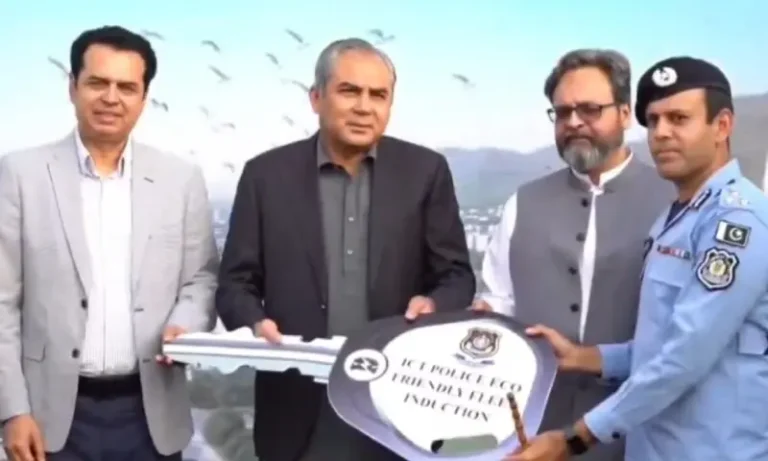
    The Islamabad Police has received 30 new vehicles for 27 police stations in the federal capital after a gap of 14 years, in a move aimed at improving police mobility and reducing emergency response times. Interior Minister Mohsin Naqvi and Minister of State for Interior Tallal Chaudhry handed over the vehicle keys to police officials during a ceremony at Police Lines on Saturday. Speaking at the ceremony, Naqvi said modern policing could not be achieved without providing police with functional and adequate transport. He said the newly provided vehicles would help officers respond to emergencies more quickly and perform their duties more effectively. The interior minister said the government was making efforts to provide Islamabad Police with the resources required to improve public safety and maintain security in the capital. He also said work was underway on the construction and upgrading of police stations across Islamabad. According to him, the projects would be completed soon and would improve the working environment and operational capacity of the force. Naqvi highlighted the inclusion of electric vehicles in the government’s efforts to promote environmentally friendly policies. He said the use of electric vehicles would also help reduce expenditure on petroleum products. Tallal Chaudhry said the new vehicles had been distributed among all 27 police stations in Islamabad. He pointed out that police personnel had previously been operating vehicles that were around 14 years old, creating difficulties for effective field operations. The minister of state said rehabilitation and construction work at the capital’s 27 police stations was also in progress and was expected to be completed by the end of the year. He further disclosed that around 9,000 new personnel were being recruited to address the shortage of manpower in Islamabad Police. He said the recruitment process would be conducted strictly on merit.

  • |

    Saudi Arabia introduces major education reforms under new school law

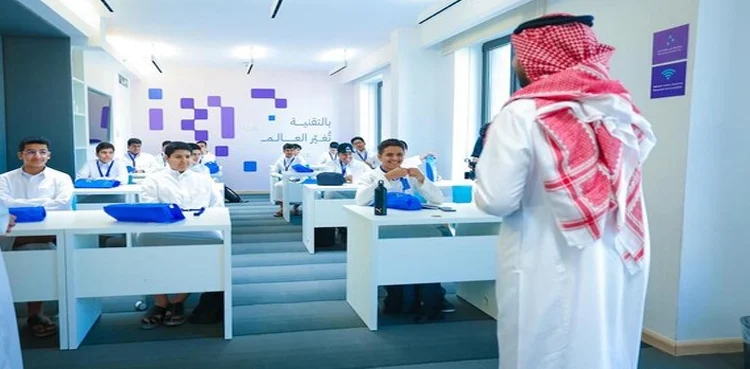
    Saudi Arabia has approved the executive regulations for its new General Education Law, introducing wide ranging reforms that will reshape the country’s education system from nursery through Grade 12. The new legislation creates a comprehensive legal framework for public and private education and is designed to support the goals of Saudi Arabia’s Vision 2030 by improving educational quality, expanding opportunities and strengthening oversight across the sector. One of the most notable changes allows private schools to decide whether boys and girls can study together, while public schools will continue to separate male and female students after the early childhood stage. The move marks a significant shift in education policy for the Kingdom and gives private institutions greater flexibility in organizing their academic programmes. The law also establishes a new General Education Affairs Council that will oversee key education policies. The council will be chaired by the Minister of Education and include representatives from several government ministries, the Education and Training Evaluation Commission and the private sector. Officials say the body will help coordinate education reforms and ensure that policies are aligned with national development goals. Compulsory education will continue for children between the ages of six and 15. The Ministry of Education will have the authority to take legal action against parents or guardians who prevent children from attending school or who contribute to students leaving education before completing the compulsory stage. Officials say the measure is intended to improve school attendance and reduce dropout rates. Arabic will remain the main language of instruction throughout the general education system. However, schools will be allowed to teach in another language when appropriate, giving educational institutions greater flexibility while preserving the country’s cultural and linguistic identity. The legislation also confirms that classroom teaching will remain the primary method of education across all grade levels. At the same time, the Ministry of Education plans to expand digital learning by developing programmes that include live online classes, self paced learning and other flexible educational options. Regulations will also be introduced for lifelong learning certificates to encourage continuous education beyond traditional schooling. Students will have access to more diverse educational pathways under the new framework. The ministry will be able to introduce specialized academic and vocational tracks designed to better prepare students for future careers and meet the changing demands of the labor market. The law places greater emphasis on supporting students with disabilities by requiring schools to provide suitable educational services, assistive technology and assessment methods that match individual learning needs. It also strengthens programmes for gifted students through specialized schools, enrichment centers, improved identification systems, teacher training and partnerships with universities and research institutions. Private schools will face stricter quality standards under the reforms. Educational institutions must obtain accreditation from the Education and Training Evaluation Commission or another internationally recognized accreditation body approved by Saudi authorities. The Ministry of Education will oversee licensing procedures, ownership transfers, school operations and the introduction of international curricula while ensuring that subjects related to national identity remain part of every approved curriculum. The new rules also introduce a clearer process for education licences. Applications must receive a written decision within 30 days, and institutions whose applications are rejected will have the right to appeal. The government says these measures are intended to improve transparency and encourage investment in the education sector. Private and nonprofit education providers will also benefit from a more defined regulatory framework. Under certain conditions, the ministry may provide financial assistance, staffing support or other resources to eligible institutions as part of efforts to expand educational services under Vision 2030. Teachers will have broader professional responsibilities under the new law. They will be expected to follow approved curricula, meet the learning needs of individual students, encourage creativity and innovation, identify gifted learners, uphold national values and participate in continuous professional development programmes. The legislation also introduces stricter disciplinary procedures for teachers, administrators and private schools that violate regulations. Authorities will have the power to temporarily remove staff from duty while investigations are carried out. Serious violations could result in dismissal and permanent disqualification from working in the education sector. Private schools that fail to comply with the law may receive warnings, face financial penalties, lose the right to admit new students or have their operating licences revoked. If a licence is cancelled, the school must ensure that enrolled students are able to complete the academic year without disruption at the owner’s expense.

  • |

    Pakistan eyes bigger share in global islamic economy

    Pakistan has significant room to expand its presence in the global Islamic economy by introducing innovative Shariah-compliant financial products, strengthening regulatory frameworks and developing specialized professional expertise, Secretary General of the Islamic Chamber of Commerce and Development (ICCD) Yousef Hassan Khalawi has said. Speaking at the Securities and Exchange Commission of Pakistan (SECP) Talk Series on Islamic finance, Khalawi highlighted Pakistan’s structural advantages and said the country was well placed to capture a larger share of the rapidly evolving global Islamic economy. He noted that Pakistan has a large Muslim population, a substantial overseas Pakistani community and an expanding Islamic finance sector. The country also has a growing base of professionals working in banking, capital markets and other financial services, providing a foundation for further development of the industry. However, Khalawi stressed that Pakistan would need to move beyond conventional Islamic finance offerings if it wanted to compete more effectively in international markets. He encouraged financial institutions and regulators to focus on developing innovative products capable of addressing emerging domestic and global demand, particularly through financial technology. Fintech seen as key driver According to Khalawi, fintech could play an important role in making Islamic financial services more accessible, efficient and affordable. Digital platforms can potentially reduce transaction costs while allowing Shariah-compliant products to reach customers who remain underserved by traditional financial institutions. He also emphasized that Islamic finance should not be viewed solely as a mechanism for structuring financial transactions. Instead, he said, the sector should play a wider role in supporting economic growth, social welfare and productive investment. One area with considerable potential is Waqf-based investment. Khalawi suggested that professionally managed and transparent listed Waqf structures could enable individuals to make relatively small contributions that could collectively generate financing for projects in key social sectors. Such models, he said, could help channel funds towards education, healthcare and infrastructure while creating a more organized framework for mobilizing charitable and community-based capital. Agriculture offers untapped potential Agriculture was also identified as an important sector where Islamic finance could make a greater contribution. Khalawi called for the development of specialized Shariah-compliant financing instruments tailored to the needs of farmers, agribusinesses and other participants across the agricultural value chain. Greater technical expertise would also be required to design products that address the specific risks and cash-flow patterns associated with agriculture. Expanding access to appropriate financing could help unlock investment and support productivity in the sector. Interest-free lending and financial inclusion The discussion also examined Qard Hassan, an interest-free lending mechanism that can provide financing to individuals without imposing conventional interest charges. Khalawi said technology could help make Qard Hassan arrangements easier to administer and more accessible to potential borrowers. Digital platforms could reduce administrative expenses, improve transparency and facilitate the distribution of small-scale interest-free loans. He further highlighted the importance of establishing common Shariah standards to promote consistency across the Islamic finance industry. Differences in interpretation and product structures can create challenges for institutions seeking to operate across markets, making greater standardization important for the sector’s international growth. Professional training was another key area highlighted during the discussion. Khalawi stressed that the continued expansion of Islamic finance would require professionals with expertise in both financial markets and Shariah principles. For Pakistan, strengthening regulatory capacity, expanding specialized training and encouraging innovation could help create an ecosystem capable of supporting new Islamic financial products. The SECP discussion underscored the broader opportunity for Pakistan to position Islamic finance as a tool not only for financial-sector development but also for investment, entrepreneurship, social welfare and sustainable economic growth.

  • | |

    Climate authority summoned again as questions grow…

    Islamabad: The Pakistan Climate Change Authority has been called back before a Senate committee only days after Chairperson Sherry Rehman strongly questioned why a new authority was operating alongside the Climate Change Ministry, asked what new work it was actually doing and raised concerns over staff costs, duplication and the use of public money. The fresh meeting will again focus almost entirely on the authority, its work, projects, programmes and progress. The quick return of the issue to the committee has increased pressure on the authority to clearly explain why it exists and what results it has produced that the Ministry of Climate Change and Environmental Coordination could not already deliver. At the previous meeting, Sherry Rehman repeatedly asked officials what work the authority was doing that the ministry was not already responsible for. She questioned whether the government had effectively created a parallel structure carrying out the same work on climate mitigation, adaptation, coordination and policy implementation. Rehman said the presentation before the committee did not show a clear new role for the authority. She also questioned why another institution was being created at a time when the ministry itself was facing shrinking development budgets. One of the strongest moments came when the committee discussed the authority’s staffing and expenditure. Rehman referred to a sanctioned strength of 24 positions and said employee related expenditure had already reached around Rs 80 million according to the presentation placed before the committee. She questioned why these costs were being incurred when she could not see a clear difference between the work of the authority and the ministry. She warned officials not to treat the meeting as a routine presentation exercise and demanded direct answers about public spending and actual results. Rehman also questioned whether creating the authority had brought new climate experts into government. Members asked whether the purpose was to recruit technocrats who could not otherwise be brought into the ministry. However, Rehman said the presentation appeared to show many of the same officials who had already worked inside government departments. She described the situation as a reshuffling of bureaucracy rather than the creation of a new technical institution. She said fragmentation was already a major government problem, with different organisations working separately on connected climate and disaster issues. According to her argument, creating another body without a clearly different mandate could increase costs while making responsibility more confusing. Rehman also questioned why the authority had been activated years after the law creating it first appeared. She said the law allowed the authority to exist but argued that this did not necessarily mean the government was forced to operationalise it. She said earlier governments had discussed removing such overlapping structures instead. During the exchange, she said she had opposed operationalising the authority while serving as minister because she feared it would create duplication. She told the committee that the result now appeared close to what she had warned about: officials were moving between the ministry and the authority instead of creating a completely new technical team. The authority defended its role. Dr Muhammad Rafiq told the committee that the authority was originally designed to provide technical support to the ministry. He acknowledged that more explanation was needed regarding what the authority was delivering against its original responsibilities. He suggested that the ministry and authority should be given an opportunity to return with a clearer presentation explaining what results they expected to achieve and what the authority could do that the ministry could not. The committee was told that the authority was still incomplete. Officials said a permanent chairperson was still being appointed and that only three members were working at the authority with a limited number of staff against the total positions planned. The authority also presented one of its strongest arguments in defence of its performance. An authority member told the committee that it had become Pakistan’s first public sector organisation to qualify as a delivery partner with the Green Climate Fund through the relevant mechanism. The official said this had been achieved by only three members and without technical assistance. He argued that this status could help the authority develop technical proposals and bring more climate finance into Pakistan. Rehman was not convinced that this achievement alone justified a separate authority. She argued that Green Climate Fund financing had already been coming to Pakistan through government structures and questioned why a completely new authority was needed when a climate finance office could operate within the ministry. She again asked why project development and technical hiring could not be handled directly by the ministry. Her central question remained the same throughout the discussion: what exactly could the new authority do that the ministry could not already do? The ministry told the committee that it had a supervisory and controlling role over the authority and that the authority’s budget passed through the ministry. However, Rehman continued to question how effective that control was if the authority could hire staff and exercise statutory powers separately. She asked officials to explain how rotating officials into a separate authority would make climate work more efficient when the ministry itself was losing development resources. Professor Dr Zahoor Ahmed Bazai, who identified himself as an unpaid member nominated to the authority and as a climate change academic, defended the institution. He told the committee that the authority was included in the climate law and that members had been nominated through the formal process. He argued that the authority was intended to provide expertise and serve an advisory role. Rehman said her criticism was not directed personally at individual members. She said the bigger problem was duplication between institutions and the growing number of attached bodies dealing with similar climate matters. The committee chairperson was also critical of the presentation the authority gave. Rehman said the presentation was not strong enough to be used by Pakistan at an international climate forum and described it as outdated in style. She said that if the authority wanted to demonstrate its value and

Leave a Reply

Your email address will not be published. Required fields are marked *