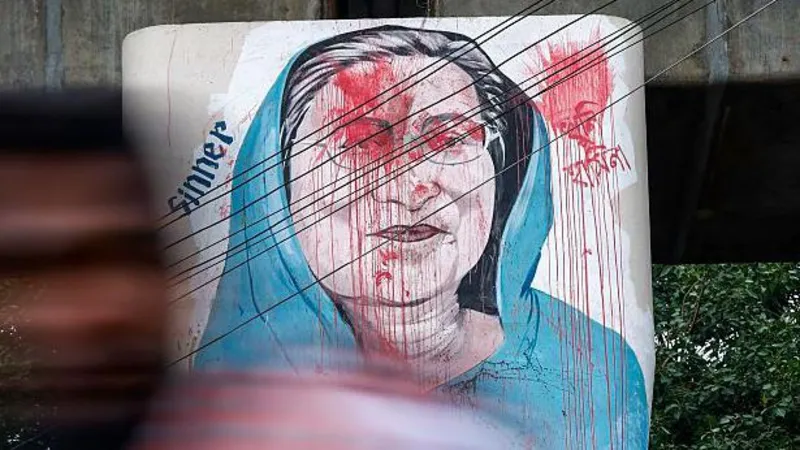
ousted bangladeshi leader
|

Ousted Bangladeshi leader Sheikh Hasina vows December return despite facing execution

Former Bangladeshi Prime Minister Sheikh Hasina has announced plans to return to her home country in December, despite facing a death sentence following her conviction for crimes against humanity.

Speaking via audio broadcast to journalists at the Foreign Correspondents’ Club in Delhi, her first direct address to the press since being ousted in August 2024, the 78-year-old former leader acknowledged the grave risks associated with her return. “I know that they may put me in jail or they may kill me, anything may happen, but still I have to go back.” Hasina stated, while declining to reveal specific travel dates or logistics.

Hasina fled to India two years ago following a mass student-led uprising that ended her 15-year rule. Last year, a special tribunal in Dhaka sentenced her to death in absentia after prosecutors presented evidence, including verified audio recordings, showing she authorised the use of lethal force against demonstrators.

UN reports estimate that up to 1,400 people were killed during the crackdown. Hasina continues to reject the charges as politically motivated, alleging that external groups transformed student protests over government job quotas into a violent movement.

The announcement has heightened diplomatic tensions between New Delhi and Dhaka. Bangladesh’s newly elected government, led by Prime Minister Tarique Rahman of the Bangladesh Nationalist Party (BNP), expressed outrage over India permitting Hasina to address international media, renewing its demands for her immediate extradition.

Meanwhile, analysts suggest Hasina’s high-stakes gamble aims to re-energise her banned party, the Awami League, whose supporters face increasing political isolation and violence ahead of her proposed return.

Similar Posts

  • |

     7 killed in India temple stampede

    At least seven people were killed and several others injured after a massive crowd triggered a stampede outside the Ashok Dham Temple in India’s Bihar state. According to Indian media reports, the incident occurred early Monday morning, the third Monday of the Hindu month of Sawan, when a large number of devotees gathered at the temple to offer prayers. District administration officials reached the scene shortly after the incident and began overseeing rescue efforts as well as measures to bring the crowd under control. Officials said the crowd outside the temple suddenly surged after two trains arrived in the area in the morning. The sudden influx placed heavy pressure on the barricades installed at the site, causing one section to collapse. Several people fell over one another, triggering panic and a stampede. Authorities said they had made arrangements in anticipation of a large turnout. However, the unexpected increase in the number of devotees quickly overwhelmed the arrangements and created a chaotic situation. Rescue teams immediately began evacuating the injured, with around 10 to 15 people initially taken to nearby hospitals for medical treatment. Indian media reports have also cited preliminary information suggesting that an electricity pole fell at the scene and some people may have suffered electric shocks. The incident reportedly caused further panic among the crowd and may have contributed to the subsequent stampede. Authorities are continuing to assess the situation and investigate the circumstances surrounding the deaths and injuries.

  • | | |

    Naqvi tells tycoons: Stop funding politicians

    Federal Minister Mohsin Naqvi has called for sweeping structural reforms, warning that Pakistan cannot overcome its long-standing economic and governance challenges without fundamental changes to the country’s political and administrative systems. Speaking at the First Pakistan Investment Summit in Islamabad, Naqvi said the existing governance structure has become outdated and is no longer capable of meeting the country’s growing economic needs. He cautioned that without meaningful reforms, Pakistan could still be facing the same problems a decade from now. Addressing business leaders and investors, the minister said responsibility for the current state of affairs does not rest solely with politicians. He argued that the business community also plays a significant role in sustaining the existing system by financing political campaigns. Naqvi urged business leaders to stop funding political parties during elections and instead push for greater transparency, accountability and institutional reforms. He said reducing financial dependence on wealthy donors could help strengthen democratic institutions and improve governance. The minister also stressed the need to reduce Pakistan’s reliance on foreign loans. He said the country must focus on generating domestic resources, expanding investment and building a stronger economic foundation through long-term planning. Calling for national unity, Naqvi urged political parties to set aside differences and work together on a comprehensive reform agenda. He said lasting economic stability can only be achieved through collective decision-making and institutional improvements. Other speakers at the summit also highlighted the need for major administrative reforms. They argued that changes in governance structures, including decentralisation and stronger regional administration, could improve service delivery and reduce governance challenges. Business leader S.M. Tanvir said structural weaknesses continue to slow economic progress and called for fresh leadership and institutional reforms to strengthen the country’s administrative framework. Participants also expressed concern over Pakistan’s social and economic indicators. They noted that a large segment of the population continues to live below the poverty line, while unemployment remains a major challenge, particularly among young people. Several speakers said temporary welfare measures alone cannot address the country’s long-term economic issues. They called for policies that create sustainable employment opportunities, promote merit-based recruitment and equip young people with the skills needed to participate in the economy

  • | | |

    Goods transport strike enters fourth day

    The nationwide strike by the All Pakistan Goods Transport Alliance has entered its fourth consecutive day. The continued suspension of freight services has raised concerns about possible disruptions to the supply of essential goods. Transporters say there has been no major breakthrough in talks with the government. They have therefore decided to continue their protest. Goods Transport Alliance President Malik Shehzad Awan said the government must take serious steps to end the deadlock. He said transporters were still willing to negotiate. However, he stressed that talks alone would not be enough. The transporters want clear progress on their demands before ending the strike. The ongoing protest has created uncertainty for businesses and traders. Goods transport vehicles play a key role in moving food, fuel and other essential items between cities. A prolonged strike could affect the movement of supplies. It could also create difficulties for wholesalers, retailers and consumers. There are concerns that shortages in some markets may push up prices. Food items could become more expensive if supplies remain disrupted for an extended period. The transporters launched the protest over rising petroleum prices. They are also opposing the government’s policy of changing petroleum prices on a daily basis. The alliance has demanded action on the issues affecting the transport sector. Transporters argue that frequent changes in fuel prices make it difficult for them to manage operating costs. They have called for serious engagement from the government. They want their concerns to be addressed through negotiations. Malik Shehzad Awan said the transporters had not closed the door to dialogue. However, he maintained that the government must demonstrate meaningful progress. The strike is affecting freight movement at a time when businesses depend heavily on road transport. Goods vehicles are used to supply markets across the country. If the deadlock continues, the impact could become more visible in local markets. Traders may face delays in receiving supplies, while consumers could face higher prices. The transporters have not announced a deadline for ending the strike. They are waiting for further government action and progress on their demands.

  • | |

    Houthis claim missile and drone attack on Saudi oil tankers

    Yemen’s Houthi movement has claimed responsibility for attacking two Saudi oil tankers in the Red Sea, marking a major escalation in regional tensions and raising fresh concerns over the security of one of the world’s busiest maritime trade routes. Houthi military spokesperson Yahya Saree said the group targeted the tankers, identified as ENCELA and LAYLIA, because they allegedly violated the maritime blockade the Houthis imposed on Saudi Arabia earlier this week. According to the spokesperson, the operation involved ballistic missiles, cruise missiles and drones. He claimed the strikes caused fires aboard both vessels and forced nearly 10 other commercial ships to abandon their planned routes and turn back. Saudi authorities have not officially commented on the Houthi claims. However, the United Kingdom Maritime Trade Operations (UKMTO), which monitors maritime security in the region, confirmed receiving a report from the captain of a tanker that an unidentified projectile had struck the vessel, sparking a fire. The crew managed to respond to the incident, and no casualties or environmental damage have been reported. The attack comes just days after the Houthis announced a maritime blockade against Saudi Arabia, saying the move was retaliation for recent military actions in Yemen. The group accused Riyadh of maintaining a long-standing blockade on areas under Houthi control and vowed to respond with similar measures at sea. The latest developments have increased fears over shipping through the Red Sea and the Bab al-Mandeb Strait, a strategic waterway linking the Red Sea to the Gulf of Aden. The route is vital for global energy supplies and international trade, carrying millions of barrels of crude oil and petroleum products every day. Shipping security in the region has already been under pressure because of wider Middle East tensions. Any prolonged disruption in the Bab al-Mandeb Strait could further affect global oil markets, increase transport costs and delay commercial shipping.

  • |

    Saudi sounds alarm on rising sea threats

      Saudi Arabia has issued a forceful warning over escalating security dangers in the region, making it clear that the era of unilateral action is over. In an official statement, Ministry of Defense Spokesman Major General Turki Al-Malki stressed that new and complex threats—ranging from maritime terrorism to drone swarms and smuggling networks—now demand a collective response. “Every country has the right to protect its national interests,” Al-Malki said, “but the scale and sophistication of today’s risks require us to act together. No nation can stand alone.” He specifically pointed to the Red Sea corridor, a lifeline for global oil shipments and trade, as a flashpoint that needs constant vigilance. The nations bordering this strategic waterway, he added, are already in continuous dialogue to align their security strategies. The spokesman made it clear that the multi-national naval defense coalition—first proposed by Saudi Arabia—is not an offensive alliance but a defensive shield. Its core mission: to secure international shipping lanes, deter hostile acts, and ensure freedom of navigation in accordance with international law. The coalition, he emphasized, is open to all nations that share these goals and is firmly rooted in the principles of the United Nations Convention on the Law of the Sea. Al-Malki warned that the threat landscape has shifted dramatically. Non-state actors now possess advanced unmanned systems, anti-ship missiles, and cyber capabilities that can disrupt maritime traffic within minutes. Piracy and human trafficking add another layer of complexity. “We are not facing traditional navies,” he noted. “We are facing hybrid threats that exploit every gap in coordination. That is why interoperability, intelligence-sharing, and joint patrols are no longer optional—they are survival tools.” In a move that underscores Saudi Arabia’s commitment to this mission, the Ministry of Defense announced the appointment of Rear Admiral Abdullah bin Salim as the commander of the coalition. A distinguished naval officer with decades of command experience, bin Salim has served in multiple high-level posts within the Royal Saudi Naval Forces, overseeing fleet modernization and participating in large-scale international exercises. His leadership is expected to bring operational sharpness, strategic clarity, and a hands-on approach to coalition drills and rapid-response mechanisms. Rear Admiral bin Salim’s appointment is not merely symbolic. It reflects Saudi Arabia’s willingness to shoulder greater responsibility in regional security while maintaining an inclusive, consultative stance. He will oversee the integration of naval assets from partner nations, coordinate joint training missions, and ensure that the coalition can respond within hours—not days—to any maritime breach. Al-Malki also extended an open invitation to the international community. “We welcome all nations that believe in a rules-based maritime order,” he said. “The Red Sea is not just a regional asset—it is a global artery. Its security is everyone’s business.” He called for increased naval presence, technology transfers, and financial backing to sustain the coalition’s operations over the long term. The spokesman concluded with a sobering reminder: in a world of drone warfare, proxy conflicts, and rapidly evolving tactics, waiting for disaster is not a strategy. “The coalition is already active,” he said. “Our patrols are ongoing, our command is in place, and our resolve is firm. We are building a security architecture that will outlast any single crisis.” With Rear Admiral bin Salim now at the helm, the coalition enters a new phase—one defined by action, accountability, and unity. Saudi Arabia has made its position clear: the time for talk is over. The time for collective defense is now.

  • | |

    China’s burger boom draws coffee chains and …

    Burgers have become one of China’s most contested fast food categories, with budget minded diners and shrinking household sizes fueling a rush that now includes hotpot operators and coffee brands alongside established global chains. Yum China’s Pizza Hut Burger Bar concept, which places a dedicated burger counter inside existing Pizza Hut locations, expanded to more than 200 outlets within six months, the company said in July. Yum China plans to grow the format to between 500 and 600 outlets by the end of 2026, representing roughly 10 percent of its total Pizza Hut store network in China. The surge into burgers reflects broader changes in Chinese consumer habits. As households shrink and economic uncertainty keeps spending cautious, diners increasingly favor lower cost, portable meals that deliver convenience without sacrificing value. That shift has transformed burgers from a niche Western import long dominated by McDonald’s, KFC and Burger King into one of the most fiercely contested segments of China’s restaurant industry, drawing a wave of new entrants eager to capture market share. Last month, hotpot chain Haidilao entered the space with a new concept called Huanxianbao, or Fresh Burger, which sells burgers alongside pizza, pasta and fried chicken. Coffee chain M Stand has also opened burger focused locations in several cities. China’s Western style fast food market was valued at 499.65 billion yuan, or about $74.1 billion, in 2025 and is projected to reach 587.09 billion yuan by 2027, according to data provider iiMedia Research, even as several global brands face broader challenges in the market. Burgers ranked as the top preference among consumers surveyed, with 55 percent selecting the category. While still a relatively small slice of China’s overall fast food industry, the burger segment alone was worth $18.4 billion in 2025 and is expected to grow 8.7 percent annually through 2035, according to Emergen Research. Part of the category’s appeal lies in simple economics. Food industry analyst Zhu Danpeng said burgers offer a lower cost alternative to full service restaurant meals while still functioning as a substantial meal, calling them a strong value for money option amid cautious consumer spending. Wang Fang, a university student in Beijing, said burgers have become a default lunch choice for her and her classmates because they cost less than ordering several dishes at a sit down restaurant. She said a burger loaded with meat, vegetables and butter makes for an affordable, balanced meal. The category’s rise also tracks with shifting demographics. Growing numbers of single person households, smaller families and young urban professionals have driven demand for convenient meals sized for one, a trend Yum China says is opening opportunities across its brand portfolio. Pizza Hut added burgers to its menu in 2024, and by 2025 the category accounted for a mid single digit percentage of Pizza Hut’s total sales in China, the company said. Yum China expects burgers to generate more than 1 billion yuan in sales this year, representing 5 to 6 percent of the brand’s revenue. The company said burgers resonate strongly with takeaway and delivery customers in China, where 43 percent of consumers order delivery at least once a week, compared with a global average of 23 percent, according to Euromonitor. The growing appetite for burgers has drawn competitors from across the industry. Domestic chains such as Tasiting now compete directly with McDonald’s, Yum China’s KFC and Shake Shack for market share. International brands are eager to join the competition as well. When US chain Five Guys opened its first stores in Beijing this month, customers waited more than two hours to be served. Wendy’s said in May that it plans to enter the Chinese market and open as many as 1,000 franchised restaurants over the next decade. Liu Tao, a 48 year old musician in Beijing, regularly takes his 11 year old son to McDonald’s on Sundays, fitting the meal into a tight schedule between the boy’s math and English classes. He said burgers work well when time is short and he needs food that feels clean, quick and won’t bore his son, noting that his son often eats in the car on the way to his next class.

Leave a Reply

Your email address will not be published. Required fields are marked *