• |

    New anti-Taliban group emerges in Afghanistan

      Armed resistance against the Taliban appears to be expanding in Afghanistan, with a new anti-Taliban group reportedly emerging in the northern province of Faryab. Sources say growing opposition to the Taliban’s style of governance, alleged ethnic discrimination and corruption has fueled resistance among sections of the Afghan population. Opposition has also increased over restrictions on education, employment and basic human rights, while the ongoing situation has contributed to a rise in Afghan migration toward Europe. According to sources, fighters affiliated with the newly formed Liberation Front carried out an attack against Taliban forces in Faryab province on Monday. The group is expected to formally announce its organisational structure, leadership and future activities within the next few days. The emergence of the new group comes as other anti-Taliban factions also signal plans to intensify their activities. General Sami Sadat, head of the Afghanistan United Front, and General Yasin Zia of the Afghanistan Freedom Front have both announced their intention to step up resistance against the Taliban. The developments indicate growing challenges for the Taliban as it continues to face opposition from armed groups as well as criticism over its policies on governance, human rights, education and employment.
  • |

    Petrol, diesel prices may fall further

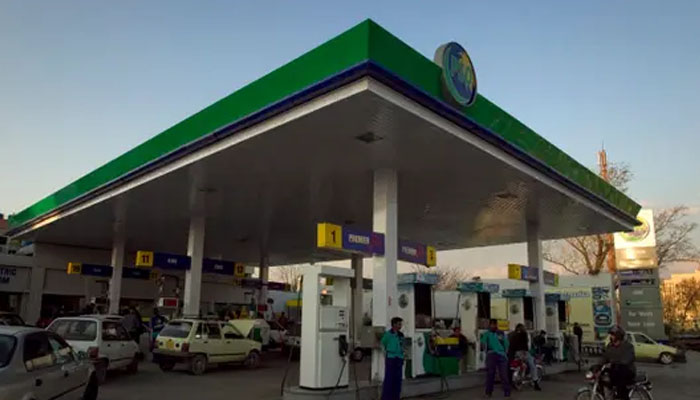
    Petroleum product prices in Pakistan may see another reduction from August 5, offering potential relief to consumers already facing high fuel costs. According to sources within the Oil and Gas Regulatory Authority (OGRA), the price of petrol could decrease by Rs3.39 per litre, while high-speed diesel may become cheaper by Rs4.07 per litre. The latest calculations suggest that the price of petrol could fall to approximately Rs328.56 per litre after the proposed reduction. Similarly, the price of high-speed diesel may come down to an estimated Rs385.86 per litre. OGRA sources said the initial working for the possible price adjustment has been completed. The final decision, however, will depend on the government’s review of the latest calculations and other relevant factors before announcing the new prices. The possible reduction comes shortly after the government announced a cut in petroleum prices. In the previous adjustment, the government reduced the price of petrol by Rs4.08 per litre, while the price of diesel fell by Rs2.45 per litre. If the latest proposed cuts receive approval, consumers could see another decline in fuel prices within a short period. A reduction in petrol prices would directly benefit motorists and households that rely on private vehicles for daily commuting. Lower diesel prices could also provide some relief to the transport sector, as diesel powers a large number of commercial vehicles, buses, trucks and other heavy transport used to move people and goods across the country. A decline in fuel prices may also help reduce pressure on transportation and logistics costs. Since diesel plays a major role in the movement of agricultural produce, industrial goods and essential commodities, any reduction in its price could potentially ease some of the cost burden on businesses and consumers. However, the impact of the proposed reduction on overall inflation will depend on several factors, including transportation costs, exchange rate movements and international oil prices. The government is expected to announce the final petroleum prices after completing its review and approving the new rates. The expected adjustment comes as consumers continue to closely monitor fuel prices because of their direct impact on household budgets and the cost of everyday goods and services. Any further reduction in petrol and diesel prices could provide some short-term financial relief to the public and businesses.

  • | |

    PSX closes higher despite volatile trading

      The Pakistan Stock Exchange (PSX) witnessed a positive trading session on Tuesday, with the benchmark KSE-100 Index gaining 1,116 points to close at 177,083 points. The index remained volatile throughout the trading session and moved within a range of 1,755 points. It reached an intraday high of 178,768 points before easing from its peak as investors adjusted their positions. Trading activity remained strong, with approximately 710 million shares changing hands in 25 billion rupees worth of transactions. The high trading volume reflected continued investor participation and active buying and selling across various sectors. Despite the rise in the benchmark index, the overall market capitalisation declined by around 120 billion rupees, falling to 19,833 billion rupees by the end of the session. The market’s performance reflected a mixed trend, as investors continued to monitor economic developments and market conditions while actively repositioning their portfolios.

  • 28 mine workers killed, Parliament raises safety concerns

    Islamabad: A serious safety crisis in Pakistan’s mining sector came under the spotlight after the National Assembly Standing Committee on Overseas Pakistanis and Human Resource Development questioned why many mine workers remain unregistered even after losing their lives in dangerous mining accidents. The committee expressed concern that families of deceased workers may struggle to receive compensation and welfare support because authorities lack complete records of people working inside mines. Members demanded immediate steps to register all mine workers and ordered a review of mining safety arrangements across the country. The issue was discussed during the meeting of the Standing Committee on Overseas Pakistanis and Human Resource Development, chaired by Syed Rafiullah, following a deadly coal mine accident in Balochistan. Members offered prayers for the workers who lost their lives and said repeated mining accidents show serious weaknesses in monitoring and enforcement systems. During the discussion, committee members questioned officials about whether the workers who died in the accident were officially registered. Officials informed the committee that complete registration details were unavailable, raising concern among members about the protection available to mining workers and their families. The committee questioned how workers could spend their lives working in dangerous conditions while government departments lacked basic information about their employment status. Members rejected the argument that many mine workers are seasonal employees and therefore difficult to register. They said anyone working in a mine, whether permanent, temporary or seasonal, should be counted as a worker and provided protection. The committee stressed that registration should not depend on the type of employment. It said workers who risk their lives underground deserve safety measures, legal protection and welfare benefits. Officials informed the committee that worker registration involves different institutions, including provincial departments and labour related organisations. However, members questioned why coordination gaps continue despite years of discussions. The committee also raised concerns over mine inspections and safety checks. Members asked when mines were last inspected, whether safety rules were followed and how many workers were present at different mining sites. Officials stated that mining safety falls under provincial responsibility, but the federal government cannot ignore the issue and must collaborate with provinces to improve worker protection. The committee directed authorities to conduct a complete survey to identify how many mines are operating, how many workers are employed and how many workers are officially registered. The Federal Minister assured the committee that action would be taken and a long term strategy would be developed to ensure every mine worker is registered. Another major concern raised during the meeting was the lack of emergency facilities near mining areas. Members questioned whether proper trauma centres, ambulances and emergency services were available near mines to save workers after accidents. They pointed out that discussions about emergency facilities had taken place in previous years, but clear improvements were still needed. The committee said safety rules cannot remain only on official documents; they must be visible at mining sites through practical action. Members also suggested reviewing mining leases and ensuring that mine operators follow safety standards before continuing operations. The committee recommended that all provinces and Gilgit Baltistan review mining conditions, worker registration systems and compliance with safety procedures. Officials informed the committee that a survey would be carried out to assess the situation on the ground and identify gaps in the current system. The committee also discussed the Workers Welfare Fund and recommended taking up the issue of its management and distribution at the Council of Common Interests level. Members stressed that workers across Pakistan must receive their legal rights and no labourer should remain invisible in government records.

  • | |

    Malik Noor Awan hails PML-N’s AJK victory

    Pakistan Muslim League-Nawaz (PML-N) Japan President Malik Noor Awan has congratulated Prime Minister Shehbaz Sharif, party leader Nawaz Sharif, the party leadership, and workers on the Pakistan Muslim League-Nawaz’s victory in the Azad Jammu and Kashmir (AJK) elections. In his congratulatory statement, Malik Noor Awan said the people of Azad Kashmir had expressed their confidence in the PML-N’s agenda of development, stability, and public service by electing the party to power. He said the victory was not only a success for a political party but also a guarantee of a brighter future, a stronger economy, and sustainable development for the people of Azad Kashmir. Malik Noor Awan stated that the PML-N has always centered its politics on public service, development, and the promotion of democratic values. He said this was the reason the people had once again placed their trust in the party’s leadership. He expressed hope that under the leadership of Prime Minister Shehbaz Sharif and PML-N President Nawaz Sharif, new development projects would be launched across Azad Kashmir, employment opportunities would be created, and more effective measures would be taken to improve public welfare. He further said that PML-N workers and the Pakistani community residing in Japan were also delighted with the historic victory and extended their heartfelt congratulations to the party leadership. Reaffirming the commitment of overseas Pakistanis, Malik Noor Awan said they would continue to stand firmly with the Pakistan Muslim League-Nawaz and play their full role in supporting the country’s progress and development.

  • |

    Experts reveal how ancient Egyptians built pyramids?

    The centuries-old Egyptian pyramids have long remained a major focus of interest for people and scientists. For years, scientists have been trying to solve the mystery of how such massive pyramids were constructed in ancient Egypt thousands of years ago. Now, a possible answer has emerged. Earlier, it was believed that ropes and sledging systems were used to transport stones to the upper sections of the pyramids. However, evidence discovered near the Nile River suggests that experts of that era had already mastered advanced construction techniques centuries before the construction of the Great Pyramid of Giza in the desert. Archaeologists have excavated a 5,000-year-old cemetery-like site near the eastern bank of the Nile River. Two tombs discovered there have construction styles remarkably similar to those of the Egyptian pyramids built centuries later. The walls of these tombs were thicker at the bottom and gradually became narrower toward the top. This design provided greater stability to the structures. Similar techniques were later used in the construction of step pyramids and other large pyramids. Researchers also discovered evidence of ancient methods used to cut stones and wood which were employed in the construction of the tombs. The tombs were discovered in Egypt’s Jabal al-Tayr region where people have been buried for thousands of years. The style of these tombs resembles the tombs of kings in Abydos, one of Egypt’s oldest cities. This suggests that advanced construction techniques may have been widely known across Egypt even before the construction of the pyramids. Researchers said the tombs provide a glimpse into experimental construction methods that may have eventually led to the construction of the Egyptian pyramids. Experts said preliminary analysis indicates that the construction style of these tombs was quite similar to that of the pyramids associated with Egypt’s First Dynasty. Egypt’s First Dynasty ruled the country around 3100 BC. According to Egypt’s Tourism Minister, Sherif Fathy, the new discovery will help researchers understand how these construction techniques evolved throughout ancient Egyptian history. Earlier, in May 2024, researchers discovered a buried branch of the Nile River beneath the desert that once flowed around more than 30 pyramids thousands of years ago. This discovery helped solve the mystery of how ancient Egyptians transported extremely heavy stones to the pyramid construction sites. The 40-mile-long branch of the river once flowed around the Great Pyramid of Giza and other pyramids. Thousands of years ago, it gradually became buried beneath desert sand and agricultural land. According to the research, the presence of this ancient river explains how 31 pyramids were constructed between approximately 4,700 and 3,700 years ago in a valley that has now become a deserted strip of desert. The valley is located near Memphis, the ancient capital of Egypt and is home to the Great Pyramid of Giza, the only surviving wonder of the ancient Seven Wonders of the World. A study published in the journal Nature Communications reported the discovery of this ancient branch of the river. The research team used radar satellite technology to identify the hidden river channel. Surveys of the area and analysis of samples confirmed the presence of the ancient river. According to researchers, the river was once very powerful but may have gradually become buried under sand because of drought around 4,200 years ago. The Great Pyramid of Giza is located just one kilometer from the bank of this buried river. Around 2.3 million stone blocks were used to build the pyramid with each block weighing between 2.5 and 15 tons. Researchers said the ancient river also provides clues about why pyramids were built at different locations. They explained that the river’s course and flow changed over time which may have led Egyptian rulers to construct pyramids at different locations.

  • Which plane seat is safest?

    Many people choose to travel by air because it is fast comfortable and one of the safest ways to get from one place to another.  However when an airplane accident happens many passengers wonder. Is there a seat that offers a better chance of survival? The good news is that air travel remains far safer than traveling by road or rail. Although plane crashes often receive worldwide attention because they are rare and serious the number of deaths from aviation accidents is much lower than from road accidents. According to global aviation safety data flying has one of the lowest accident and death rates of any form of transportation. Is there a safest seat? There is no seat that can guarantee survival in every accident.  Aviation experts say the outcome depends on many factors including the type of crash the speed of the aircraft and where the impact occurs. However studies of past accidents suggest that some seats may provide a slightly better chance of survival in certain situations. What research shows A review of airplane crashes over 35 years found that middle seats in the rear section of the aircraft had the lowest death rate, around 28%.  By comparison seats in the middle section of the plane had a higher death rate. Another study by Popular Mechanics which examined crashes between 1971 and 2005 found that passengers sitting in the back of the plane were up to 40% more likely to survive than those sitting closer to the front. Why the back may be safer Aviation experts explain that the front of the aircraft often absorbs the first impact during some types of crashes.  Because of this passengers seated in the rear may have a better chance of surviving in certain accidents. The back of the aircraft is also closer to the rear emergency exits which may help passengers leave the plane more quickly if an evacuation is needed. But every crash is different Experts also warn that there is no “perfect” seat. Some crashes affect the rear of the aircraft first while others damage the front or middle section. In accidents involving mountains the ocean or explosions survival may depend more on the nature of the crash than on where a passenger is sitting. For example if a plane crashes into a mountain or falls into the sea the chances of survival are often very low regardless of seat location. Emergency exit seats can help Passengers sitting near emergency exits may be able to leave the aircraft faster after a crash provided the exits remain usable.  Quick evacuation is often an important factor in survival. What Aviation Authorities Say The US Federal Aviation Administration (FAA) says no part of an airplane is officially considered safer than another. Survival depends on many factors, including the type of accident the force of the impact fire and how quickly passengers can evacuate. Research suggests that seats near the back of the aircraft especially the middle seats in the rear section may offer a slightly better chance of survival in some crashes. However no seat can guarantee safety. The most important thing passengers can do is wear their seat belt listen to the safety briefing and follow the cabin crew’s instructions.  These simple steps can make a big difference in an emergency.

  • | |

    Tight security marks peaceful Chehlum procession

    The main Chehlum procession concluded peacefully in Karachi on Tuesday after passing through its designated route under comprehensive security arrangements. Thousands of mourners participated in the annual religious procession to mark Chehlum, also known as Arbaeen, which commemorates the 40th day of mourning for the martyrdom of Imam Husain (AS), the grandson of the Holy Prophet Muhammad (PBUH). Law enforcement agencies implemented an extensive security plan to ensure the procession was held without any untoward incident. The event concluded successfully after participants reached the designated endpoint. Sindh Chief Minister Syed Murad Ali Shah expressed satisfaction over the peaceful conclusion of the procession. He praised the Sindh Police, Pakistan Rangers, and other security agencies for their coordinated efforts to maintain law and order throughout the day. The chief minister also appreciated the cooperation extended by procession organisers, religious scholars, volunteers, and participants. He said their collective efforts helped ensure the religious event remained peaceful and well-organised. Sindh Home Minister Ziaul Hassan Lanjar also commended the police for their professional performance. He said the successful completion of Chehlum processions reflected effective planning and strong coordination among all institutions responsible for security. A comprehensive security strategy had been put in place ahead of the event. More than 11,000 police officers and personnel were deployed across Karachi to protect Chehlum processions, religious gatherings, and imambargahs. Security officials remained on high alert throughout the day. Additional police personnel were stationed along the procession route and at sensitive locations across the city. Rangers and other law enforcement agencies also assisted in maintaining security. Authorities carried out continuous patrolling, snap checking, and picketing in different areas. Officers were instructed to remain present in their respective jurisdictions and ensure strict monitoring of important public places, government buildings, private installations, and religious sites. To facilitate security arrangements, several major roads along the procession route remained closed. Traffic police introduced a detailed diversion plan to reduce inconvenience for commuters. Motorists were advised to use alternate routes through Lasbela Chowk, Nishtar Road, Kashmir Road, Shahrah-i-Quaideen, Martin Road, Bahadur Yar Jang Road, Soldier Bazaar, and other connecting roads. Traffic police personnel remained deployed across the city to guide commuters and manage the flow of vehicles.

  • |

    Karachi flour price fixed at Rs. 130 per kilogram

    The Commissioner of Karachi has taken notice of a sharp increase in flour prices in the city. A meeting was held between the Commissioner of Karachi and the Flour Mills Association where it was agreed to ensure the supply of wheat at lower prices and without interruption. Following the meeting, flour mills reduced the ex-mill price of No. 2.5 flour by Rs. 3 per kilogram fixing it at Rs. 130 per kilogram. Flour mills across the city will sell No. 2.5 flour at an ex-mill price of Rs. 130 per kilogram from today. The price of wheat has also fallen to Rs. 121 per kilogram resulting in a reduction in flour prices. It is worth mentioning that the Flour Mills Association had previously increased flour prices arbitrarily. The price of No. 2.5 flour had been raised to Rs. 133 per kilogram while fine flour was priced at Rs. 149 per kilogram. During the past three months, the price of No. 2.5 flour increased by Rs. 24 per kilogram while the price of fine flour rose by Rs. 31 per kilogram. The price of mill-ground flour (chakki atta) has also increased by Rs. 20 to Rs. 25 per kilogram over the past three months. Wheat is currently being supplied to chakki owners at Rs. 130 per kilogram. However, if wheat prices rise further, there is a possibility that flour prices could increase again.

  • High sugar intake in early life may raise dementia risk

    A new study has found that children who consume high amounts of sugar at an early age may face a higher risk of developing dementia later in life. The study suggests that pregnant women who avoid sweets, chocolates and other sugary foods may help reduce their child’s risk of developing the disease by up to 20 percent. The research published in the medical journal Neurology also found that consuming very small amounts of sugar during early life may provide protection against dementia. The study’s lead author, Professor Jiazheng Zheng said the findings suggest that limiting sugar intake during the early stages of life could have long-term benefits for brain health. He further said the findings highlight the potential importance of early-life nutrition in reducing the risk of dementia decades later. Researchers from the Hong Kong University of Science and Technology compared the health of 64,737 people who were born before and after sugar rationing was introduced in Britain during World War II. The participants were divided into groups based on the timing of sugar rationing: those who experienced limited access to sugar before birth and during their first year of life, those who experienced it before birth and until the age of two and those who were not exposed to sugar rationing. When the participants reached an average age of 55, the research team began analyzing their medical records to determine which individuals were diagnosed with dementia during the following 15 years. Among the 15,256 people who had limited access to sugar before birth and during their first two years of life, only 2 percent were later diagnosed with dementia. Although researchers say the findings do not conclusively prove that eating less sugar directly prevents dementia, experts believe the results are consistent with growing evidence that sugar can affect brain function. Experts also say that the brain is highly sensitive to fluctuations in blood sugar levels. Other research has found that people with high blood sugar levels may face up to a 69 percent higher risk of Alzheimer’s disease.