• | |

    Deadly heatwave sweeps South Korea, claims 16 live…

    SEOUL: South Korea is grappling with one of the most intense heatwaves in its recorded history, with at least 16 people losing their lives and more than 2,000 others suffering from heat-related illnesses as extreme temperatures continue to grip the country. According to South Korean authorities, the nation recently recorded its highest temperature in 122 years of weather observations, with the southern city of Yangsan reaching a scorching 42.5°C. For the first time, officials have issued an extreme heat warning for the capital, Seoul, highlighting the severity of the ongoing weather conditions. President Lee Jae Myung has instructed government agencies to step up emergency measures to protect vulnerable groups, including the elderly, outdoor workers, and people with underlying health conditions. He also directed officials to closely monitor the country’s electricity supply as soaring demand for cooling systems places added pressure on the power grid. Climate experts say the unprecedented heat is being driven by a combination of persistent high-pressure weather systems and the growing impact of climate change, which has intensified extreme weather events across the region. Authorities continue to urge residents to limit outdoor activities, stay hydrated, and take precautions as the record-breaking heatwave shows little sign of easing.

  • Seven Hundred Billion Reasons to Doubt

    Federal Minister for Planning Ahsan Iqbal announced that the government will place the National Flood Protection Plan IV before the Council of Common Interests for approval. The price tag is now Rs 700 billion. The same plan was approved by the CCI in 2017 at roughly half that amount. The minister was candid: the previous governments failed to implement it, and the 2022 floods forced a revision. Nearly a decade and a half after the plan was first conceived after the 2010 floods that devastated the country, we are back where we started, except the bill has grown by Rs 360 billion. But there is a problem with the numbers, and it is not a small one. In November 2025, Secretary Water Resources Syed Ali Murtaza testified before the Senate Standing Committee on Water Resources that NFPP-IV comprised 375 schemes with a total cost of Rs 824.493 billion. The provincial component alone stood at Rs 746.961 billion, while the federal share was only Rs 77.533 billion. He told the committee that provinces had refused to contribute their shares, escalating the matter to the CCI. Eight months later, the same plan is being presented at Rs 700 billion with a 50-50 federal-provincial split. The total has been trimmed by roughly Rs 124 billion despite inflation and rising cost of construction, and the provinces’ burden has been halved. A plan that shrinks by fifteen percent despite the increased costs and flips its cost-sharing formula in eight months is not rigorously costed. It is still being negotiated politically, not finalized technically. After the 2022 floods, international donors pledged $11 billion for reconstruction and flood protection. Three years later, Pakistan had utilized less than $3 billion. Finance Minister Muhammad Aurangzeb admitted that Pakistan failed to prepare a single credible, bankable project to access the funds. The money sat in files while the people sat in mud and water. It is one thing to lack funds. It is quite another to hold the funds and lack the institutional capacity to spend them. So when the government now asks for Rs 700 billion, the question is not whether we need the plan. We do. The question is whether we have earned the right to spend it, or are simply paying compound interest on a decade of negligence. In 2017, When the CCI approved the National Flood Protection Plan in 2017, the Punjab Assembly had already passed the Flood Plain Regulation Act of 2016. That Act designated flood plains, mandated annual surveys, prohibited all construction without written permission, and criminalized unauthorized building. Section 20 gave it overriding effect over all other laws. It was a good, careful law. And for ten years, we ignored it. Then came the 2022 floods, killing more than 1,700 and displacing 33 million. The 2023 Punjab Irrigation Act, strengthened the framework further. . Then came the Infrastructure Audit Programme of January 2026, promising to inspect and certify every embankment before the rains. The NDMA had warned in November 2025 that the 2026 monsoon would bring 22 to 26 percent above-normal rainfall. In May, Chairman Lt Gen Inam Haider Malik was briefed the Emergency Response Committee. The warnings were not classified. They were reported in media across the country. And still, on July 31, as the Sawan rains continue and Bhadoon approaches, we are told that a Rs 700 billion plan is about to be placed before the CCI. The human cost of this incompetence is measured in lives, not spreadsheets. Between June 26 and July 25, 2026, NDMA recorded 97 deaths and 297 injuries in rain-related incidents. House and roof collapses were the leading cause, with Khyber Pakhtunkhwa reporting the highest toll, followed by Punjab. The authority evacuated 3,841 people. These are not abstract figures. They are preventable losses and deaths in a country that had years to prepare. Meanwhile, last year’s federal budget slashed water sector allocations by 27 percent, from Rs 184.6 billion to Rs 133.4 billion for the water sector. Even the flagship Diamer-Basha Dam saw reduced priority. The message is clear: politically visible projects win funding; invisible embankments lose it. We are also building vulnerability into the landscape faster than we are building protection. The hundred-arch bridge near Shahdara was designed a century ago to let Ravi floodwater pass freely. In September 2025, the M5 motorway near Jalalpur Pirwala collapsed after the Sutlej River breached its banks, blocking natural channels with inadequate culverts. Modern infrastructure is failing where century-old engineering succeeded because hydrology is no longer part of the design brief. Every stakeholder knows what needs to be done. District officials know where encroachments choke flood channels. Engineers know where embankments need reinforcement. Satellite imagery can map floodplains with precision. Yet these tools are shelved while development authorities continue to approve new roads, schools and BHUs for permanent dwellings that should not have been there to begin with.  New high profile housing schemes are regularized in natural river basins. The National Water Policy, approved by the CCI in April 2018, promised real-time telemetry by the end of 2021 and a National Water Council chaired by the Prime Minister to meet annually. Seven years later, the Council has convened only once, in October 2018. The telemetry system is five years past its deadline. The unfinished cost of ongoing water schemes stands at approximately Rs 1.27 trillion. What would it take to believe this time will be different? Not more money. We have enough money to drown in. What we lack is accountability that lives on the riverbank. The Infrastructure Audit of 2026 must be opened to the public, if it was ever done. The names of every certifying officer who signed off on an embankment must be known, and if a structure fails, the officer must stand beside it and explain. And if not, we need to ask why not? The early warning system must learn to speak to the village, not the province. Alerts must name villages and localaties, expected water levels, and designated evacuation routes. They

  • Ending the Insurgency in Months, Not Decades: What…

    I have stood in places most policymakers only read about in briefing papers. I spent time in Afghanistan during the Ashraf Ghani years, and the whole of 2010 in what was then Ex-FATA — a zone so dangerous that even seasoned aid workers called it the place where devils refuse to go. Later, I worked on rehabilitation efforts in Azad Jammu and Kashmir. None of what I am about to argue is theoretical. It is drawn from villages of EX-FATA I walked through, water I watched women carry for miles on donkeys, and children I saw crossing frozen ground without shoes while, an hour’s drive away, the Afghan elite lived behind walls that looked like fortresses. That contrast is the whole story of why the Taliban won. Over two decades, the Western-backed Afghanistan collapsed not primarily on the battlefield but in the space between Kabul’s donor-funded skyline and the rural provinces that never saw a rupee — or a dollar — of that money trickle down. Billions moved through Kabul. Almost none of it moved past it. Into that vacuum, the Taliban did not need to conquer the countryside. They simply had to show up where the state never had, and offer order where there was only neglect. In 2010, in FATA, I watched the same mechanism recruit teenage boys into suicide bombing — and the driving force was rarely ideology in its purest form. It was poverty, weaponised by men who understood exactly how to turn deprivation into obedience. I say this because Pakistan is now watching its own soldiers and citizens bleed in Balochistan, Khyber Pakhtunkhwa, and Azad Jammu and Kashmir, and we keep mistaking the symptom for the disease. In Balochistan, it is poor living conditions and the absence of work that push young men toward the BLA and other militant groups — not some inherited hatred of the state, but the calculation of someone with nothing left to lose. In KPK, mining activity that could employ tens of thousands sits frozen, and extremist preachers walk into that economic silence with a ready-made narrative of grievance, exactly as I watched happen in FATA 16 years ago. In Azad Jammu & Kashmir (AJK), where I subsequently served on the front lines of post-disaster rehabilitation, the work executed under the leadership of General Musharraf and Lieutenant General Nadeem was nothing short of extraordinary. They transformed the region—erecting world-class infrastructure that spanned rural housing, modern hospitals, and state-of-the-art universities. Having witnessed his work firsthand, I can unhesitatingly attest that Lt. Gen. Nadeem exemplified the highest standards of professional integrity and selfless duty in the field. Regrettably, subsequent regimes, particularly the current political regime, failed to capitalize on this monumental achievement. Worse still, political negotiators deliberately suppressed these successes under strict orders to deny General Musharraf the credit he rightly deserved It was neither the foreign conspiracies spun about Modi nor the shadow plays attributed to Netanyahu that brought us to our knees—it was the quiet, deliberate treason of our own. The true architects of our ruin sat comfortably in our own cabinets, presiding over the Ministry of Planning and the Ministry of Petroleum. Let the record be unsealed, and let the ledger of corruption show the reality of our sabotage. While the global solar revolution was gaining unstoppable, undeniable momentum as far back as 2012, our planners turned a blind eye to the sun. Instead, they peddled dirty imported coal and structurally flawed LNG infrastructure, deceitfully masquerading them as national “game-changers.” They were not mistakes; they were choices. They willfully shackled this nation to predatory FSRU contracts, riddled with toxic force majeure loopholes that bled our public treasury dry to enrich foreign syndicates and domestic middlemen. Their actions expose a chilling, unvarnished truth: capital was never the bottleneck. Financial constraints were a myth. The true poverty of this nation was the shameless, treasonous lack of political will to break free from the payout loop and build a sovereign future. According to Pakistan’s own energy regulator, NEPRA, consumers were burdened with roughly Rs1.81 trillion in capacity payments in fiscal year 2024–25 alone — fixed payments to power producers simply for having plants available, regardless of whether they generated a single unit of electricity. That figure made up 61 percent of the country’s entire power purchase cost. On a per-unit basis, Pakistanis paid roughly Rs14.3 for capacity alone, compared to about Rs9.0 for the energy actually consumed. Multiply that pattern across recent years and the country has handed over trillions of rupees to keep idle machinery on standby, while Pakistani manufacturers pay electricity rates nearly double what their competitors pay in India and Vietnam, hollowing out the very industries that could have employed the young men now being recruited by militants instead. Even a third of what has been paid out in capacity charges over the past five years — redirected honestly into youth employment programs in KPK, Balochistan, and AJK — would have done more to end this insurgency than any military operation conducted so far. This is not sentiment. It is arithmetic that any finance ministry could run in an afternoon. And here the accountability question becomes unavoidable. The man who, as federal minister for petroleum and natural resources from 2013 to 2018, championed the LNG import architecture that helped lock Pakistan into the very capacity-payment structure now crushing consumers, later became Prime Minister of Pakistan. He subsequently faced formal NAB proceedings, an indictment, and questions in court over unexplained deposits connected to that period — a matter of public record, still contested by his supporters as political victimization, but investigated nonetheless by the country’s own anti-graft body. I raise this not to relitigate one man’s guilt or innocence in a courtroom I am not sitting in, but to make a structural point: the same energy policy architecture that produced Pakistan’s capacity-payment crisis was built, negotiated, and defended by people who moved seamlessly from ministry to premiership to private life, largely untouched by the consequences their decisions imposed on

  • Economic freedom begins with constitutional govern…

    The recently published PRIME Plus report, An Assessment of the FY2026–27 Federal Budget Through the Lens of Economic Freedom, deserves appreciation for shifting the debate beyond conventional budget arithmetic. Rather than asking merely whether taxes have increased or decreased, it examines whether the budget enlarges or restricts the freedom of individuals and businesses to produce, invest, trade and innovate. That alone makes it a valuable contribution to Pakistan’s policy discourse. The report of Policy Research Institute of Market Economy (PRIME) correctly observes that Pakistan’s formal economy bears a disproportionate tax burden while much of the informal sector remains outside the effective tax net. It questions tax expenditures exceeding Rs 2.35 trillion, highlights the crowding out of private investment by government borrowing, welcomes tariff rationalisation and criticises regulatory uncertainty. These issues deserve much wider public attention. PRIME’s analysis also points towards a deeper weakness in Pakistan’s reform discourse: we discuss economic freedom without first securing constitutional governance. The distinction is fundamental. International indices commonly measure economic freedom through taxation, trade openness, government spending, financial markets and regulatory efficiency. These indicators matter. Lower barriers to enterprise can promote investment, innovation and competition. They answer only part of the question. Why do countries with similar tax rates produce very different economic outcomes? Why do investors accept higher taxation in some jurisdictions while avoiding countries with lighter tax burdens? Why do some economies flourish with relatively large governments while others stagnate despite repeated concessions? The answer lies primarily in institutions. James Buchanan argued that public finance cannot be analysed independently of the constitutional rules under which governments operate. Douglass North demonstrated that long-term development depends upon institutions that reduce uncertainty, enforce contracts and create predictable incentives. Centuries earlier, Ibn Khaldun linked prosperity with justice, moderation in taxation and restraint upon arbitrary power. Excessive intervention, unpredictable fiscal demands and rent-seeking, he observed, ultimately weaken both economic activity and state revenues. These intellectual traditions converge on one central proposition: economic freedom is not created simply by lowering tax rates. It emerges from constitutional governance. Pakistan’s experience illustrates this clearly. Successive governments have offered tax holidays, created special economic zones, reduced customs duties and announced investment facilitation mechanisms. Investment nevertheless remains subdued. Investors do not merely compare tax rates; they compare legal systems. They ask whether contracts will be enforced within a reasonable time, whether regulations will survive political transitions, whether tax liabilities can be altered retrospectively and whether executive discretion outweighs parliamentary certainty. These are questions of constitutional governance rather than fiscal engineering. The same principle applies to taxation. Pakistan’s problem is frequently described as one of high taxation. That diagnosis is incomplete. The deeper problem is unequal taxation. The salaried class in formal sector is fully documented, its tax is deducted before income reaches employees, and its compliance burden continues to rise. Large segments of commerce, services and agriculture operate under very different fiscal realities. The issue is not merely how much tax is collected, but whether equal citizens are governed by equal fiscal rules. A system built around withholding taxes, presumptive taxes, minimum taxes and sector-specific exemptions creates unequal citizenship before the law. It also encourages informality. Businesses do not remain undocumented only because rates are high. Formal participation imposes greater compliance costs while offering few institutional benefits. Documentation without trust becomes compulsion rather than reform. The PRIME report also notes that government borrowing crowds out private investment because banks prefer sovereign lending over commercial risk. This is not simply a banking failure. When governments repeatedly finance deficits through domestic borrowing, banks act rationally by purchasing government securities. Financial markets are responding to distorted fiscal incentives created by public policy. Interest payments and defence together consume nearly 94 percent of net federal revenue, leaving little fiscal space for education, healthcare, scientific research, digital infrastructure, justice administration and productive public investment. The challenge is not merely that government spends too much; it is that public priorities have become distorted. Expenditure that strengthens courts, education, digital infrastructure, research, public health and efficient regulation expands future economic freedom because it reduces uncertainty and lowers transaction costs. Spending absorbed by debt servicing and institutional inefficiency does not. Constitutional Political Economy therefore distinguishes between the size of government and the quality of government. Fiscal federalism is another neglected dimension. The Constitution (Eighteenth Amendment) Act, 2010 reshaped the distribution of fiscal powers. Provincial sales taxes, fragmented administrations and overlapping jurisdictions now influence business decisions daily. Economic freedom cannot be assessed through the federal budget alone. The constitutional structure governing taxation matters as much as the annual Finance Act itself. Pakistan’s economic challenge is consequently larger than budget reform. Markets flourish where laws are predictable, taxation is neutral, contracts are enforceable, property rights are secure and governments remain subject to constitutional restraints. These conditions cannot be created through a single Finance Act. They require a durable commitment to constitutional governance. The value of the PRIME report lies in encouraging this broader conversation. The next step is to recognise that economic freedom rests upon a stronger constitutional foundation. Where constitutional governance is weak, economic reforms remain temporary. Where it is strong, markets can generate prosperity without constant discretionary intervention. Pakistan’s recurring fiscal crises are symptoms rather than the disease. The underlying ailment is institutional. Budgets can redistribute resources, but only constitutional governance can establish equality before law, predictable taxation, secure property rights and meaningful limits on arbitrary state power. Economic freedom, therefore, is neither the starting point of development nor a concession to be distributed through annual Finance Acts. It is the outcome of a constitutional order in which taxation rests on representation, public borrowing is subject to accountability, contracts and property are protected, and executive power remains bounded by law. In a rent-distributing state, freedom is rationed through exemptions, influence and discretion; in a constitutional state, it is secured for all through equal rules. Unless Pakistan reforms the institutions that determine who is taxed, how public money is spent, who bears the cost of debt and how state power is

  • A Habit of Second Thought

    President Donald John Trump occupies a singular place in the history of American leadership. He is at once a politician, a successful businessman, and an enthusiast of freestyle wrestling. His manner of thinking, planning, and decision-making bears a character distinctly different from that of his predecessors; indeed, many observers contend that it has few, if any, precedents in the annals of modern American politics. Analysts frequently describe him as a man of remarkable flexibility, yet they also acknowledge that a position defended with absolute conviction at one moment may, in the next, be replaced by its very opposite without the slightest hesitation. This characteristic became strikingly evident following the commencement of large-scale military operations against Iran on 28 February 2026. A careful examination of the period, particularly up to the defence of the Memorandum of Understanding concluded in June, reveals no fewer than seven significant shifts in President Trump’s strategic approach. At the outset, he dismissed economic concerns altogether, declaring that the financial difficulties of the American people were of no consequence and that the sole imperative was to prevent Iran from acquiring a nuclear weapon. By the time of the G7 summit, however, his tone had undergone a marked transformation. He began advocating the necessity of an agreement capable of shielding the global economy from a crisis comparable to the Hoover era and the Great Depression, pointing to instability in the financial markets as evidence supporting this revised position. His initial call for regime change in Iran was equally unequivocal. In a video address, he urged the Iranian people to rise against their government, declaring that the moment might represent their final opportunity for generations to come. Yet subsequent statements quietly abandoned this objective. Instead, he began speaking of normalising relations with Iran and cooperating with its existing leadership, occasionally describing those very leaders as more “reasonable” than before. During the early phase of the conflict, the complete destruction of Iran’s missile program, the industries responsible for its production, and the naval forces supporting it was presented as a principal objective. Later, however, his position softened considerably. He observed that while missiles might inflict damage upon limited areas, they were incapable of destroying the world, and since other nations possessed similar capabilities, Iran might also retain a limited missile arsenal. It was for this reason that the Memorandum of Understanding contained no provision requiring the dismantlement of Iran’s missile program. A similar evolution occurred regarding Iran’s nuclear program. Following the military operations of 2025 and again in 2026, it was asserted that Iran’s entire uranium enrichment capability would be eliminated and that the nuclear threat would be extinguished permanently. In time, however, the objective was narrowed simply to ensuring that Iran would not acquire a nuclear weapon. Rather than insisting upon total dismantlement, reliance shifted towards international monitoring and continued negotiations. Control over highly enriched uranium, initially regarded as a non-negotiable and indispensable condition, was subsequently treated as a matter of secondary importance. It was argued that preventing the production of a nuclear weapon remained the essential objective, while questions concerning enriched uranium would be addressed in future negotiations. The instruments of pressure likewise underwent a profound transformation. Economic sanctions and financial restrictions, once regarded as the principal means of coercion, gradually gave way to incentives. Discussions emerged concerning the release of frozen assets, temporary licences for Iranian oil exports, and the possibility of reconstruction assistance amounting to hundreds of billions of dollars, with additional concessions to be granted subject to Iran’s future conduct. Likewise, the original determination to terminate Iran’s support for regional proxy groups gradually receded into the background. In its place, greater emphasis was placed upon securing a direct ceasefire and addressing the broader requirements of peace and stability throughout the Middle East. These strategic adjustments were accompanied by repeated tactical oscillations, in which stern threats were frequently followed by the postponement or cancellation of military action. A chronological review compiled up to 3 August reveals numerous announcements of major strikes that were ultimately abandoned. The latest example occurred on 1 and 2 August, when military action was suspended following requests from Iran and several regional parties, together with the emergence of preliminary outlines for a possible understanding involving the reopening of the Strait of Hormuz and measures aimed at removing the nuclear threat. On 7 April, shortly before the expiration of an ultimatum in which President Trump had threatened strikes against bridges and power stations, a two-week ceasefire was agreed. He had warned that such attacks could extinguish an entire civilisation. On 21 April, at the request of international mediators, the ceasefire was extended indefinitely, although hostilities resumed at a later stage. On 18 May, a major military operation was deferred to allow serious negotiations to proceed, but when those negotiations faltered, military action recommenced. On the night of 11 June, President Trump threatened an overwhelming assault upon Iran together with the seizure of its oil and gas resources. Yet only hours later, citing what he described as a significant diplomatic breakthrough, he cancelled the operation, thereby paving the way for the Memorandum of Understanding. Signed on 17 June, the Memorandum provided for a ceasefire, the temporary reopening of the Strait of Hormuz, limited economic relief, and a framework for sixty days of negotiations. It nevertheless expressly reserved the right to resume bombing should its provisions prove unsatisfactory. At the beginning of July, following attacks upon commercial shipping, the ceasefire was declared terminated. Military strikes were launched against dozens, and subsequently scores, of targets. Congress was formally notified, and the Administration adopted an increasingly uncompromising public tone. Yet negotiations continued simultaneously. The naval blockade was reimposed, retaliatory operations persisted, and on 27 July the intensive daily bombardment was once again suspended in order to afford diplomacy another opportunity. Even in early August, fresh threats eventually yielded to renewed consideration of a possible political framework. Oil sanctions followed a similarly fluctuating course. Temporary export licences were granted, only to be withdrawn as sanctions were reimposed.

  • | | |

    Pezeshkian says Iran seeks peace, not wider conflict

    Iranian President Masoud Pezeshkian has said that Iran has no intention of prolonging the current conflict or expanding it beyond its existing scope. However, he made it clear that the country will continue to defend its sovereignty, territorial integrity and national interests against any threat. Speaking at a ceremony in Tehran, the president said Iran’s policy is based on protecting its borders while avoiding any unnecessary escalation. He stressed that the country does not seek war but will not hesitate to respond if its security or independence is challenged. Pezeshkian said maintaining national security is not only the responsibility of the armed forces but also depends on the unity and solidarity of the Iranian people. He urged citizens to set aside political and social differences and work together to strengthen the country during a difficult period. The president said internal unity is one of the strongest defenses against foreign interference. According to him, divisions within society can create opportunities for outside powers to influence domestic affairs. He added that a united nation is better equipped to face political, economic and security challenges. He emphasized the need to build a strong and stable society where people enjoy confidence in national institutions and where hostile elements cannot create unrest or weaken public trust. He said Iran must focus on strengthening its social fabric to prevent enemies from exploiting internal disagreements. Pezeshkian also called for greater national cooperation to overcome current challenges. He said every segment of society has a role to play in safeguarding the country’s future and preserving stability. The Iranian president reiterated that his government remains committed to protecting the country’s borders and national interests while pursuing policies that avoid a wider regional conflict. He said Iran’s priority is to maintain security, preserve national unity and prevent conditions that could lead to further instability.

  • | | |

    Pakistan’s solar capacity reaches 38,000MW: …

    ISLAMABAD: Federal Minister for Power Awais Leghari has said Pakistan’s solar energy capacity has reached 38,000 megawatts (MW), highlighting the country’s growing shift toward renewable energy and its commitment to reducing dependence on imported fuels. Speaking at the Battery Storage Flexibility 2026 Conference, the minister said the government aims to increase the share of clean energy in Pakistan’s electricity mix to 90% by 2035. He said expanding renewable energy and developing battery storage solutions are key to strengthening the country’s energy security and lowering the import bill for conventional fuels. Leghari said the government is promoting the development of a local battery energy storage industry, encouraging domestic engineering, system integration and battery management software. He added that the Ministry of Industries is finalizing a national policy to support local battery manufacturing. The minister announced that the government is also preparing a National Battery Energy Storage Framework, which will include safety standards, grid connection guidelines and investment regulations to support the growth of the sector. According to Leghari, clean energy now accounts for 55% of Pakistan’s total electricity generation, reflecting significant progress in the country’s transition toward sustainable energy sources. He said a National Steering Committee for Battery Energy Storage Systems has already been established, while technical and regulatory working groups have also been formed to guide policy development and implementation. Leghari further revealed that pilot battery energy storage projects have been approved for electricity distribution companies. The data collected from these projects will help shape future regulatory policies and improve the country’s energy planning. The minister said Pakistan has emerged as one of the world’s fastest-growing distributed energy markets and assured investors that the government will provide a clear, transparent and long-term regulatory framework to encourage investment.

  • | |

    Security forces kill militants in Lakki Marwat ope…

    Security forces carried out intelligence-based operations in Lakki Marwat district of Khyber Pakhtunkhwa, killing several militants and destroying multiple hideouts during the latest counterterrorism action. According to security sources, the operation targeted militant hideouts following intelligence reports about their presence in the area. During the operation, several militants were killed, while others were reportedly injured as security forces engaged the suspects. Officials said a cache of weapons, ammunition and other militant-related material was recovered from the sites cleared during the operation. Security sources added that the operation dealt a significant blow to the militant network operating in the area. Clearance and search activities continued to ensure that no militants remained in the vicinity. Meanwhile, Federal Interior Minister Mohsin Naqvi praised the security forces for the successful operation. He commended the professionalism, courage and commitment displayed by the personnel in carrying out the intelligence-based action. The interior minister said the forces had foiled the militants’ plans through timely action and reaffirmed the government’s commitment to eliminating terrorism from the country. He added that intelligence-based operations would continue until militant groups are completely dismantled and lasting peace is restored. He also said the nation stands with the security forces and values their sacrifices in maintaining peace and protecting the country from terrorist threats.

  • |

    Sharmeen Ali opens up about rebuilding her life after divorce

    Pakistani actress Sharmeen Ali has candidly shared her journey of becoming financially independent after her divorce, revealing how she rebuilt her life while taking full responsibility for herself and her daughter. Speaking during a recent television morning show, the actress reflected on the difficult phase that followed the end of her marriage and how it ultimately led her to pursue a career in the entertainment industry. Sharmeen explained that after her separation, she felt she had no choice but to become self-reliant. Having married at a young age, she said she was unable to complete her education, leaving her with limited opportunities when she had to start over. Recalling that period, the actress said she returned to live with her parents after the divorce but was determined not to become a financial burden on them. She shared that her parents were growing older, and she wanted to support herself instead of relying on them for her daily expenses. Driven by that determination, Sharmeen began exploring different ways to earn a living. Before entering showbiz, she worked on various creative projects, including clothing design, home décor, and other freelance services. She said those early efforts helped her regain confidence and provided a foundation for a new beginning. According to the actress, her life changed within just three months when she received an opportunity to work from producer Nina Kashif. The offer marked the beginning of her acting career and opened the door to Pakistan’s television industry. Sharmeen admitted that not everyone in her family was initially comfortable with her decision to join showbiz. She said her loved ones had reservations about the profession, but given her circumstances, financial independence was her top priority. She believed pursuing a career in acting was the best way to secure a stable future for herself and her daughter. Although her early days in the entertainment industry were not easy, Sharmeen said she received only a limited number of projects at first. However, she remained grateful for every opportunity that came her way. She explained that those initial roles were enough to keep her moving forward and gradually helped her establish herself in the industry. The actress also reflected on the emotional impact her marriage had on her confidence. Despite having studied abroad before getting married, she said the experiences she went through during her marriage affected her deeply. She recalled that she had once been an independent and confident young woman, but after the challenges she faced, it felt as though that confidence had disappeared. Sharmeen said rebuilding her self-belief became one of the biggest challenges of her life. She described the period after her divorce as starting from zero, requiring patience, resilience, and consistent effort. Through hard work and determination, she slowly regained her confidence and created a new path for herself. Today, the actress views her journey as a reminder that difficult circumstances can become an opportunity for personal growth. By choosing independence and refusing to give up despite financial and emotional hardships, Sharmeen Ali has built a successful career while providing for her family. She hopes her story encourages others facing similar challenges to believe in themselves, remain persistent, and never lose hope, even when life demands a fresh start.

  • | |

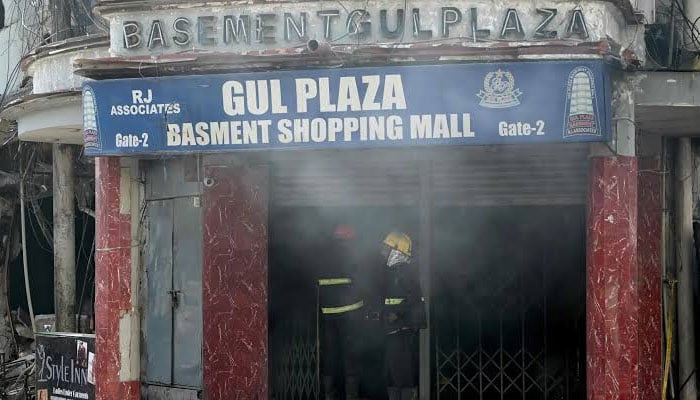
    Court extends Gul Plaza probe till Aug 9

    KARACHI: A judicial magistrate in Karachi has granted investigators additional time to complete the investigation into the Gul Plaza tragedy case. The court extended the deadline until August 9 and directed the investigating officer to submit a complete report at the next hearing. During the proceedings, the investigating officer informed the court that the inquiry was still in progress and requested more time to finalize the investigation. He said responses from several government departments had been collected, but information from some key institutions was still awaited. The court was told that six government departments had already submitted their replies to investigators. However, responses from the Sindh Building Control Authority (SBCA) and the Water Corporation had not yet been received, preventing the investigation from being completed. The investigating officer requested that the court allow additional time so that all pending replies could be included in the final investigation report. The court accepted the request and granted an extension until August 9. The magistrate directed the investigating officer to complete all remaining inquiries before the next hearing and submit a comprehensive report covering all aspects of the case. The court stressed the importance of ensuring that the investigation is thorough and based on complete information from all relevant departments. The Gul Plaza tragedy case has remained under investigation as authorities continue collecting evidence and official records from various institutions. Investigators are examining the role of different departments and reviewing all available documents before reaching their final conclusions.