• |

    Cameroonian President Paul Biya reshuffles military leadership amidst prolonged absence in Switzerland

    Cameroon’s 93-year-old President, Paul Biya, the world’s oldest sitting head of state, has enacted a strategic reshuffle of the country’s military leadership from abroad, issuing decrees to promote senior officers and appoint new commanders while remaining in Geneva, Switzerland. Among the key appointments, Biya promoted five colonels to the rank of brigadier general. Notably, Brigadier General Raymond Jean Charles Beko’o Abondo was reappointed to lead the elite Presidential Guard, an essential security unit responsible for the president’s personal protection that he has commanded since 2013. The administrative shifts coincide with growing domestic anxiety regarding Biya’s absence from Cameroon, which has extended to nearly two months following his departure on 7 June for what officials termed a “brief private stay”. Opponents and civil society groups have voiced concern over an institutional vacuum, noting that a newly created vice-presidential seat remains vacant and a promised cabinet overhaul has yet to materialise. Government representatives, including Communication Minister René Emmanuel Sadi, dismissed claims of administrative paralysis or health crises, maintaining that the president remains fully operational and continues to sign official decrees and financial agreements from abroad.

  • |

    Arson suspect charged as catastrophic wildfires devastate Spokane County

    A 37-year-old man has been charged with first-degree arson in connection with one of three uncontained wildfires burning across Spokane County, Washington, as emergency crews continue to combat blazes that have destroyed hundreds of structures and forced tens of thousands to flee their homes. Spokane County Sheriff John Nowels confirmed that Aaron F. Farinacci was arrested on Monday in relation to the Old Trails Fire and is being held on a $1 million bond. According to law enforcement officials, a witness reported seeing Farinacci kneeling near the location where the fire originated on Saturday, shortly before smoke was observed rising from the brush. Responding officers subsequently located the suspect carrying waterproof matches and a butane lighter. Investigators utilised body-worn camera footage to obtain an official arrest warrant. The Old Trails, Autumn Lane, and Fairview fires have collectively scorched more than 10,000 acres across the region. None of the three blazes has been contained, presenting an ongoing challenge for emergency personnel navigating difficult weather conditions and dry vegetation. Washington Governor Bob Ferguson described the emergency in stark terms during a broadcast interview, characterising the destruction across urban and suburban zones as severe. He noted that entire residential neighbourhoods within the city of Spokane have been largely wiped out by the advancing flames. Local authorities estimate that more than 700 structures have been completely destroyed, with an additional 10,000 properties remaining under immediate threat. Roughly 65,000 residents across Spokane County have been ordered to evacuate as containment efforts proceed. Emergency services confirmed that no fatalities or injuries have been verified to date.

  • |

    Progressive Abdul El-Sayed and moderate Haley Stevens lock horns in high-stakes Michigan Democratic Senate primary

    Voters across Michigan headed to the polls on Tuesday for a pivotal Democratic Senate primary that has emerged as a major battleground testing the ideological direction of the party. Former public health director Abdul El-Sayed faced four-term US Representative Haley Stevens in a fierce contest to secure the nomination to replace retiring Democratic Senator Gary Peters. The election night watch party for El-Sayed in Detroit saw left-wing commentator Hasan Piker launch a sharp critique against the Democratic political establishment while speaking to media representatives. Piker praised El-Sayed’s campaign as an “issues-first” movement, asserting that grassroots engagement carried greater weight than financial backing. Piker drew specific attention to external campaign funding, taking aim at the more than $30 million (£23.5 million) poured into the race by political action committees affiliated with the American Israel Public Affairs Committee (AIPAC) in support of Stevens. Describing the influx of negative advertising against El-Sayed as a “heinous smear campaign”, Piker expressed hope that mainstream Democrats would learn from El-Sayed’s approach. He also dismissed suggestions that the candidate or his high-profile backers would prove to be a general election liability, arguing that voters are disillusioned with personality-driven politics and seeking structural policy changes. Throughout the primary, the candidates presented starkly contrasting visions for the party’s future in the battleground state. El-Sayed, who gained endorsement from Senator Bernie Sanders, focused his platform on reducing corporate influence in politics, expanding healthcare access, and providing economic support to working families. Responding to characterisations regarding his political stance, El-Sayed clarified that he advocates for regulated capitalism rather than socialism. Conversely, Stevens leaned on her tenure in the US House of Representatives and her previous role in the Obama administration, positioning herself as a pragmatic candidate with the legislative track record needed to retain the seat. While earlier polling indicated El-Sayed held a slight edge, surveys suggested Stevens might hold broader appeal amongst moderate voters in the upcoming general election. The political friction surrounding the primary also drew public commentary from US President Donald Trump, who characterised the race as a contest between a “communist and a socialist.” The winning Democratic nominee will move on to face Republican candidate Mike Rogers in the November general election, a race anticipated to play a crucial role in determining party control of the US Senate.

  • | |

    Pakistan discovers high-grade lithium in Khairpur

    Pakistan has taken a significant step toward joining the global lithium supply chain after the discovery of high-grade lithium in Sindh’s Khairpur district, a development that could pave the way for the country’s first domestic lithium industry and strengthen its ambitions in clean energy and advanced manufacturing. The breakthrough comes as the Oil and Gas Development Company Limited (OGDCL) signed a strategic agreement with the Pakistan Institute of Nuclear Science and Technology (PINSTECH) to develop technology capable of extracting lithium from geothermal brine on a commercial scale. The agreement follows the successful identification of high-quality lithium in water produced from a well in Khairpur, raising hopes that Pakistan could eventually reduce its dependence on imported battery materials while creating a new high-value industrial sector. Officials familiar with the project said the collaboration will focus on designing an efficient and commercially viable extraction process. If successful, the initiative could lay the foundation for a local lithium value chain, supporting industries involved in electric vehicle batteries, renewable energy storage systems, and other high-tech applications. The discovery is also expected to attract interest from investors looking to capitalize on the rapidly growing global demand for lithium, a critical mineral used in rechargeable batteries that power electric vehicles, smartphones, laptops, and grid-scale energy storage systems. In another major development, authorities have expanded lithium exploration across Sindh. Plans are underway to investigate eight to ten additional wells in search of further lithium-rich geothermal brine deposits, increasing the likelihood of identifying commercially viable reserves. Energy experts believe Pakistan’s emerging lithium potential could diversify the country’s mineral resources, generate export opportunities, and create skilled employment if exploration results continue to be positive and commercial production becomes feasible. While further scientific studies and economic assessments are still required before large-scale production begins, the Khairpur discovery marks a milestone in Pakistan’s pursuit of critical minerals. Industry observers say sustained investment in research, technology, and infrastructure will be essential to transform the discovery into a competitive domestic lithium industry capable of supporting the country’s long-term energy transition and industrial growth.

  • |

    French and British coastguards rescue over 150 migrants following engine fire in English Channel

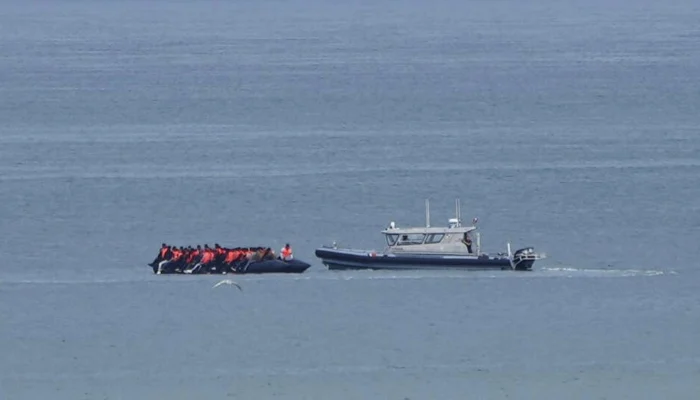
    Joint emergency response teams from France and the United Kingdom rescued 157 migrants after their vessel caught fire during an attempted crossing of the English Channel early on Tuesday morning. The vessel, which departed from the northern coast of France near Normandy, was under monitoring by French maritime authorities when its engine caught fire in France’s search-and-rescue zone close to British territorial waters. The blaze caused the boat’s condition to deteriorate rapidly, forcing emergency crews to initiate an immediate extraction operation involving naval helicopters, lifeboats, and medical units from both nations. Prior to the engine fire, French patrol vessels had retrieved five individuals who requested medical aid overnight. Maritime officials noted that passengers making irregular crossings frequently decline preventative assistance from coastal patrols, accepting aid only when confronted with catastrophic emergencies. All rescued individuals were disembarked at the northern French port of Boulogne-sur-Mer for formal health evaluations and processing. Authorities confirmed that no fatalities were recorded during the incident.

  • |

    Commercial shipping through critical Middle Eastern corridors stays subdued amidst mixed diplomatic signals

    Commercial vessel traffic through key maritime chokepoints in the Middle East, specifically the Strait of Hormuz and the Bab el-Mandeb, remained virtually unchanged, as maritime operators maintained a cautious stance amid conflicting signals regarding diplomatic negotiations. Data tracked by maritime analytics firm Kpler showed that eight vessels transited the Strait of Hormuz, consisting of five tankers and three bulk carriers, matching the previous day’s tally. Six of the vessels were inbound toward the Persian Gulf, while two made the outbound journey. Prior to the escalation of hostilties in late February and subsequent Iranian restrictions across the waterway, the strait typically logged between 130 and 140 daily vessel movements. Concurrently, tracking data recorded an Abu Dhabi National Oil Company (ADNOC) liquefied natural gas (LNG) carrier, the Mubaraz, emerging outside the Strait of Hormuz bound for India’s Dahej terminal in Gujarat. The shipment represents the third successful LNG transit by the vessel carrying cargo loaded from Das Island since regional maritime disruptions intensified. At the Bab el-Mandeb strait, daily transits held steady with 20 vessels passing through the passage, evenly split between entries and exits. Industry analysts emphasized that published transit totals reflect only ships navigating with active Automatic Identification System (AIS) transponders, noting that a significant volume of commercial traffic continues to operate with disengaged transponders to mitigate security risks. The persistent stagnation in maritime trade follows conflicting geopolitical communications. While Qatari mediators indicated progress in preliminary discussions aimed at bringing an end to hostilties, official statements from Tehran denied direct bilateral talks with Washington, noting instead that discussions mediated through Oman remain focused on managing navigation and security protocols through the strait.

  • |

    Guatemalan emergency services initiate community evacuations following eruption of Fuego volcano

    Guatemalan disaster management authorities ordered the preventive evacuation of settlements surrounding the Fuego volcano after the geological structure entered a paroxysmal eruptive phase, sending plumes of volcanic ash and pyroclastic density currents down its flanks. The National Coordinator for Disaster Reduction (CONRED) issued a nationwide institutional orange alert, while escalating departmental warnings to red across Sacatepéquez, Chimaltenango, and Escuintla. Emergency personnel coordinated the relocation of over 1,700 residents from high-risk communities, including El Porvenir and Las Lajitas in the San Juan Alotenango municipality. Monitoring reports from the National Institute of Seismology, Volcanology, Meteorology and Hydrology (INSIVUMEH) confirmed that high-temperature pyroclastic flows, composed of volcanic gases, ash, and incandescent rock, descended across five major ravines. Officials warned that dispersed ash clouds could affect municipalities up to 130 kilometres west and northwest of the crater. In response, regional transport authorities temporarily closed National Route 14 to civilian traffic, while the Ministry of Education suspended in-person schooling across nearby districts.

  • | | |

    Pakistan, US boost anti-terror partnership

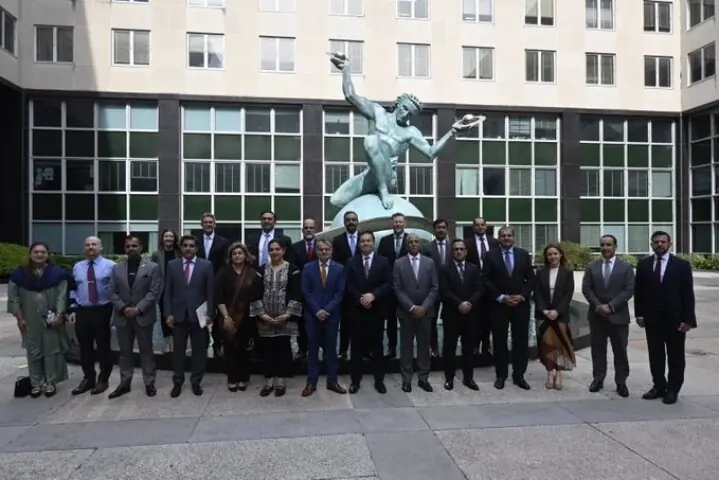
    Pakistan and the United States have reaffirmed their commitment to expanding cooperation against terrorism during the fourth round of the Pakistan-US Counterterrorism Dialogue held in Washington. The meeting brought together senior officials from both countries to discuss the changing regional and global security situation. The dialogue was led by Pakistan’s Special Secretary Ambassador Nabeel Munir and the US Coordinator for Counterterrorism, Ambassador Gregory LoGerfo. Both sides reviewed the current terrorist threat environment. They exchanged views on security challenges facing the region. Officials also explored practical ways to strengthen cooperation in tackling terrorism and violent extremism. A joint statement issued after the meeting said both countries share a common interest in defeating terrorist organisations. It added that Pakistan and the United States remain committed to working together to improve regional and international security. The discussions focused on strengthening border security and improving coordination between the two countries. Officials also discussed measures to disrupt terrorist financing and facilitation networks. They agreed that closer cooperation is essential to prevent terrorist groups from expanding their activities. During the dialogue, both delegations identified several militant organisations that continue to threaten regional peace and stability. These included ISIS-Khorasan (ISIS-K), Al Qaeda, Tehreek-i-Taliban Pakistan (TTP), and the Balochistan Liberation Army (BLA), along with affiliated groups. Both governments reaffirmed their determination to confront these organisations and protect their citizens from terrorism. The two countries also agreed to deepen cooperation through bilateral engagement and multilateral platforms. They stressed the importance of intelligence sharing, information exchange, and joint efforts to improve counterterrorism capabilities. Pakistan’s Foreign Office said the two sides held detailed discussions on regional and global terrorist threats. Both countries pledged to enhance collaboration in addressing security challenges and maintaining regional stability. The latest dialogue reflects improving relations between Islamabad and Washington after years of strained ties following the withdrawal of US forces from Afghanistan in 2021. Since then, both countries have gradually rebuilt engagement by focusing on areas of mutual interest instead of past differences. Besides counterterrorism, Pakistan and the United States have increased cooperation in trade, investment, climate change, and regional peace. Officials from both countries believe continued dialogue is essential to strengthen bilateral relations and promote long-term stability.

  • |

    Cross-party US legislators introduce resolution demanding prompt elections in Caracas

    A bipartisan group of US senators has introduced a resolution urging the swift organisation of free, transparent elections in Venezuela. The measure comes seven months after the American intervention that removed former President Nicolas Maduro and placed Vice President Delcy Rodriguez in charge as acting president. Spearheaded by Republican Senator Ted Cruz and Democratic Senator Jeanne Shaheen, the proposal demands the immediate release of political detainees and measures to protect political figures from violence or state retribution. The resolution highlights growing Congressional dissatisfaction with the current diplomatic stance of the White House, which lawmakers argue has failed to move the interim administration in Caracas toward establishing democratic processes. The action arrives as formal talks between the interim government and select opposition factions prepare to open without the inclusion of prominent opposition leader and Nobel Peace Prize laureate Maria Corina Machado. Machado, currently living in exile following post-election repression, has signaled intentions to return home to assist with national recovery following severe earthquakes, despite reluctance from Washington officials who argue her return could destabilise the fragile political environment. Senatorial leadership emphasised that restoring elected governance remains vital to regional security, cross-border cooperation, and international democratic norms.

  • | | | |

    US, Iran and Oman near interim Strait of Hormuz ag…

    WASHINGTON: A breakthrough agreement aimed at reopening the strategically vital Strait of Hormuz could be announced as early as Wednesday, with the United States, Iran and Oman reportedly nearing a temporary deal designed to restore maritime traffic and reinforce the fragile ceasefire between Washington and Tehran. According to a report by the US news website Axios, citing two regional sources and a US official, negotiations have reached their final stage after weeks of intensive diplomacy. The agreement is expected to provide a 60-day interim framework that could later be extended if both sides remain committed to its terms. Under the proposed arrangement, ships entering the Persian Gulf would travel through the northern shipping lane under Iranian oversight, while vessels leaving for the Arabian Sea would use the southern lane within Omani waters, coordinated in consultation with Iran. During the interim period, no tolls or transit fees would be imposed on commercial shipping. The deal also includes a commitment to clear naval mines from the central navigation channel within 30 days. Once the route is declared safe, it is expected to become the primary passage for two-way maritime traffic under a longer-term management framework jointly coordinated by Iran and Oman. The reported agreement would address some of Iran’s longstanding demands for a greater role in managing navigation through the strategic waterway, one of the world’s most important energy corridors through which a significant share of global oil and liquefied natural gas exports passes. Regional diplomatic efforts played a crucial role in bringing the parties closer to an understanding. Sources familiar with the talks said officials from Qatar, Pakistan and Saudi Arabia supported mediation efforts alongside Oman, while the White House remained actively involved throughout the negotiations. The report added that US envoy Steve Witkoff, Iranian Foreign Minister Abbas Araghchi, and Omani Foreign Minister Badr Albusaidi held several telephone discussions in recent days to finalize outstanding issues. Regional sources said Araghchi had agreed to the proposal in principle over the weekend, pending approval from Iran’s senior leadership and the Supreme National Security Council. A US official and another regional source indicated that Tehran completed its approval process on Tuesday, clearing the way for a formal announcement. If confirmed, the agreement could ease tensions in the Gulf, reduce risks to global energy supplies, and revive broader diplomatic efforts, including discussions on Iran’s nuclear programme and long-term regional stability.