• Teen girl summits khushal gang

    A 14 year old girl from Pakistan’s Balochistan province has achieved an inspiring milestone by climbing one of the country’s highest mountains despite facing family concerns and difficult training. Malika Khilji became the first young girl from Balochistan to reach the top of Khushal Gang a 6,040 meter high peak making history with her achievement. she had always loved sports but growing up she had very few opportunities to take part. When she got the chance to learn mountaineering she decided to follow her passion. She explained that she received a training scholarship from the Alpine Club of Pakistan and the Balochistan Institute for Tourism Hospitality and Culture Management where she began formal mountain climbing training. Malika shared that her family was not supportive at first. She said girls in her community often have limited opportunities but her brother encouraged her and convinced their parents to let her join the expedition. Before attempting Khushal Gang she practiced on the hills around Quetta. However she had little experience with technical climbing. During the expedition she used professional climbing equipment for the first time and faced harsh weather conditions. The toughest part of  the climb came at around 3 a.m. during the final push to the summit when she had to climb a steep wall of snow. Feeling exhausted she almost decided to turn back. Her guide encouraged her by reminding her that she could become the first girl from Balochistan to reach the summit.  Inspired by those words she continued climbing and successfully reached the top. Malika said she hopes to keep climbing more mountains represent Pakistan proudly and encourage other girls to believe in themselves and chase their dreams.

  • NA committee demands action against drug suppliers in universities

    ISLAMABAD: A serious debate erupted in the National Assembly Standing Committee on Federal Education and Professional Training after lawmakers questioned whether educational institutions were doing enough to stop the spread of drugs among students, warning that awareness campaigns alone cannot defeat organised supply networks operating around campuses. The committee, chaired by Ms. Mahtab Akbar Rashdi, examined the growing problem of narcotics in educational institutions and demanded practical results instead of only reports, seminars and awareness programmes. The committee stressed that the issue was not limited to students using drugs but also involved people supplying these substances to young people. During the meeting, officials of the Federal Directorate of Education (FDE) informed the committee that no drug use incident had been officially reported inside its public sector institutions. They said multiple measures were being taken, including drug awareness education, life skills programmes, tobacco free zones, monitoring committees and coordination with law enforcement agencies. However, Member of the Committee Dr Shazia Sobia Aslam Soomro expressed dissatisfaction with the briefing and questioned whether awareness campaigns were producing real results. She said simply giving presentations about awareness was not enough and asked authorities how many suppliers had been caught, how many institutions had reported cases and what action had been taken against those involved in supplying drugs. “This is not a joke,” Chairperson Ms. Mahtab Akbar Rashdi said while stressing that the problem required serious action. She questioned why authorities were focusing mainly on awareness while failing to show clear results against those involved in supplying drugs. The committee also raised concerns that drug suppliers were using new methods to reach students. Members pointed towards reports suggesting that drugs were being supplied through online channels and other hidden methods, including delivery systems that make it difficult for institutions to detect the problem. Dr Shazia Sobia informed the meeting that Islamabad Police had reported seizing 370 kilograms of drugs over three years, with 214 cases reported in educational institutions and 263 people arrested. The member questioned why education authorities were mostly discussing awareness instead of providing details about cooperation with police, the Anti Narcotics Force and rehabilitation centres. The committee raised another major concern that disciplinary action was often taken against students, while the people supplying drugs were not being targeted enough. Members questioned why students faced penalties while suppliers operating around educational institutions continued to escape. They demanded stronger action against those bringing drugs into campuses rather than focusing only on students who may already be victims of addiction. Chairperson Ms. Mahtab Akbar Rashdi said educational institutions must take responsibility because they control campuses, hostels and facilities where students spend their time. She said institutions cannot reach inside homes, but they must ensure strict monitoring within their own premises. She further directed that universities and colleges should provide regular reports about drug related cases, actions taken and rehabilitation efforts. She emphasised that the goal should not only be punishment but also helping affected students recover. The Higher Education Commission (HEC) informed the committee that it had implemented a drug and tobacco control policy across around 249 universities. According to HEC officials, committees had been formed in universities, monitoring mechanisms were introduced and coordination was established with the Anti Narcotics Force and other agencies. HEC officials told the committee that around 1,418 drug related cases were reported in 250 institutions. They said penalties, warnings, counselling and other disciplinary actions were taken in different cases. The committee, however, questioned whether these numbers reflected a real improvement or only showed administrative action after incidents had already occurred. Members also raised concerns about suppliers operating near universities, including allegations that some people connected with campus facilities could be involved in supplying drugs. They demanded that authorities investigate suppliers instead of limiting action to students. HEC officials responded that action had been taken against suppliers where evidence was available. They said surveillance systems, including CCTV monitoring, were being used and that students involved in supplying drugs could face suspension or termination. The committee decided that future discussions should include the Anti Narcotics Force, police authorities and relevant rehabilitation experts to develop a stronger strategy against drug supply networks. Officials were asked to return with practical results, including information about suppliers caught, students rehabilitated and improvements achieved.

  • K-IV project delay, NA committee summons Sindh officials

    Islamabad: The future of Karachi’s major water supply project K IV came under discussion in the National Assembly Standing Committee on Water Resources as lawmakers questioned the scheme’s progress and summoned senior Sindh government officials for a detailed briefing. The committee was informed that the portion of the K IV Project under the responsibility of the Water and Power Development Authority (WAPDA) is expected to be completed by 2027. The WAPDA Chairman told the committee that the funds required for this part of the project have already been secured, removing a major financial hurdle. However, questions remain over the overall progress of the project, as the committee decided to summon key Sindh officials in its next meeting to seek a clear update on the remaining work and coordination between different departments. The National Assembly Standing Committee on Water Resources, chaired by Mr. Ahmad Atteeq Anwer, MNA, directed that the Chief Secretary Government of Sindh, Secretary Irrigation Department Sindh, CEO Karachi Water and Sewerage Corporation and Project Director K IV must attend the next meeting to explain the current status of the project. The K IV project is considered an important scheme for improving water availability for Karachi, a city that has faced long standing challenges related to water supply. The committee stressed the need for better coordination among federal and provincial institutions to ensure timely completion. During the meeting, the committee also reviewed the WAPDA Security Force Bill, 2026. After detailed discussions, members directed that a comprehensive comparison study of the proposed legislation should be provided before the next meeting so that lawmakers can examine its provisions in detail. The committee members emphasised that major water projects require continuous monitoring and effective implementation to ensure public benefit. The committee will continue reviewing progress and seek updates from concerned departments in future meetings.

  • Rs7.1bn Parliament lodges project faces forensic a…

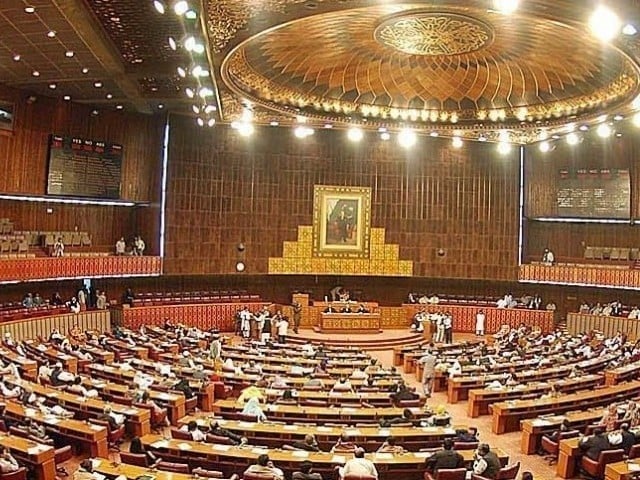
    Islamabad: Serious questions have been raised over the construction quality and progress of the Rs 7.1 billion New Parliament Lodges Project after the Senate House Committee found major differences between official claims and the actual condition observed during inspection. The committee was informed that although significant progress was claimed, the inspection team found that only around 20 percent of the 104 new Parliament Lodges were functionally complete. Senators raised concerns over construction standards, design changes and the quality of facilities being developed with public funds. The Senate House Committee, chaired by Senator Syedal Khan, Deputy Chairman Senate and Chairman Senate House Committee, expressed concern over the findings and decided to move towards a detailed forensic audit to examine the quality of construction work, repairs and maintenance activities. During the meeting, Senator Kamil Ali Agha informed the committee that several issues were identified during the inspection of the new lodges. These included changes from the originally approved central air conditioning system to individual air conditioning units, poor ventilation arrangements, problems in ceiling fan installation due to design limitations and unsuitable placement of storage areas near lodge entrances. Senators questioned whether the project was being completed according to the originally approved design and whether the quality of construction matched the cost involved. Officials from the Capital Development Authority informed the committee that the grey structure of the lodges had been completed and finishing work was currently underway. They stated that imported lifts were yet to be installed and furniture for the lodges had already been ordered. The CDA representative further informed the committee that an architect had been hired to prepare a model lodge design for the renovation of existing Parliament Lodges. The renovation plan would include improvements in electrical systems and other related facilities. The committee also discussed complaints regarding maintenance and repair work in existing Parliament Lodges. Senator Jan Muhammad highlighted that only limited funds had been allocated for the repair of his allotted lodge despite repeated requests over the past three years. CDA officials informed the committee that funds for the first quarter had been released and the tendering process would begin soon. They expected repair work to start in the first week of September 2026. The Ministry of Planning, Development and Special Initiatives informed the committee that the total cost of the 104 New Parliament Lodges Project stands at Rs 7.1 billion. Out of this amount, Rs 3.5 billion has already been spent, while Rs 1.1 billion has been allocated during the current financial year. The committee also discussed concerns related to transparency and accountability. CDA officials informed members that the Auditor General of Pakistan had already started an external forensic audit of repair and maintenance works, and the final report was awaited. However, the committee decided that a broader independent forensic audit should also be conducted for both the existing Parliament Lodges and the construction of the new 104 lodges. Senator Syedal Khan proposed that a professional consultancy firm led by Syed Shabbar Zaidi should conduct the audit. Senator Kamil Ali Agha supported the proposal, describing the firm as highly professional. The committee unanimously recommended engaging the firm to ensure transparency, accountability and better quality control. The committee stressed that Parliament projects must meet the highest standards because they are funded through public money. Members said timely completion, quality construction and proper use of funds would remain under strict parliamentary monitoring.

  • Blood treatment removes forever chemicals

    A new study suggests that a blood cleaning treatment used to lower cholesterol may also help remove harmful “forever chemicals” from the body. The treatment called apheresis is mainly used for people whose high cholesterol cannot be controlled with medication.  During the procedure blood is taken from one arm and passed through a special filter that removes excess fats. The cleaned blood is then returned to the body through the other arm. At the Technical University of Dresden in Germany, home to one of the world’s largest apheresis centers around 10,000 of these treatments are performed each year. For the study researchers examined used filter bags from the apheresis machines to see what substances had been removed along with cholesterol. They wanted to find out whether the filters could also remove harmful forever chemicals toxic substances that remain in the environment and the human body for a very long time as well as tiny plastic particles known as microplastics. The researchers say the early findings are promising. If future studies confirm these results apheresis could become a useful way to reduce the amount of certain harmful pollutants in the body in addition to lowering cholesterol.

  • | |

    Woman arrested after four men stabbed near Covent …

    Police arrested a woman on Wednesday after four men suffered stab wounds during an incident near London’s Covent Garden district, with investigators saying they believe the attack stemmed from a mental health related episode. Officers detained the woman, who is in her forties, on suspicion of possessing an offensive weapon and assault. She remains in custody as the investigation continues. Police described the incident as mental health related, though they have not released further details about what led up to the attack. Emergency crews found four men, aged 34, 39, 42 and 52, suffering from stab wounds at the scene. A spokesperson for the London Ambulance Service said paramedics treated all four men on site before transporting them to a nearby trauma centre for further care. Authorities have not yet released updates on the men’s conditions. The stabbings took place on Endell Street, a road situated about a quarter of a mile from Covent Garden square, one of London’s most visited tourist destinations known for its street performers, shops and market stalls. The area typically draws large crowds of visitors and locals throughout the day, and Wednesday’s incident occurred in a part of the city usually associated with heavy foot traffic rather than violent crime. Police have not disclosed whether the woman and the four victims knew each other before the attack, nor have they indicated a specific motive beyond the reference to a mental health related incident. Investigators are continuing to gather evidence at the scene and are expected to provide further updates as the inquiry progresses. London has periodically grappled with knife related violence in public spaces, prompting ongoing debate over policing resources and mental health support services across the city. Incidents involving individuals in psychiatric distress have drawn particular attention from advocacy groups, who argue that stronger community mental health infrastructure could help prevent similar episodes before they escalate into violence.

  • | |

    US publication praises Pakistan’s digital financ…

    A US publication has praised Pakistan’s efforts to modernise its financial system, saying the country is steadily strengthening its position in the global digital financial landscape through reforms and technological innovation. The article highlighted Pakistan’s initiatives to promote digital transformation and said the country has the potential to play a meaningful role in the evolving global digital economy. It also commended the vision of Pakistan Virtual Assets Regulatory Authority (PVARA) Chairman Bilal Bin Saqib, stating that Pakistan must actively position itself within the international digital financial system to benefit from emerging technologies and new economic opportunities. According to the publication, the future will belong to countries that make swift decisions and implement reforms without delay. It noted that Pakistan has the opportunity to emerge as a leader in the digital economy by embracing innovation and adopting forward-looking policies. The article further stated that governments can no longer rely solely on traditional bureaucratic systems. Instead, they must adopt the speed, flexibility and innovation-driven approach of technology startups to remain competitive in a rapidly changing global environment. It added that digital assets are becoming the foundation of the future financial infrastructure and countries investing in digital finance today will be better positioned for long-term economic growth and global competitiveness. The publication’s remarks come as Pakistan continues to promote digital payments, financial technology and cashless transactions as part of its broader strategy to modernise the economy and expand financial inclusion.

  • | |

    Overnight missile barrage on Kyiv region kills 17,…

    Russia launched a large scale missile assault on Kyiv and the surrounding region on Wednesday, killing at least 17 people and leveling warehouses belonging to major retail chains, according to Ukrainian officials, as Kyiv’s dwindling stock of air defence interceptors leaves the capital increasingly exposed. Explosions tore through the region overnight, lighting up the sky above the Ukrainian capital, which has faced missile attacks roughly every three to four days in recent weeks as Moscow has ramped up its aerial campaign. President Volodymyr Zelenskiy said on Telegram that ballistic missile interceptors could have prevented the deaths recorded on Wednesday, calling on Ukraine’s international partners to replenish the country’s interceptor stocks. He said shipments of air defence missiles have arrived at only a third of the pace seen in 2025. Ukraine’s air force said its defences shot down close to 90 percent of the 115 drones Russia launched but failed to stop any of the 24 ballistic missiles or four Zircon cruise missiles fired during the same assault. Russia’s Defence Ministry said its forces struck seven logistics centres in Kyiv and the wider region, claiming the sites were used to store or move dual use goods and drone components. Ukraine has struggled for months with a shortage of interceptor missiles for its US supplied Patriot systems, currently the only weapon in its arsenal able to shoot down Russian ballistic missiles traveling at many times the speed of sound. Since the outbreak of the Iran war in February, Patriot interceptors originally intended for Ukraine have instead gone to the US military and its Gulf allies. Russia has used the opening to intensify ballistic strikes on Kyiv and other Ukrainian cities even as its ground advances have slowed markedly this year. Officials said the attack injured more than 40 people in addition to those killed. At a commuter rail station in the Kyiv suburb of Brovary, rescue workers found seven bodies scattered across the platform, with an eighth victim discovered nearby in nearby bushes. Volodymyr Bigun, head of the local administration in Brovary, said residents had missed their last train home when the strike hit, and confirmed eight deaths in the district so far. He said five logistics warehouses sustained damage there, including one belonging to food retailer Fozzy, and accused Russian forces of continuing to target civilian infrastructure. Both Russia and Ukraine have consistently denied targeting civilians throughout the war, which began with Russia’s full scale invasion in February 2022. Ukraine has continued striking back at Russian territory as part of its own campaign, hitting a logistics hub belonging to Russian online retailer Wildberries in the Tula region overnight, adding to more than a dozen similar facilities Kyiv has damaged in recent operations. Epicentr, Ukraine’s largest home improvement retail chain, said two major logistics facilities and a manufacturing plant were destroyed within minutes during Wednesday’s strikes, and that it was still working to determine the full extent of the damage. The company described the attack as a deliberate effort to undermine Ukrainian manufacturing, logistics, employment and the broader capacity to recover from the war. Food retailer Silpo said on social media that at least six of its employees died in the strikes and that two of its distribution centres caught fire. Iryna Chechotkina, co founder of the online retailer Rozetka, said she watched overnight as three ballistic missiles destroyed years of work, describing the experience as devastating while stressing that her company remains operational. Ukraine’s economy has shown considerable resilience over more than four years of war, sustained in part by billions of dollars in financial support from Western governments, but business losses have mounted this year as strikes on commercial infrastructure have grown more frequent. The Kyiv regional military administration said Wednesday’s attack damaged 13 warehouses, a manufacturing facility, four private homes and dozens of vehicles. Prime Minister Sergii Koretskyi, who took office last month following a government reshuffle, said officials would hold an emergency meeting with business leaders to determine how to keep logistics and trade operations running smoothly. Kyiv has renewed its request for additional PAC-3 interceptors, the newest generation of Patriot missile. Separately, the United States is continuing talks that would allow Ukraine to manufacture Patriot missiles domestically, according to four people familiar with the discussions, even after President Donald Trump expressed skepticism about such an arrangement.

  • |

    Saba Hameed’s double role as mom and wife sparks confusion

    Saba Hameed continues to prove her versatility as an actor, appearing in more projects than most of her peers. Her latest casting choices, though, have left fans and colleagues puzzled. In ARY Digital’s Bas Tera Saath Ho, now 28 episodes deep, Saba portrays the wife of the male lead’s uncle, played by Faran Tahir. Around the same time, she plays the mother of the female lead’s father in Dar-e-Nijaat, another ARY production, again opposite Tahir. She is essentially his wife in one show and his mother in another, with both airing simultaneously. Content creator K Khan raised the issue in an Instagram reel on Monday. He questioned how the makers of Dar-e-Nijaat decided she suited the role of Tahir’s mother, given that she plays his spouse elsewhere on the same channel. Actor Zhalay Sarhadi weighed in through the comments, arguing that only women seem to age in Pakistani show business, while men remain perpetually youthful on screen. She said the industry keeps reinforcing this outdated mindset, even as attitudes shift elsewhere in the world. Sarhadi called for better, more realistic roles written for female actors, and joked she might soon end up playing Humayun Saeed’s mother if the trend continues. Atiqa Odho voiced similar frustration on her show Kya Drama Hai, posted to YouTube on Tuesday. She praised the overall cast but admitted she could not understand the casting logic behind Hameed’s role. She added that Hameed’s look in the part felt unconvincing, since she does not resemble a grandmother. Not everyone agreed. TV host Juggun Kazim defended the casting, calling it proof of Hameed’s exceptional range as a performer. She said Hameed has a rare gift for making audiences forget she is acting and fully believe each character. This is not the first time ageism has stirred debate in Pakistani television. Atiqa herself was previously targeted over remarks about her appearance. Critics often point out that male actors in their 40s still land lead roles as young men, such as Fahad Mustafa in Kabhi Main Kabhi Tum, frequently paired with much younger actresses. Women of similar age, meanwhile, are routinely pushed into roles as mothers or older relatives, underscoring a persistent double standard in casting across the industry.

  • | |

    Female UEFA officials lead pushback against Infantino amid FIFA turmoil

    Two women sitting on UEFA’s executive committee have become the most visible faces of opposition to FIFA President Gianni Infantino as he confronts the toughest test of his ten years leading world football’s governing body, raising fresh questions about whether the sport is ready for female leadership at the top. Laura McAllister of Wales and Lise Klaveness of Norway, the only two women on UEFA’s executive committee, have taken outspoken public stances against Infantino during a crisis triggered by the collapse of his plan to push through a private equity backed venture called FIFA Football Enterprises. The backlash against that failed proposal has opened up a broader conversation about whether football, an industry historically run by men, could realistically be led by a woman. McAllister, who serves as a UEFA vice president, told a foreign news agency that seeing a woman elected FIFA president would be a welcome development, though she cautioned that the path there remains complicated. “I’d like to think we’re not far off having a female president,” she said, adding that she worries football still lags behind broader social progress on gender. The conversation gained additional traction after former FIFA President Sepp Blatter publicly said this week that the time had come for a woman to lead the organization, singling out Klaveness for praise. McAllister welcomed the sentiment but pushed back on the idea that installing a female president would be straightforward. She said a woman could well be the strongest candidate available, but stressed that FIFA’s global politics do not operate as a simple meritocracy. Her comments follow the unraveling of Infantino’s FFE plan, which fell apart after UEFA and several other regional federations mounted fierce resistance. Wales became the first national association to publicly withdraw its backing for Infantino’s re election bid, and opposition quickly spread through other parts of FIFA’s membership. Infantino was scheduled to hold an emergency meeting in Morocco on Wednesday as the fallout continued. McAllister, whose call for national associations to boycott FIFA events won unanimous backing at UEFA’s emergency meeting last week, said the current unrest points to governance failures that run deeper than any single controversy. She said the organization appears to be approaching a genuine crisis point, if it has not reached one already. She cited a string of episodes that have chipped away at confidence in Infantino’s leadership, including FIFA’s connections to the failed European Super League proposal, political controversies tied to the World Cup, and the federation’s decision to overturn a red card issued to American forward Folarin Balogun after President Donald Trump publicly urged Infantino to revisit the call. McAllister said these incidents collectively point to serious flaws in how FIFA governs itself. She framed the standoff as a fight to preserve football’s core principles, tracing her outlook and Klaveness’s back to their shared history as international players for their respective countries before they moved into administrative careers, Klaveness as a lawyer and McAllister as a political scientist. She said both are driven by a strong sense of values, warning that football risks losing its essential character if those values slip away. She added that women in the sport sometimes bring a clearer focus on football’s fundamental purpose rather than getting absorbed in its business side, arguing the game belongs to everyone, from grassroots participants to elite professionals, spanning wealthy and poor countries alike, and should remain free from private capital control or political interference. Only 10 of FIFA’s 211 member associations currently have a woman at the helm, Klaveness among them. Any serious bid for the FIFA presidency would require support stretching well beyond Europe, and McAllister urged patience rather than a rushed push for female leadership. She said building momentum gradually often proves more effective than trying to force rapid change. Michael Payne, a former marketing director at the International Olympic Committee, said football’s governing bodies have historically trailed other sports when it comes to advancing women into leadership positions. He drew a contrast with the IOC, now led by Kirsty Coventry, noting that the Olympic movement has spent roughly two decades pursuing gender equity and has reached full parity between male and female athletes at the Games, a benchmark football’s World Cup has yet to meet. The dispute over FIFA’s direction reflects broader tensions playing out across international sports governance, where longstanding institutions face growing pressure to modernize leadership structures and diversify decision making bodies that have remained largely unchanged for decades. As football’s global profile continues to expand, the question of who holds power at its highest levels, and how that power gets exercised, appears likely to remain a central point of contention well beyond the current crisis surrounding Infantino’s leadership.