pakistan monsoon death
| |

Pakistan monsoon death toll hits 110

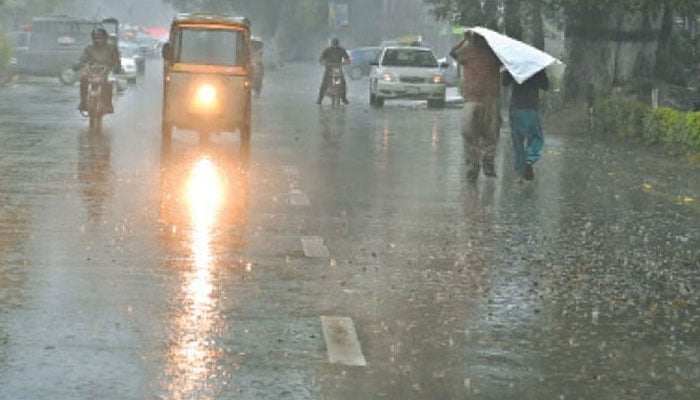
The death toll from monsoon rains, flash floods and landslides across Pakistan has risen to 110, according to the National Disaster Management Authority (NDMA).

The authority said 360 people have been injured in rain-related incidents since June 26. Nearly 800 houses have also been damaged across the country.

Most fatalities have been reported in Khyber Pakhtunkhwa, followed by Punjab. Several areas have also faced flooding and damage caused by heavy rainfall.

The NDMA briefed Prime Minister Shehbaz Sharif on the latest situation. The authority warned that northern parts of the country could face more flash floods and glacial lake outburst floods in the coming weeks.

Rapidly melting glaciers have increased the risk in mountainous areas. Authorities have been asked to remain prepared for sudden flooding and other weather-related emergencies.

Prime Minister Shehbaz directed officials to use all available resources to protect lives and property. He also stressed the importance of early warning systems and timely emergency measures.

The Pakistan Meteorological Department has forecast another strong monsoon spell from July 29. The system is expected to affect Islamabad, upper Punjab, Khyber Pakhtunkhwa, Azad Kashmir and Gilgit-Baltistan.

The upper catchment areas of major rivers may also receive heavy rainfall. The weather system is expected to continue until August 5.

The weather department has warned of possible urban flooding. Rising water levels in rivers, hill streams and nullahs are also expected in vulnerable areas.

Authorities have urged residents to remain cautious and follow official warnings during the latest spell of rainfall.

Meanwhile, the Punjab Home Department has imposed Section 144 across the province for 60 days. The restrictions ban swimming, bathing and unauthorised boating at various water bodies.

Pakistan faces heavy monsoon rainfall every year between late June and September. The season frequently causes flooding, landslides, infrastructure damage and loss of life.

Similar Posts

  • | |

    Jaranwala tragedy remains a deep wound, says Punja…

    Punjab Minister for Minority Affairs Sardar Ramesh Singh Arora has said that the painful memories of August 16 are still fresh. He described the Jaranwala tragedy as a deep wound on the hearts of the affected families and communities. In a statement, Arora said the Punjab government stood with all victims of the tragedy. He said Chief Minister Punjab and the provincial government were committed to protecting the rights of religious minorities. Arora said the Punjab government had adopted an effective strategy to ensure the safety of minority communities. He added that security measures had been strengthened to protect people from violence and discrimination. The provincial minister said the protection of religious minorities was a priority for the government. He claimed that the government had taken steps to ensure that such an incident would not happen again. Arora warned that no individual or group would be allowed to take the law into their own hands. He said violations of the rights of religious minorities would not be tolerated. He stressed that every citizen had the right to live in safety and with dignity. He said the government was responsible for protecting the lives and property of all citizens, regardless of their religious background. The minister also said religious minorities in Punjab were being provided with all possible facilities. He said the government was working to address their concerns and improve their overall security. Arora said the Punjab government would continue taking measures to create a peaceful environment for all communities. He added that protection of minorities was essential for maintaining harmony and stability in the province. The minister’s statement came on August 16, the anniversary of the Jaranwala incident. The episode remains a painful memory for the Christian community and has continued to raise concerns about the protection of religious minorities. Arora said the government was determined to learn from the tragedy and prevent similar incidents in the future. He reiterated that no one would be permitted to violate the law or target minority communities.

  • |

    ECC approves emergency import of 1 million tonnes …

    ISLAMABAD: In a move aimed at easing mounting pressure on wheat supplies and soaring flour prices, the Economic Coordination Committee (ECC) has conditionally approved the emergency import of up to one million metric tonnes of wheat, with the estimated import bill standing at $340 million. The decision was taken during an emergency meeting of the ECC chaired by Finance Minister Muhammad Aurangzeb. However, officials said the final quantity of wheat to be imported will depend on the requirements of the provinces and their willingness to arrange payments before shipments are ordered. According to the Ministry of Finance, a high-level steering committee led by Deputy Prime Minister Ishaq Dar will oversee the import process, assess the country’s wheat requirements and develop an operational framework to ensure transparency and financial discipline. Federal Minister for National Food Security Rana Tanveer Hussain said the imported wheat would cost approximately $340 million, while transportation costs within Pakistan would be borne by the provinces requesting the grain. Officials said the federal government had linked wheat imports to the opening of letters of credit (LCs) by provincial governments to avoid financial complications experienced during previous commodity imports. Provinces seeking wheat supplies will also participate in decisions regarding import quantity, quality standards and procurement procedures. Government sources indicated that the actual import volume could range between 500,000 and one million metric tonnes, depending on the final assessment by provincial authorities. The approval comes as Pakistan faces a sharp increase in wheat flour prices. According to the Pakistan Bureau of Statistics, the average national price of wheat flour has surged by 74% over the past year, reaching around Rs129 per kilogram, while prices in some cities, including Peshawar, have climbed as high as Rs150 per kilogram. Officials said the provinces had collectively requested around 2.2 million metric tonnes of wheat to stabilise supplies and curb rising prices. The ECC’s approval for up to one million tonnes represents nearly 45% of that total demand. The steering committee will now finalise procurement timelines, import mechanisms and financial arrangements in coordination with provincial governments. Authorities hope the emergency imports will help improve market availability, ease pressure on flour prices and provide relief to consumers struggling with the rising cost of essential food items.

  • |

    Trump’s generic drug tariff plan puts US-India pharma ties to test

    A newly announced tariff schedule introduced by President Donald Trump targeting generic pharmaceutical imports is expected to significantly affect the deep trade relationship between the United States and India, which serves as the principal supplier of generic medicines to the American market. Indian drug manufacturers currently supply roughly half of all generic pharmaceuticals consumed in the United States, with the American market generating close to a third of India’s overall pharmaceutical export earnings. The scale of this commercial exposure means the newly outlined tariff timeline, despite featuring a two-year grace period, has immediately drawn close scrutiny from Indian pharmaceutical firms and market analysts due to the critical role US sales play in corporate revenues. The policy introduces additional uncertainty to a bilateral trade dynamic already strained by recent tariff disputes, raising the stakes for Indian manufacturers as they decide whether to commit capital toward expanding domestic manufacturing inside the United States or absorb steep import duties in the future. Trump outlined a phased tariff framework for generic medications entering the United States. Under this timeline, generic drug imports will continue to enter duty-free under a zero per cent tariff until August 1, 2028, marking a two-year transition window from the policy’s effective date. Following this grace period, a 100 per cent tariff will apply for one year, after which the import levy will rise to 200 per cent. Trump framed the escalated duties as a penal mechanism designed to compel foreign pharmaceutical companies to construct manufacturing facilities on American soil within the allotted timeframe, rather than remaining reliant on overseas production plants. He explicitly distinguished this new generic drug framework from the administration’s policy on branded and patented pharmaceuticals, stating that existing regulations for branded drugs would remain unchanged due to their ongoing success. Reports citing White House details indicate that the new generic tariffs will be executed under Section 232 trade authority, matching the legal foundation used for the administration’s earlier tariffs placed on branded pharmaceuticals in April. Trump also highlighted what he described as an unprecedented surge in new domestic pharmaceutical plant construction currently underway across the United States, presenting the new tariff schedule as a measure to reinforce an existing shift toward onshore manufacturing. The policy holds major implications for the broader American healthcare system and global exporters because generic medications account for nearly 90 per cent of all prescriptions filled in the United States. This action follows previous interventions in the pharmaceutical sector, including the 100 per cent tariff placed on branded drugs starting in October 2025, alongside a most-favoured-nation pricing push. That pricing policy led more than a dozen major pharmaceutical corporations, including Pfizer, Eli Lilly, and Novo Nordisk, to conclude agreements to reduce US drug prices in exchange for multi-year exemptions from import duties. For Indian drugmakers, the two-year transition window provides initial breathing room but lacks long-term security. Indian generic manufacturers now face the choice of allocating capital to construct or expand production facilities within the United States before the 2028 deadline, or facing severe cost disadvantages once the punitive tariffs take effect. Industry analysts expect to monitor whether major Indian drug companies will announce accelerated manufacturing investments in the United States over the coming months as the sector formulates its response.

  • |

    Will Scharf named Trump’s new White House counsel

    US President Donald Trump has appointed Will Scharf as the next White House counsel and assistant to the president. Scharf, who currently serves as White House staff secretary, will take over the legal post on September 1, 2026. He will replace David Warrington, who is set to leave the administration and enter the private sector. Scharf is a lawyer and political adviser with close ties to Trump. Before joining the White House, he represented Trump in several major legal matters. He was also involved in the presidential immunity case that reached the US Supreme Court. Scharf previously worked as a federal prosecutor. He also served as a law clerk for federal appeals court judges, giving him experience in both government and federal litigation. His new position will place him at the centre of the Trump administration’s legal strategy. As White House counsel, Scharf will advise the president on legal issues and oversee matters involving executive privilege, judicial appointments and relations with the Justice Department. He will also be involved in responding to legal challenges facing the administration. The position is considered particularly important as Trump prepares for growing political and legal pressure ahead of the 2026 midterm elections. Scharf joined Trump’s legal team in 2023. He worked on the federal election interference case brought by former Special Counsel Jack Smith. His involvement continued as the case reached the Supreme Court. In 2024, the Supreme Court ruled that presidents have broad immunity from criminal prosecution for official acts. The decision became a major development in the legal battles surrounding Trump. After Trump returned to the White House in January 2025, Scharf was appointed staff secretary. In that role, he managed documents and other materials sent to the president for review. He also frequently appeared with Trump during executive-order signing ceremonies. Scharf has also chaired the National Capital Planning Commission. During his tenure, he was involved in the approval process for Trump’s proposed White House ballroom project, which has faced controversy and scrutiny. His appointment comes at a politically sensitive time for the administration. The White House is dealing with legal and political challenges while preparing for increased congressional scrutiny before the midterm elections. Trump praised Scharf after announcing the appointment. He described him as “tough, strong, and smart” and highlighted his experience as a federal prosecutor and his work on Trump’s legal cases.

  • | | | |

    Two Chinese oil tankers safely cross Bab el-Mandeb…

    RIYADH: Two Chinese supertankers carrying Saudi crude oil have safely passed through the Bab el-Mandeb Strait, despite growing security concerns following the Houthi movement’s recently announced naval blockade targeting Saudi-linked shipping. According to international media reports and shipping data, the vessels successfully navigated one of the world’s busiest maritime chokepoints, even as commercial shipping across the region faces mounting disruption due to escalating tensions in the Middle East. The two tankers departed earlier this week from Saudi Arabia’s Yanbu Port, transporting crude oil to China. Maritime tracking data indicated that both ships identified themselves as carrying Chinese crews, a detail analysts believe may have helped reduce the risk of interception while transiting the strategically important waterway. The successful voyage comes at a time when regional shipping routes are under increasing pressure. While the Bab el-Mandeb passage remained open for these vessels, traffic through the Strait of Hormuz has slowed significantly amid heightened geopolitical tensions and security threats. Industry monitoring organizations reported that only one oil tanker crossed the Strait of Hormuz on Thursday, marking the lowest daily traffic recorded since May 7. The sharp decline reflects growing concerns among shipping companies over the safety of vessels operating in the Gulf region. The latest developments follow the Houthis’ announcement of a naval blockade against Saudi shipping, raising fears of further disruptions to global energy supplies. The Red Sea and nearby waterways serve as vital corridors for international trade, with millions of barrels of crude oil passing through them every day. Maritime security experts say shipping companies are increasingly reassessing routes, insurance coverage, and operational risks as tensions continue to rise. Some firms have warned that insurance policies for vessels operating in high-risk conflict zones could become more expensive or even be withdrawn if security conditions deteriorate further. Although the two Chinese tankers completed their journey through Bab el-Mandeb without incident, analysts caution that the broader security situation remains highly volatile. Any escalation involving key maritime routes could have significant consequences for global oil markets, freight costs, and international supply chains. The safe passage of the vessels offers temporary reassurance for energy markets, but observers note that commercial shipping in the region remains vulnerable as geopolitical tensions persist. Governments, shipping operators, and energy traders are closely monitoring developments, with particular attention focused on the strategic waterways that connect the Gulf to global markets.

  • | | |

    TTAP announces relief mission to AJK amid tensions

    ISLAMABAD: The opposition alliance Tehreek Tahaffuz-e-Ayeen Pakistan (TTAP) has announced that its senior leadership will travel to Azad Jammu and Kashmir (AJK) on Monday with relief supplies, while criticizing the government’s handling of the situation in the region and calling for dialogue to address ongoing political tensions. Speaking at a press conference in Islamabad, TTAP spokesperson Akhunzada Hussain Yousafzai said the delegation would carry humanitarian assistance for affected residents and express solidarity with people in Rawalakot, where a protest sit-in has continued in recent days. Yousafzai alleged that the government had responded to public dissent with force rather than engagement. He claimed that, according to what he described as verified information, dozens of people had lost their lives during the unrest. His claims have not been independently verified, and no official confirmation of the casualty figures was immediately available. The spokesperson also alleged that leaders associated with the Joint Awami Action Committee (JAAC) had either been killed or had bounties placed on them. Authorities have not publicly responded to these specific allegations. Political tensions in Azad Jammu and Kashmir have persisted since widespread demonstrations erupted last year over demands for constitutional, administrative and governance reforms. The JAAC-led protests called for a broad package of changes, including an end to privileges for the political elite, the abolition of 12 legislative assembly seats reserved for refugees and the removal of the existing quota system. The unrest resulted in deadly clashes before negotiations between the government and the JAAC produced an agreement covering several core demands. As part of that understanding, both sides agreed to establish a high-level committee to examine the issue of refugee seats in the AJK Legislative Assembly. However, the issue remains unresolved. The JAAC continues to demand the abolition of the reserved refugee seats, while the government maintains its opposition to the proposal. Yousafzai argued that attempts to suppress opposing voices had deepened political divisions and contributed to the emergence of public movements in the region. He maintained that all outstanding issues could be resolved through meaningful negotiations rather than confrontation. The opposition alliance said its planned visit is intended to provide humanitarian support while also urging all stakeholders to pursue peaceful dialogue. Political observers say the coming days could prove significant as discussions over governance reforms and representation continue to shape the political landscape in Azad Jammu and Kashmir.

Leave a Reply

Your email address will not be published. Required fields are marked *