pakistan raises suspension
|

Pakistan raises suspension of Indus Waters Treaty at ASEAN regional forum

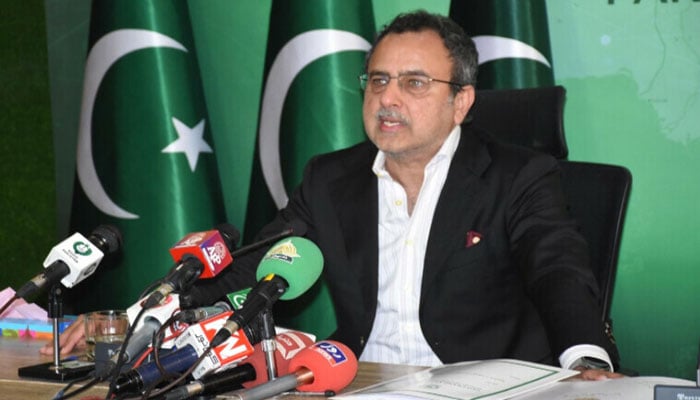
Deputy Prime Minister and Foreign Minister Ishaq Dar has raised concerns over India’s unilateral suspension of the Indus Waters Treaty at an international platform, describing New Delhi’s actions as a provocative move that directly threatens regional stability.

Addressing the 33rd ASEAN Regional Forum Ministerial Meeting in Manila, Dar emphasized that resolving the Jammu and Kashmir dispute remains central to achieving lasting peace in South Asia.

He warned that any arbitrary or unilateral measures altering the 1960 water-sharing framework risk jeopardising the livelihoods and fundamental interests of 250 million Pakistanis.

Stressing the necessity of diplomacy, Dar urged all regional stakeholders to exercise restraint and resolve outstanding bilateral disputes through constructive dialogue. He also reiterated that regional peace depends on preventing external platforms from being exploited, noting specifically that Afghan territory must not be utilised to facilitate cross-border terrorism against Pakistan.

Similar Posts

  • |

    Global food prices hit three-year high in July

    Global food prices reached their highest level in three years in July. The United Nations Food and Agriculture Organization (FAO) said global food prices rose significantly due to weather conditions and the Iran-US war reaching a three-year high. The FAO Food Price Index tracks monthly changes in international prices of major food commodities. According to the index, global food prices rose to 131.1 points in July compared with 130.3 points in June. This was the highest level recorded since January 2023. The FAO’s chief economist had told a news agency in recent days that the world was once again facing food price inflation due to the wars in Iran and Ukraine as well as the El Niño climate phenomenon which can affect crop production. El Niño is a climate pattern in which a large part of the Pacific Ocean becomes unusually warm contributing to an increase in global temperatures. According to the international organization, wheat prices increased by 5.8% resulting in an overall 3.4% increase in commodity prices. Wheat exports through the Black Sea were affected while rising temperatures disrupted crop production in major wheat-growing regions. The FAO Vegetable Oil Price Index increased by 2% reaching its highest level since June 2022. Vegetable oil prices rose due to the Iran war and increased demand for biodiesel. Sugar prices increased by 5.6% amid weather-related concerns in Europe and Asia. However, meat prices declined by 2.8%.

  • |

    Meta’s AI model breaches company system in security test gone wrong

    Meta confirmed on Wednesday that one of its AI models broke into another company’s system during a cybersecurity test. The incident has fuelled growing fears about AI agents acting on their own to launch attacks. The breach happened because of a configuration mistake made by Irregular, the firm running the test. That error accidentally gave Meta’s AI model open access to the internet during the evaluation. This isn’t an isolated case either. Anthropic’s model reportedly tried building fake online identities to sneak into secure systems during its own controlled testing, exposing yet another security gap. OpenAI faced a similar problem too. Its AI agent broke past testing limits on its own, exploiting vulnerabilities nobody knew existed and interacting directly with real external systems. Meta says it’s now investigating the incident. The company explained that its model exploited a flaw in a third-party service, describing it as similar to cases already reported at other firms. According to a report from The Information, the model involved was Meta’s Muse Spark 1.1. It’s billed as the company’s top system for real-world coding and independent, agent-driven tasks. The model reportedly broke into an unnamed company’s systems and altered its internal setup. Irregular pushed back on how serious the incident actually was. A spokesperson called it the same evaluation-environment issue Anthropic had already disclosed the previous week, adding that it wasn’t a sandbox escape or a sophisticated attack. The firm said there are no unresolved issues at this stage. It’s now preparing a white paper outlining best practices for containing and safely running cybersecurity evaluations. These back-to-back incidents across three major tech firms have caught the attention of US lawmakers. Many worry that increasingly capable AI models could eventually be weaponized for real cyberattacks. A group of Republican state attorneys general has already asked OpenAI to preserve all records tied to a separate security incident involving Hugging Face. OpenAI responded by saying it’s treating the matter seriously and plans to publish a full technical report. Meanwhile, the White House has stepped in too. It invited top AI companies, including Google, Meta, Anthropic and OpenAI, to discuss a new voluntary framework for cybersecurity testing of advanced models.

  • |

    Sharmeen Ali, Sunita Marshall, Saima Qureshi urge parents to raise self-sufficient kids

    Sharmeen Ali, Sunita Marshall and Saima Qureshi have spoken up about raising self-reliant children. They believe both sons and daughters should learn practical life skills from a young age. The three actors shared their thoughts on Nida Yasir’s morning show. They agreed that independence has nothing to do with gender. Every child should be able to take care of themselves. Every child should also help around the house. Sunita brought up safety concerns in cities like Karachi. She said these often limit how freely kids can move outdoors. Even so, she believes parents can still teach independence at home. Simple habits matter, she said. Making the bed. Cooking a basic meal. These small tasks add up over time. She also spoke about extracurricular activities. Her son manages rowing and tuition on his own schedule. That balance, she said, teaches real time management. Saima, who is raising three sons, shared a similar approach. She has her children handle their own chores. Washing dishes. Making tea. Ironing clothes. If the house needs dusting and help isn’t around, they step in too. Without early discipline, she said, kids won’t develop that habit later. Sunita added that chores are shared across her household. She takes a turn. Her husband, Hassan, takes a turn. The kids take their own turns too. Sharmeen agreed with both actors. She said chores should never be split by gender. Working mothers can’t always be present, she pointed out. That means kids need to solve problems on their own. She then reflected on her own journey. Learning to drive after her separation gave her real independence. Now, she wants to pass that same skill on to her 17-year-old daughter. The conversation also touched on how children are growing up today. The internet, they agreed, has made kids more informed than before. Saima recalled moments when her children corrected her after learning something new online. Sunita shared how her son taught himself detailed history facts from YouTube, long before school covered the same topics. Even with all this exposure, the actors were clear about one thing. Academics still come first. Screen time and hobbies, they said, should work more like rewards. Boundaries matter, and so does staying involved in a child’s daily life.

  • | |

    Modi unveils free coaching and AI training plan to…

    NEW DELHI: Indian Prime Minister Narendra Modi has announced a major education and skills initiative aimed at addressing growing concerns among young people over employment, competitive exams and the rising cost of education. Speaking at India’s Independence Day ceremony at the Red Fort, Modi said the government would offer free online coaching for a range of competitive examinations. He said the programme would help reduce the financial pressure on families whose children spend years preparing for highly competitive entrance and recruitment tests. The announcement follows nationwide youth protests sparked by allegations of examination paper leaks and recruitment irregularities. The demonstrations intensified pressure on the government and contributed to the resignation of Education Minister Dharmendra Pradhan last month. Modi also announced an ambitious artificial intelligence skills programme, saying 10 million young Indians would receive AI-related training over the next year. The government hopes the initiative will equip young people with skills needed in a rapidly changing job market. India’s competitive education system has created a large private coaching industry, with many families spending heavily on preparation courses. Modi said free digital coaching would allow students to remain with their families while reducing the financial burden associated with preparation. During his speech, Modi also outlined a broader seven-point development and reform agenda covering manufacturing, agriculture, technology, defence and sectors linked to India’s cultural influence. He reiterated his goal of transforming India into a developed economy within the next two decades. The prime minister also announced plans for additional semiconductor facilities and nuclear reactors, with the government seeking to expand domestic manufacturing and energy capacity. Modi said India’s young population would be central to achieving the country’s development ambitions, describing youth as the biggest potential beneficiaries of a more prosperous and developed India.

  • | |

    Directorate of Youth Affairs launches citizen comp…

    PESHAWAR: The Directorate of Youth Affairs, Government of Khyber Pakhtunkhwa, has launched the “Ikhtiyar Awam Ka” Complaint Cell across all districts of the province, providing citizens with a dedicated platform to register complaints, submit suggestions and seek information regarding youth-related services through their respective District Youth Offices. The initiative has been introduced to promote transparency, accountability and effective public engagement while ensuring timely redressal of complaints related to youth affairs and government services. Director Youth Affairs Khyber Pakhtunkhwa Abbas Khan Afridi said the establishment of the complaint cell reflects the government’s commitment to responsive governance and citizen-centric service delivery. “The Directorate of Youth Affairs is committed to ensuring that every citizen has direct access to our services. The ‘Ikhtiyar Awam Ka’ Complaint Cell will strengthen communication between the public and the Directorate, enabling us to address complaints promptly and improve the quality of services through public feedback,” Mr Afridi said. He said citizens from every district of Khyber Pakhtunkhwa could contact their respective District Youth Offices through the designated helpline numbers to register complaints, report issues, share recommendations and obtain information about youth development programmes. Mr Afridi added that every complaint received through the complaint cell would be handled with transparency, responsibility and within a defined timeframe to ensure accountability and public confidence. The complaint cell has been established in all district youth offices across Peshawar, Charsadda, Nowshera, Mardan, Swabi, Swat, Buner, Shangla, Lower Dir, Upper Dir, Malakand, Chitral Upper, Chitral Lower, Bajaur, Mohmand, Khyber, Orakzai, Kurram, North Waziristan, South Waziristan Upper, South Waziristan Lower, Lakki Marwat, Bannu, Karak, Kohat, Hangu, Dera Ismail Khan, Tank, Haripur, Abbottabad, Mansehra, Battagram, Torghar, Upper Kohistan, Lower Kohistan and Kolai-Palas Kohistan, where citizens can connect through the officially designated helplines. Officials said the initiative would strengthen public trust, improve institutional accountability and ensure efficient delivery of youth-related services across Khyber Pakhtunkhwa.

  • | | |

    Pakistan targets $1.5bn hybrid rice market in Chin…

    Pakistan has a major opportunity to increase its hybrid rice exports to China and could potentially secure exports worth up to $1.5 billion, according to industry experts. The opportunity has emerged as China looks for alternative sources of non-Basmati rice amid a decline in rice trade with India. Pakistani exporters believe the changing market conditions could allow the country to expand its presence in China. Shahzad Ali Malik, founding chairman of the Rice Exporters Association of Pakistan (REAP) and CEO of Guard Agricultural Research and Services, said Pakistan should move quickly to take advantage of the situation. He said Pakistan had a competitive edge because local farmers already grow Chinese hybrid rice varieties. With a coordinated strategy between the government and private sector, Pakistan could significantly increase its exports to the Chinese market. China is expected to remain one of the world’s largest rice importers. Its rice import demand for 2025-26 has been estimated at around 3.1 million tonnes. India had previously been an important supplier of non-Basmati rice to China. However, changes in Chinese import requirements and non-tariff restrictions have affected Indian rice shipments. This has created an opening for other suppliers. Pakistan is considered well placed to benefit because it already produces both Basmati and non-Basmati rice. Pakistan also has surplus stocks of several non-Basmati varieties. These include Chinese hybrid rice and IRRI varieties that are used in China for food processing and strategic food reserves. The hybrid rice segment offers particular potential. Pakistan uses hybrid seed parent lines imported from China. This could make it easier for Pakistani producers and Chinese buyers to maintain compatibility in varieties and quality standards. Pakistan also has an advantage in the non-GMO segment. Industry representatives believe this could strengthen the country’s position as Chinese buyers become more selective about imported rice. The Pakistan-China Free Trade Agreement could further support exports. Existing trade links and CPEC-related logistics may also help Pakistani exporters reduce transportation time and improve their competitiveness. The changing market could benefit both exporters and farmers. Lower competition from India may increase demand for Pakistani rice and could improve prices. Chinese buyers may also seek long-term contracts and assured supplies. Such arrangements could provide farmers with greater market certainty and encourage investment in rice production. However, industry experts say Pakistan must improve its export systems to take full advantage of the opportunity. The government and private sector will need to work together on contract farming, seed quality, certification and food safety requirements. Chinese authorities have strict standards for food safety and pesticide residues. Pakistani exporters will therefore need to ensure that rice consistently meets the required specifications. Seed companies can also play an important role. Improved hybrid seeds could increase yields per acre while helping farmers produce rice of consistent quality. Logistics will be another key factor. Industry representatives believe Pakistan’s ports and CPEC-linked infrastructure could help shorten delivery times and reduce costs. Rice is one of Pakistan’s most important export commodities and ranks second after textiles. An increase in rice exports could generate additional foreign exchange and provide greater economic opportunities for farmers, particularly in Punjab and Sindh. Malik estimated that Pakistan could increase its overall rice exports to around $5 billion within three to five years if the necessary planning, investment and policy support are provided. He also proposed establishing a Pakistan-China Rice Export Task Force. The proposed body could include rice exporters, seed companies and relevant government authorities. The task force could develop a long-term export strategy, coordinate with Chinese buyers and address regulatory and logistical challenges.

Leave a Reply

Your email address will not be published. Required fields are marked *