foreign nationals seek
|

Foreign nationals seek asylum in Canada following world cup

A total of 175 foreign visitors who travelled to Canada during the FIFA World Cup have formally requested asylum, triggering legal reviews under the country’s refugee protection laws.

Canada issued approximately 26,000 visas for the tournament, which saw 13 matches staged across Toronto and Vancouver. While thousands of football fans globally applied for visitor visas to attend the fixtures, strict screening measures resulted in over 50 per cent of those applications being rejected.

Immigration officials have not disclosed whether any athletes or team members are among the claimants. However, initial breakdown data indicates that 25 applicants are citizens of Ghana, while Egypt and Colombia account for 15 claims each, with total figures expected to climb further.

Canadian authorities had issued warnings prior to the tournament clarifying that temporary visas obtained for the World Cup would not serve as an avenue to bypass immigration standards, remain beyond authorised stays or claim political asylum.

Similar Posts

  • | |

    Fawad urges Imran Khan’s immediate hospital tran…

    Former federal minister Fawad Chaudhry has called for the immediate end of Pakistan Tehreek-e-Insaf (PTI) founder Imran Khan’s solitary confinement and urged authorities to shift him to a hospital following recommendations in his latest medical report. In a statement posted on social media platform X, Chaudhry expressed concern over Imran Khan’s health and conditions at Adiala Jail. He said the medical report made it necessary for authorities to end the former prime minister’s solitary confinement and provide him with better medical facilities. Chaudhry criticised the decision to keep Imran Khan in isolation and alleged that denying adequate medical care to a major political leader was unacceptable. He urged the authorities to follow the recommendations of medical experts and ensure that all necessary treatment and facilities were provided without delay. A medical report submitted to the Supreme Court reportedly contains recommendations from a medical board that examined Imran Khan at Adiala Jail. According to the report, the medical board recommended several measures to help manage Imran Khan’s blood pressure and anxiety. The doctors recommended that the former prime minister be allowed to walk for at least one hour every day. The board said some relaxation in the prison environment was necessary in view of his current health condition. The medical team also recommended providing Imran Khan with newspapers, magazines, books and television facilities. The measures are intended to keep him mentally engaged during his imprisonment. The medical board also made recommendations regarding his meetings with family members and his wife. It suggested that meetings with his family and wife should take place more regularly and for longer than the currently prescribed duration, subject to the applicable rules. According to the recommendations, regular physical activity, access to reading material and greater interaction with family members could help reduce Imran Khan’s anxiety and assist in keeping his blood pressure under control. Fawad Chaudhry has called on the authorities to implement the medical recommendations and ensure that Imran Khan receives appropriate treatment and a suitable environment during his imprisonment.

  • | |

    Dar, Turkish Foreign Minister reaffirm diplomacy a…

    ISLAMABAD: Deputy Prime Minister and Foreign Minister Ishaq Dar held a telephone conversation with Turkish Foreign Minister Hakan Fidan, during which the two sides discussed recent regional developments and reaffirmed their commitment to strengthening bilateral cooperation. According to Pakistan’s Ministry of Foreign Affairs, the two foreign ministers agreed that dialogue and diplomacy remain the most effective means of addressing regional challenges and advancing peace and stability. The conversation comes as Pakistan continues diplomatic efforts to help ease tensions surrounding the ongoing US-Israeli conflict with Iran. Islamabad has stepped up engagement with key international and regional partners and has offered its platform for dialogue between Washington and Tehran. Dar has recently held discussions with senior diplomatic representatives from the United States, United Kingdom and China, as well as Pakistan’s ambassador-designate to Sweden, focusing on developments in the region. He has repeatedly emphasised the importance of implementing the Islamabad Memorandum of Understanding as a pathway towards lasting peace and security. Norwegian Foreign Minister Espen Barth Eide also recently praised Pakistan’s role in facilitating diplomatic efforts during the conflict, describing Islamabad’s contribution as important and constructive. The latest Dar-Fidan conversation also comes against the backdrop of growing security cooperation among Pakistan, Türkiye and Saudi Arabia. On August 7, the three countries signed the Makkah Joint Defence Agreement, a trilateral framework aimed at strengthening collective deterrence, expanding military cooperation and supporting regional stability. The agreement builds on the Strategic Mutual Defence Agreement signed between Pakistan and Saudi Arabia last year, under which aggression against either country is to be regarded as aggression against both. The latest diplomatic contacts underline Pakistan and Türkiye’s shared emphasis on dialogue, cooperation and diplomatic engagement as tools for managing regional tensions and promoting stability.

  • | |

    Tiny kurtas and Y2K trends dominate summer fashion

    Pakistani fashion influencers are embracing a fresh wave of nostalgic style this summer, with Y2K-inspired outfits, tiny kurtas, polka dots and fusion dressing emerging as some of the season’s biggest trends. Rather than recreating early-2000s fashion exactly as it was, creators are blending vintage influences with contemporary styling, giving classic pieces a modern update. Across Instagram, influencers are moving away from heavily embellished looks in favour of versatile wardrobe staples that can be styled for both casual and dressy occasions. The result is a mix of timeless silhouettes, tailored basics and playful colours that reflect nostalgia while remaining practical for everyday wear. One of the standout trends making a strong comeback is the tiny kurta. Popular during the late 1990s and early 2000s, the short kurta has returned with a modern twist. Fashion creators are pairing it with straight-leg jeans, tailored trousers, capri pants and flowing skirts, creating looks that combine traditional Eastern wear with contemporary styling. The trend has reminded many fashion enthusiasts of classic Bollywood wardrobes from the early 2000s while fitting naturally into today’s minimalist aesthetic. Instead of heavily embroidered designs, influencers are opting for clean cuts and understated styling that allow the silhouette to take centre stage. Another pattern enjoying renewed popularity is the polka dot. After several seasons dominated by florals and abstract prints, the timeless motif has returned on dresses, matching co-ord sets and separates. The classic print offers a vintage-inspired feel without appearing outdated, proving that certain fashion elements continue to return in new forms. Summer wardrobes are also embracing a colour palette inspired by Y2K fashion. Shades such as butter yellow, cherry red, chocolate brown, powder blue and soft pink are appearing frequently across influencer feeds, bringing warmth and nostalgia to seasonal outfits. Accessories like headbands and capri trousers have also quietly re-entered fashion conversations, although in more refined ways than their original early-2000s versions. While nostalgic pieces are attracting attention, wardrobe basics remain equally important this season. Oversized button-down shirts, classic waistcoats, relaxed tailoring and crisp white shirts have become essential styling pieces. Influencers are layering these staples over denim or pairing them with tailored trousers to create polished everyday looks. Perhaps the defining feature of this summer’s fashion movement is fusion dressing. Rather than separating Eastern and Western clothing, creators are combining them effortlessly. Tiny kurtas are styled with denim, waistcoats are worn with skirts, blazers are layered over traditional separates, while shalwars are paired with fitted tank tops and contemporary accessories. Instead of chasing fast-changing microtrends, many Pakistani influencers appear to be focusing on clothing that offers longevity and versatility. By blending nostalgic Y2K influences with classic tailoring and traditional silhouettes, they are creating wardrobes that feel both fashionable and wearable, making this summer less about dramatic statements and more about timeless personal style.

  • | |

    Kangana Ranaut attacks Gen Z protesters, targets young women

    Actress and BJP Member of Parliament Kangana Ranaut has sparked widespread outrage after sharing a series of inflammatory Instagram Stories targeting the Gen Z-led Cockroach Janta Party movement, which has been demanding accountability over exam paper leaks that rocked India’s education system. Her remarks, which took direct aim at young women protesters and described them in deeply offensive terms, have drawn sharp condemnation from across the country. The political context for her comments is significant. The CJP protests, which began in New Delhi and spread to other cities, were triggered by widespread allegations of paper leaks in competitive examinations. The movement gained considerable momentum after Education Minister Dharmendra Pradhan resigned, intensifying public debate around the protesters’ demands for systemic reform and accountability. Ranaut chose not to address those demands. Instead, she used her platform to launch a sweeping attack on the character of the people participating in the protests. “They don’t do this at the cost of their parents or families,” she wrote. “Here is a new generation of so-called westernised Indian women. I call them generational gutter. Some of them have nothing to offer to the system. They are not good at studies but they are so ugly and corrupt that they can’t be home makers either. But they probably flaunt their freedom to have drugs, drinks or endless body counts.” She went on to specifically criticise young Hindu women whom she accused of aspiring to a form of independence they had not earned. “Most appalled is the behaviour of young Hindu women who want to imitate the lives of independent career women, without earning that freedom,” she said. “Women who are truly independent, they make rebellious choices, bold opinions, unconventional career moves and they take accountability for their actions.” She also addressed those who had faced physical confrontations during the protests, framing the violence as a natural consequence of their own behaviour. “Protesters who are getting beaten and abused on the roads by the common people because of their filthy and abusive roles, must understand that once you post, you will be criticised and once you damage public property, the public will damage you.” She concluded with a statement she presented as philosophical but which read to many as dismissive. “Now is not a time to cry. If you receive the opposite reaction, it is due to cause and effect. You will understand soon if you have not already.” The remarks have landed with considerable force at a moment when Indian celebrities are already divided over whether and how to support the CJP movement. While figures including Diljit Dosanjh, Arijit Singh and actor Imran Khan have expressed solidarity with the protesters, Ranaut has positioned herself firmly on the opposite side, in a manner that has gone well beyond political disagreement into personal attack. The language she used about young women in particular has drawn the most intense criticism, with many pointing out the specific ugliness of describing protesting citizens in the terms she chose.

  • | |

    Canada announces retaliatory tariffs as trade talks with US collapse

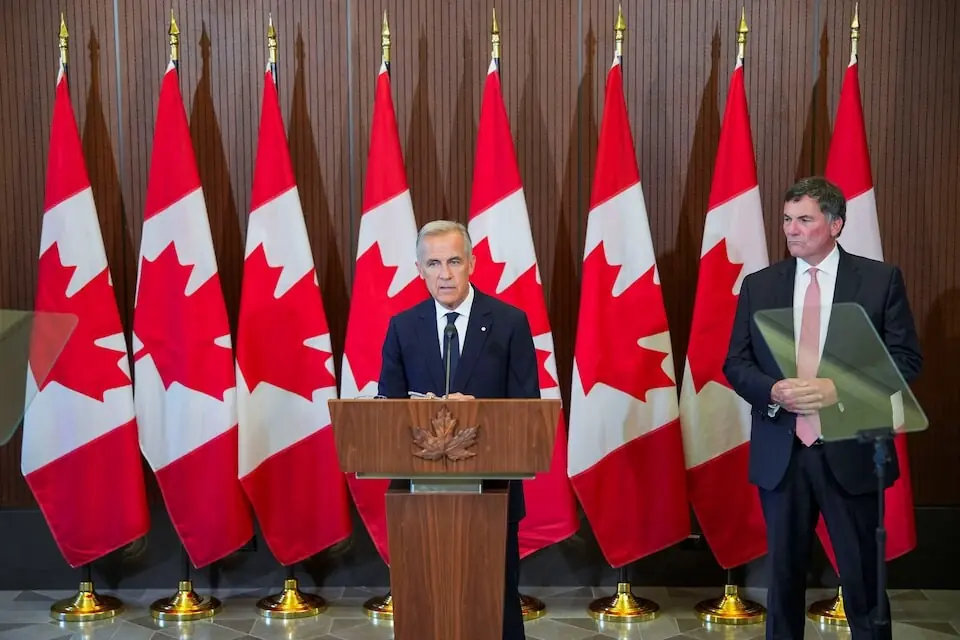
    OTTAWA: Canada has announced plans to impose new tariffs on a range of American products in response to steep duties introduced by US President Donald Trump on Canadian goods, marking another sharp deterioration in trade relations between the two North American neighbours. Prime Minister Mark Carney said on Saturday that Canada would adopt a “dollar-for-dollar” approach to Washington’s latest tariffs. The retaliatory measures are scheduled to take effect on September 8 and will cover products including US steel, electronics, appliances, agricultural equipment, pulp and paper and other goods. The announcement came after three days of intensive negotiations between Canadian and US officials ended without a trade agreement. Both sides blamed the other for the failure to reach a breakthrough, raising fresh uncertainty over the future of the United States-Mexico-Canada trade framework. Carney vows to defend Canadian economy Speaking at a press conference in Ottawa, Carney said Canada would respond to the US measures in an effort to shield workers, farmers, businesses and families from the economic impact of the new duties. “Canada will match Washington’s new tariffs dollar for dollar,” Carney said, stressing that Ottawa could not accept the conditions put forward by the US administration. Asked whether the dispute had effectively developed into a trade war, Carney responded in stark terms, saying Canada had been attacked and therefore had to defend its economic interests. The Canadian government said its countermeasures would target a broad selection of US products. Further details, including the specific goods affected and the tariff rates, are expected to be announced in the coming days. Carney also indicated that Ottawa would introduce support programmes for Canadian industries affected by the American duties. The assistance could remain in place for several years depending on the impact of the trade measures. US-Canada negotiations break down The latest dispute follows the collapse of negotiations that had been viewed as an opportunity to prevent a further escalation in tariffs. US Trade Representative Jamieson Greer described the failed talks as a missed opportunity for Canada and said Washington would proceed with measures responding to Canadian retaliation. He also suggested that no fresh negotiations were immediately planned. The White House and offices representing the US commerce secretary and trade representative did not immediately issue a detailed response to Canada’s announcement. The breakdown has created additional uncertainty for businesses operating across the US-Canada border, particularly industries that depend heavily on integrated North American supply chains. New US duties affect key Canadian exports The latest US tariffs apply to a range of Canadian exports, including wine, furniture, dairy products, cement, clothing, fishing equipment and hockey-related products. According to the Canadian government, the new duties affect approximately $20 billion worth of Canadian exports to the United States. Unlike some previous measures, the latest tariffs do not fully exempt products traded under the existing North American trade agreement. The new duties represent a relatively small share of Canada’s overall exports to the US, but officials and industry representatives warn that individual sectors could face significant pressure. Industries such as softwood lumber, wine, manufacturing and other export-oriented businesses could experience weaker demand, higher costs and potential employment losses if the dispute continues. Candace Laing, chief executive of the Canadian Chamber of Commerce, urged companies across the country to prepare for a prolonged period of uncertainty. Dispute over vehicles and trade conditions One of the most difficult issues during the negotiations involved the treatment of larger vehicles. Canadian negotiators reportedly sought to extend preferential tariff arrangements for light-duty vehicles to medium- and heavy-duty trucks. Washington opposed the proposal, according to people familiar with the negotiations. Carney said the US position could have placed Canadian-made models at a competitive disadvantage. He specifically pointed to vehicles produced in Canada, including Ford’s F-350, F-450 and F-550 trucks and General Motors’ Silverado. The Canadian prime minister also said some US proposals touched on issues involving Canadian culture, language and sovereignty, although he did not provide further details. Ontario backs Ottawa’s position Ontario Premier Doug Ford, a prominent critic of US tariffs, welcomed Carney’s decision to reject what he described as an unfavourable agreement. Ford said the proposed terms would have harmed Ontario’s automotive, steel and manufacturing industries, adding that he supported Ottawa’s decision to retaliate rather than accept a deal that he considered damaging to the province. Ontario is particularly exposed to disruptions in US-Canada trade because of its large manufacturing and automotive sectors and its close integration with American supply chains. Canada seeks new international partnerships The escalating dispute also comes as Canada seeks to reduce its economic dependence on the United States. Nearly 70% of Canadian exports are destined for the US market, making the country particularly vulnerable to changes in American trade policy. Carney has nevertheless pledged to strengthen Canada’s relationships with other countries and explore new trade and security partnerships. The prime minister was elected on a platform that included a tougher negotiating stance toward the Trump administration. His government has maintained that Canada should defend its economic interests while looking for opportunities to expand trade beyond its southern neighbour. Public opinion has also strengthened Ottawa’s position, with polling indicating that many Canadians oppose making major concessions to Washington. Conservative Party leader Pierre Poilievre, who leads the federal opposition, also called for national unity in response to the US tariffs.

  • | |

    Sharjeel Memon slams PML-N over ‘fake mandat…

    Sindh Senior Minister Sharjeel Inam Memon on Tuesday launched a strong criticism of the Pakistan Muslim League-Nawaz (PML-N), accusing the party of relying on what he described as a “fake mandate” while campaigning for the upcoming Azad Jammu and Kashmir (AJK) elections. In a statement, Sharjeel Memon said the people of Azad Kashmir had rejected what he called “manufactured political representation” in the past and would make the same decision in the upcoming elections. He expressed confidence that voters would once again support democratic values and reject politics based on disputed electoral mandates. The senior minister alleged that the PML-N had come to power through a questionable electoral process and was now attempting to present itself as a defender of the Kashmiri people. He said a party that, in his view, failed to respect the public’s vote could not claim to protect the democratic rights of others. Sharjeel Memon said the people of Pakistan and Azad Kashmir were fully aware of the country’s political history and would decide their future through the power of the ballot. He maintained that genuine public support could only be earned through transparent elections and good governance. Referring to the Pakistan Peoples Party’s (PPP) performance in Gilgit-Baltistan, he said the party had secured the confidence of voters through democratic means. He added that the people of Azad Kashmir would also reject what he described as the politics of a disputed mandate. The Sindh minister also criticised the Punjab government’s performance. He claimed that many residents of Punjab continued to travel to Karachi for advanced medical treatment and better healthcare facilities. He urged the PML-N leadership to focus on addressing public issues instead of criticising political opponents during election campaigns. Sharjeel Memon said the PPP remained committed to constitutional supremacy, democratic principles and respect for the people’s mandate. He added that the party believed in serving the public through practical governance rather than political slogans.

Leave a Reply

Your email address will not be published. Required fields are marked *