
pakistan unveils fiveyear
|

Pakistan unveils five-year plan to revive hockey

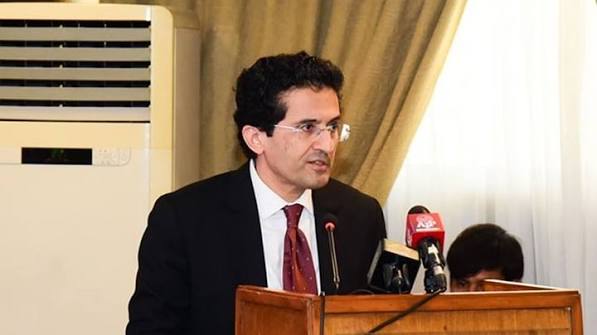
ISLAMABAD: Pakistan Hockey Federation (PHF) President Mohiuddin Ahmad Wani has unveiled an ambitious three-to-five-year roadmap aimed at rebuilding Pakistan’s national sport from the grassroots level and restoring the country’s competitiveness on the international stage.

The plan comes at a difficult time for Pakistan hockey. The national team’s defeat against England in its opening match of the 2026 FIH Men’s Hockey World Cup has once again raised questions about the sport’s decline and the team’s ability to compete with the world’s leading sides.

Wani said the federation wanted to move away from short-term decisions and instead build a sustainable system that could continuously produce quality players.

“Our priority is not just to win one tournament but to rebuild the entire hockey ecosystem,” he said.

Under the proposed system, young players would progress through school, district, provincial and national competitions before entering the senior setup. The PHF says the pathway will be based on merit, allowing talented players to rise through the ranks regardless of their background.

The federation also plans to draw lessons from successful hockey systems in the Netherlands, Belgium, Germany and India. Greater emphasis will be placed on modern coaching, professional training methods and improved infrastructure.

A major target is to increase the number of astro-turf facilities across Pakistan from the existing 52 to 100 within five years. The proposed facilities would not merely provide playing surfaces but also host coaching programmes, competitions and dedicated initiatives for women’s hockey.

Coaching is another key part of the roadmap. Local coaches are expected to receive advanced training with the assistance of foreign experts, while the national side would be given greater international exposure through overseas tours and visits by foreign teams to Pakistan.

The PHF also intends to improve financial incentives for players and provide clearer career opportunities, an important step toward encouraging talented youngsters to choose hockey as a long-term profession.

The roadmap envisages grassroots and infrastructure development during the first year, stronger academies and coaching programmes in the second, followed by a performance review in the third year.

Wani stressed that restoring Pakistan hockey would require sustained cooperation from governments, stakeholders and the public.

The challenge is formidable, but the PHF hopes its long-term approach can turn Pakistan’s once-dominant hockey tradition into a competitive future rather than another chapter of sporting nostalgia.
Similar Posts

  • | |

    US appeals court allows thousands of social media …

    SAN FRANCISCO: A US appeals court has cleared the way for thousands of lawsuits against major social media companies, including Meta Platforms, Google parent Alphabet, TikTok owner ByteDance and Snap, rejecting an attempt by the technology firms to use federal online protections to halt litigation over allegations that their platforms are deliberately designed to keep young users hooked. The ruling was issued Monday by the 9th US Circuit Court of Appeals, which declined to immediately consider an appeal filed by Meta and TikTok challenging a lower court decision that had allowed more than 3,000 lawsuits to continue in federal court. The lawsuits, brought by parents, children, school districts, local governments and state authorities, accuse social media companies of designing products and features that encourage excessive use among children and teenagers. Plaintiffs argue that the companies were aware of potential risks associated with prolonged social media use but failed to adequately protect young users or warn families about those risks. At the center of the companies’ legal argument is Section 230 of the Communications Decency Act of 1996. The law generally protects online platforms from being held liable for content created and posted by their users. Meta and TikTok argued that the protection should also prevent lawsuits alleging that the companies failed to warn users about the allegedly addictive characteristics of their platforms. However, the appeals court determined that the companies had sought appellate review too soon. The court said Section 230 provides a defense against liability but does not give companies immunity from having to defend themselves in litigation. As a result, the companies cannot use the current appeal to stop the cases from proceeding through the lower courts. Meta’s attempt to delay multistate trial rejected The appeals court also rejected Meta’s request to postpone a major trial involving 29 US states. The case, brought by state attorneys general, accuses Meta of unlawfully collecting and using information relating to children, designing its platforms to encourage young users to remain engaged for extended periods and making misleading statements concerning the safety of its services. Meta had sought to delay the trial while its appeal concerning Section 230 was pending. The court rejected that request, meaning the proceedings can move forward as scheduled. The development represents another significant legal challenge for Meta, which has faced growing scrutiny from regulators, lawmakers and families over the impact of its platforms on children and teenagers. A Meta spokesperson declined to comment on the appeals court’s decision. TikTok representatives did not immediately respond to requests for comment. Lawyers say trials could reveal what companies knew Attorneys representing thousands of individuals and school districts involved in the federal litigation welcomed the ruling. Lawyers Lexi Hazam and Previn Warren said the decision would allow the multistate case to proceed and would also clear the path for a separate trial involving school districts that is scheduled for February. The attorneys said court proceedings could provide the public with evidence about what social media companies knew regarding the potential effects of their products on children, when they became aware of those concerns and how they responded. The lawsuits have become part of a much broader legal battle in the United States over the responsibilities of technology companies toward minors. Plaintiffs contend that social media platforms can contribute to serious problems among young people, including anxiety, depression, eating disorders and concerns about body image. They argue that companies intentionally use features such as recommendation algorithms, notifications and engagement mechanisms to encourage repeated and prolonged use. The technology companies have generally denied allegations that they deliberately designed their platforms to harm children. Thousands of cases consolidated The federal lawsuits have been centralized before US District Judge Yvonne Gonzalez Rogers in Oakland, California. The cases involve claims brought by a wide range of plaintiffs, including families, school districts, municipalities and state governments. They seek financial damages, penalties and other forms of relief from the technology companies. Meta and TikTok previously appealed rulings issued by Judge Rogers in 2023 and 2024 that largely permitted the litigation to continue. The companies also face hundreds of similar cases in state courts. Around 3,300 related cases have been consolidated in California state court, underscoring the scale of the legal challenge confronting the social media industry. Jury verdict adds pressure on technology companies The latest appeals court decision comes after several significant courtroom developments involving the alleged impact of social media on young users. In March, a Los Angeles jury found Meta and Google negligent in connection with claims that their social media products were designed in ways that could harm young people. The jury awarded $6 million to a young woman who said she became addicted to Instagram and YouTube after using the services as a child. The verdict was closely watched because it represented an early test of how juries may respond to similar allegations against major technology companies. Meta and Google have denied wrongdoing in the case and said they intend to appeal. New Mexico ruling increases scrutiny Meta has also suffered a major legal setback in New Mexico. A judge in the state recently ruled that the company had created a public nuisance and ordered it to pay $567 million into a fund intended to support teen mental-health initiatives, while also requiring the company to implement additional measures aimed at protecting young users. The New Mexico proceedings followed an earlier stage of litigation in which a jury found that Meta had misled consumers about the safety of its platforms and ordered the company to pay $375 million. Meta has rejected the allegations and indicated that it will challenge the findings through the appeals process. The growing number of lawsuits reflects increasing pressure on social media companies in the United States to explain how their platforms are developed, marketed and operated for younger audiences. The latest 9th Circuit decision does not resolve whether Meta, Google, TikTok or Snap will ultimately be held liable. Instead, it allows the underlying lawsuits to continue, potentially setting the

  • |

    FIFA backs Gianni Infantino, apologise for World Cup privatisation plan

    RABAT: FIFA has thrown its full support behind president Gianni Infantino despite growing criticism over the now-abandoned proposal to privatise the commercial rights of the FIFA World Cup, while admitting that serious mistakes were made during the handling of the controversial plan. The governing body’s senior leadership met in Rabat, Morocco, on Wednesday to address the crisis that erupted after details of the proposal were leaked to the media. Following the meeting, FIFA issued a statement reaffirming its confidence in Infantino but also apologised to member associations for the way the process was managed. The proposed project, known as the FIFA Forward Enterprise (FFE), aimed to create a new commercial subsidiary responsible for managing tournaments such as the FIFA World Cup and Club World Cup. FIFA estimated the venture could generate up to $4.2 billion, based on a valuation of $20 billion, while significantly increasing financial support for its 211 member associations. Under the proposal, each member nation would have received a one-time payment of $20 million in 2027, with regular funding for the 2027–2030 cycle rising from $8 million to $20 million. However, instead of winning support, the initiative sparked fierce opposition from football stakeholders worldwide. UEFA strongly criticised the plan, describing it as an opaque agreement that lacked transparency, while CONCACAF questioned Infantino’s leadership and governance. Canadian Prime Minister Mark Carney also publicly expressed doubts about Infantino’s ability to continue leading world football. Facing mounting pressure, Infantino withdrew the proposal last weekend, saying FIFA’s primary goal had always been to unite and strengthen the global game. In Wednesday’s statement, FIFA admitted that member associations and the FIFA Council should have been more closely involved from the outset. It also acknowledged mistakes made after the proposal became public and pledged to improve transparency in future decision-making. A formal review of the process will now be conducted, with findings expected to be presented at the next FIFA Council meeting. Officials confirmed that the FFE proposal has been permanently shelved. Later in the day, Infantino attended a Women’s Africa Cup of Nations match in Rabat alongside Moroccan football federation president Fouzi Lekjaa, one of the few senior officials to publicly support him throughout the controversy. Despite surviving the immediate crisis with the backing of FIFA’s leadership, the episode has raised fresh questions about governance, transparency and trust within world football, casting a shadow over Infantino’s bid for another term as FIFA president.

  • | |

    Citizen named Quaid-e-Azam told to appear before N…

    PESHAWAR: The Peshawar High Court has directed a citizen named Quaid-e-Azam to appear before the National Database and Registration Authority (NADRA) Board after his Computerised National Identity Card (CNIC) was blocked. The matter came before the court after the citizen challenged the blocking of his CNIC through a petition. A division bench comprising Justice Waqar Ahmed and Justice Inamullah Khan heard the case. During the proceedings, the petitioner’s lawyer told the court that his client was a businessman. He said the citizen’s CNIC had been blocked and requested the court to intervene in the matter. The lawyer sought relief against the action taken against his client. He maintained that the blocking of the identity card had affected the citizen and required judicial consideration. A NADRA representative also appeared before the court. The Director Legal of NADRA informed the bench that the CNIC had not been blocked without reason. He said the authority had found the petitioner’s identity record suspicious. According to NADRA, the issue required further verification of the citizen’s record and identity documents. After hearing both sides, the court did not immediately order the restoration of the CNIC. Instead, the bench directed the petitioner to appear before the NADRA Board. The court’s direction means that the petitioner will have an opportunity to present his position before the relevant authority. NADRA will then examine the matter in accordance with its verification process. The case highlights the importance of accurate identity records and the procedures followed when questions arise over a citizen’s documentation. The court’s order also provides a formal channel for the petitioner to address the concerns raised by NADRA

  • | |

    Sindh to launch facial recognition attendance syst…

    KARACHI: The Sindh government is set to introduce a facial recognition-based attendance system in government schools across six districts from August 17, aiming to strengthen staff monitoring and improve teacher availability for students. The Facial Recognition Attendance Monitoring and Evaluation System (FRAMES) will initially be launched as a pilot project, with one district selected from each division. The system will monitor attendance of both teaching and non-teaching staff through a digital mobile application. The pilot phase will cover Karachi East, Hyderabad, Naushehro Feroze, Jacobabad, Ghotki and Umerkot, with attendance of around 49,565 employees to be monitored through the system. Sindh Education Minister Syed Sardar Ali Shah said the initiative would gradually be expanded to all districts if the pilot proves successful. He said the application had been designed to be user-friendly, while a mechanism had also been established to identify and resolve technical issues promptly. The minister said FRAMES was not merely an attendance tool but was intended to ensure students have access to teachers during school hours. Staff members will be able to record attendance using their own phones or those of a headmaster or colleague. The system will also function without an internet connection, with attendance data automatically updated once connectivity becomes available. Teachers will be required to record both their arrival and departure from school. Employees will be able to view their attendance records through the application and download monthly reports. The system will also allow teachers to submit leave requests online from home, with approvals processed digitally. Training for education officials, school heads and teachers has been completed to ensure smooth implementation. The government has also provided special training to school heads to assist staff in using the system. FRAMES is available on both Android and Apple devices, while employees who have not yet completed registration have been advised to contact the Directorate General Monitoring and Evaluation office to update their records.

  • | |

    Australian court rejects Indian appeal in Basmati …

      An Australian court has dismissed an appeal filed by the Agricultural and Processed Food Products Export Development Authority (APEDA) in the Basmati word mark case, marking a significant legal development for Pakistan’s rice exporters. According to the Ministry of Commerce, the Australian court’s decision has reaffirmed Pakistan’s principled position that the term “Basmati” cannot be treated as the exclusive property of India. The ruling is being viewed by Pakistani authorities as an important legal success in protecting the rights of the country’s Basmati rice producers and exporters. The Australian court has also ordered the Indian institution APEDA to pay the legal costs associated with the proceedings. The decision follows a legal dispute over the use and registration of the word “Basmati” in Australia. APEDA had applied to register the word “Basmati” as a certification trademark. The application was challenged, leading to legal proceedings concerning whether the term could be claimed exclusively for Indian rice products. Pakistan has consistently maintained that Basmati rice is also produced in Pakistan and that Pakistani exporters should have equal rights to use the name. The Ministry of Commerce said Australian authorities had already acknowledged that Basmati rice is produced in Pakistan, strengthening Islamabad’s position in the dispute. The latest court decision has therefore been welcomed by Pakistani officials as confirmation of the country’s longstanding stance on the geographical and commercial identity of Basmati rice. The Ministry of Commerce stated that the ruling represents an important legal victory for Pakistan because it supports the principle that Pakistani exporters should not be deprived of the right to use the term Basmati for rice produced in the country. Federal Minister for Commerce Jam Kamal congratulated the Ministry of Commerce team on what he described as Pakistan’s legal success in the case. He appreciated the efforts of the officials and legal representatives involved in defending Pakistan’s position before the Australian authorities. The dispute is significant because Basmati rice is an important agricultural and export commodity for both Pakistan and India. The term has considerable commercial value in international markets because consumers associate Basmati with a distinctive variety of aromatic long-grain rice. Pakistan is among the countries known for producing and exporting Basmati rice, particularly from areas in Punjab. The country has sought greater recognition of its rights over the Basmati name in international markets, arguing that the rice is a shared agricultural heritage of the region and is produced on both sides of the border. APEDA’s attempt to register “Basmati” as a certification trademark had raised concerns in Pakistan because exclusive registration could potentially affect Pakistani exporters’ ability to market their products using the internationally recognized name. The Australian court’s rejection of APEDA’s appeal is consequently being seen by Pakistan as an important development in safeguarding its exporters’ commercial interests. The order requiring APEDA to pay legal costs also adds to the significance of the decision for Pakistan. The Ministry of Commerce has emphasized that the ruling strengthens Pakistan’s position in international legal and commercial forums. Pakistani authorities are expected to continue protecting the interests of local rice growers and exporters and ensuring that they retain the right to market their Basmati rice under its recognized name. The decision could also contribute to broader efforts to strengthen Pakistan’s agricultural exports and promote its Basmati rice in international markets.

  • |

    Global food prices hit 3-year high as FAO warns of hunger risk

    World food prices climbed in July to their highest level in more than three years. The UN Food and Agriculture Organization says extreme weather and escalating conflicts are driving the surge. According to FAO’s food price index, prices averaged 131.1 points in July, up from 130.3 points in June. That marks the strongest reading recorded since January 2023. Experts describe the trend as a “perfect storm” of overlapping pressures hitting global agriculture at once. Multiple factors are compounding each other, making the situation harder to control. Reuters reported that FAO’s chief economist pointed to severe weather, including intense heatwaves and El Niño effects, as major contributors. These conditions have damaged crop yields in several key farming regions. On top of that, escalating conflicts in the Black Sea and Gulf regions have added further strain. Together, these factors have disrupted supply chains and pushed prices higher across multiple food categories. Cereal prices led July’s overall rise, climbing 3.4% month-on-month. That increase was largely driven by a sharp 5.8% jump in wheat prices specifically. FAO said wheat markets were rattled by fears over disrupted Black Sea exports. Heat damage to crops in major producing regions added even more pressure on supply. Vegetable oil prices also rose, climbing 2% to their highest level since June 2022. Higher crude oil prices, tied partly to the ongoing Iran conflict, helped push palm and soy oil prices upward. Rapeseed and sunflower oil prices moved in the opposite direction, declining slightly during the same period. Sugar prices rose too, up 5.6%, driven by weather concerns across Europe and Asia. Stronger expected demand for ethanol in Brazil added further support to sugar prices. Meat prices, however, told a different story entirely, falling 2.8% after hitting a record high in June. Poultry, pork and beef prices all declined during the month. Sheep meat was the exception, hitting a record high due to tight export supplies from Oceania. Dairy prices dipped slightly as well, down 0.7% overall. Despite July’s increase, the latest reading remains 18.2% below the record peak set in March 2022, following Russia’s invasion of Ukraine. Even so, economists warn that these combined pressures could trigger a fresh wave of global food inflation in the months ahead

Leave a Reply

Your email address will not be published. Required fields are marked *