pakistans debt growth
| | |

Pakistan’s debt growth falls to 20-year low: Fin…

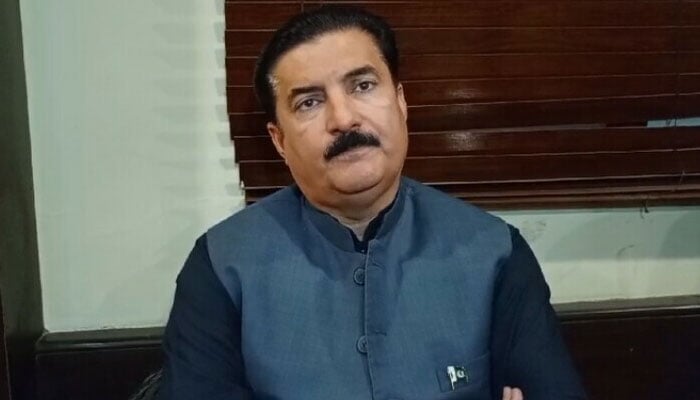
ISLAMABAD: Pakistan’s Finance Ministry has reported a significant slowdown in the country’s debt growth, saying the rate of increase fell to its lowest level in two decades during fiscal year 2025-26.

According to the ministry, Pakistan’s debt increased by only 7.7 per cent during 2025-26, compared with an average annual growth rate of around 16 per cent over the past 20 years.

The ministry said the country’s debt-to-GDP ratio also improved, falling to 68.3 per cent from 75 per cent in fiscal year 2022-23. Between 2019 and 2021, the ratio had remained between 86 and 88 per cent.

Pakistan’s external debt-to-GDP ratio also declined to 21.5 per cent, which the ministry described as the lowest level in nine years.

The country’s foreign exchange reserves have meanwhile increased substantially, rising from $2.9 billion to $18.4 billion, according to the ministry.

The Finance Ministry said Pakistan also repaid Rs4.72 trillion in debt ahead of schedule. It added that annual interest expenditure on government debt declined by nearly Rs2 trillion.

The burden of interest payments on government revenue also fell sharply, from 61 per cent to 35 per cent, indicating an improvement in the government’s fiscal position.

The ministry further said Pakistan has recorded a primary budget surplus for three consecutive years, reflecting continued efforts to strengthen fiscal management and control expenditure.

Pakistan has also returned to international capital markets after a four-year gap. The country’s Panda Bond reportedly attracted demand nearly five times higher than the amount offered, indicating strong investor interest.

The ministry also highlighted Pakistan’s improved credit outlook. S&P Global Ratings has maintained Pakistan’s rating at B with a stable outlook, with the ministry describing the current rating as the agency’s highest level for Pakistan in nearly nine years.

Similar Posts

  • | |

    Zoya Akhtar explains Katrina’s ZNMD kiss with Hrithik

    Filmmaker Zoya Akhtar has revealed why Katrina Kaif agreed to an unexpected kissing scene with Hrithik Roshan in Zindagi Na Milegi Dobara. Speaking at the Monsoon Film Festival on Monday, Akhtar recalled her experience of working with Katrina on the 2011 film. She said Katrina had never performed a kissing scene before. According to Akhtar, Katrina understood that the scene was important to the story. After reading the script, she agreed to film the moment because she recognised its importance to her character. The director explained that Katrina’s character, Laila, was portrayed as someone who lived in the moment and acted on her instincts. Akhtar said the kiss was important because audiences needed to see Laila make a completely spontaneous decision. The moment was designed to reveal another side of her personality. She compared the scene to a fairy-tale moment. In her interpretation, Hrithik Roshan’s character Arjun was like Sleeping Beauty, while Laila played the role of the prince who wakes him up. Akhtar said the scene was not included simply as a romantic moment. It was intended to strengthen Laila’s character and underline the emotional transformation taking place between the characters. The scene later became one of the most discussed moments from the popular film. During the conversation, Akhtar also addressed reports about a possible sequel to Zindagi Na Milegi Dobara. She confirmed that work on a follow-up is underway but said several details are still uncertain. The filmmaker indicated that the team is considering whether the story can successfully revisit the characters at their current stage of life. Released in 2011, Zindagi Na Milegi Dobara starred Katrina Kaif, Hrithik Roshan, Farhan Akhtar, Abhay Deol and Kalki Koechlin. The film followed three friends who reunited for a road trip in Spain. It became widely popular for its themes of friendship, adventure, relationships and living life to the fullest. The movie was also a commercial success. It reportedly earned around ₹153 crore worldwide against a production budget estimated at between ₹45 crore and ₹55 crore.

  • |

    Kendall Jenner shares powerful lesson about facing rejection

    Rejection is often one of the most difficult experiences anyone can face while pursuing a dream. It can leave a person questioning their abilities, choices and even their place in an industry or environment they desperately want to be part of. For Kendall Jenner, rejection was not something that simply disappeared once she entered the world of fashion and entertainment. Instead, it became part of her journey and taught her an important lesson about persistence. Jenner has spoken openly about how difficult it can be to pursue a career when other people are not convinced that you have what it takes. She recalled facing closed doors and encountering adults who were hesitant to work with her. Some people, she said, even laughed at her behind her back. Such experiences can be particularly painful when someone is young, ambitious and trying to establish themselves in a highly competitive field. Her words offer an honest look at a side of success that is often hidden from the public. People usually see the glamorous moments, major opportunities, successful projects and achievements that come after someone has established a name for themselves. What is less visible are the disappointments that came before those achievements. Every successful person has faced moments when someone said no, overlooked their potential or decided they were not the right person for an opportunity. For anyone chasing a dream, rejection can feel deeply personal. When an opportunity is lost, it can be easy to believe that the rejection reflects a lack of talent or ability. However, Jenner’s experience suggests that one person’s opinion does not necessarily determine someone’s future. A closed door can simply mean that the timing, circumstances or people involved were not right. There are also moments when rejection is not expressed directly. Sometimes opportunities disappear without an explanation. Other times, people make it clear that they do not believe in you. Hearing that someone has doubted your abilities can be discouraging, especially when you are already struggling with self-doubt. Yet continuing despite those opinions can become an important part of building confidence. Jenner’s quote serves as a reminder that belief in yourself does not always come from other people first. There may be times when nobody around you understands your goals or sees the potential you believe you have. That does not necessarily mean the dream is unrealistic. It may simply mean that you have to keep moving forward before others recognize what you are capable of achieving. Her journey also highlights the importance of resilience. Success rarely happens because every opportunity works out perfectly. More often, it develops through a combination of patience, hard work, learning from setbacks and remaining committed when circumstances become difficult. The most powerful message in Jenner’s words is that rejection does not have to be the end of the story. Doors may close, people may doubt you and opportunities may not arrive when you expect them. But those moments do not have to define your future. Sometimes, the beginning of success is simply refusing to stop after someone else has told you no. Continuing to believe in yourself, improving your skills and pursuing your goals can eventually lead to opportunities that once seemed impossible. In that sense, rejection may hurt, but it can also become part of the journey toward proving to yourself what you are capable of achieving. You have no idea how many doors closed on me and how many adults were either initially reluctant to take a chance working with me.

  • | |

    Austria opens police station at house where Hitler…

    Austria has opened a police station inside the house in Braunau am Inn where Adolf Hitler was born, closing out years of debate over how to handle the building’s dark history. The 17th century structure once operated as an inn and served as the birthplace of the Nazi dictator in April 1889. Authorities have now completed a substantial renovation that changed the building’s facade, though managing the site has posed a persistent challenge for Austrian officials determined to prevent it from turning into a destination for neo Nazi pilgrimage. Hitler lived in the building, located at Salzburger Vorstadt 15, for only a few weeks before his family relocated to another address in Braunau. The family left the town permanently when Hitler was three years old. He briefly returned to Braunau in 1938 while traveling to Vienna after annexing Austria into Nazi Germany. Interior Minister Gerhard Karner attended the opening ceremony alongside other local officials, which featured police musicians performing on tuba and other brass instruments. Karner said Austria is taking responsibility for what he called the terrible legacy of the past, adding that although deciding the building’s fate proved difficult, he believes the new police station represents a fresh chapter for the site. He said the building will now stand as a place representing democracy, the rule of law, security, freedom and human dignity. A Catholic police chaplain then blessed two crosses that will hang inside the new station. For decades, Austria’s interior ministry rented the building from its former owner, a local woman named Gerlinde Pommer, paying her generous rent in an effort to keep the property from becoming a site for far right tourism. A local charity used the building for years as a day center and workshop for people with special needs, but the organization had to vacate in 2011 after Pommer blocked planned renovations. She also repeatedly declined to sell the property to the government, leaving the building empty for several years while she and authorities disputed terms. In 2016, Austria’s parliament passed legislation allowing the government to seize the property from Pommer, paying her compensation of 812,000 euros. She later challenged the amount in court, arguing it was too low, but ultimately lost the case. Wolfgang Sobotka, who served as interior minister at the time, suggested the building should be demolished and replaced with a new structure altogether, echoing an earlier proposal from a Russian lawmaker who had offered to purchase the house and destroy it. Both ideas drew significant criticism, with opponents arguing that tearing down the building would amount to denying Austria’s Nazi era history. In 2019, the government unveiled plans to convert the building into a police station and launched an EU wide competition inviting architects to submit design proposals. Officials subsequently spent millions of euros renovating the structure, transforming its appearance dramatically from its earlier state. The building, now painted white both inside and out, features extensive oak woodwork throughout, while an original winding staircase and arched entrance hall have been preserved from the earlier structure. The transformation marks a stark contrast to the building’s condition decades ago, when the Lebenshilfe charity operated a small shop in one of its front rooms. Police Chief Inspector Ludwig Heise said he feels fortunate to work in such a modern facility, noting the additional space compared to previous quarters, though he added that beyond its size, the station functions just like any other police facility in Austria. The reopening marks the culmination of a long and often contentious effort by Austrian authorities to neutralize the symbolic weight of Hitler’s birthplace, transforming a site once feared as a potential magnet for extremist sympathizers into a functioning symbol of the democratic institutions Austria has built in the decades since the Second World War.

  • | |

    Father challenges medical report in Mir Raza case

    The mystery surrounding the death of young businessman Mir Raza Ali Khan remains unresolved as investigators continue to examine evidence, while the victim’s family insists he was murdered and has raised questions about the findings of the preliminary medical report. Mir Raza’s father, Hussain Raza, has rejected the possibility of suicide. He claimed his son was killed and alleged that attempts were being made to present the case as a suicide. He expressed concern over the medical report, saying it mentioned only the gunshot injury and did not describe what he believes were signs of physical violence on his son’s body. According to the father, Mir Raza had injuries on his face, hands and other parts of his body. He also claimed his son was shot from behind and questioned why the report did not include details of the alleged injuries. He further asked investigators to explain what happened during the period between his son’s disappearance on July 28 and the recovery of his body the following day. He said Mir Raza had spoken to his sister before leaving home and appeared to be in good spirits. The taxi driver who transported him also reportedly told investigators that Mir Raza seemed relaxed and was listening to music during the journey. The family has appealed to senior authorities for a transparent and impartial investigation. The investigation has made further progress with the recovery of another CCTV recording showing Mir Raza’s movements before his death. The footage reportedly captures him taking his mobile phone out of his pocket and throwing it away. Investigators are conducting forensic and technical analysis of the video to determine its significance. Police said the preliminary medical examination found that Mir Raza died from a gunshot wound to the chest. However, the firearm used in the incident and the spent bullet casing have not yet been recovered, leaving investigators without key physical evidence. As part of the ongoing investigation, police are also looking into Mir Raza’s financial dealings. Initial inquiries suggest he had borrowed money from several individuals. Authorities are preparing a list of those people and are questioning them to determine whether any financial dispute may have contributed to the incident. Investigators have so far included 12 individuals in the inquiry and recorded statements from 15 people connected to the case. Earlier CCTV footage showed Mir Raza leaving his shop in Bahadurabad during the early hours after taking a security guard’s pistol from a drawer. He later returned home, where he left behind his car, smartwatch, house keys and Rs39,000 before booking an online taxi. Further footage showed him traveling alone to Gulistan-e-Jauhar. Investigators believe he switched off his mobile phone near Johar Mor before reaching Block 2, where he was last traced.

  • | |

    Mushtaq Ahmad released after brief detention

    Former Jamaat-e-Islami senator Mushtaq Ahmad Khan was released on Thursday after his supporters claimed he had been held for more than 24 hours following his attempt to travel to Azad Jammu and Kashmir (AJK), where protests have intensified in recent days. According to his team, Mushtaq Ahmad was stopped by authorities after being denied entry into AJK while travelling to express solidarity with families affected by the recent unrest. They alleged that he was later taken into custody while returning to Islamabad and remained out of contact for several hours before his release. Following his release, his official social media account confirmed that he was safe and announced that he would address a press conference in Islamabad to share details of the incident. Supporters claimed that he was intercepted near Kahuta by Punjab Police and taken away without any formal arrest warrant or explanation. They further alleged that authorities did not disclose his location during the period of detention, prompting concerns among family members and political colleagues. The alleged detention triggered strong reactions from opposition leaders and rights advocates, who demanded transparency and adherence to legal procedures. Several political figures called for an explanation from the authorities, while human rights groups stressed the importance of protecting civil liberties and ensuring due process. The incident comes amid heightened tensions in Azad Jammu and Kashmir following clashes between security personnel and protesters. The unrest has resulted in casualties and injuries, leading to widespread political criticism and renewed calls for an independent investigation into the violence. Political parties have urged the government to exercise restraint and resolve disputes through dialogue, warning that excessive use of force could further inflame the situation.

  • | |

    Colombia’s death toll from earthquake climbs…

    Rescue crews continue combing through collapsed buildings across western Colombia after a powerful magnitude 7.4 earthquake struck the region on Monday, August 10, with officials confirming the death toll has risen to at least 164 people. Authorities said more than 880 people have sustained injuries, while over 3,200 remain unaccounted for as soldiers, emergency responders and local volunteers work through debris from dozens of collapsed structures. Thousands of residents have been forced from their homes since the quake struck, adding to the scale of the humanitarian response now underway. The earthquake flattened multi story buildings in cities including Pereira and Cali, and severely damaged one of the towers of a historic cathedral in Manizales. The tremor originated at an intermediate depth with its epicenter located near San José del Palmar in the western department of Chocó, causing widespread destruction across Pereira, Cali, Manizales and other communities in Colombia’s coffee growing region. Residential buildings, hospitals, schools and key infrastructure, including several regional airports, all suffered severe damage in the quake. At one city hospital, several upper floors, including sections dedicated to pediatric care, collapsed inward, trapping some patients inside and forcing hospital staff to treat roughly 600 additional patients outdoors on a street littered with debris, according to hospital director Irne Torres Castro, who spoke to a Colombian television network. That same city saw some of the earthquake’s most extensive destruction, with entire residential blocks reduced to piles of concrete and twisted metal. Video circulating online captured buildings shaking violently as residents fled into the streets, while separate footage showed a regional airport swaying dramatically during the quake as large sections of ceiling came down around people sheltering inside. Among the most widely shared images online is footage showing the Cathedral Basilica of Our Lady of the Rosary shaking and partially collapsing. The cathedral, built in the 1920s, holds the distinction of being Colombia’s tallest cathedral and ranks among the highest neo Gothic churches anywhere in the Americas. The disaster struck just days after Abelardo De La Espriella was sworn in as Colombia’s president, immediately confronting his new administration with a major crisis. The earthquake also comes with memories still fresh of a pair of devastating earthquakes that struck neighboring Venezuela in June. Colombia’s national government has declared a state of emergency and mobilized the military, police and specialized rescue units to lead recovery operations, while accepting offers of international assistance as the search for survivors continues. The disaster adds to a string of major seismic events across the region in recent months, underscoring the ongoing vulnerability of Andean nations to powerful earthquakes and the strain such disasters place on emergency infrastructure even in areas with established disaster response systems.

Leave a Reply

Your email address will not be published. Required fields are marked *