ppp rejects sindh
| |

PPP rejects Sindh division, calls province ‘red …

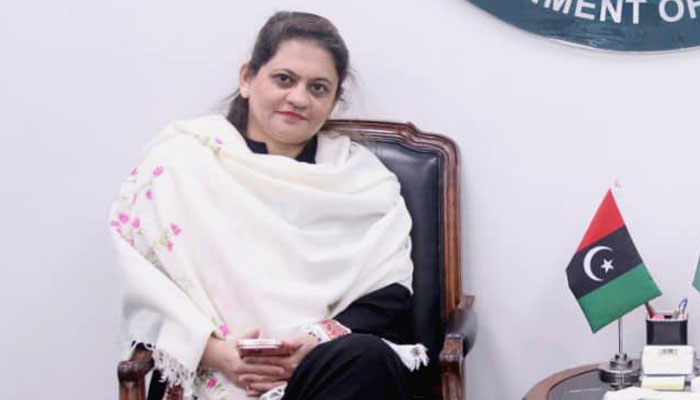
KARACHI: Pakistan Peoples Party (PPP) has firmly rejected any proposal to divide Sindh into administrative units, with Sindh government spokesperson Saadia Javed declaring that the province remains a “red line” for the party.

Speaking to the media on Monday, Javed said the PPP has never supported the division of Sindh and has no intention of doing so in the future. She argued that Pakistan’s current economic challenges and rising inflation make the creation of additional administrative units impractical, questioning how the government would finance such a move.

Criticising the Muttahida Qaumi Movement (MQM), she described the demand for new administrative units as a political stunt. Javed questioned the performance of senior MQM leaders, including Federal Health Minister Mustafa Kamal and Khalid Maqbool Siddiqui, asking what concrete steps they had taken to address the concerns of their voters or improve education and public services.

She reiterated that Karachi is the capital of Sindh and stressed that any attempt to divide the province is unacceptable to the PPP. According to Javed, while some people in Punjab may favour the creation of additional administrative units, the people of Sindh do not share that view.

Addressing Karachi’s civic challenges, she acknowledged that infrastructure development is underway but admitted that progress has not been as fast as residents expect. Referring to ongoing construction on University Road, she recognised the inconvenience faced by commuters and residents. She also shared her own experience, saying that despite living in Defence for four decades, her home still does not receive a regular water supply.

Javed said the provincial government is working to resolve Karachi’s longstanding issues and insisted that all of the city’s problems should not be blamed solely on the current administration. She expressed confidence that visible improvements in Karachi would emerge by the end of the year.

On the Red Line Bus Rapid Transit project, the spokesperson said work is progressing at a rapid pace, adding that the deadline for completing the mixed-lane track has been set for July 31.
Similar Posts

  • |

    Viral 1970s PTV clip reignites debate over changing TV standards

    A vintage clip from a 1970s Pakistan Television (PTV) drama has gone viral on social media, reigniting conversations about how the country’s television industry and cultural standards have changed over the decades. PTV, Pakistan’s oldest television network, first went on air in November 1964 and quickly became known for producing memorable dramas, educational programs, and family-oriented entertainment. Many of its productions from the 1960s and 1970s are still remembered for their strong storytelling, talented actors, and high production quality. Over the years, however, the broadcaster’s programming evolved alongside Pakistan’s changing political and social landscape. The recently resurfaced clip is from the classic PTV play Parchaiyaan. In the scene, several female characters are seen wearing elegant sarees paired with sleeveless blouses, a fashion choice that has caught many younger viewers by surprise. The attire, which reflected the style of that era, has sparked widespread discussion online, with many people saying such costumes would be unlikely to appear on mainstream Pakistani television today. The video quickly gained traction across social media platforms, where users compared the fashion and creative freedom of the 1970s with modern television standards. Many viewers expressed surprise that such scenes were once broadcast on the country’s state-owned television network. Some social media users described the clip as evidence that Pakistani television once embraced a more modern and progressive visual style. Others questioned whether the footage was authentic, with one user asking if it had really aired on PTV. Another remarked that the television industry of the time appeared far more liberal than many people assume today. Not everyone viewed the clip positively. Some users argued that the clothing shown in the scene was too revealing by today’s standards, while others said the discussion highlighted how cultural expectations and public attitudes have shifted over the decades. Several viewers, however, praised the actresses featured in the clip for carrying the traditional outfits with grace and elegance. One user admired the woman dressed in a black saree, saying she wore the outfit confidently despite the short-sleeved blouse. Others pointed out that sarees were a common part of formal fashion in Pakistan during that period, particularly among urban families and in television productions. The viral discussion has also revived broader conversations about the evolution of Pakistan’s entertainment industry. Many users reflected on how television content has changed over time due to shifting social values, cultural preferences, and broadcasting policies. Some believe earlier productions offered greater artistic freedom, while others argue that changing audience expectations naturally influenced the direction of television programming. As the clip continues to circulate online, it serves as a reminder of how fashion, media, and public opinion evolve across generations. Whether viewed as a symbol of artistic expression or simply a reflection of its time, the decades-old scene has once again placed PTV’s rich television history at the center of public conversation.

  • |

    Shakib ready to return to Bangladesh if assured of security

    DHAKA: Bangladesh cricket star and former lawmaker Shakib Al Hasan has said he is prepared to return home from exile, face ongoing court proceedings and play a farewell series if the government guarantees his safety. Shakib, 39, has been living in the United States since the fall of former Prime Minister Sheikh Hasina’s government following a deadly student-led uprising in August 2024. The former Bangladesh captain remains politically linked to Hasina’s Awami League, having previously served as a lawmaker from the party. He is currently facing criminal cases in Bangladesh, including one related to the alleged killing of a protester and another involving anti-corruption authorities. Speaking to Reuters from Sri Lanka, where he is playing franchise cricket, Shakib said he wanted to return and was willing to appear before the courts. He said he would go back if the government formally assured him that adequate security would be provided. Shakib maintained that he had not committed any wrongdoing and described the murder case against him as baseless. He said the case was filed on a day in August 2024 when he was playing a match in Toronto. The cricketer also said he had previously attempted to return to Bangladesh. In late 2024, he boarded a flight after receiving assurances that he would be protected, but was reportedly instructed to turn back while the journey was underway. He eventually landed in Dubai before returning to the United States. Shakib said another planned return was blocked after he posted a birthday message for Hasina. He questioned why such a social media post should prevent him from entering his own country. The former captain also rejected suggestions that he should distance himself from Hasina or the Awami League to facilitate his return. Shakib recently appeared virtually at a press conference in Delhi alongside Hasina. Following the event, his vacant home in Bangladesh was reportedly attacked. He defended his participation, saying his message was focused on peace and Bangladesh’s progress. A spokesperson for Prime Minister Tarique Rahman said Shakib must face the legal process like any other accused person and surrender before Bangladeshi courts. Meanwhile, Shakib said he still hopes to represent Bangladesh in a farewell series and possibly play at the 2027 ODI World Cup. He acknowledged that retirement was approaching but said he remained physically fit and continued to enjoy playing cricket. The cricketer also revealed that his bank accounts had been frozen for around 18 months during investigations. He said he had not seen his parents in Bangladesh for nearly two years.

  • |

    India’s young protesters turn memes into a tool of resistance

    NEW DELHI: A massive youth-led protest in India’s capital has taken an unusual turn after thousands of demonstrators responded to a police crackdown not only with slogans but also with memes, short videos and social media posts. The online campaign has become a powerful extension of the street movement, with young protesters using humour to document their experiences and keep public attention focused on their demands. The demonstrations were organised by supporters of the Cockroach Janta Party (CJP), a youth movement that first emerged over allegations of examination paper leaks and irregularities in government recruitment. Over time, the campaign expanded into a broader call for transparency, accountability and reforms in India’s education and recruitment systems. Tens of thousands of protesters marched towards Parliament in New Delhi, demanding the resignation of Education Minister Dharmendra Pradhan. Demonstrators accused the government of failing to stop repeated examination leaks that they say have damaged the future of millions of students. The minister has rejected the allegations and insisted that opposition parties are using students for political purposes. Police blocked the march before protesters could reach Parliament. Security personnel used tear gas and baton charges to disperse the crowd after demonstrators attempted to cross security barriers. Authorities also suspended mobile internet services around the protest area, saying the measure was necessary to maintain law and order. Both protesters and police reported injuries during the clashes. Demonstrators claimed that many participants were beaten during the operation, while police said several officers were also injured. Once internet services were restored, social media platforms were flooded with videos recorded during the protest. Instead of sharing only images of violence, many young protesters posted humorous clips showing themselves preparing for the march, running from tear gas and joking about the day’s events. Several participants uploaded “fit check” videos before joining the protest. The popular social media trend, usually used to show clothing and fashion, was transformed into political content. Some joked that they were dressed for a protest where they expected to face police action. Hours later, many of those same individuals were posting videos from the streets after the clashes. Other protesters shared short clips reviewing the effects of tear gas in a humorous style or laughing about the long distances they ran while escaping baton charges. The humour quickly attracted millions of views and became one of the defining features of the protest movement online. Participants said the jokes were never meant to make light of the violence. Instead, they described humour as a way to deal with fear and emotional stress. Many said laughing together helped them remain calm during an extremely tense situation. Young demonstrators also explained that recording videos had become a natural part of participating in modern protests. Smartphones allowed them to document events from their own perspective and preserve evidence of what happened on the streets. Researchers who study digital culture say the protests highlight how political activism is changing among younger generations. Unlike traditional demonstrations that relied mainly on speeches, banners and newspapers, today’s movements increasingly use short videos, memes and online storytelling to spread their message. Experts believe internet humour has become an effective political tool because it reaches audiences who may not normally follow current affairs. A single viral video or meme can introduce complex political issues to millions of young people in a simple and engaging way. Observers also note that humour has always played an important role in protest movements around the world. Songs, cartoons, street theatre and satire have historically helped protesters build unity, reduce fear and maintain morale during difficult campaigns. Social media has simply given those traditions a new digital form.

  • | |

    Maryam Nawaz orders timely salaries for Sutrah Pun…

    Punjab Chief Minister Maryam Nawaz has directed that workers associated with the Sutrah Punjab programme be paid their salaries by the fifth of every month. According to an official statement, the chief minister also sought monthly reports from the companies responsible for making payments to the workers to ensure that salaries are being disbursed on time. Maryam Nawaz ordered a zero-tolerance policy against workers who fail to perform their duties. She also directed authorities to develop standard operating procedures (SOPs) to regularly assess workers’ performance and improve the overall efficiency of the programme. The chief minister stressed that special attention should be given to cleanliness at fruit and vegetable markets. She said additional efforts were required to achieve better sanitation results across Punjab. Maryam Nawaz also directed officials to begin washing and cleaning major roads at 5am. She instructed authorities to ensure door-to-door waste collection and maintain proper cleanliness around schools, colleges, universities and hospitals. She further ordered the use of uniform garbage bins and waste bags in markets and commercial areas. Officials were directed to establish specific timings for removing waste from commercial zones and ensure that vacant plots in different areas were also cleaned.

  • | | |

    PSX gains nearly 1,380 points in early Friday trad…

    The Pakistan Stock Exchange (PSX) staged a strong recovery during the first half of trading on Friday, with the benchmark KSE-100 Index climbing nearly 1,380 points before trading was temporarily suspended for the weekly Friday prayer break. The market opened on a positive note, extending gains throughout the morning session as investors returned to selective buying following recent losses driven by regional geopolitical tensions. By midday, the KSE-100 Index had risen 1,378 points, or 0.79%, to reach 176,926. During intraday trading, the benchmark touched a high of 177,108.66 before easing slightly. The index also found support around 176,405.33, indicating sustained buying interest across key sectors. Trading activity remained steady, with more than 101.8 million shares changing hands during the morning session. The total value of traded shares reached approximately Rs6.96 billion, reflecting healthy market participation despite the shortened trading period. Trading was suspended at midday in line with the Pakistan Stock Exchange’s routine Friday prayer break and was scheduled to resume later in the afternoon. The market’s rebound followed a volatile trading week shaped by uncertainty in the Middle East and fluctuations in global oil prices. Investors appeared to set aside concerns over rising regional tensions and instead focused on attractive valuations in selected stocks. On Thursday, the benchmark index had closed at 175,547.98 after selling pressure weighed on investor sentiment. Friday’s recovery helped the market regain a significant portion of those losses. Broader market performance also remained positive, with the All-Share Index and several sectoral indices posting gains during the morning session. Market participants are expected to closely monitor both domestic economic developments and geopolitical events in the Middle East as trading resumes, with investors assessing their potential impact on market sentiment in the coming sessions.

  • | | |

    Two Israeli soldiers killed in southern Lebanon bl…

    Beirut: The Israeli military has confirmed that two of its soldiers were killed during operations in southern Lebanon, underscoring the continued volatility along the Israel-Lebanon border as cross-border hostilities show little sign of easing. In a statement issued on Wednesday, the Israel Defense Forces (IDF) identified the slain personnel as Major Harel Baron Stock, 34, a commander, and Sergeant Major Tamir Vaknin, 33. The military said both were killed in an explosion that occurred in the Lebanese town of Majdal Zoun, near the border. The IDF added that four other soldiers were seriously wounded in the same incident. The injured personnel were evacuated to nearby hospitals, where they are receiving medical treatment. Israeli authorities did not immediately provide further details on the nature of the explosion or whether it was caused by an explosive device or another form of attack. The incident comes amid continuing Israeli military operations across southern Lebanon, where strikes have intensified in recent months. The border region has witnessed repeated exchanges of fire, increasing fears of a broader escalation that could further destabilize the Middle East. Lebanese media have reported extensive damage in several southern districts following ongoing Israeli attacks. Large numbers of residents have been displaced, although many families have recently begun returning to their homes despite widespread destruction in affected areas. Security analysts say the latest casualties highlight the dangers faced by troops operating in the tense border zone, where military activity and intermittent clashes continue to pose risks to both soldiers and civilians. The deaths of the two Israeli soldiers are likely to renew attention on the fragile security situation along the Israel-Lebanon frontier, as diplomatic efforts to reduce tensions remain limited. With military operations continuing on both sides, concerns persist that any major incident could trigger a wider regional confrontation, further complicating an already volatile conflict.

Leave a Reply

Your email address will not be published. Required fields are marked *