public trust islamabad
| |

Public trust in Islamabad High Court has increased…


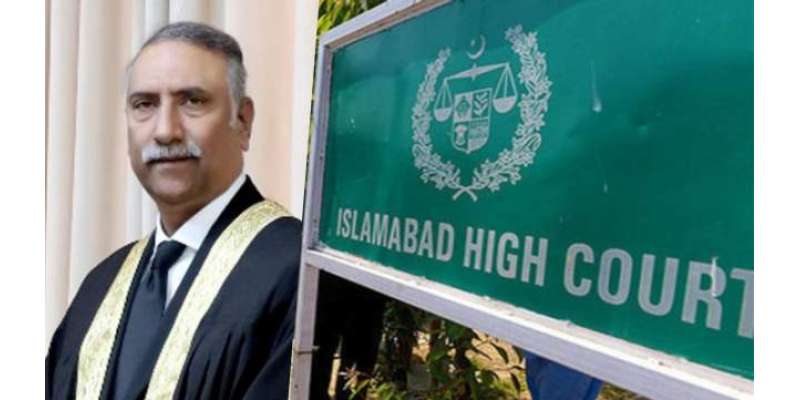
ISLAMABAD:Chief Justice of the Islamabad High Court (IHC) Justice Sarfraz Dogar has said that public confidence in the Islamabad High Court and district courts has increased significantly, as reflected by the sharp rise in the number of cases being filed before the courts.

Addressing a ceremony held at the Islamabad High Court on the occasion of Independence Day, Justice Sarfraz Dogar said that the number of cases filed in the high court had increased nearly fivefold. He noted that there was a time when the daily filing rate remained below 50 cases, whereas the court is now receiving around 250 cases every day.

According to the chief justice, the substantial increase in case filings indicates that people are increasingly turning to courts in the hope of obtaining relief and having their grievances addressed through the legal system. He said the growing number of cases was also an indication of the public’s confidence in the judiciary and its ability to provide justice.

Justice Dogar acknowledged that the judiciary was facing several challenges, particularly a shortage of judges. Despite these difficulties, he said, courts were continuing to perform their responsibilities with dedication and commitment. He stressed that the primary responsibility of the judiciary was to ensure that every deserving person received justice in a fair, impartial and transparent manner.

He further highlighted the importance of cooperation between judges and lawyers, describing the bench and the bar as two essential pillars of the judicial system. He said effective coordination between the two was necessary to improve the delivery of justice and ensure that citizens could obtain timely relief.

Speaking about the country’s future, the chief justice said that the protection and stability of Pakistan was a collective responsibility. He urged citizens to keep the country away from conflict, disorder, extremism and politics based on hatred. He emphasized that Pakistan’s progress could only be achieved through sincerity, mutual respect, unity and a positive contribution from all segments of society.

Justice Dogar also referred to what he described as Pakistan’s significant diplomatic and defence achievements over the past two years. He said the country had strengthened its position internationally through effective diplomatic efforts and had emerged as an important voice for peace in the international community.

The chief justice particularly highlighted developments in defence cooperation among Muslim countries. He described efforts to bring Islamic countries together on a common platform for defence cooperation as a historic development. According to him, the initiative reflected a vision that had previously been associated with former prime minister Zulfikar Ali Bhutto, who had advocated greater unity and cooperation among Muslim nations.

Justice Sarfraz Dogar said Pakistan’s national institutions had an important role to play in strengthening the country and maintaining public confidence. He stressed that institutions must continue to work according to constitutional principles, the rule of law and national interests.

He concluded by emphasizing the importance of tolerance, unity and respect in addressing differences. He said that Pakistan could move forward only when its institutions and citizens worked together to promote justice, stability, peace and national development.
Similar Posts

  • | | | |

    Iran rules out US talks until demands are met

    Iran has ruled out direct negotiations with the United States for now, saying Washington must first comply with the terms of an interim agreement reached in June. Iranian Foreign Minister Abbas Araghchi said on Sunday that Tehran and Washington were not holding direct talks. He said messages were still being exchanged through intermediaries. Araghchi also reiterated Iran’s position on the Strait of Hormuz. He said the strategic waterway would not reopen simply because Iran and Oman reached an agreement on shipping arrangements. According to Iranian reports, Tehran and Muscat are close to finalising an understanding on a temporary shipping route. However, Iran says the route can only be used after other conditions are met. The Strait of Hormuz has remained at the centre of the wider conflict. Iran has repeatedly linked its reopening to demands directed at Washington. Iranian officials have called for an end to US threats and military action. They have also demanded the lifting of sanctions and blockades and the release of Iranian assets. Iran’s Revolutionary Guard has separately warned that the strait will remain closed until Tehran’s conditions are accepted. The force accused its opponents of shifting their focus toward reopening the vital waterway. The strait is one of the world’s most important energy routes. A significant share of global oil and gas shipments normally passes through it. Oman, meanwhile, said discussions with Iran over arrangements for shipping through the waterway had been positive and constructive. Muscat also urged all sides to avoid actions that could undermine the negotiations. Iranian President Masoud Pezeshkian has suggested that the current situation could provide an opportunity for an agreement. He said Iran remained united and strong despite the ongoing conflict. The diplomatic uncertainty comes as tensions continue to affect commercial shipping in the region. The United Arab Emirates said Iran had attacked a vessel linked to its state-owned oil company while it was travelling through the Strait of Hormuz. No injuries were reported. The United Kingdom Maritime Trade Operations agency also reported that a vessel caught fire after being struck by an unidentified projectile. The fire was later brought under control, with no environmental damage reported. Iranian authorities have not immediately commented on the individual incident. Saudi Arabia reports fires at energy facilities Tensions have also spread across the Gulf. Saudi Arabia said firefighters had extinguished a blaze at an Aramco facility in Jizan. The Saudi Energy Ministry said there were no fatalities. Yemen’s Houthi movement claimed responsibility for an attack on the site, saying it had used a drone in response to alleged Saudi strikes in Yemen. A separate explosion was also reported in the industrial area of Jubail. Regional sources said gas facilities were targeted and that a fire broke out. The exact cause remained unclear. It was not immediately established whether the incidents in Jizan and Jubail were connected. US defence industry ordered to increase weapons production Meanwhile, the United States has asked its defence industry to accelerate weapons production amid shortages linked to the war with Iran. US Deputy Defence Secretary Steve Feinberg reportedly instructed defence companies to submit plans aimed at speeding up deliveries and increasing production of critical military equipment. The demand comes amid reports of pressure on US ammunition supplies, including stocks of Patriot missile interceptors. The Trump administration has maintained that the United States has substantial weapons reserves and that additional supplies are being manufactured and delivered. The conflict has also triggered threats from armed groups in the region. The leader of Iraq’s Harakat Hezbollah al-Nujaba, Akram al-Kaabi, has threatened retaliation for US-Saudi strikes on sites belonging to Iraq’s Popular Mobilisation Forces. The group has warned that further military action could lead to a response. Iranian military officials, meanwhile, have claimed that the United States and Israel failed to achieve their objectives against Iran. They have praised the country’s military preparedness and vowed to continue resisting pressure. With the Strait of Hormuz still closed and negotiations remaining indirect, the prospect of restoring normal shipping remains uncertain. Iran insists that reopening the waterway depends on Washington accepting its conditions. The United States, meanwhile, has linked the lifting of its blockade to Iran fulfilling commitments under any future agreement.

  • | |

    Ghazi University marks Minorities Day, reaffirms e…

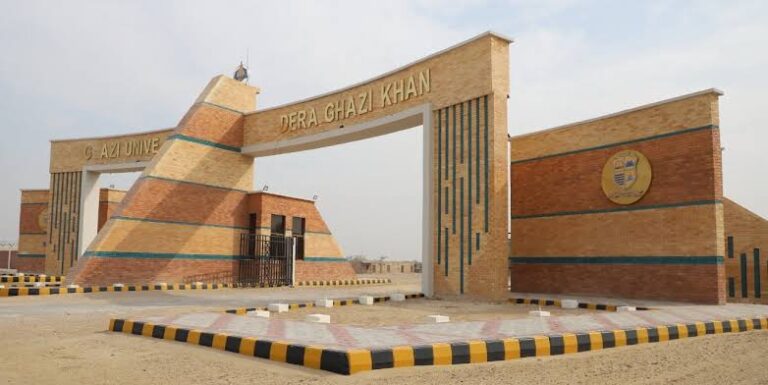
    Dera Ghazi Khan: The Ghazi University, Dera Ghazi Khan observed National Minorities Day today on the special directions of the Vice Chancellor Prof. Dr. Ashfaq Ahmad. The event, organized by the Directorate of Students Affairs and hosted by Prof. Dr. Arshad Munir, brought together members of the non-Muslim community and university officials to highlight the equal rights, religious freedom, and contributions of minorities in Pakistan. Members of the non-Muslim community from Dera Ghazi Khan, including Mr. Saleem Ilyas and Mr. Boota Masih, and others attended the ceremony. Senior university officials, Registrar Dr. Muhammad Asif, Prof. Dr. Saeed Ullah, Dr. Muhammad Ziaullah, Director ORIC Dr. Sagheer Atta, Dr. Irum Aziz, Dr. Khizra Bakhsh, and other faculty members were also in the event. The programme commenced with the recitation of the Holy Quran by an M.Phil scholar from the Department of Islamic Studies, followed by the recitation of verses from the Injeel (Gospel) by Mr. Boota Masih. Dr. Muhammad Ibrahim then presented a Naat-e-Rasool-e-Maqbool in praise of the Holy Prophet (PBUH). Thereafter, the National Anthem of Pakistan was played, with all participants standing in respect. In his welcome address, Prof. Dr. Arshad Munir highlighted the significance of National Minorities Day in Pakistan. He acknowledged the historic contributions of the non-Muslim community to the establishment of Pakistan and their continued role in strengthening the nation. On behalf of Vice Chancellor Prof. Dr. Ashfaq Ahmad, he extended an open invitation to members of the non-Muslim community to visit Ghazi University and enrol their children for higher education, assuring that the university would provide full facilitation and support in this regard. Two documentaries were screened during the event. The first showcased the establishment and progressive transformation of Ghazi University under the leadership of Vice Chancellor Prof. Dr. Ashfaq Ahmad. The second, prepared by the Directorate of Students Affairs, highlighted the efforts of non-Muslim personalities and movements that played a vital role in the creation of Pakistan and in its subsequent development. Speaking on the occasion, Mr. Saleem Ilyas expressed gratitude to the university administration for inviting members of the non-Muslim community and honouring them. He stated that minorities in Pakistan enjoy complete liberty, freedom of livelihood and worship, and equal rights alongside citizens of all other faiths. Mr. Boota Masih also thanked the university for the respect and affection extended to the community. He said non-Muslims feel comfortable and content in Dera Ghazi Khan, actively participate in local festivities, and remain an integral part of the social fabric. Extending a gesture of interfaith harmony, he invited all participants to visit their church. A cake marking National Minorities Day was cut by the honourable guests, symbolising unity and equality among people of all religions. Refreshments were also served to the participants. The Director Students’ Affairs, Dr. Muhammad Salman Haider presented the vote of thanks at the conclusion of the programme. The event conveyed a clear message of equal rights, religious freedom, and interfaith harmony, reaffirming that minorities are valued partners in Pakistan’s national progress and social cohesion.

  • | |

    Pakistan standing tall: realising Jinnah’s visio…

    Shehbaz Sharif and Asim Munir: Advancing the Vision of Quaid-e-Azam As Pakistan celebrates its 79th Independence Day, there is a growing sense that the country is witnessing a moment that would have deeply pleased its founding father, Quaid-e-Azam Muhammad Ali Jinnah. For decades, Pakistanis have carried Jinnah’s vision of a strong, sovereign and respected Pakistan in their hearts. Today, as Pakistan’s diplomatic and strategic importance continues to grow, that vision appears increasingly visible on the international stage. Prime Minister Muhammad Shehbaz Sharif and Field Marshal Syed Asim Munir are working together to translate that vision into reality. Their close coordination has provided Pakistan with a sense of direction, unity and confidence at a time when the world itself is undergoing profound geopolitical change. The Pakistan of today is increasingly being recognised as a country whose voice matters. Jinnah envisaged a Pakistan that would not merely exist on the world map, but would stand with dignity, sovereignty and confidence among the nations of the world. His vision was of a country capable of determining its own destiny and making a meaningful contribution to international affairs. There is a powerful resonance between that vision and the Pakistan we are witnessing today. Jinnah once spoke of a future in which the world’s decisions would be influenced by Pakistan. For many years, that aspiration seemed distant. But recent developments suggest that Pakistan is moving closer to that position. From facilitating dialogue between major powers to strengthening strategic partnerships with Türkiye, Saudi Arabia and China, Pakistan is demonstrating that it can engage with countries across different geopolitical blocs while protecting its own national interests. The country’s ability to host US-Iran talks is particularly significant. In an increasingly polarised world, being trusted to provide a platform for dialogue is itself an indication of diplomatic relevance. Pakistan’s relationship with China remains a cornerstone of its foreign policy, while ties with Türkiye and Saudi Arabia continue to deepen. At the same time, engagement with the United States has entered a phase in which Washington is once again recognising Pakistan’s strategic importance. The positive remarks by US President Donald Trump about Prime Minister Shehbaz Sharif and Field Marshal Asim Munir have also attracted international attention. Perhaps most importantly, Pakistan is projecting itself with greater confidence. The scenes in Islamabad surrounding the inauguration of Yadgar-e-Fateh, commemorating the sacrifices and achievements associated with Operation Bunyan-un-Marsoos, captured this changing mood. Political and military leaders standing together alongside the families of martyrs and veterans conveyed a powerful message that Pakistan’s strength lies in unity. As an overseas Pakistani who has lived in the West for more than two decades, this transformation is particularly striking. I have witnessed different phases of Pakistan’s image abroad. There were years when Pakistan was frequently discussed through the prism of instability, terrorism and political uncertainty. Today, the conversation is different. Pakistan is increasingly being discussed in terms of its strategic importance, diplomatic role, defence capabilities, regional influence and economic potential. This should make every Pakistani proud—but it should also make us more responsible. International recognition alone cannot build a prosperous Pakistan. The next challenge is to convert diplomatic and strategic gains into economic prosperity, stronger institutions, better education, employment opportunities and an improved quality of life for ordinary Pakistanis. That is where Jinnah’s vision must ultimately lead. At 79, Pakistan has every reason to celebrate. The country is standing taller on the world stage, and the partnership between Prime Minister Shehbaz Sharif and Field Marshal Asim Munir has helped project a message of unity and national purpose. But this is not the end of the journey. It is the beginning of a new chapter. Jinnah gave Pakistan a dream. The responsibility of this generation is to turn that dream into a lasting reality. Pakistan Zindabad.

  • |

    Kubra Khan breaks silence on Dr Bahu criticism

    Pakistani actress Kubra Khan has addressed the criticism she faced for her role in the hit drama Dr Bahu, revealing that the negative comments surrounding her appearance and on-screen pairing with co-star Shuja Asad deeply affected her. Dr Bahu, which is approaching its finale on ARY Digital, has remained one of the most talked-about dramas of the season. Written by Sanam Mehdi Zaryab and directed by renowned filmmaker Mehreen Jabbar, the serial is produced by Humayun Saeed and Shahzad Nasib. Kubra Khan plays the lead role, while Shuja Asad stars opposite her. Although the drama has received praise for its storytelling and performances, it also sparked widespread debate online. Many social media users criticized the casting of Kubra Khan and Shuja Asad, with some claiming that the actress appeared older than her co-star. The criticism soon expanded beyond the pairing, with users also commenting on Kubra’s hairstyle, clothing, and weight. Speaking during a recent appearance on journalist Maliha Rehman’s YouTube show, Kubra Khan shared how the online backlash impacted her emotionally despite her decision to remain silent. She admitted that the criticism did hurt her, explaining that choosing not to respond publicly did not mean she was unaffected by the comments. According to the actress, people often assume silence means indifference, but that was never the case for her. Kubra also spoke about the unrealistic beauty standards that women in the entertainment industry are expected to meet. She said there is a narrow definition of beauty that expects women to be extremely slim, tall, and fair-skinned, making it difficult for many actresses to fit into those expectations. The actress pointed out that she does not consider herself to fit those conventional standards and has dealt with such judgments for years. She added that seeing people criticize her weight simply because it became a trending topic was upsetting. Rather than engaging with online trolls, Kubra chose to stay quiet because she believed responding would not change anyone’s mindset. She said it felt like “talking to a wall,” making it pointless to defend herself against endless criticism. Kubra further revealed that social media users also targeted her hairstyle and wardrobe during the drama’s initial episodes. She said such things could easily be changed, but she questioned why people were so focused on minor details while far more important issues were taking place in the world. The actress also clarified the story behind her much-discussed hairstyle. She explained that the haircut was inspired by the voluminous hairstyles that were popular during the 1990s. According to Kubra, she had already been sporting bangs before they became a viral topic online, but the look unexpectedly drew widespread attention after the drama premiered. Despite the criticism, Kubra Khan has continued to focus on her work, with many viewers praising her performance in Dr Bahu as the serial heads toward its final episodes. Her comments have also reignited conversations about body shaming, unrealistic beauty standards, and the pressure female actors face in the entertainment industry.

  • |

    Sabahat Bukhari opens up about healthy flirting on drama sets

    Veteran Pakistani television actress Sabahat Bukhari has shared her thoughts on friendly interactions between co-stars, saying that healthy flirting can help create positive energy and improve chemistry between actors on set. Sabahat Bukhari is a familiar face in Pakistan’s television industry and has been associated with showbiz for many years. She began her professional journey as an announcer at PTV Lahore Centre before moving towards acting. Over the years, she established herself as a versatile performer by appearing in numerous television productions and playing a variety of memorable roles. Some of her notable television projects include Kankar, Rehmat, Intekhab, Humnawa, Bas Aik Tum Hi, Sambhal Ja Ae Dil and Inteha. She is also set to appear in another upcoming television drama. Alongside her acting career, Sabahat remains active on social media, where she frequently entertains her followers with humorous videos, reels and glimpses from her professional life. During a recent podcast appearance, Sabahat spoke candidly about her experiences while working in the entertainment industry. The conversation turned towards whether she had ever received romantic attention or been approached by colleagues during her career. Responding to the question, the actress explained that several colleagues had complimented her or expressed admiration for her over the years. Instead of viewing such attention negatively, she said she considers respectful praise a compliment. Sabahat went on to discuss what she described as “healthy flirting,” explaining that lighthearted and respectful interactions between colleagues can sometimes create a comfortable working environment. According to her, maintaining friendly energy on a drama set can help actors connect with one another and make working together more enjoyable. She believes that when co-stars are comfortable and friendly with each other, their connection can also contribute to stronger chemistry in front of the camera. Such interactions, she stressed, should remain respectful and positive. The actress also revealed that one of the most meaningful compliments she has received throughout her career is being told that she carries positive energy. She appeared pleased that people around her recognize her optimistic and energetic personality. However, Sabahat clarified that she does not consider herself a flirtatious person. She explained that whenever she finds someone attractive, pleasant or positive, she does not hesitate to appreciate them sincerely. For her, complimenting another person is simply a way of acknowledging their positive qualities rather than necessarily expressing romantic interest. Sabahat’s comments offer an interesting perspective on relationships and friendships behind the scenes of television productions. Her remarks suggest that respectful appreciation, friendliness and positive communication between colleagues can contribute to a healthier atmosphere while also helping performers develop a natural connection required for their role.

  • | |

    Crazy, Stupid, Love. directors recall Kevin Bacon?…

    Fifteen years after Crazy, Stupid, Love. became a romantic comedy favorite, directors Glenn Ficarra and John Requa are looking back on the making of the film and sharing one behind-the-scenes moment that has stayed with them ever since. The filmmaking duo recently reflected on the 2011 hit while celebrating its enduring popularity. Starring Steve Carell, Ryan Gosling, Emma Stone, Julianne Moore and Kevin Bacon, the film earned praise for its clever storytelling, heartfelt romance and memorable performances. Looking back, the directors admitted there was one piece of advice from Kevin Bacon that they have never forgotten. According to Ficarra and Requa, Bacon encouraged them not to overthink the filmmaking process and reminded them to trust their instincts. His words came during production when the directors were navigating the pressure of managing a major Hollywood ensemble cast. The advice, they said, proved invaluable and has stayed with them throughout their careers. (people.com⁠) The directors also laughed while recalling the lighthearted atmosphere on set. Despite featuring several A-list stars, they said the cast created a collaborative and relaxed environment where everyone was eager to support one another. They credited the actors’ professionalism and sense of humor for making long filming days enjoyable. One of the film’s most iconic moments remains the now-famous shirtless reveal featuring Ryan Gosling, a scene that continues to be celebrated by fans more than a decade later. The directors admitted they never expected certain scenes to become part of pop culture, but they believe the film’s emotional core is what has allowed it to stand the test of time. Released in 2011, Crazy, Stupid, Love. follows recently separated Cal Weaver, played by Steve Carell, as he attempts to rebuild his confidence with the help of smooth-talking bachelor Jacob Palmer, portrayed by Gosling. The film blends romance, comedy and family drama while exploring love at different stages of life. Its surprising twists and heartfelt ending helped make it one of the standout romantic comedies of the decade. Reflecting on the anniversary, Ficarra and Requa said they remain grateful for the lasting affection audiences have shown the film. They noted that hearing fans quote lines and revisit the movie years later has been one of the most rewarding parts of their careers. Bacon’s simple advice to trust the process, they added, continues to influence the way they approach every project. As Crazy, Stupid, Love. celebrates its 15th anniversary, its blend of humor, heart and memorable performances continues to resonate with viewers. And thanks to one unforgettable lesson from Kevin Bacon, the directors still carry a reminder that sometimes the best filmmaking comes from believing in your instincts.

Leave a Reply

Your email address will not be published. Required fields are marked *